Entertainment
At Contact in the Desert, 'Coachella for UFOs,' a once-fringe topic takes the main stage

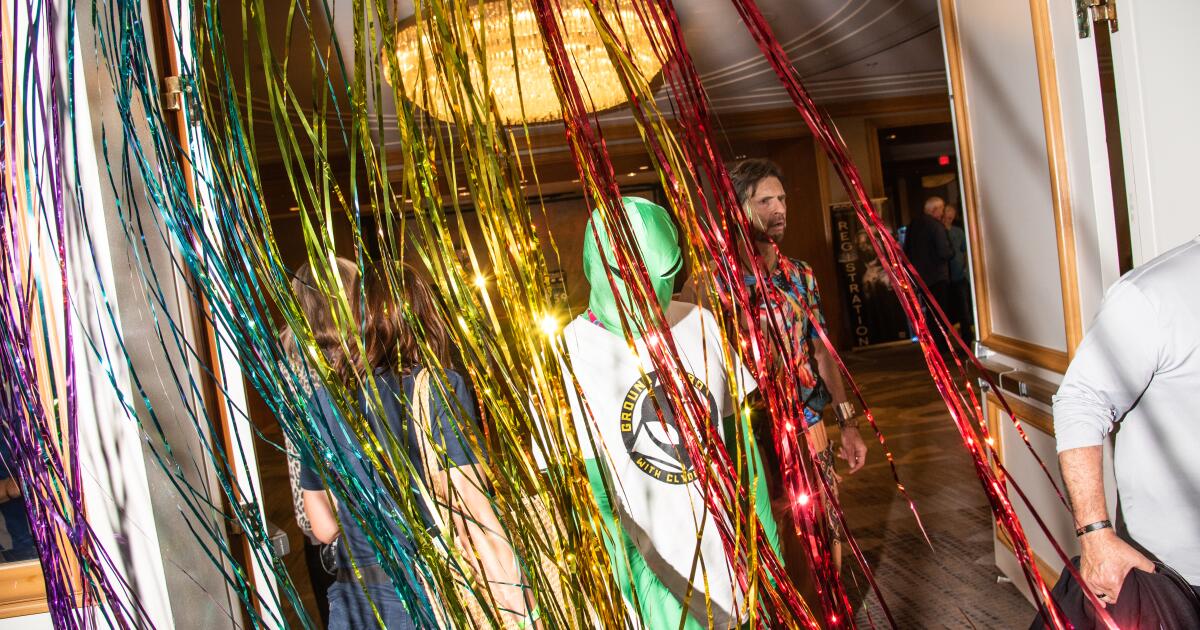
Timothy Humphrey isn’t sure what exactly happened the night the visitor arrived.
“I saw something in the sky, and then an individual on the ground who spoke to me,” Humphrey, a Temecula resident, recalled as he walked through the Saturday afternoon crowds at the Contact in the Desert UFO convention in Indian Wells. He described the entity — a possible extraterrestrial? — as a “blonde-haired, blue eyed dude” dressed in all white. “I wasn’t on psychedelics or anything,” Humphrey laughed, but the encounter left him shaken.
“I had trouble sleeping after, but I wasn’t harmed,” Humphrey said. “I took it as an experience where the line blurred between reality and spiritual woo-woo stuff.”
Humphrey’s mind-bending night was the kind of thing many would keep private, or to the deepest trenches of UFO Reddit. But last weekend, two thousand fellow seekers gathered at the Renaissance Esmeralda resort to try to make sense of their similar encounters and beliefs.
They had much to discuss. The topic of UFOs has gone from fringe to urgently mainstream in just a few years. The highest reaches of the government, military, media and entertainment have taken serious interest in the phenomenon.
Hardcore Ufologists rightly feel vindicated, but that’s old news at Contact the Desert, which celebrated its tenth anniversary this year. There, a fascination with Ufology melded with esoteric spirituality, government conspiracy, alt-celebrity culture and a bit of self-awareness about how loopy this can all get.
Believers at the five-day convention between May 30 to June 3 nurtured a subculture that’s now passing laws and opening minds. But such belief can also self-reinforce to strange places. The worldviews on display at Contact the Desert are ascendant. They show where Americans are looking for meaning — or solace — in terrestrially fraught times.
“It was a wonderful experience being here,” Humphrey said. “It was fellowship with a lot of like minds. It makes you wonder what else is out there I don’t know about?”
“They tried so hard to wipe us out, but here we are,” said professed UFO experiencer Whitley Strieber, left, with Travis Walton, Linda Moulton Howe, and Paul Hynek at Contact in the Desert convention in Indian Wells.
(David Vassalli / For The Times)
From at least the early 20th century era of rocket scientist Jack Parsons, and the shared roots of Pasadena’s Jet Propulsion Laboratory, Scientology and the occult group Ordo Templi Orientis, the hard science of space exploration has mingled with more esoteric ideas in Southern California.
Now, UFOs are a common topic in government. The most recent national defense authorization act compelled the National Archives to gather documents about “unidentified anomalous phenomena, technologies of unknown origin and nonhuman intelligence,” and this year yielded the first All-domain Anomaly Resolution Office report. U.S. Senate Majority leader Chuck Schumer and others drafted legislation to declassify information about Unidentified Aerial Phenomena (UAP, the current term for UFOs). Rep. Tim Burchett formed a bipartisan UAP caucus. There’s been sworn testimony from a U.S. intelligence officer alleging the government may have alien craft and bodies. Harvard astrophysicist Avi Loeb wrote bestsellers arguing we may have found evidence pointing to extraterrestrial life.
A decade ago, after the pop-culture success of “The X-Files” but before the latest wave of mainstream and government attention, Ron Janix helped found Contact in the Desert as a home for all of it.
The audience was there — according to a 2021 Pew Research Center poll, two-thirds of Americans believe that extraterrestrial life exists, and more than half believe that military-reported sightings are evidence of alien life.
Entranced by the James Webb space telescope photographs? Think the CIA is lying about the power of psychic remote viewing? See something weird out in Joshua Tree? You’d find fellow travelers at Contact.
“The audience definitely runs the full gamut, from people with a general curiosity to diehards who claim experiences with aliens,” Janix said. “But there’s no question that since the New York Times story in 2017 and the release of UAP videos from the Pentagon, there’s been a lot more exposure of our community in the mainstream. We try to have fun with it — there’s lots of new people at the event and we want them to know it’s just something to ponder.”
“It is kind of like a Coachella for UFO’s,” laughed Dan Harary, the co-founder of the Hollywood Disclosure Alliance, a group that connects experts and “experiencers” at Contact with the film industry. A boom in documentaries such as J.J. Abrams’ sober Showtime series “UFO” and James Fox’s cult hit “The Phenomenon” proved the topic is compelling beyond red-eyed History Channel marathons.
“There are thousands of fascinating stories for producers here. It’s not just like that Twilight Zone episode ‘To Serve Man’,” Harary said. “We’ve got a guy who is a multimillionaire businessman who said he’s met with the Pleiadians ever since he was 5, and hey, I believe him.”

Felicia LuQue is ready to encounter the unknown at the Contact in the Desert convention in Indian Wells, California.
(David Vassalli / For The Times)
Ufology, like Protestantism, is a big-tent religion, and “A lot of this overlaps,” Janix said. “The ways things blend here is through the idea of nonhuman intelligence, whether it’s a nuts-and-bolts spacecraft to someone talking to ghost to a DMT or ayahuasca experience to talking to artificial intelligence.”
As the topic of UAP and extraterrestrial life became a live-wire issue in Congress and the Department of Defense, with figures including the late Sen. Harry Reid acknowledging programs such as the Advanced Aerospace Threat Identification Program, the question of UAP took on new seriousness in the halls of power.
“I think the audience feels a degree of vindication,” said Nick Pope, a UAP researcher and former civil servant in the U.K.’s Ministry of Defense, who presented at Contact. “People that went to these events used to get ribbed by their families, now those families say ‘I saw the congressional hearing on that, I heard about UFO provisions in the defense bill.’ These people were ridiculed and now they can hold their heads up high. ”
This being SoCal, that included Thomas Jane, the actor and star of “Hung” and “The Punisher,” who said he was “coming out of the UFO closet” with a lecture at Contact.
“Actors do lots of crazy stuff, but I hope I can help destigmatize the phenomenon,” he said. “I had an experience I couldn’t explain, and there are a lot of people in my position where you wouldn’t feel okay to talk about it before those congressional hearings blew the door wide open. We have to be culturally ready to absorb that we’re not alone. What will this tell us about the nature of reality, physics, evolution?”
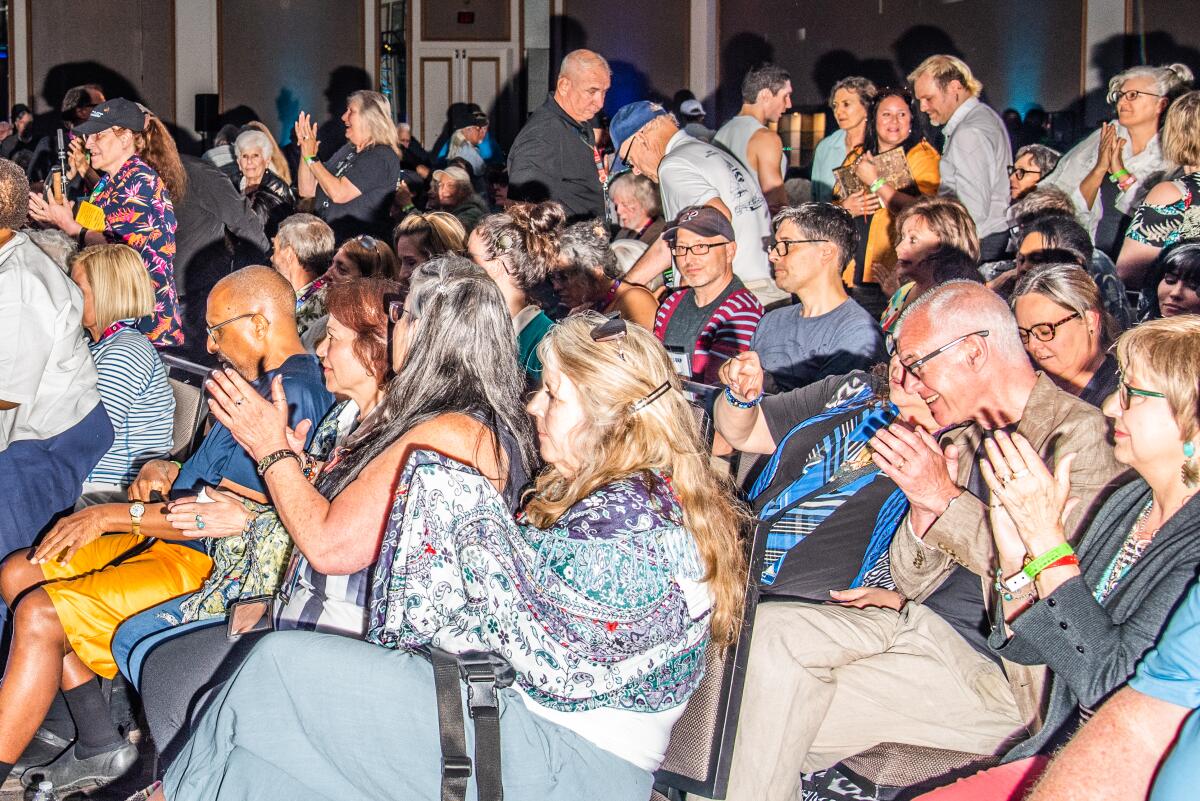
On Saturday, crowds wandered through two floors of the Esmeralda, a swanky resort between Palm Springs and the Coachella festival grounds. The audience ranged from witchy Highland Park Gen Z’ers to Nevada desert libertarian Boomers. From morning to night, they strolled between talks that ranged from the grounded (an interview with Harvard’s Loeb touching on his recent book “Interstellar”) to the starstruck (a “Legends: The Pioneers Who Paved The Way” panel with George Noory, of the long running news-of-the-weird conspiracy show “Coast To Coast AM,” and physicist and former CIA parapsychologist Russell Targ). The hosts of the popular true-crime and occult comedy show “Last Podcast on the Left” drew howls and groans when they smashed deep-cut UFO-sighting videos into (pixelated) clips of hardcore alien-themed porn.
Dave Magown, from Las Vegas, was at his first Contact, and felt heartened by everyone’s curiosity. His partner was an experiencer, he said, and he wanted to learn more to support her. “The people here are so open minded, it’s what’s missing in the world today,” he said. “They have the ability to see more than the average Joe. I plan to come every year, I’m gonna be more educated next time.”
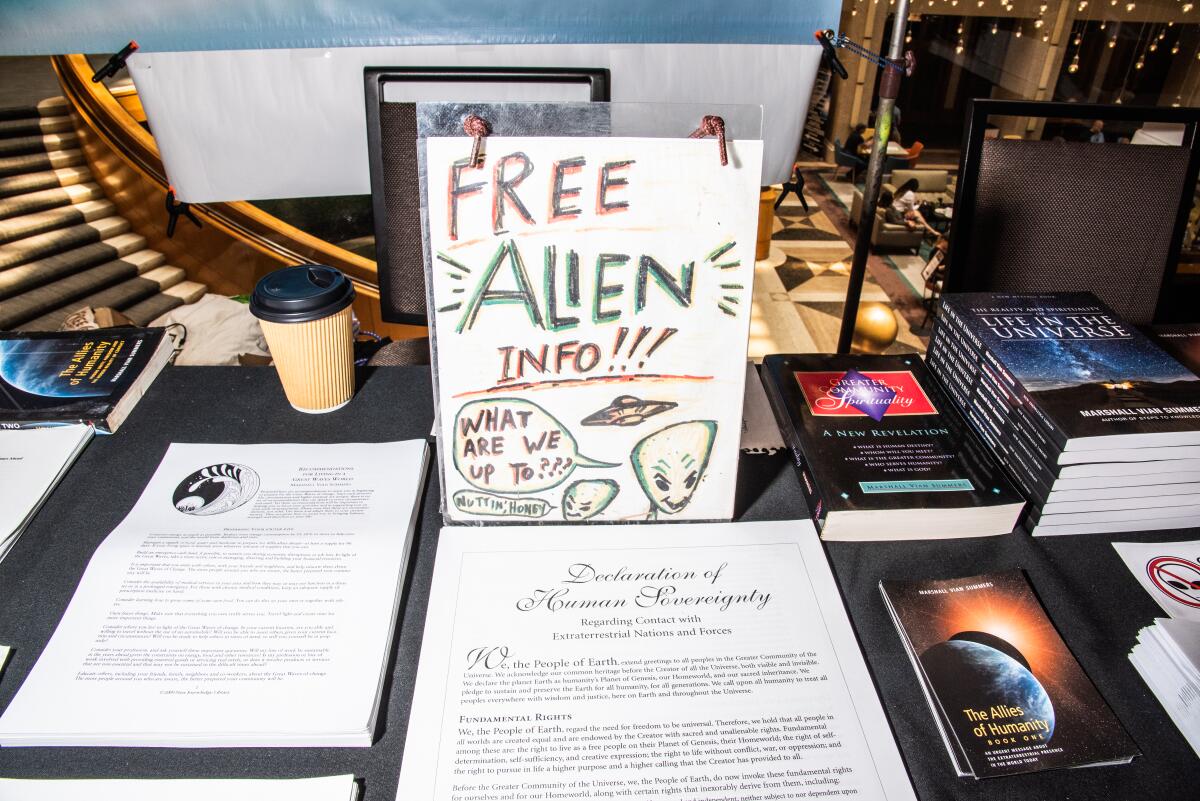
“The people here are so open-minded, it’s what’s missing in the world today,” said Dave Magown about Contact In The Desert. “They have the ability to see more than the average Joe.”
(David Vassalli / For The Times)
Regulars walked through the halls of crystal skulls and clairvoyant booths with the renewed vigor of being proved right, at least on some of it.
“I usually speak or sell these energy devices at these, it’s my favorite event of the year,” said Apolla Asteria, an esoteric YouTuber. “We’ve witnessed changes in the field of disclosure in the few years, with the UAP task force and the Pentagon reports. We’re getting the vibe that this is being taken seriously.”
Other Contact in the Desert veterans, such as L.A. musician Helena Reznor, are eager to move past staid government reports. “I think people are getting bored of the whole alien thing, we pretty much know there’s something else coming into our reality,” Reznor said. “It’s time to start looking more into portal activity and all of the different, strange intelligences that seem to be interacting with us.”
Shannon McNamara and Xander Gilbert traveled in from Denver for the convention. Gilbert had just left “a talk about Egypt where they said they were beaming people into space when they die and that’s why the Pharaohs are in pyramids,” he laughed. “Everything’s a fun story, even when its wacky.”
McNamara, a podcaster who covers celebrities and conspiracy theory culture, said she knew when to draw the line between silly and dangerous beliefs. “I go as deep as I can before they mention Jewish people and then I’m out,” she said. “Ever since 2020, conspiracy topics have popped off because people don’t trust the media, they don’t trust politicians, they don’t trust schools. All these systems have broken down, so people are like ‘Maybe I trust this author on Amazon with an e-book that resonates.’”
“And they want a community where like-minded weirdness resonates,” Gilbert added.
That was the conflict at this year’s Contact in the Desert. It is no longer just a fringe event where someone like Travis Walton, the mustachioed professed abductee portrayed in “Fire In the Sky,” is mobbed like Harry Styles. Its topics are no longer taboo in the mainstream.
Should its culture shift to more scientific inquiry, or towards fan service for its most devoted? Does an event like this have an obligation to police its far edges, or to cultivate them?
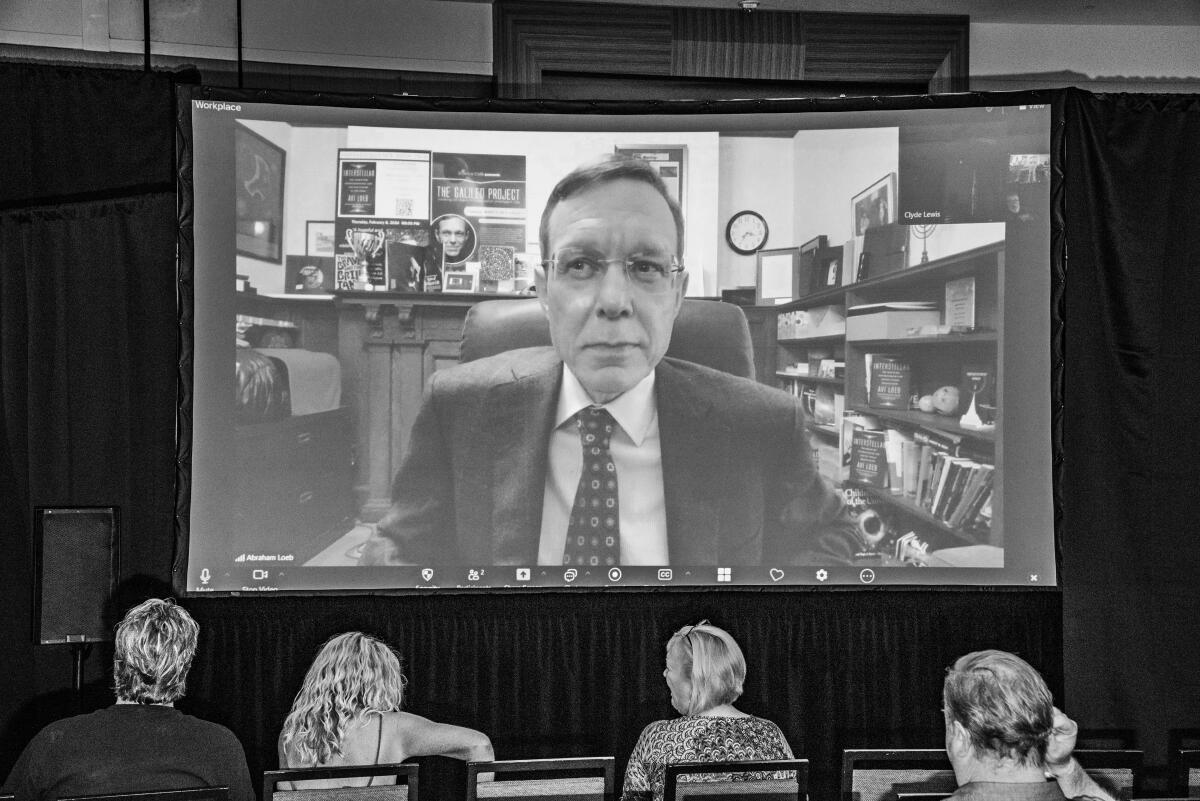
“If the government has classified information, they won’t release it. Why wait for the government to tell us what lies outside the solar system?” asked Harvard astrophysicist Avi Loeb before the Contact in the Desert convention in Indian Wells.
(David Vassalli / For The Times)
For Loeb, the director of Harvard’s Institute for Theory and Computation at the Harvard-Smithsonian Center for Astrophysics, who delivered a Zoom talk at Contact on Saturday, serious researchers into this field should expect healthy criticism.
“People invent virtual realities. AI has hallucinations. We live in a world where you don’t get feedback if you don’t speak with other people,” said Loeb in a phone call before the festival. “That’s become part of politics and polarization now, and it’s also part of science. That’s unfortunate, because science gives you the privilege of taking risks, making mistakes and learning.”
Loeb’s scientific credibility and Harvard perch made him a potent — if controversial — figure. His captivating 2021 book “Extraterrestrial” posited that Oumuamua, the first known interstellar object to enter our solar system, had evidence of being extraterrestrial technology. The book galvanized the field, became a bestseller and made him UFO-scene famous.
“The beauty of science is that there is one reality we share and can measure it with instruments,” Loeb said. “If the government has classified information, they won’t release it. Why wait for the government to tell us what lies outside the solar system?”
There are risks navigating a scene like Contact. Recently, Loeb caught blowback for appearing via Zoom before a Mexican congressional hearing about UAP where, later, a Ufologist presented “alien mummies” that were likely made of human and animal bones (“It was embarrassing,” Loeb said). Benjamin Fernando, a Johns Hopkins seismologist, recently said that seismic signals from a meteor crash Loeb was investigating were more likely due to a car backfiring.
“What a ridiculous statement,” Loeb laughed when asked about Fernando’s critique. “An eagle has crows on its back pecking at its neck. My goal is to rise to the level where the crows fall off.
“Copernicus’ book was banned for hundreds of years, but his ideas prevailed because people realized they were true,” he continued. “It’s a subject of great interest. Put some limits on this, but let’s explore it!”
“We’re so close to the finish line of disclosure,” UFO lobbyist Stephen Bassett said. “That’s what makes this the most extraordinary activist movement.”
(David Vassalli / For The Times)
For all the avant-garde amateur physics and brain-smoothing New Age thought at Contact, there was also real feeling that the world was being proven more complex and fantastical by the week.
If you couldn’t quite follow esoteric journalist Linda Moulton Howe’s thoughts about how pure bismuth could help negate gravity, you could appreciate the vim of Stephen Bassett, a UAP disclosure lobbyist with the Paradigm Research Group, racking up legislative wins.
“We’re so close to the finish line of disclosure,” Bassett said. “Until now it was as if you were arguing to end the embargo on Cuba, and the government’s position was ‘There’s no such thing as Cuba. Those photos are fake.’ That’s what makes this the most extraordinary activist movement.”
“The US government officially acknowledged that UFOs were real. Up until that point, everyone was struggling constantly to get their friends and neighbors to believe they weren’t crazy,” said Daniel Sheehan, an attorney who founded New Paradigm Institute, a UAP-focused policy group, after a colorful career of other activist litigation. After the dissolution of last year’s UAP Disclosure Act, he’s now lobbying Congress to establish an independent board that would gather and declassify information and protect whistleblowers.
“There’s a shift in consciousness here when people get together. Now they can talk to friends and neighbors about news reports,” Sheehan said. “There was this underworld club where they were oppressed in common. Now that’s been lifted, and they realize they’re going to have to do more work.”
The final goals of the movement — definitive proof and acknowledgment from government of the existence of extraterrestrial life — remain tantalizingly beyond the veil.
One hot topic at Contact was the whistleblower David Grusch, a former intelligence official and U.S. Air Force officer who set the UFO podcast world aflame with Congressional testimony that the government could be hiding recovered alien craft and bodies. (NASA administrator Bill Nelson, when asked about Grusch in a 2023 press conference, said “NASA is open and transparent in our data. He said he had a friend that knew where a warehouse was that had a UFO locked up. He also said he had another friend that said he had parts of an alien. Whatever he said, where’s the evidence?”)
There was no faster way to get sour looks at Contact than citing March’s AARO report, a paper from the Defense Department’s newly established All-domain Anomaly Resolution Office. The department said “AARO has found no verifiable evidence that any UAP sighting has represented extraterrestrial activity. AARO has found no verifiable evidence that the U.S. government or private industry has ever had access to extraterrestrial technology. AARO has found no indications that any information was illegally or inappropriately withheld from Congress.”
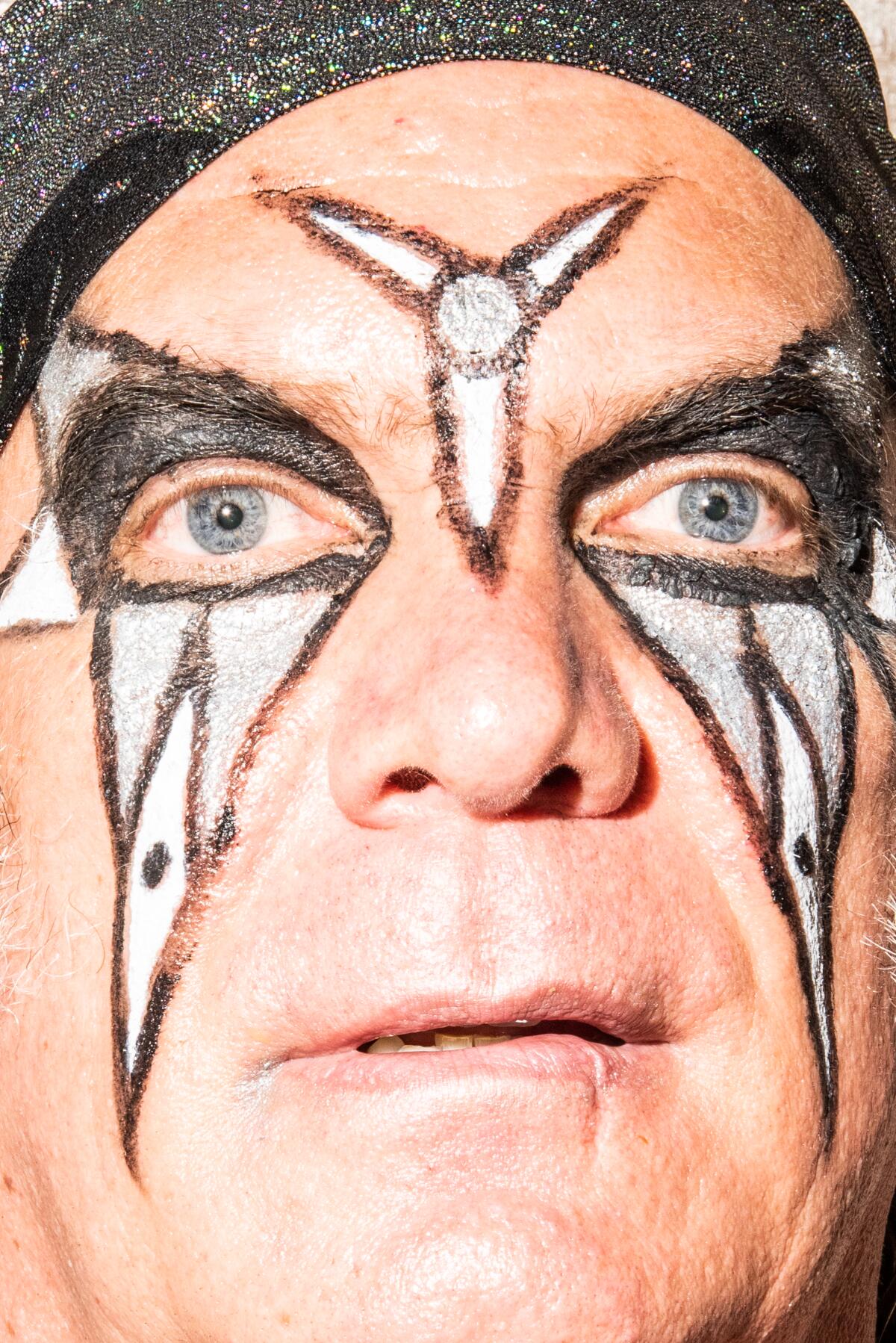
Rocky Angel looks to the skies at the Contact in the Desert convention in Indian Wells.
(David Vassalli / For The Times)
“I was so optimistic about AARO, but it was so dismissive,” Janix said. “It just felt like what the government did with Project Blue Book and the Condon Report. If this is all that AARO is, we need to go somewhere else.”
The government’s openness to the topic has Ufologists worried that a fragile consensus might end up in the culture-war morass — or pernicious conspiracies.
“The cynic in me says everything is political,” Pope said. “If Joe Biden said ‘We have proof of alien life,’ his opponents would say ‘Here comes the next COVID.’ We have rare bipartisanship around this issue, and we risk unraveling into conspiracy and deep hatreds. There is a conspiratorial wing that can breed extremism.”
As the lectures at Contact wound down into a boozy dance party with a live rock band, the crowd of Ufologists had wine-fueled disagreements: Did David Grusch have the evidence to back up his claims? Can the government be trusted to disclose what it knows?
One thing they were certain of, however, is that they were winning.
Late in the day, Whitley Strieber, the “Communion” author and legendary professed experiencer, opened the Legends of Ufology panel to thunderous applause.
“They tried so hard to wipe us out,” Strieber said, voice shaking with conviction. “And here we are.”


The Invite is a remake of the Spanish film The People Upstairs, itself based on a play by the same director Cesc Gay. With all remakes, the question is: What’s this version bringing to the table. In this case, it’s a rock solid cast with great chemistry and some very snappy direction by Olivia Wilde.
Joe (Seth Rogen) and Angela (Olivia Wilde) are a dysfunctional couple with some noisily amorous upstairs neighbours. They invite Hawk (Edward Norton) and Piña (Penélope Cruz) to dinner and hijinks ensue.
There’s a lot to like about The Invite. Each member of the cast is funny in their own way. Rogen plays his usual schlub but his character is more nuanced than usual, with the rapid-fire jokes masking a deep frustration and melancholy. Wilde‘s Angela is a persnickety neurotic, but it’s not hard to see why. Cruz plays a sultry therapist who’s in permanent flirt mode but is also holding something back. Norton steals the show with a quietly hilarious performance as a retired firefighter who is all too eager to share his new age insights. The way each person interacts with the other results in a rollercoaster of cringe comedy, acerbic satire and genuine gut-busters. This is a film that relies entirely on performance and actually succeeds.
The story itself is a little masterpiece. Adapted from Gay’s original by Rashida Jones and Will McCormack, the dialogue is quick, laden with not-very-subtextual motivations and always up to something. It’s very even-handed, and all the characters are sympathetic but flawed in amusing ways. Watching the increasingly desperate Joe and Angela bouncing off the Hawk and Piña is both funny and excruciating. Joe’s attraction to Piña is played fairly straight, but Angela’s attraction to Hawk becomes side-splitting as she pours out her soul to his Zen-calm ears and gets responses that make her even more attracted to him and by the end she’s practically hyperventilating.
The Invite does take something of a turn towards the end, although the film is in a state of continual twist throughout. This final shift throws the couples’ dysfunction into stark terms but doesn’t ruin anything. In the end, it moves from a somewhat misanthropic tone to a sincere and compassionate one. It skillfully makes you complicit in Joe and Angela’s spatting and then forces you to reconsider. The comedy is so intense throughout the film that when this happens it might lose some viewers, but it’s well-earned, true to the characters and it’s a very satisfying payoff.
The Invite is a small film that feels like a return to a better era in cinema. It’s a remake that is worth watching for its performances, and it’s very, very funny. It’s the sort of film that can be watched at home given its confined setting, but it generates enough laughs that seeing with an audience is a real pleasure.
Entertainment
Jesús Ortiz Paz and Jimmy Humilde took their legal dispute to Instagram. Here’s the breakdown
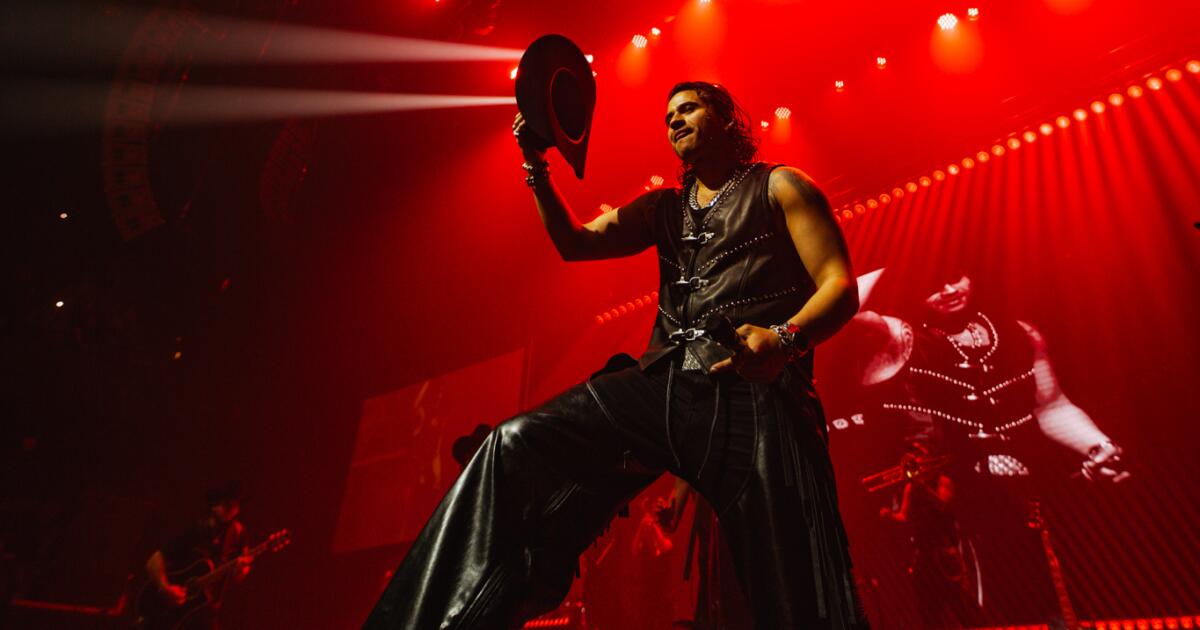
What started off as a trailblazing music partnership between música mexicana band Fuerza Regida and L.A. label Rancho Humilde has now fizzled into a sticky online drama.
On Saturday, Fuerza Regida frontman Jesús Ortiz Paz, better known as JOP, took to his personal Instagram account to post a statement addressing the band’s ongoing legal battle with the independent label led by music mogul Jimmy Humilde, who signed the band in 2018.
“To everyone who supports Fuerza Regida, you deserve to hear our music,” Ortiz Paz wrote in a public statement. “You deserve to see us perform at the World Cup. You deserve to listen to us on the MLB [Major League Baseball] album.”
This statement, which has since disappeared from JOP’s Instagram post, alleged that music created by the música mexicana group “keeps disappearing.”
Among the songs that have been taken down from streaming platforms by Rancho Humilde are “Triston,” “Todos nos Shipean” and “67,” according to the band’s publicist.
In September 2025, Rancho Humilde filed a lawsuit against Fuerza Regida, alleging breaches of contract for unilaterally collaborating with artists outside the label — such as Chino Pacas and Drake — and signing exclusive live performance deals with Apple Music and Live Nation.
Fuerza Regida countersued, alleging that Rancho Humilde withheld millions in royalties and attempted to “sabotage” the band’s success, including by neglecting to submit its music for consideration ahead of the 2024 Latin Grammys.
The case is still making its way through the courts.
“Everyone knows [what’s] going on[.] [You see] it [in the] media, [that’s] why I’m going to let justice do its job, everyone is going to know who you really are,” the post by JOP continued in both English and Spanish. “[He who has nothing to hide has nothing to fear], go let [Jimmy Humilde] & [Rancho Humilde] know how you feel, make your voice heard. Our story isn’t over I promise.”
Humilde responded to the artist in the comment section shortly after the post was made public.
“You asked me for a bigger [deal], I got it done. You asked me for your [masters], I fought to make it happen. You wanted to become one of the biggest artists in the [world], I have everything I had to help build that dream,” wrote Humilde.
“When you needed help, I didn’t just bring business. I brought my lawyers, my doctors, my relationships, my time, and my heart. I stood by you when it mattered the most,” Humilde continued. “You walked away with the biggest check of your [life,] over $50 million. I never complained. I was happy to see you win because your success was our success.”
“What hurts is seeing everything we’ve built together reduced to a public narrative that doesn’t tell the whole story. If you believe people deserve the truth, then honor the agreement we made. Complete the contract the same way I honored every commitment I made to you. I never stopped looking out for you. I only ask that you do the same. [He who has nothing to hide has nothing to fear].”
In a separate comment — which Humilde uploaded to his own Instagram account with Fuerza Regida’s own song “El Dinero Los Cambio” (which describes how money can change someone) — the label head pushed back on allegations of robbery: “I robbed you? Robbed you of what, fool. You didn’t even have a dollar for me to rob.”
The music mogul also accused JOP — who founded his own label Street Mob Records in 2018 — of sabotaging his own bandmates. “Let’s talk about [how] your own band members went from partners to being employees. They didn’t have much of a choice.”
“And let’s not forget I helped you land a $15 million deal for your label. After that, how you choose to take care of your artists is on you. [Let’s] ask Chinito [Pacas], Calle [24] and Armenta!!” added Humilde, including the names of artists signed to Street Mob Records.
JOP of Fuerza Regida performs at South By Southwest on March 13 in Austin, Texas.
(Cat Cardenas / For De Los)
In an email to De Los, Humilde’s lawyer, Mike Trauben, pushed back on claims that Rancho Humilde is trying to stop Fuerza Regida from making music and obtaining other opportunities.
They cite two recent deals that were approved by Rancho Humilde, including Fuerza Regida’s appearance on “Grand Theft Auto” and in the online video game “Fortnite,” which aligns with the contractual framework both parties had negotiated.
With regards to the proposed MLB and FIFA collaborations, Humilde’s council said that Fuerza Regida sought to prevent Rancho Humilde from exercising its claimed contractual rights, which was ultimately denied by a federal court.
The reason certain songs were removed from streaming platforms is because Fuerza Regida chose to release music outside the agreed Rancho/Sony distribution structure and without the approvals required under the parties’ agreements, per Humilde’s lawyers.
“Ultimately, this case is not about stopping an artist from succeeding,” wrote Trauben to The Times. “It is about whether sophisticated parties are required to honor the agreements they voluntarily negotiated after success had already arrived.”
According to Trauben, Rancho Humilde and Fuerza Regida, both parties entered a completely new agreement in 2022 that fundamentally restructured their entire business relationship, fully terminating the initial 2018 contract in place. As a result, Fuerza Regida received a flat million-dollar bonus, Rancho Humilde converted its ownership of existing masters into a 50/50 structure and the two entered into a new agreement, which Humilde’s lawyers claim favors Fuerza Regida.
“This case is not about whether artists should have rights. They absolutely should. Nor is it about preventing Fuerza Regida from making music,” wrote Trauben. “Rather, this case asks a much broader question that affects the entire music industry: Do contracts still matter after artist success arrives?”
The Times reached out to Fuerza Regida’s attorney but did not hear back as of this publication.

NEW YORK (OSV News) – At what is meant to be a poignant moment in the DC Comics adaptation “Supergirl” (Warner Bros.), the title character, played by Milly Alcock, is told by her mother (Emily Beecham) that she doesn’t have to be nice but she must be good. The recipient of this advice takes it to heart in a way that lends the whole film an unpleasant tone.
We’re not talking Deadpool depths of obscene snark here. Yet scrappy Supergirl, aka Kara Zor-El, in contrast to her affable cousin — and fellow Kryptonian — Superman (David Corenswet), does not come across as especially likeable.
Nor is she a figure to be imitated since, before she embarks on the quest to which most of the running time is devoted, early scenes show her waking up with a succession of staggering hangovers. She gets blotto, we later learn, in an effort to blot out her troubled past. The only positive ingredient in her current life is the bond she shares with her beloved dog, Krypto.
So when evil alien Krem of the Yellow Hills (Matthias Schoenaerts) wounds Krypto with a poisoned dart, leaving him with only hours to live, Supergirl is desperate to help the pup survive. Learning that Krem carries the antidote with him wherever he goes, she sets off on an interplanetary hunt for the villain, racing against time.
Supergirl has already crossed paths with another of Krem’s victims, Ruthye (Eve Ridley). Having watched as Krem slaughtered her entire family, Ruthye is out for revenge and wants to join forces with Supergirl.
Since Ruthye, though courageous, is undersized and completely untrained for combat, Supergirl initially tries to ditch her. But Ruthye is not to be so easily rebuffed.
The unlikely duo eventually acquire an informal ally in the person of cigar-chomping, motorcycle-riding freelance warrior Lobo (Jason Momoa). Lobo has reasons of his own for hating the band of brigands Krem leads.
As scripted by Ana Nogueira, director Craig Gillespie’s scifi adventure includes more than one exchange in which Supergirl warns Ruthye about the morally corrupting effects of exacting vengeance. Yet this thoroughly respectable ethical message is completely undermined as the action reaches its climax.
“Supergirl” may not be a dose of Kryptonite. But it’s no energy-infusing sunbath either.
The film contains much harsh but bloodless violence, a scene of urination, a passing reference to nonscriptural religious ideas, a couple of mild oaths, several uses each of crude and crass language and an obscene gesture. The OSV News classification is A-III – adults. The Motion Picture Association rating is PG-13 — parents strongly cautioned. Some material may be inappropriate for children under 13.
Read More Movie & Television Reviews
Copyright © 2026 OSV News
-

 World7 minutes ago
DR Congo says 1,307 Ebola cases confirmed, including 377 deaths
-
 News31 minutes ago
Michigan governor threatens to pull troops from D.C. if used for Trump task force
-

 New York2 hours ago
Metropolitan Diary Challenge Day 2: How to Write Your N.Y. Story
-

 Los Angeles, Ca2 hours ago
Company has weeks to complete cleanup of Boyle Heights warehouse fire, officials announce
-

 Detroit, MI2 hours ago
18 New Kid-Friendly Places That Opened in Metro Detroit in 2026 (So Far!)
-

 San Francisco, CA2 hours ago
Anza expedition celebrates 250th anniversary in San Francisco
-

 Dallas, TX3 hours ago
Preston Hollow residents oppose proposed $800 million mixed-use development in Dallas, survey reveals
-

 Miami, FL3 hours ago
Bradley Beal to Miami Heat rumors draw skepticism

