Entertainment
'American Idol' alum Mandisa's cause of death revealed: complications of obesity

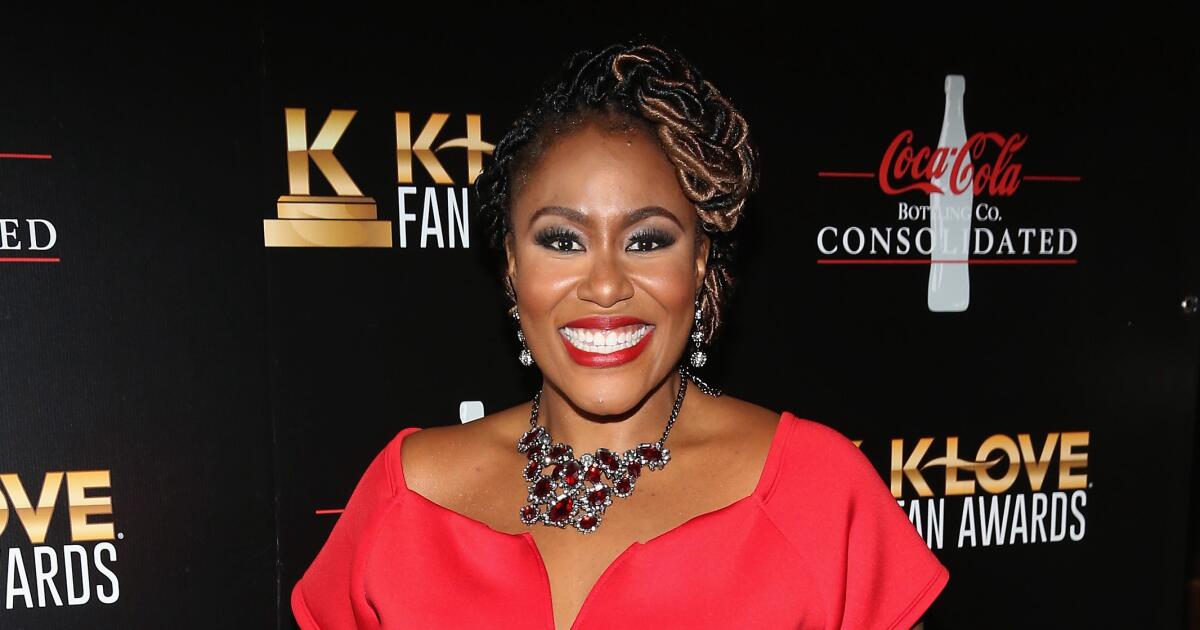
Mandisa, the Grammy-winning Christian music singer and former “American Idol” contestant, died in April from complications of class III obesity, according to an autopsy report.
Documents obtained by People listed the singer’s manner of death as natural and noted that the 47-year-old was found dead in her Tennessee home on April 18. The singer “was last known alive approximately three weeks” before her death, the report said.
A representative for Mandisa, born Mandisa Lynn Hundley, confirmed the singer’s death to The Times on April 19. “At this time, we do not know the cause of death or any further details,” the representative said at the time.
Mandisa’s autopsy report confirms her father John Hundley‘s belief that his daughter “did not [harm herself],” which he expressed to Fox News Digital in May. He told the outlet that detectives “looked for signs that she may have harmed herself, and there were no signs to indicate that she did anything” of that nature. During a celebration of Mandisa’s life in late April, Hundley said he believed his daughter “fell down in her bedroom.”
Days after news of the “Overcomer” singer’s death broke, Tennessee police confirmed to The Times that there were no signs of foul play.
Cleveland Clinic defines class III obesity as a “chronic condition” in which a person has a body mass index of 40 or higher, or a BMI of 35 or higher while experiencing obesity-related health conditions. “Class III obesity can contribute to several serious health conditions, such as Type 2 diabetes and heart disease,” the clinic says.
Mandisa was a five-time Grammy nominee who earned her first award for her 2014 album, “Overcomer.” While her legacy includes songs “Good Morning” and “You Keep Hope Alive,” she was most widely known for showcasing her talents on Season 5 of “American Idol” in 2006.
The long-running singing competition remembered Mandisa in an Instagram statement and with a musical tribute by former contestants Melinda Doolittle, Colton Dixon and Danny Gokey in an “Idol” episode that aired in late April. The singers, all dressed in white, delivered a cover of Mary Mary’s “Shackles (Praise You),” which Mandisa performed during her time on the series.
“I think she came in praising, I think she left praising,” Dixon said after the performance. “We’re gonna miss her, but our loss is heaven’s gain.”
Times staff writer Eva Hartman contributed to this report.

Entertainment
Jesús Ortiz Paz and Jimmy Humilde took their legal dispute to Instagram. Here’s the breakdown
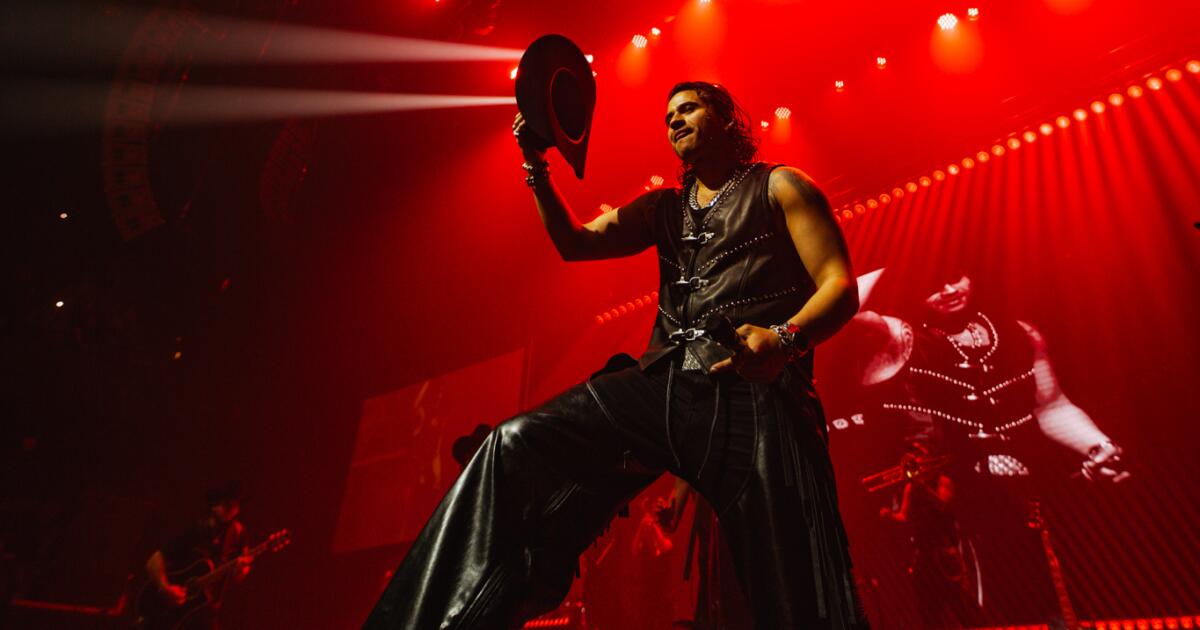
What started off as a trailblazing music partnership between música mexicana band Fuerza Regida and L.A. label Rancho Humilde has now fizzled into a sticky online drama.
On Saturday, Fuerza Regida frontman Jesús Ortiz Paz, better known as JOP, took to his personal Instagram account to post a statement addressing the band’s ongoing legal battle with the independent label led by music mogul Jimmy Humilde, who signed the band in 2018.
“To everyone who supports Fuerza Regida, you deserve to hear our music,” Ortiz Paz wrote in a public statement. “You deserve to see us perform at the World Cup. You deserve to listen to us on the MLB [Major League Baseball] album.”
This statement, which has since disappeared from JOP’s Instagram post, alleged that music created by the música mexicana group “keeps disappearing.”
Among the songs that have been taken down from streaming platforms by Rancho Humilde are “Triston,” “Todos nos Shipean” and “67,” according to the band’s publicist.
In September 2025, Rancho Humilde filed a lawsuit against Fuerza Regida, alleging breaches of contract for unilaterally collaborating with artists outside the label — such as Chino Pacas and Drake — and signing exclusive live performance deals with Apple Music and Live Nation.
Fuerza Regida countersued, alleging that Rancho Humilde withheld millions in royalties and attempted to “sabotage” the band’s success, including by neglecting to submit its music for consideration ahead of the 2024 Latin Grammys.
The case is still making its way through the courts.
“Everyone knows [what’s] going on[.] [You see] it [in the] media, [that’s] why I’m going to let justice do its job, everyone is going to know who you really are,” the post by JOP continued in both English and Spanish. “[He who has nothing to hide has nothing to fear], go let [Jimmy Humilde] & [Rancho Humilde] know how you feel, make your voice heard. Our story isn’t over I promise.”
Humilde responded to the artist in the comment section shortly after the post was made public.
“You asked me for a bigger [deal], I got it done. You asked me for your [masters], I fought to make it happen. You wanted to become one of the biggest artists in the [world], I have everything I had to help build that dream,” wrote Humilde.
“When you needed help, I didn’t just bring business. I brought my lawyers, my doctors, my relationships, my time, and my heart. I stood by you when it mattered the most,” Humilde continued. “You walked away with the biggest check of your [life,] over $50 million. I never complained. I was happy to see you win because your success was our success.”
“What hurts is seeing everything we’ve built together reduced to a public narrative that doesn’t tell the whole story. If you believe people deserve the truth, then honor the agreement we made. Complete the contract the same way I honored every commitment I made to you. I never stopped looking out for you. I only ask that you do the same. [He who has nothing to hide has nothing to fear].”
In a separate comment — which Humilde uploaded to his own Instagram account with Fuerza Regida’s own song “El Dinero Los Cambio” (which describes how money can change someone) — the label head pushed back on allegations of robbery: “I robbed you? Robbed you of what, fool. You didn’t even have a dollar for me to rob.”
The music mogul also accused JOP — who founded his own label Street Mob Records in 2018 — of sabotaging his own bandmates. “Let’s talk about [how] your own band members went from partners to being employees. They didn’t have much of a choice.”
“And let’s not forget I helped you land a $15 million deal for your label. After that, how you choose to take care of your artists is on you. [Let’s] ask Chinito [Pacas], Calle [24] and Armenta!!” added Humilde, including the names of artists signed to Street Mob Records.
JOP of Fuerza Regida performs at South By Southwest on March 13 in Austin, Texas.
(Cat Cardenas / For De Los)
In an email to De Los, Humilde’s lawyer, Mike Trauben, pushed back on claims that Rancho Humilde is trying to stop Fuerza Regida from making music and obtaining other opportunities.
They cite two recent deals that were approved by Rancho Humilde, including Fuerza Regida’s appearance on “Grand Theft Auto” and in the online video game “Fortnite,” which aligns with the contractual framework both parties had negotiated.
With regards to the proposed MLB and FIFA collaborations, Humilde’s council said that Fuerza Regida sought to prevent Rancho Humilde from exercising its claimed contractual rights, which was ultimately denied by a federal court.
The reason certain songs were removed from streaming platforms is because Fuerza Regida chose to release music outside the agreed Rancho/Sony distribution structure and without the approvals required under the parties’ agreements, per Humilde’s lawyers.
“Ultimately, this case is not about stopping an artist from succeeding,” wrote Trauben to The Times. “It is about whether sophisticated parties are required to honor the agreements they voluntarily negotiated after success had already arrived.”
According to Trauben, Rancho Humilde and Fuerza Regida, both parties entered a completely new agreement in 2022 that fundamentally restructured their entire business relationship, fully terminating the initial 2018 contract in place. As a result, Fuerza Regida received a flat million-dollar bonus, Rancho Humilde converted its ownership of existing masters into a 50/50 structure and the two entered into a new agreement, which Humilde’s lawyers claim favors Fuerza Regida.
“This case is not about whether artists should have rights. They absolutely should. Nor is it about preventing Fuerza Regida from making music,” wrote Trauben. “Rather, this case asks a much broader question that affects the entire music industry: Do contracts still matter after artist success arrives?”
The Times reached out to Fuerza Regida’s attorney but did not hear back as of this publication.

NEW YORK (OSV News) – At what is meant to be a poignant moment in the DC Comics adaptation “Supergirl” (Warner Bros.), the title character, played by Milly Alcock, is told by her mother (Emily Beecham) that she doesn’t have to be nice but she must be good. The recipient of this advice takes it to heart in a way that lends the whole film an unpleasant tone.
We’re not talking Deadpool depths of obscene snark here. Yet scrappy Supergirl, aka Kara Zor-El, in contrast to her affable cousin — and fellow Kryptonian — Superman (David Corenswet), does not come across as especially likeable.
Nor is she a figure to be imitated since, before she embarks on the quest to which most of the running time is devoted, early scenes show her waking up with a succession of staggering hangovers. She gets blotto, we later learn, in an effort to blot out her troubled past. The only positive ingredient in her current life is the bond she shares with her beloved dog, Krypto.
So when evil alien Krem of the Yellow Hills (Matthias Schoenaerts) wounds Krypto with a poisoned dart, leaving him with only hours to live, Supergirl is desperate to help the pup survive. Learning that Krem carries the antidote with him wherever he goes, she sets off on an interplanetary hunt for the villain, racing against time.
Supergirl has already crossed paths with another of Krem’s victims, Ruthye (Eve Ridley). Having watched as Krem slaughtered her entire family, Ruthye is out for revenge and wants to join forces with Supergirl.
Since Ruthye, though courageous, is undersized and completely untrained for combat, Supergirl initially tries to ditch her. But Ruthye is not to be so easily rebuffed.
The unlikely duo eventually acquire an informal ally in the person of cigar-chomping, motorcycle-riding freelance warrior Lobo (Jason Momoa). Lobo has reasons of his own for hating the band of brigands Krem leads.
As scripted by Ana Nogueira, director Craig Gillespie’s scifi adventure includes more than one exchange in which Supergirl warns Ruthye about the morally corrupting effects of exacting vengeance. Yet this thoroughly respectable ethical message is completely undermined as the action reaches its climax.
“Supergirl” may not be a dose of Kryptonite. But it’s no energy-infusing sunbath either.
The film contains much harsh but bloodless violence, a scene of urination, a passing reference to nonscriptural religious ideas, a couple of mild oaths, several uses each of crude and crass language and an obscene gesture. The OSV News classification is A-III – adults. The Motion Picture Association rating is PG-13 — parents strongly cautioned. Some material may be inappropriate for children under 13.
Read More Movie & Television Reviews
Copyright © 2026 OSV News

A crazed newscaster prompts his viewers to do a wild thing: open their windows and shout, “I’m as mad as hell and I’m not going to take this anymore.” And they do it, from Atlanta to Baton Rouge, so much yelling. It’s a prescient scene in “Network” from 1976, the year of America’s bicentennial. Fast forward to the semiquincentennial and Americans holler versions of that slogan through windows in real life, just on phones and computers.
When the national mood wobbles, we turn to the arts, which have the power to free buried desires, soothe souls and cross divides. So as America turns 250, the Entertainment team considered how this country’s ups and downs have shaped what we watch, listen to and read. Throughout this week those stories will appear here. Bookmark this page to come back for more.
To start, “Network” makes our list of movies that illustrate frictional historical moments. (“Team America: World Police” does too so expect range!) We also spotlight a new generation of playwrights reimagining Americanness with a sense of hope that America’s best years are still ahead of us. —Brittany Levine Beckman, Entertainment and Features editor

-

 Sports18 seconds ago
Lions release Terrion Arnold after bond set at $1 million in armed robbery, kidnapping case
-

 Technology7 minutes ago
Texas data breach hits 3M license customers
-
 Business10 minutes ago
Rocket Lab enters satellite communications market with $8-billion deal
-
Entertainment15 minutes ago
Jesús Ortiz Paz and Jimmy Humilde took their legal dispute to Instagram. Here’s the breakdown
-

 Lifestyle22 minutes ago
Inside Hearts On Fire’s Plan For a New Era of Diamond Jewellery
-
 Politics25 minutes ago
Anthropic partners with California to expand AI use by government workers
-
 Sports37 minutes ago
Lions release cornerback Terrion Arnold soon after judge sets his bond at $1 million
-

 World45 minutes ago
EU will ‘come to its senses’ on Israel, former Netanyahu adviser says

