Entertainment
2024 Tony Awards winners list: 'Stereophonic,' 'The Outsiders,' Jeremy Strong, Daniel Radcliffe

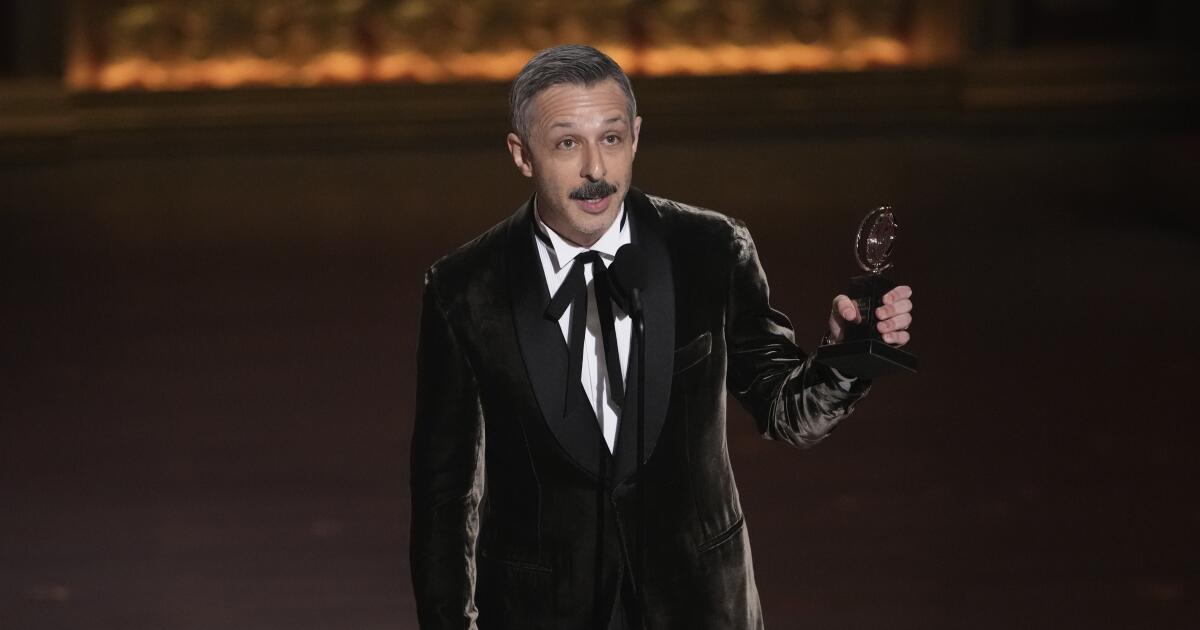
David Adjmi’s “Stereophonic” scored five Tony Awards including best play, and “The Outsiders” took home four trophies including an upset win for best musical as Broadway honored its finest on Sunday night.
Jonathan Groff won lead actor in a musical and co-star Daniel Radcliffe won featured actor for “Merrily We Roll Along,” which took home four awards total including best revival of a musical. Heading into the ceremony, the Alicia Keys musical “Hell’s Kitchen” and “Stereophonic” led with 13 nominations each, and a starry list of contenders included Eddie Redmayne for “Cabaret at the Kit Kat Club,” Jessica Lange and Jim Parsons for “Mother Play,” Rachel McAdams for “Mary Jane,” Leslie Odom Jr. for “Purlie Victorious,” and Sarah Paulson and Corey Stoll for “Appropriate.” The ceremony can now be streamed on demand; here’s how.
The complete winners list:
The company of “The Outsiders” performs during the 77th Tony Awards on Sunday.
(Charles Sykes / Invision / AP)
Best musical
“Hell’s Kitchen”
“Illinoise”
WINNER — “The Outsiders”
“Suffs”
“Water for Elephants”
Best play
“Jaja’s African Hair Braiding”
“Mary Jane”
“Mother Play”
“Prayer for the French Republic”
WINNER — “Stereophonic”
Best revival of a musical
“Cabaret at the Kit Kat Club”
“Gutenberg! The Musical!”
WINNER — “Merrily We Roll Along”
“The Who’s Tommy”
Best revival of a play
“An Enemy of the People”
WINNER — “Appropriate”
“Purlie Victorious: A Non-Confederate Romp Through the Cotton Patch”
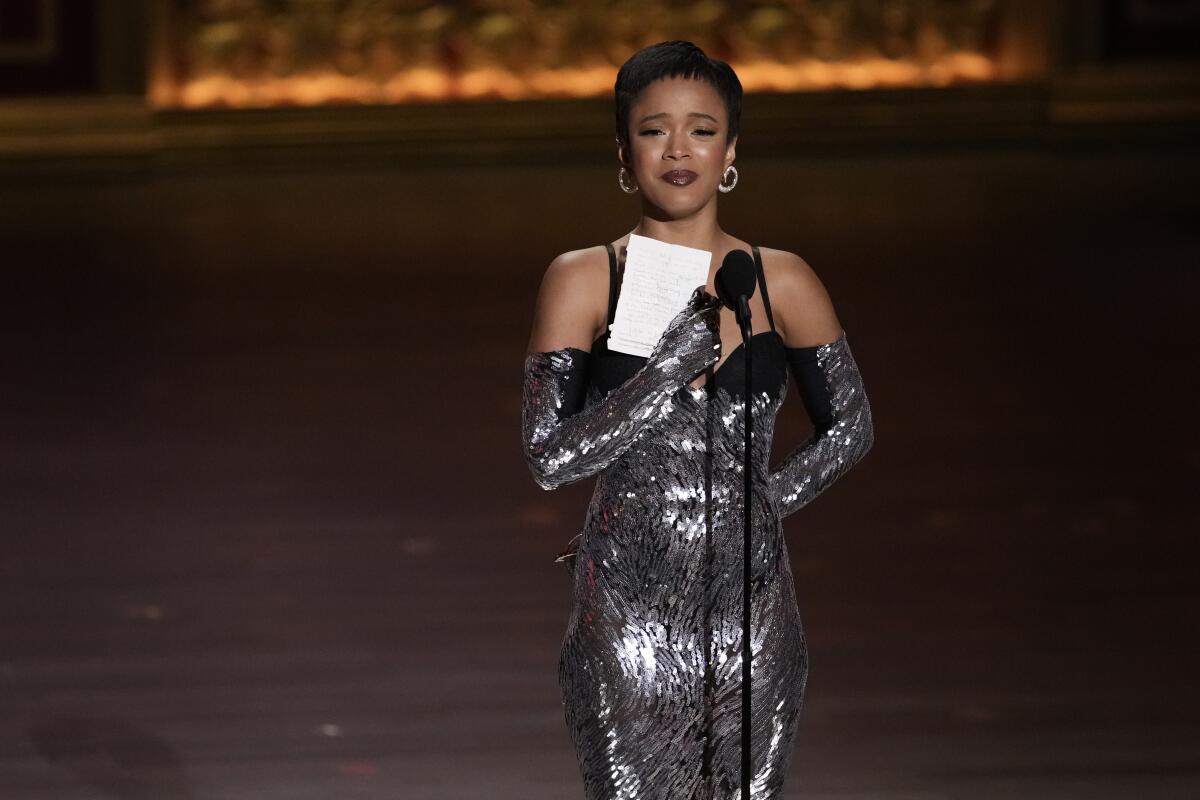
In the most moving speech of the night, Maleah Joi Moon accepts the Tony for lead actress in a musical for “Hell’s Kitchen.”
(Charles Sykes / Invision / AP)
Lead actress in a musical
Eden Espinosa, “Lempicka”
WINNER — Maleah Joi Moon, “Hell’s Kitchen”
Kelli O’Hara, “Days of Wine and Roses”
Maryann Plunkett, “The Notebook”
Gayle Rankin, “Cabaret at the Kit Kat Club”
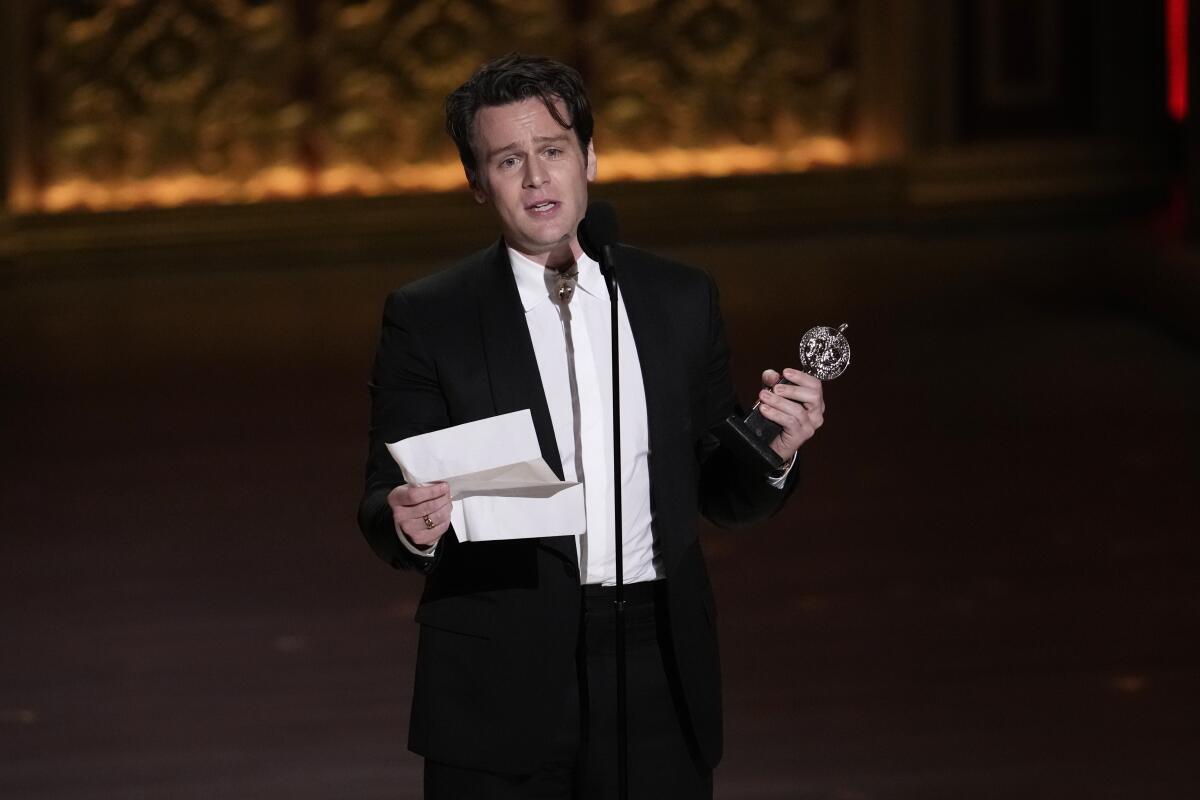
An emotional Jonathan Groff accepts the award for lead actor in a musical for “Merrily We Roll Along.”
(Charles Sykes / Invision / AP)
Lead actor in a musical
Brody Grant, “The Outsiders”
WINNER — Jonathan Groff, “Merrily We Roll Along”
Dorian Harewood, “The Notebook”
Brian D’Arcy James, “Days of Wine and Roses”
Eddie Redmayne, “Cabaret at the Kit Kat Club”
Lead actress in a play
Betsy Aidem, “Prayer for the French Republic”
Jessica Lange, “Mother Play”
Rachel McAdams, “Mary Jane”
WINNER — Sarah Paulson, “Appropriate”
Amy Ryan, “Doubt: A Parable”
Lead actor in a play
William Jackson Harper, “Uncle Vanya”
Leslie Odom Jr., “Purlie Victorious”
Liev Schreiber, “Doubt: A Parable”
WINNER — Jeremy Strong, “An Enemy of the People”
Michael Stuhlbarg, “Patriots”
Features actress in a play
Quincy Tyler Bernstine, “Doubt: A Parable”
Juliana Canfield, “Stereophonic”
Celia Keenan-Bolger, “Mother Play”
Sarah Pidgeon, “Stereophonic”
WINNER — Kara Young, “Purlie Victorious: A Non-Confederate Romp Through the Cotton Patch”
Featured actor in a play
WINNER — Will Brill, “Stereophonic”
Eli Gelb, “Stereophonic”
Jim Parsons, “Mother Play”
Tom Pecinka, “Stereophonic”
Corey Stoll, “Appropriate”
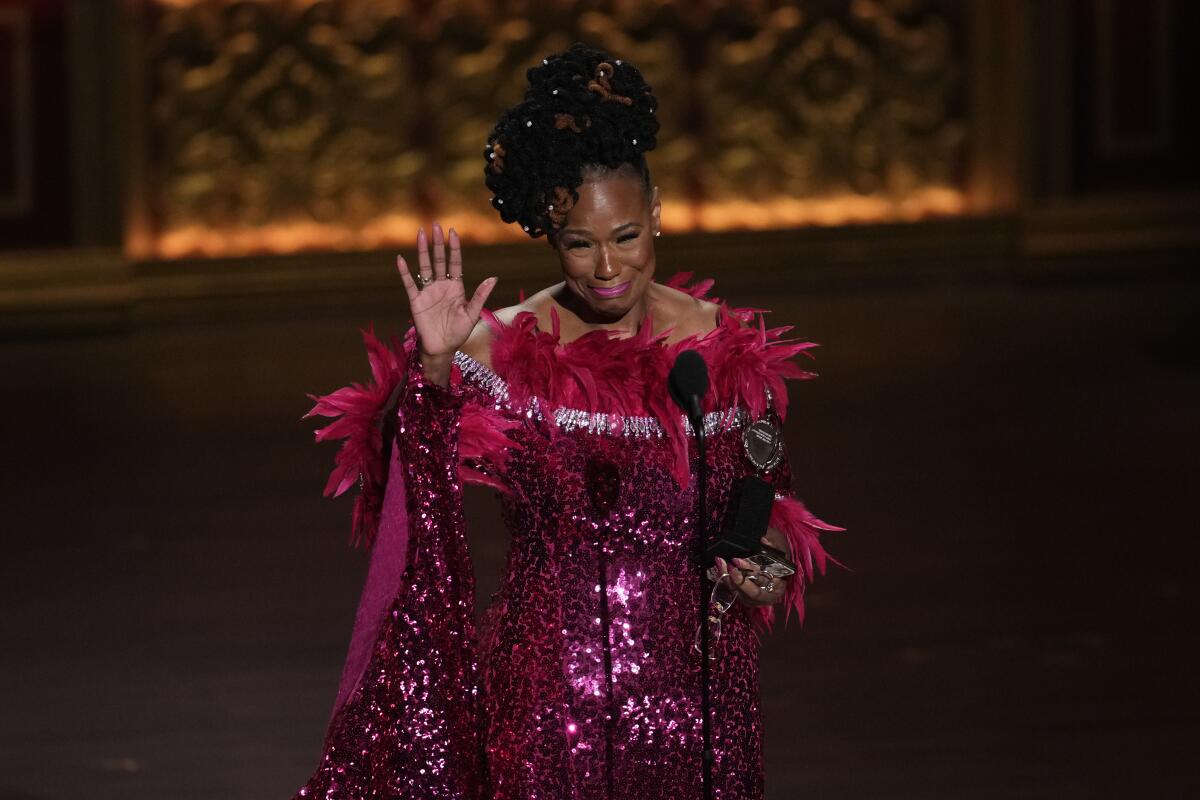
Theater veteran Kecia Lewis, winner for featured actress in a musical for “Hell’s Kitchen.”
(Charles Sykes / Invision / AP)
Featured actress in a musical
Shoshana Bean, “Hell’s Kitchen”
Amber Iman, “Lempicka”
Nikki M. James, “Suffs”
Leslie Rodriguez Kritzer, “Monty Python’s Spamalot”
WINNER — Kecia Lewis, “Hell’s Kitchen”
Lindsay Mendez, “Merrily We Roll Along”
Bebe Neuwirth, “Cabaret at the Kit Kat Club”
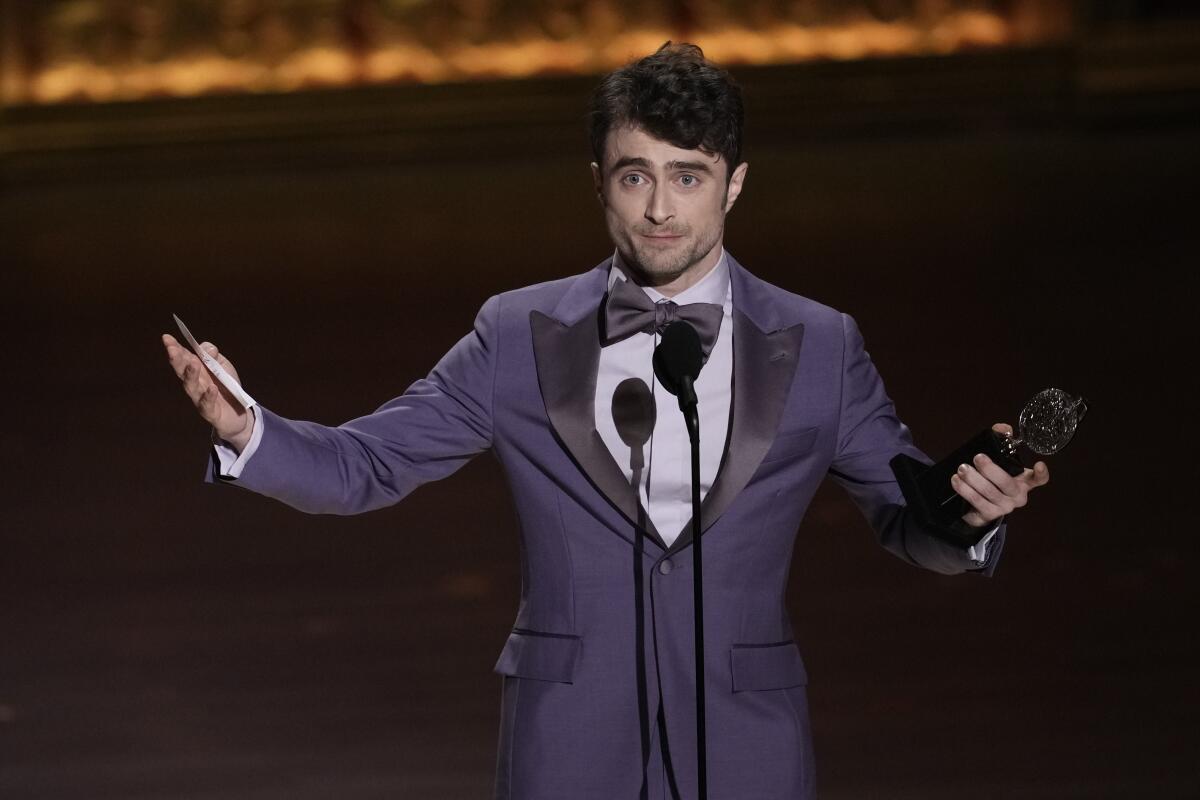
Daniel Radcliffe accepts the Tony Award for best actor in a featured role in a musical for “Merrily We Roll Along.”
(Charles Sykes / Invision / AP)
Featured actor in a musical
Roger Bart, “Back to the Future: The Musical”
Joshua Boone, “The Outsiders”
Brandon Victor Dixon, “Hell’s Kitchen”
Sky Lakota-Lynch, “The Outsiders”
WINNER — Daniel Radcliffe, “Merrily We Roll Along”
Steven Skybell, “Cabaret at the Kit Kat Club”
Direction of a play
WINNER — Daniel Aukin, “Stereophonic”
Anne Kauffman, “Mary Jane”
Kenny Leon, “Purlie Victorious: A Non-Confederate Romp Through the Cotton Patch”
Lila Neugebauer, “Appropriate”
Whitney White, “Jaja’s African Hair Braiding”
Direction of a musical
Maria Friedman, “Merrily We Roll Along”
Michael Greif, “Hell’s Kitchen”
Leigh Silverman, “Suffs”
Jessica Stone, “Water for Elephants”
WINNER — Danya Taymor, “The Outsiders”
Book of a musical
Kristoffer Diaz, “Hell’s Kitchen”
Bekah Brunstetter, “The Notebook”
Adam Rapp and Justin Levine, “The Outsiders”
WINNER — Shaina Taub, “Suffs”
Rick Elice, “Water for Elephants”
Orchestrations
Timo Andres, “Illinoise”
Will Butler and Justin Craig, “Stereophonic”
Justin Levine, Matt Hinkley and Jamestown Revival (Jonathan Clay and Zach Chance), “The Outsiders”
Tom Kitt and Adam Blackstone, “Hell’s Kitchen”
WINNER — Jonathan Tunick, “Merrily We Roll Along”
Choreography
Annie-B Parson, “Here Lies Love”
Camille A. Brown, “Hell’s Kitchen”
Rick Kuperman and Jeff Kuperman, “The Outsiders”
WINNER — Justin Peck, “Illinoise”
Jesse Robb and Shana Carroll, “Water for Elephants”
Scenic design of a play
dots, “Appropriate”
dots, “An Enemy of the People”
Derek McLane, “Purlie Victorious: A Non-Confederate Romp Through the Cotton Patch”
David Zinn, “Jaja’s African Hair Braiding”
WINNER — David Zinn, “Stereophonic”
Scenic design of a musical
AMP featuring Tatiana Kahvegian, “The Outsiders”
Robert Brill and Peter Nigrini, “Hell’s Kitchen”
Takeshi Kata, “Water for Elephants”
David Korins, “Here Lies Love”
Riccardo Hernández and Peter Nigrini, “Lempicka”
Tim Hatley and Finn Ross, “Back to the Future: The Musical”
WINNER — Tom Scutt, “Cabaret at the Kit Kat Club”
Costume design of a play
Dede Ayite, “Appropriate”
WINNER — Dede Ayite, “Jaja’s African Hair Braiding”
Enver Chakartash, “Stereophonic”
Emilio Sosa, “Purlie Victorious: A Non-Confederate Romp Through the Cotton Patch”
David Zinn, “An Enemy of the People”
Costume design of a musical
Dede Ayite, “Hell’s Kitchen”
WINNER — Linda Cho, “The Great Gatsby”
David Israel Reynoso, “Water for Elephants”
Tom Scutt, “Cabaret at the Kit Kat Club”
Paul Tazewell, “Suffs”
Lighting design of a play
Isabella Byrd, “An Enemy of the People”
Amith Chandrashaker, “Prayer for the French Republic”
Jiyoun Chang, “Stereophonic”
WINNER — Jane Cox, “Appropriate”
Natasha Katz, “Grey House”
Lighting design of a musical
Brandon Stirling Baker, “Illinoise”
Isabella Byrd, “Cabaret at the Kit Kat Club”
Natasha Katz, “Hell’s Kitchen”
Bradley King and David Bengali, “Water for Elephants”
WINNER — Brian MacDevitt and Hana S. Kim, “The Outsiders”
Sound design of a play
Justin Ellington and Stefania Bulbarella, “Jaja’s African Hair Braiding”
Leah Gelpe, “Mary Jane”
Tom Gibbons, “Grey House”
Bray Poor and Will Pickens, “Appropriate”
WINNER — Ryan Rumery, “Stereophonic”
Sound design of a musical
M.L. Dogg and Cody Spencer, “Here Lies Love”
Kai Harada, “Merrily We Roll Along”
Nick Lidster for Autograph, “Cabaret at the Kit Kat Club”
Gareth Owen, “Hell’s Kitchen”
WINNER — Cody Spencer, “The Outsiders”
Original score (music and/or lyrics) written for the theater
“Days of Wine and Roses”
Music & Lyrics: Adam Guettel
“Here Lies Love”
Music: David Byrne and Fatboy Slim
Lyrics: David Byrne
“The Outsiders”
Music & Lyrics: Jamestown Revival (Jonathan Clay and Zach Chance) and Justin Levine
“Stereophonic”
Music & Lyrics: Will Butler
WINNER
“Suffs”
Music & Lyrics: Shaina Taub





Just when you think Pixar’s petting-zoo cute new movie “Hoppers” is flagrantly ripping off James Cameron, the characters come clean.
movie review
HOPPERS
Running time: 105 minutes. Rated PG (action/peril, some scary images and mild language). In theaters March 6.
“You guys, this is like ‘Avatar’!,” squeals 19-year-old Mabel (Piper Curda), the studio’s rare college-age heroine.
Shoots back her nutty professor, Dr. Fairfax (Kathy Kajimy): “This is nothing like ‘Avatar!’”
Sorry, Doc, it definitely is. And that’s fine. Placing the smart sci-fi story atop an animated family film feels right for Pixar, which has long fused the technological, the fantastical and the natural into a warm signature blend. Also, come on, “Avatar” is “Dances With Wolves” via “E.T.”
What separates “Hoppers” from the pack of recent Pix flix, which have been wholesome as a church bake sale, is its comic irreverence.
Director Daniel Chong’s original movie is terribly funny, and often in an unfamiliar, warped way for the cerebral and mushy studio. For example, I’ve never witnessed so many speaking characters be killed off in a Pixar movie — and laughed heartily at their offings to boot.
What’s the parallel to Pandora? Mabel, a budding environmental activist, has stumbled on a secret laboratory where her kooky teachers can beam their minds into realistic robot animals in order to study them. They call the devices “hoppers.”
Bold and fiery Mabel — PETA, but palatable — sees an opportunity.
The mayor of Beaverton, Jerry (Jon Hamm), plans to destroy her beloved local pond that’s teeming with wildlife to build an expressway. And the only thing stopping the egomaniacal pol — a more upbeat version of President Business from “The Lego Movie” — is the water’s critters, who have all mysteriously disappeared.
So, Mabel avatars into beaver-bot, and sets off in search of the lost creatures to discover why they’ve left.
From there, the movie written by Jesse Andrews (“Luca”) toys with “Toy Story.” Here’s what mischief fuzzy mammals, birds, reptiles and insects get up to when humans aren’t snooping around. Dance aerobics, it turns out.
Per the usual, “Hoppers” goes deep inside their intricate society. The beasts have a formal political system of antagonistic “Game of Thrones”-like royal houses. The most menacing are the Insect Queen (Meryl Streep — I’d call her a chameleon, but she’s playing a bug), a staunch monarch butterfly and her conniving caterpillar kid (Dave Franco). They’re scheming for power.
Perfectly content with his station is Mabel’s new best furry friend King George (Bobby Moynihan), a gullible beaver who ascended to the throne unexpectedly. He happily enforces “pond rules,” such as, “When you gotta eat, eat.”
That means predators have free rein to nosh on prey, and everybody’s cool with it. Because of bone-dry deliveries, like exhausted office drones, the four-legged cast members are hilarious as they go about their Animal Planet activities.
No surprise — talking lizards, sharks, bears, geese and frogs are the real stars here. They far outshine Mabel, even when she dons beaver attire. Much like a 19-year-old in a job interview, she doesn’t leave much of an impression.
Yes, the teen has a heartfelt motivation: The embattled pond was her late grandma’s favorite place. Mabel promised her that she’d protect it.
But in personality she doesn’t rank as one of Pixar’s most engaging leads, perhaps because she’s past voting age. Mabel is nestled in a nebulous phase between teenage rebellion and adulthood that’s pretty blasé, even if a touch of tension comes from her hiding her Homo sapien identity from her new diminutive pals. When animated, kids make better adventurers, plain and simple.
“Hoppers” continues Pixar’s run of humble, charming originals (“Luca,” “Elio”) in between billion-dollar-grossing, idea-starved sequels (“Inside Out 2,” probably “Toy Story 5”). The Disney-owned studio’s days of irrepressible innovation and unmatched imagination are well behind it. No one’s awed by anything anymore. “Coco,” almost 10 years ago, was their last new property to wow on the scale of peak Pixar.
Look, the new movie is likable and has a brain, heart and ample laughs. That’s more than I can say for most family fare. “A Minecraft Movie” made me wanna hop right out of the theater.
Entertainment
Ulysses Jenkins, Los Angeles artist and pioneer of Black experimental video, dies at 79
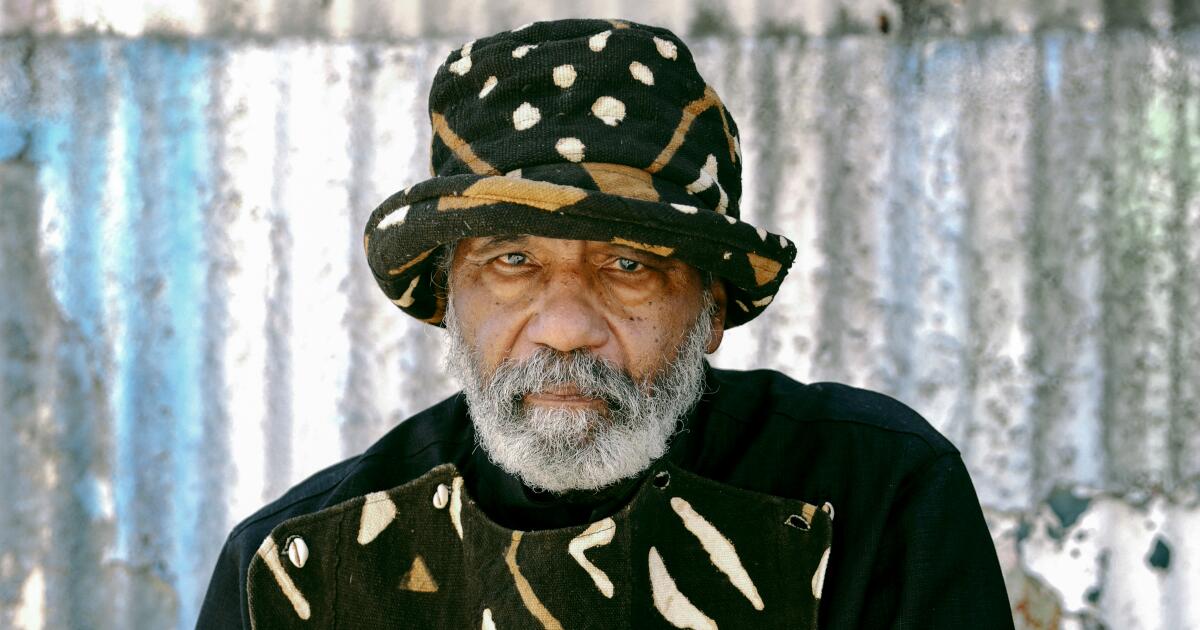
Ulysses Jenkins, the pioneering Los Angeles-born video artist whose avant-garde compositions embodied Black experimentalism, has died. He was 79.
Jenkins’ death was confirmed by his alma mater Otis College, where he studied under renowned painter and printmaker Charles White in the late 1970s and returned as an instructor years later. The Los Angeles art and design school shared a statement from the Charles White Archive, which said, “Jenkins had a profound impact on contemporary art and media practices.”
“A trailblazing figure in Black experimental video, he was widely recognized for works that used image, sound, and cultural iconography to examine representation, race, gender, ritual, history, and power,” the statement said.
A self-proclaimed “griot,” Jenkins throughout his decades-spanning career maintained an art practice grounded in the tradition of those West African oral historians who came before him. Through archival documentaries like “The Nomadics” and surrealist murals like “1848: Bandaide,” he leveraged alternative media to challenge Eurocentric representations of Black Americans in popular culture.
He was both an artist and a storyteller who sought to “reassert the history and the culture,” he told The Times in 2022. That year, the Hammer Museum presented Jenkins’ first major retrospective, “Ulysses Jenkins: Without Your Interpretation.”
“Early video art was about the problems with the media that we are still having today: the notions of truth,” Jenkins said. “To that extent, early video art was a construct that was anti-media … a critical analysis of the media that we were viewing every night.”
Born in 1946 to Los Angeles transplants from the South, Jenkins was ambivalent about the city, which offered his parents some refuge from the blatant systemic racism they encountered in their hometowns, but housed an entertainment industry that had long perpetuated anti-Black sentiment.
“What Hollywood represents, especially in my work, is the classic plantation mentality,” Jenkins told The Times in 1986. “Although people aren’t necessarily enslaved by it, people enslave themselves to it because they’re told how fantastic it is to help manifest these illusions for a corporate sponsor.”
Jenkins, who participated in a group of artists committed to spontaneous action called Studio Z, was naturally drawn to video art over Hollywood filmmaking. “I can address any issue and I don’t have to wait for [the studios’] big OK. I thought this was a land of freedom, and video allows me that freedom and opportunity that I can create for myself and at least feel that part of being an American,” he said.
Jenkins went on to deconstruct Hollywood’s vision of the Black diaspora in experimental video compositions including “Mass of Images,” which incorporates clips from D.W. Griffith’s notoriously racist “The Birth of a Nation,” and “Two-Tone Transfer,” which depicts, in Jenkins’ words, a “dreamscape in which the dreamer awakens to a visitation of three minstrels who tell the story of the development of African American stereotypes in the American entertainment industry.”
Jenkins’ legacy is not only artistic but institutional, with the luminary having held teaching appointments at UCSD and UCI, where he co-founded the digital filmmaking minor with fellow Southern California-based artists Bruce Yonemoto and Bryan Jackson.
As artist and educator Suzanne Lacy penned in her social media tribute to Jenkins, which showed him speaking to students at REDCAT in L.A., “he has been an important part of our histories here in Southern California as video and performance artists evolved their practices.”

4/5 stars
Bounding into cinemas just in time for spring, the latest Pixar animation is a pleasingly charming tale of man vs nature, with a bit of crazy robot tech thrown in.
The star of Hoppers is Mabel Tanaka (voiced by Piper Curda), a young animal-lover leading a one-girl protest over a freeway being built through the tranquil countryside near her hometown of Beaverton.
Because the freeway is the pet project of the town’s popular mayor, Jerry (Jon Hamm), who is vying for re-election, Mabel’s protests fall on deaf ears.
Everything changes when she stumbles upon top-secret research by her biology professor, Dr Sam Fairfax (Kathy Najimy), that allows for the human consciousness to be linked to robotic animals. This lets users get up close and personal with other species.

Home Gym Supplies Squat Rack Cage Package Released to Market for Exercise Lovers by Strongway Gym Supplies

‘Hoppers’ review: Who can argue with hilarious talking animals?

‘God of War’ Creator Says TV First Look Is ‘So Dumb’ and ‘Terrible’: Looks Like He’s ‘S—ing in the Woods’

How President Trump’s Image Permeates the White House and Beyond

The Latest on Natural Ozempic Alternatives: How To Lose Weight Without GLP-1s

Florida High School Football Rankings: Top 25 teams – Oct. 21

Cleary's 21 help Le Moyne down Central Connecticut State 69-64 in OT

How old is Bo Nix? What to know about Oregon quarterback ahead of 2024 NFL Draft

99th annual Pony Swim held in Virginia

Indiana Members Credit Union announced as new anchor tenant at Bottleworks District

Trump sends official notification to Congress on strikes against Iran

Unexpected birth brings hope to near-extinct Amazon tribe

Supreme Court blocks redrawing of New York congressional map, dealing a win for GOP

Map: Earthquake Shakes Central California

Gas prices could jump as Middle East tensions threaten global oil supply
-

 World5 days ago
Exclusive: DeepSeek withholds latest AI model from US chipmakers including Nvidia, sources say
-

 Massachusetts5 days ago
Mother and daughter injured in Taunton house explosion
-

 Denver, CO5 days ago
10 acres charred, 5 injured in Thornton grass fire, evacuation orders lifted
-

 Louisiana1 week ago
Wildfire near Gum Swamp Road in Livingston Parish now under control; more than 200 acres burned
-

 Technology1 week ago
YouTube TV billing scam emails are hitting inboxes
-

 Politics1 week ago
OpenAI didn’t contact police despite employees flagging mass shooter’s concerning chatbot interactions: REPORT
-

 Technology1 week ago
Stellantis is in a crisis of its own making
-

 News1 week ago
World reacts as US top court limits Trump’s tariff powers