Education
Trump Administration Opens Civil Rights Inquiry Into a Long Island Mascot Fight


Federal education officials said on Friday that they had opened a civil rights inquiry into whether New York State could withhold state money from a Long Island school district that has refused to follow a state requirement and drop its Native American mascot.
The announcement came shortly after President Trump expressed his support for the district, in Massapequa, N.Y., in its fight against complying with a state Board of Regents requirement that all districts abandon mascots that appropriate Native American culture or risk losing state funding.
The Massapequa district, whose “Chiefs” logo depicts an illustrated side profile of a Native American man in a feathered headdress, is one of several that have resisted making a change.
The name of the town, a middle-class swath of the South Shore where most residents voted for Mr. Trump in the November election, was derived from the Native American word “Marspeag” or “Mashpeag,” which means “great water land.”
In announcing the investigation, Linda McMahon, the education secretary, said that her department would “not stand by as the state of New York attempts to rewrite history and deny the town of Massapequa the right to celebrate its heritage in its schools.”
JP O’Hare, a spokesman for the state Education Department, said in a statement that state education officials had not been contacted by the federal government about the matter.
“However,” he added, “the U.S. Department of Education’s attempt to interfere with a state law concerning school district mascots is inconsistent with Secretary McMahon’s March 20, 2025, statement that she is ‘sending education back to the states, where it so rightly belongs.’”
The policy, introduced in 2022, was adopted amid a national push to change Native American mascot names or iconography through legislation and other moves.
When the ban was adopted, about five dozen New York school districts still used Native American-inspired mascots and logos. Districts were given until the end of June this year to eliminate banned mascots.
Since taking office for his second term, Mr. Trump and his administration have waged a relentless campaign against what they argue are illegal diversity, equity and inclusion initiatives and have threatened entities that do not fall in line and eliminate such efforts.
The president has said he would slash funding for low-income students in states that fail to do away with such programs. New York’s Education Department was the first to publicly refuse to comply with the order.
Massapequa school leaders filed a federal lawsuit seeking to keep the “Chiefs” name, but the judge in the case recently moved closer to dismissing it after finding they had failed to provide sufficient evidence for their claims, including that the mascot qualified as protected speech.
In a social media post this week, Mr. Trump criticized New York’s policy and called for Ms. McMahon to intervene.
“Forcing them to change the name, after all of these years, is ridiculous and, in actuality, an affront to our great Indian population,” the president wrote.
In a statement included in the federal Education Department’s announcement, Kerry Watcher, the Massapequa Board of Education president, welcomed the investigation.
“Attempts to erase Native American imagery do not advance learning,” Ms. Watcher said. “They distract from our core mission of providing a high-quality education grounded in respect, history and community values.”



When Donald J. Trump eulogized Schlafly at her funeral in September 2016, he cast both himself and her as underdogs — perhaps reasonably. Mr. Trump looked like the most long shot presidential nominee in living memory. Schlafly, who gave him a rare early endorsement, had in the 1970s slayed the Equal Rights Amendment, which sought to give women equality under the Constitution — a seeming shoo-in, until she got involved.
By 2016, much of American life had turned nightmarish for someone like her.
Gay marriage: widely accepted. Abortion: legalized. Gender-neutral bathrooms: commonplace on many campuses. Many women no longer measured their success in marriage and children, but in financial independence and personal fulfillment.
These days, though, her arguments ring anew in our ears, as a new generation of conservative women challenges feminism’s gains.
Today, anti-feminists hold powerful roles in Washington. Social media has gone frilly with tradwives. Their reasoning echoes Schlafly’s: Homemakers enjoy special status, protected and provided for by their husbands. Why give it up?
Decades before battles erupted over unisex bathrooms for transgender people, Schafly warned that the Equal Rights Amendment would spawn co-ed bathrooms. Long before “America First” and “stop the steal,” the ultra-isolationist Schlafly accused shadowy “kingmakers” of conspiring to nominate “America Last” candidates for president. She tarred feminists as radicals, just as her heirs do now.
To combat the E.R.A., abortion and gay rights, she mobilized formerly apolitical evangelical Christians, helping to build the coalition of religious conservatives that propelled Ronald Reagan to victory and eventually ousted social moderates from the Republican Party.
The political divisions that defined those 1970s debates “only got more pronounced over the years,” leading to today’s hyper-polarization, said Marjorie J. Spruill, the author of “Divided We Stand.” “And Schlafly’s tone had a lot to do with it.”
Schlafly’s victories came wreathed in paradoxes: She presented herself as a model wife and mother, breastfeeding all six of her children, yet she had resources (her husband, a lawyer, came from wealth) and a housekeeper that allowed her to run political campaigns and churn out books, newsletters and commentary. While exalting homemaking, she lobbied (unsuccessfully) for a top post in the Reagan administration.
Calmly, she deflected accusations of hypocrisy, saying that she had raised her children before embracing what she called her “hobby” — politics. Career and homemaking, she said, came “at different times in my life.”
Feminists never tire of leveling similar charges today, against women like Erika Kirk, the conservative activist who now leads the influential organization started by her late husband, Charlie Kirk; and Katie Miller, the prominent Republican political operative who promotes motherhood as women’s highest calling.
Yet many young women are veering further left, and their conservative peers aren’t necessarily sticking to homemaking, either. At a recent Turning Point USA conference for conservative young women, several speakers openly discussed balancing family with high-powered careers. You could see Schlafly’s influence. You could also see feminism’s.

Welcome to Great Adaptations, the Book Review’s regular multiple-choice quiz about printed works that have gone on to find new life as movies, television shows, theatrical productions and more. As America edges closer to its 250th birthday next month, this week’s challenge highlights the popular screen adaptations of books about significant eras in the country’s history. Just tap or click your answers to the five questions below. Scroll down after you finish the last question for links to the books and their screen versions.

new video loaded: How the Job Market Is Leaving New Graduates Behind
By Sydney Ember, Nour Idriss and Stephanie Swart
June 5, 2026
-

 Indiana2 minutes ago
Madam Walker Legacy Fest block party celebrates Black excellence with food, music, and community
-

 Iowa5 minutes ago
Blocked Iowa HHS director resigns but is appointed deputy director
-
 Kansas10 minutes ago
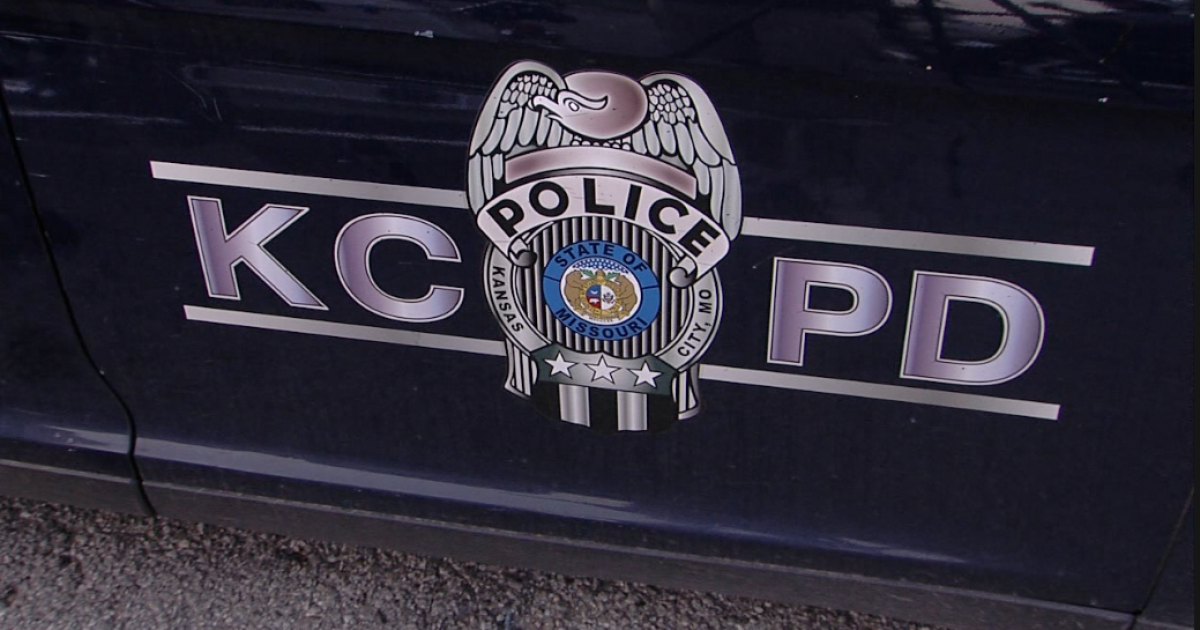
1 man dies after being shot June 9 in Kansas City, Missouri; police working to identify person of interest
-

 Kentucky17 minutes ago
Tornado ripped through Florence area during storms, NWS confirms
-

 Louisiana20 minutes ago
How Louisiana nitrogen gas executions could be affected by court ruling on Alabama
-

 Maine25 minutes ago
Two charged with assault after boater dies overboard in Hurricane Sound
-

 Maryland32 minutes ago
Two Injured In Waldorf Shooting, One Flown To Trauma Center – The BayNet
-

 Michigan35 minutes ago
Michigan QB Bryce Underwood on Year 1’s challenges and what’s next

