Education
Lawsuit Accuses University of California of Allowing Race to Factor in Admissions


Over the last few months, University of California officials have boasted that they have admitted the most racially diverse class ever to their sprawling system.
They have managed to do this, they say, despite a 28-year-old state ban on considering race in college admissions, known as Proposition 209.
But a lawsuit filed on Monday by a newly formed group takes aim at the university’s efforts, accusing the California system of cheating by secretly restoring race-conscious admissions in defiance of the state law. The group, Students Against Racial Discrimination, was organized by a persistent critic of affirmative action.
The lawsuit accuses the California system of harming all students by gradually bringing back racial preferences in recent years to stem public outrage over the low number of Black and Hispanic students at the state’s top universities.
Stett Holbrook, a spokesman for the University of California system, said the university had not yet been served with the legal papers, so it could not reply directly to the lawsuit. But he said that after the ban, it had adjusted its admissions practices to comply with the law, and it collected undergraduate students’ race and ethnicity for statistical purposes only, not for admission.
Students Against Racial Discrimination was founded last fall by a group that includes researchers and Asian American anti-affirmative action activists. Among them is Richard Sander, a law professor at the University of California, Los Angeles, who has made something of a crusade of fighting affirmative action.
The group’s approach emulates the strategy of Students for Fair Admissions, the organization that defeated Harvard and the University of North Carolina in the landmark 2023 Supreme Court ruling that rejected affirmative action in college admissions nationwide.
The lawsuit accuses the University of California system of violating protections against racial discrimination in Title VI of federal civil rights law and the Equal Protection clause of the 14th Amendment.
It asks the court to order the U.C. system to select students “in a color-blind manner” and to appoint a court monitor to oversee admissions decisions, to “eliminate the corrupt and unlawful race and sex preferences that subordinate academic merit to so-called diversity considerations.”
Last month, the U.C. system reported that Black undergraduate enrollment was up by 4.6 percent and Latino enrollment by 3.1 percent across the 10 campuses. It contrasted those increases with the many other universities that have struggled to maintain Black and Hispanic enrollment in the wake of the Supreme Court decision.
Over nearly a decade, the data show a steady but small rise in African American freshman admissions systemwide — to 7,139, or 5 percent, for the fall of 2024 from 4,358, or 4 percent, in 2016. The percentage of Hispanic students has also risen slightly, from a much bigger base. (About 6 percent of Californians are Black and 40 percent are Latino.)
The university said it had increased undergraduate enrollment overall and the diversity of the incoming class last fall by capping out-of-state enrollment and through funding support from the state, especially at the most in-demand campuses. It also targeted recruitment and college preparatory courses at disadvantaged students and eliminated the SAT and ACT testing requirement.
John Aubrey Douglass, a senior research fellow at the Center for Studies in Higher Education at Berkeley, said that while he was not an insider on admissions practices, “my sense is that admissions is highly regulated and careful to stay clear of Prop 209 restrictions, and the Supreme Court’s ruling on affirmative action.”
Much of the increase in enrollment can be explained by the demographic pool of applicants, and their growing readiness for college as they take required courses and as their high school graduation rates increase, he added.
California voters adopted Proposition 209, which banned the use of race in admissions at public universities in the state in 1996, becoming the first of nine states to take similar action.
The first class at Berkeley’s law school after Proposition 209 was approved had only one Black student, and he had been admitted before the referendum. The situation at Berkeley was so dire that it became the topic of a “Doonesbury” cartoon, in which Joanie Caucus, a Berkeley law graduate, arrives at her reunion to be told that not much has changed except, “Well, we no longer admit Black people.”
Dr. Sander said in an interview that he believes that Berkeley reverted to race-conscious admissions almost immediately.
If so, the impact has been small. The number of African American freshmen admitted to Berkeley has risen to 683, or 5 percent, in the fall of 2024 from 464, or 3 percent, in 2016.
Janet Gilmore, a spokeswoman for the system’s flagship, the University of California, Berkeley, said the institution was complying with the law.
“U.C. Berkeley is committed to admitting and enrolling the best and the brightest students and we do so in compliance with all state, federal and university policies and laws,” she said.
In the fall of 2006, after the passing of Proposition 209, only 96 of the 4,800 freshmen expected to enroll at U.C.L.A. were Black, the lowest figure since 1973. Twenty of those were athletes, according to a front-page article at the time in The Los Angeles Times. The Black students became known as “the infamous 96,” and administrators blamed the situation on the ballot measure. (Four more Black students were admitted on appeal.)
U.C.L.A. also buckled to public outrage, the complaint says. U.C.L.A. referred questions about the case and its admissions to the larger university system.
In the lawsuit filed on Monday, the complaint cites Tim Groseclose, a member of a faculty oversight committee for U.C.L.A. admissions during that period, who said U.C.L.A.’s chancellor had made admissions more subjective. Dr. Groseclose, now a professor of economics at George Mason University, believed that “this new policy became a subterfuge for reactivating racial preferences in admissions,” the complaint says.
Dr. Sander argues that affirmative action is detrimental to Black and Latino students who are less prepared and struggle academically. His theory, known as “mismatch,” argues that students will do better on measures like grades, persistence in science and math and graduation rates at a college that better matches their preparation. The complaint says that the system has become more and more guarded about such data, shutting down websites that provided it.
But many experts have disputed the mismatch theory, especially after Justice Antonin Scalia commented in 2015, during oral arguments in an affirmative action case at the Supreme Court, that Black students might be better off going to “slower-track” colleges where they could succeed.
Matthew Chingos, then a vice president of the Urban Institute, challenged Justice Scalia’s comments at the time. Research has shown that students with similar credentials who attend different colleges are more likely to graduate from the more selective colleges, Dr. Chingos noted.
And his analysis found that the mismatch conclusions were based on “at best very weak evidence for this claim and no evidence of any connection to affirmative action policies.”
The complaint filed on Monday allows that “the effects of Proposition 209 upon U.C. and its students were complex and are still debated by academics.” And the evidence it offers is sometimes contradictory.
To bolster the point that the system is cheating, the complaint says statistical analysis shows an improbable parity between the Black and Hispanic admission rates and the overall admission rate. And it says that Dr. Sander’s analysis of publicly available U.C. law school data shows that Black students with relatively low LSAT scores and grade point averages have 10 times as good a chance to be admitted as a white or Asian American student with similar credentials.
But the complaint also notes that Black and Latino graduation rates across the system were “much higher” in 2006 than in 1998. It argues that is because students “cascaded” down to lesser colleges where they could compete.
And it concedes that there were other factors at play that could explain the increase in Black and Hispanic students — not that they were being favored in the admissions office, but that more were applying and getting in as the university system responded to Proposition 209 by putting more resources into helping them.
Susan C. Beachy contributed reporting.



When Donald J. Trump eulogized Schlafly at her funeral in September 2016, he cast both himself and her as underdogs — perhaps reasonably. Mr. Trump looked like the most long shot presidential nominee in living memory. Schlafly, who gave him a rare early endorsement, had in the 1970s slayed the Equal Rights Amendment, which sought to give women equality under the Constitution — a seeming shoo-in, until she got involved.
By 2016, much of American life had turned nightmarish for someone like her.
Gay marriage: widely accepted. Abortion: legalized. Gender-neutral bathrooms: commonplace on many campuses. Many women no longer measured their success in marriage and children, but in financial independence and personal fulfillment.
These days, though, her arguments ring anew in our ears, as a new generation of conservative women challenges feminism’s gains.
Today, anti-feminists hold powerful roles in Washington. Social media has gone frilly with tradwives. Their reasoning echoes Schlafly’s: Homemakers enjoy special status, protected and provided for by their husbands. Why give it up?
Decades before battles erupted over unisex bathrooms for transgender people, Schafly warned that the Equal Rights Amendment would spawn co-ed bathrooms. Long before “America First” and “stop the steal,” the ultra-isolationist Schlafly accused shadowy “kingmakers” of conspiring to nominate “America Last” candidates for president. She tarred feminists as radicals, just as her heirs do now.
To combat the E.R.A., abortion and gay rights, she mobilized formerly apolitical evangelical Christians, helping to build the coalition of religious conservatives that propelled Ronald Reagan to victory and eventually ousted social moderates from the Republican Party.
The political divisions that defined those 1970s debates “only got more pronounced over the years,” leading to today’s hyper-polarization, said Marjorie J. Spruill, the author of “Divided We Stand.” “And Schlafly’s tone had a lot to do with it.”
Schlafly’s victories came wreathed in paradoxes: She presented herself as a model wife and mother, breastfeeding all six of her children, yet she had resources (her husband, a lawyer, came from wealth) and a housekeeper that allowed her to run political campaigns and churn out books, newsletters and commentary. While exalting homemaking, she lobbied (unsuccessfully) for a top post in the Reagan administration.
Calmly, she deflected accusations of hypocrisy, saying that she had raised her children before embracing what she called her “hobby” — politics. Career and homemaking, she said, came “at different times in my life.”
Feminists never tire of leveling similar charges today, against women like Erika Kirk, the conservative activist who now leads the influential organization started by her late husband, Charlie Kirk; and Katie Miller, the prominent Republican political operative who promotes motherhood as women’s highest calling.
Yet many young women are veering further left, and their conservative peers aren’t necessarily sticking to homemaking, either. At a recent Turning Point USA conference for conservative young women, several speakers openly discussed balancing family with high-powered careers. You could see Schlafly’s influence. You could also see feminism’s.

Welcome to Great Adaptations, the Book Review’s regular multiple-choice quiz about printed works that have gone on to find new life as movies, television shows, theatrical productions and more. As America edges closer to its 250th birthday next month, this week’s challenge highlights the popular screen adaptations of books about significant eras in the country’s history. Just tap or click your answers to the five questions below. Scroll down after you finish the last question for links to the books and their screen versions.

new video loaded: How the Job Market Is Leaving New Graduates Behind
By Sydney Ember, Nour Idriss and Stephanie Swart
June 5, 2026
-

 Indiana5 minutes ago
Madam Walker Legacy Fest block party celebrates Black excellence with food, music, and community
-

 Iowa8 minutes ago
Blocked Iowa HHS director resigns but is appointed deputy director
-
 Kansas13 minutes ago
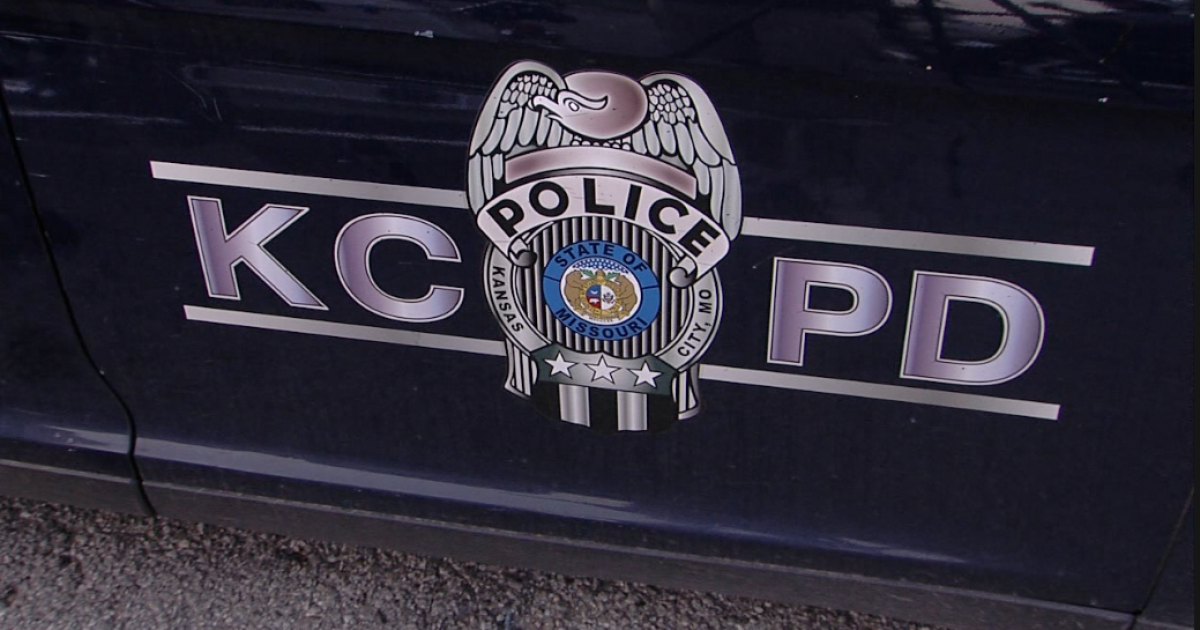
1 man dies after being shot June 9 in Kansas City, Missouri; police working to identify person of interest
-

 Kentucky20 minutes ago
Tornado ripped through Florence area during storms, NWS confirms
-

 Louisiana23 minutes ago
How Louisiana nitrogen gas executions could be affected by court ruling on Alabama
-

 Maine28 minutes ago
Two charged with assault after boater dies overboard in Hurricane Sound
-

 Maryland35 minutes ago
Two Injured In Waldorf Shooting, One Flown To Trauma Center – The BayNet
-

 Michigan38 minutes ago
Michigan QB Bryce Underwood on Year 1’s challenges and what’s next

