Culture
The 'post-Olympic blues': Why do so many competitors suffer an emotional comedown?


The Olympics should be the pinnacle of an athlete’s career. Yet scratch beneath the surface and the physical toll is often accompanied by an emotional comedown known as the ‘post-Olympic blues’.
That is an experience which unites swimmer Michael Phelps — the most decorated Olympian with 28 medals, gymnast Simone Biles with seven medals, Allison Schmitt and Adam Peaty, who won 10 and five pool medals respectively. Between them, they boast 34 Olympic golds.
Great Britain’s 800m runner Keely Hodgkinson and U.S. sprinter Noah Lyles are examples of athletes at their peak who have spoken of post-Olympic comedowns.
Dr Karen Howells, an academic and sports psychologist, explains that athletes first coined the term ‘post-Olympic blues’. “The blues undermined the seriousness,” she says. “The problem with using the word ‘depression’ is it is a mental illness, diagnosed by clinical psychologists and psychiatrists. As a researcher and applied sports psychologist, I’m not qualified to diagnose.”
Noah Lyles (Patrick Smith/Getty Images)
Jessica Bartley, senior director of psychological services for the U.S. Olympic and Paralympic Committee (USOPC), explains the ‘blues’ as a range of emotions.
“We try to make it broad because it’s not always ‘blues’. I don’t want to alienate athletes who aren’t feeling sad. If they’re feeling anxious, the blues often capture a lot of them, but it’s not everyone’s experience.
“Other athletes say, ‘I had the perfect experience, I did everything that I wanted to.’ It’s complicated, but we try to be as open as possible, as often as possible.”
It is impossible to accurately state how many athletes experience this. Although there is academic research, there is no standardised questionnaire. Not all athletes are prepared to speak about their emotions or engage in interventions.
Howells will not put a number on it because she hasn’t carried out a prevalence survey, but says she has “not yet met an Olympian who hasn’t experienced” the post-Olympic blues.
A 2023 study of 49 Danish Olympians and Paralympians found 27 per cent had below-average well-being or moderate-to-severe depression. For athletes who achieved their goals, as many had above-average well-being as below average (40 per cent).
There are typical symptoms. “The most helpful way is to recognise deviations from their baseline,” says Dr Cody Commander, the Team USA mental health officer for the delayed 2020 Tokyo Olympics. “Were they gregarious and outgoing and now they’re not?
“Appetite and sleep are the first few things that can change. You’re eating and sleeping more or less. You’re also looking to see if there’s any social withdrawal. That is more common for elite athletes now — not responding to text messages, emails and calls. They can’t deal with the mental energy needed to talk to everyone about it.”

Adam Peaty at the Tokyo Olympics (Maddie Meyer/Getty Images)
Danielle Adams Norenberg, head of psychology at the UK Sports Institute and Team GB psychologist references “maladaptive responses” post-Games. These include a dependence on alcohol and overtraining among other self-destructive behaviours, as athletes try to fill the void.
Commander describes “a crash of emotions afterwards”. He describes an inevitability “because it’s more of a build-up over time. They’re training for years versus just a season and it’s a bigger stage. Financially, this may be a great source of potential income. There is a lot of expectation and pressure.
“It’s more about making a map of how to get to a destination. Once you get there, it’s like, ‘Now what?’ They’re in a period with no plans and no spectators and they don’t know what to do. Elite athletes are used to having each minute planned every day for years.
“When there’s no plan, it’s the feeling of ‘I’m lost’. It’s very different from training. That difference is what they have a hard time adjusting to — the freedom can feel more awkward.
Howells explains that most people can relate to the blues. “It’s normal that when we build up to something, and then it’s over, we are going to feel lost and upset,” she says. “There may be anger, frustration, irritation”.
Recent Olympic cycles have seen changed approaches to managing athletes’ emotional well-being, with performance now considering mental health and the post-Olympic experience, and countries taking measures to prepare athletes for life post-Games.
“We have a team of 15 that focus on mental health and mental performance,” Bartley says. We’re meeting regularly with Canada, Great Britain, Australia, Denmark and the Netherlands.”
The International Olympic Committee (IOC) has started to build infrastructure which countries use and there are shared initiatives. “There are over 150 mental health providers at the Games from different countries.” All the nations met pre-Games to pool resources and share strategies. Since Tokyo, Team USA has implemented a new process, screening first-time athletes via questionnaires.
“When an athlete makes the team, we immediately talk about resources, whether that’s mental health or medicine, career services, retirement services, how to transition out of sport. We’ve tried to normalise and make the transition piece a part of the conversation early. Throughout their career, we’re talking about it during what we call an ‘elite athlete health profile’.
“We talk to them annually, doing physical and mental health screenings. Right before the Games, we’re screening every athlete. We’ve met with every Olympic and Paralympic athlete, every alternate, training partners — everybody who’s in the mix for Team USA.
“Then we’ll follow up post-Games. We’ve developed ‘navigating the Olympic blues’ and navigating the emotions. We have process groups and skills groups, then we have a really cool experience.” All U.S. Olympians and Paralympians visit the White House and meet the President, and there are counsellors available throughout the week post-Games.

US Olympians meet President Joe Biden in 2022 (Patrick Smith/Getty Images for USOPC)
For Team GB, the focus is on performance decompression. A six-stage model designed by the British Institute of Sport before the Tokyo Games applied knowledge and research from the military, the Red Cross and their own practical experience to help prepare athletes for life after the Games.
It consists of four phases: First, a ‘hot debrief’, almost immediately post-competition. Second is ‘time zero’, athletes are encouraged to take a break and engage with the present. The third phase is ‘process the emotion’, a psychological debrief to discuss the emotional experience of the Games. Finally, there is a performance debrief.
“In those pre-stages, we’ll talk to them about the importance of performance decompression,” says Adams Norenberg. “We will drip-feed the conversation all the way through. We might say, ‘When might you want to plan your post-Games period?’
“They’ve got really good performance decompression plans, they know when they’re going to take a break and, ideally, they know when they’re going to have that process the emotion conversation. It’s all booked in before the Games start.
“In some areas of the military, upon returning home, there’s a stop-off before, where individuals are supported to make sense of their experience. We knew that talking it through, understanding and acknowledging emotions that might have come up for them is important before jumping straight in to find life again.
“The research from the Red Cross, about support for hostages returning home, gave us insight into how a stage three brief, where emotions are understood, could look”.
But there is a balance required between focusing on the post-Games experience and potentially problematic emotions, and prioritising competition.
“You want to think about it before the Games, but not right before,” says Commander. “Maybe six months out. So afterwards, if it goes well, here’s my plan. If it doesn’t go well, here’s my plan B. I’m thinking about it ahead of time but now I have a plan so I’m not thinking about it anymore. I’m just focused on my training and everything else.”
For Bartley and the USOPC, as with Team GB, athletes are given ownership. “We start when they’re ready. Even when we’re doing an athlete orientation or introducing our services, we’ll tell them there’s going to be a lot of emotions that come up. We’re not going to start talking at them about what to expect. We let them know we’re here and say, ‘When you’re ready, let us know’.”
Academics first identified the ‘blues’ decades ago. In a 1998 study of 18 Australian Olympic gold medallists, competing across several sports at Games between 1984 and 1992, only four athletes described their experiences as completely positive. Six, however, cited burnout and a lack of support. Athletes were “lacking guidelines for being a gold medallist”.
A study of 61 Israeli athletes and coaches at the 2012 London Games found one in five spoke with others afterwards — most ignored their feelings or isolated themselves. A 2021 paper, which interviewed 18 Australian Olympians after the Rio 2016 games said: “national system stressors, including organisational restructures, coaching changes and funding cuts, were impediments to athlete well-being”.
In 2018, Howells and Mathijs Lucassen interviewed four British Olympians. They concluded that “negative emotions are a normal response to returning home but athletes don’t expect it to affect them, they are incapable of focusing beyond the Games before they happen and get rollicked by a return to normality. They struggle being away from other athletes with relatable experiences.”
Holly Bradshaw, a pole vault bronze medallist, was a participant. In 2022, Bradshaw became “researcher as participant” alongside Howells and Lucassen. She facilitated four focus groups with 14 British Olympians across various sports, featuring medallists and non-medallists. Researchers were surprised by how much athletes preferred focus groups.
“We thought that having Holly run them would enable the Olympians to be more open. We hadn’t realised how open they were going to be.
“What came out very clearly was a real antagonism and mistrust towards sports psychologists,” she says. Athletes felt they might relay information to the coach which made them look ‘weak’ or cost them their place on the team. “Sports psychologists didn’t really get it.” Athletes “wanted to be supported through the post-Olympic blues by somebody who’d been through it,” Howells says.

Holly Bradshaw competing at the Tokyo Olympics in 2021 (Michael Steele/Getty Images)
The way forward is nuanced, Howells believes: “It is more complicated than we thought. We would be foolish not to listen to the athletes”. She says peer support should complement, not replace, sports psychology.
“Just because you’ve been through it, it doesn’t mean that you are in the best position to help somebody. To get a team of sports psychologists to support Olympians afterwards is easy. It’s much harder to work a mentorship scheme.”
Academia may try to shift the dial from encouraging change to initiating it more formally. In 2020, experts proposed that national governing bodies view the Games as a five-year cycle, with a clearly defined support system for 12 months post-Games. Formalised mental health care teams and a specific mental health officer, improving athlete education and simplifying screening processes were further recommendations.
“There are two areas at which we can address the blues,” says Howells. “The first is pre-Games, with psychoeducation. That’s the first thing that athletes were clear about and that aligned with our own expectations: the more that you know, the better equipped you are to cope.”
Stigma is gradually reducing as high-profile athletes open up publicly. The pressure, expectation, the heralding of exceptional athletes as heroes and superhuman and the ensuing celebrity status are all factors. It does not encourage athletes to be human.
A 2023 paper on Olympic judokas (judo) explained the identity crises athletes face as a result of hyper-fixation on performance, leaving their non-sporting personalities underdeveloped. In a 2018 paper, Howells wrote that athletes with a greater “myopic” performance focus are more at risk of the ‘blues’.
“At elite sport level, it is common for competitors to have this very high athletic identity. That is all they are,” says Howells. “They’ve sacrificed every other aspect of their identity for the purpose of being an Olympian. Many have an Olympic rings tattoo; they are branding themselves, their bodies, as an Olympian”.

(Buda Mendes/Getty Images)
Bartley, who has worked with the USOPC since 2012, is confident that discussing mental health can provide “an edge” in performance.
“The biggest difference I’ve seen (over that time) is that so many notable athletes have spoken out about their mental health that it’s starting to destigmatise it a lot,” she says. “It’s helping future athletes or even athletes now to understand that it’s OK to talk about mental health and to use these resources.”
A 2015 report by Tanni Grey-Thompson, who won 16 Paralympic medals with Team GB, found that “mental health and well-being is a major concern in British performance sport and should be treated accordingly”.
Howells points to it as a turning point in reducing stigma. “There is certainly a very dark side to elite sport,” she says, but remains positive about affecting change.
“Change doesn’t happen quickly, the stigma is still there. It takes a long time to bring about attitudinal change, but we’re getting there.”
(Header photos: Getty Images)



Homer’s “Odyssey” has been translated into English countless times, with versions ranging from contemporary and accessible to highly poetic. A.O. Scott, critic at large for The New York Times Book Review, breaks down three translations and explains which one might be right for you.

Among the many complaints made about the modern American novelist, the loudest, if not the most intelligent, has been the charge that he is not speaking for his country. A few seasons back an editorial in Life magazine asked grandly, “Who speaks for America today?” and was not able to conclude that our novelists, or at least our most gifted ones, did.
This opening paragraph is from an essay titled “The Fiction Writer and His Country” by a writer whose work was influenced by Catholicism, the rural South and peacocks. Who was it?

Welcome to Lit Trivia, the Book Review’s regular quiz about books, authors and literary culture. This week’s challenge is all about an influential group of writers, editors and other creative types known as the Algonquin Round Table. In the five multiple-choice questions below, tap or click on the answer you think is correct. After the last question, you’ll find links to related books and other information about the era if you’d like to do further reading.
-
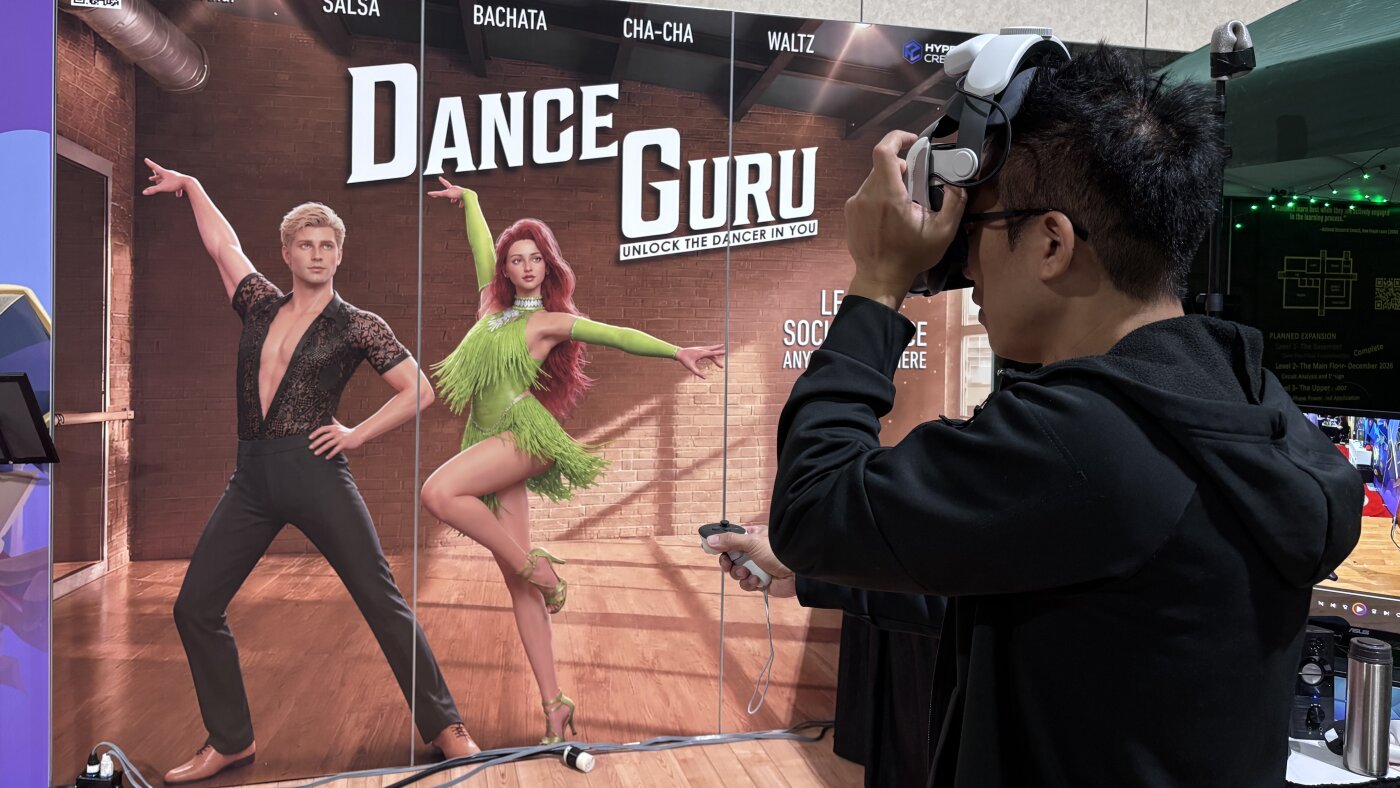 Lifestyle14 minutes ago
Shy on the dance floor? Virtual reality ‘partners’ aim to help you find your groove
-

 Technology26 minutes ago
Are you filthy enough for a $700 portable shower?
-

 World27 minutes ago
Former British MP and reality TV star Ann Widdecombe found dead; man arrested for murder
-

 Politics34 minutes ago
Trump takes unusual step, lets bipartisan housing bill become law unsigned amid SAVE pressure campaign
-

 Health41 minutes ago
Eating common dairy food every day may slow biological aging, study suggests
-

 Sports44 minutes ago
CM Punk to defend Undisputed WWE Championship against Cody Rhodes at SummerSlam
-

 Technology49 minutes ago
Would you pay $8,000 for a robot to fold laundry?
-
 Business56 minutes ago
Legendary Television City may be be sold in further blow to Hollywood

