Culture
Rafael Nadal is retiring from tennis right on time


For more than 20 years, Rafael Nadal leaned into his reputation for authenticity.
Roger Federer was the tennis politician, an artless beacon of neutrality. Novak Djokovic was fated to manage the difficult task of fitting into a sport that the Nadal-Federer rivalry had come to define, by trying on a series of identities. He has only recently settled into his best fit: a tennis statesman prone to releasing the antagonistic tennis demon that he so relishes and which always lurks within.
Rafa just did Rafa. He was never afraid to be painfully honest with what was unfolding in front of his eyes or around him. Sometimes he used his words, punctuating a sentence with his trademark, “that is my true.” Sometimes it was one of those eyebrows, arched with the curve of his forehand, or the sarcastic grin that barely held back his disbelief.
“Really, amigo?” he might have said as Federer played on until 41, essentially on one knee in his final go-rounds, or as Andy Murray gamely tested rackets and tried to defy spinal surgery this spring and summer. Nadal shared with them the desire to have nothing left to give, but his decision to call it quits at 38 after the Davis Cup Finals in Malaga this November feels downright speedy by comparison even with the halting physical uncertainty of his last two years.
Nadal collected all the data he needed to conclude his time had passed in 16 matches over four months, all of them on red clay, the surface where besting him had once been arguably the toughest task in any sport. He won 10 and lost six, including two painful and somewhat lopsided defeats to Alexander Zverev and to Djokovic on Court Philippe-Chatrier at Roland Garros, his supposed living room. That was that, regardless of that raging-bull, never-quit mentality that has awed friends and foes alike for ages.
Rafael Nadal and Novak Djokovic’s last meeting was a signal to him that it was time. (Tim Clayton / Corbis via Getty Images)
“He’s the strongest player I’ve seen, mentally, and I’m not talking just about tennis, I’m talking about all sports,” his friend and compatriot Feliciano Lopez said in an interview Thursday.
The mentality was never his doubt. Nadal wanted to play without physical limitations. He couldn’t.
“It’s obviously a difficult decision, one that has taken me some time to make,” he said in his retirement video.
“Everything in this life has a beginning and an end. I think it is the appropriate time to end a career.”
How Rafael Nadal will leave tennis
It’s true that this has been in the works for something on the order of two years, ever since Nadal pulled up while chasing a forehand in Rod Laver Arena at the Australian Open in January 2023. He glared up at his box in mid-stride, his eyes so wide it looked like someone had stabbed him in the hip.
In June of that year, he had surgery to repair two muscle tears, then embarked on one last comeback, enduring another series of setbacks each time he began to feel like his game might still be within reach. Ultimately, Nadal proved incapable of deluding himself that he could ever compete with the best players in the world again.
In retrospect, it probably didn’t even take that long. At the top level of tennis today, players need to be able to collect a certain number of easy points on their serve. This was especially true for Nadal, no longer with the speed or the ability to chase down balls for four hours through five sets as he had for 20 years.
He could no longer inflict the same damage on his serve, a shot that was always something of a limitation, even as he had managed to turn it from a real weakness into something of a weapon. He could no longer lift or torque his body as he once had, and he was essentially hitting two second serves every time he stepped up to the line. That would not change, even while skipping hardcourt tournaments and the Wimbledon grass, prompting thoughts of one last trip to the French capital where he, the boy from Mallorca, has his statue.

Rafael Nadal’s final French Open saw him dealt a cruel hand by the draw in the shape of Alexander Zverev. (Alain Jocard / AFP via Getty Images)
If he couldn’t go there with the dream of doing something important, he wasn’t going to bother. He didn’t need another afternoon of adulation and parting gifts if the match that preceded it would be little more than valediction.
“I prefer to stay with all the amazing memories that I have,” he said during a news conference ahead of the 2024 French Open.
Hubert Hurkacz, who also served Federer the humiliation of a Wimbledon bagel, pummeled Nadal at the Italian Open 10 days later. Nadal blew off a post-match celebration and didn’t mince words about the performance.
“I did a disaster,” he said after the match.
A spell of good health and a solid week of training ahead of that final French Open gave him some hope, but the draw delivered Zverev in the best form of his life. Nadal said he had felt good enough to perhaps improve with each match, but the pairing didn’t allow for that. Given where his ranking stood, and the state of his health, the draws probably wouldn’t have helped him again.
And then the final data point came at the Olympics in a second-round match against Djokovic, his longtime foe. In their 60th meeting, Djokovic won 6-1, 6-4 in a match that wasn’t as close as even that scoreline implies.

GO DEEPER
Game, Set, Match: Novak Djokovic sees off Rafael Nadal at Paris Olympics
Just as with Hurkacz, Nadal was cold and clear-eyed in his assessment of what had unfolded on that afternoon. He knew where his tennis stood. Djokovic had controlled the court all day, playing from all the comfortable positions, punishing Nadal on his serve and taking away his legs, as Nadal had done to so many on that red dust for so long.
“He was much better than me,” Nadal said then.
He could have played on. In an individual sport, no one cuts you from the team. Especially not tennis, and especially not tennis with Nadal, whose tournaments would dole out wild card entries to him as long as he could ask for them. He could have spent the next year enduring beatings like the ones from Hurkacz and Zverev and Djokovic, then letting crowds across the globe fete him in his anguish.
He didn’t need that. As he put it back in the spring, he preferred to stay with all his amazing memories.
(Top photo: Julian Finney / Getty Images)



Homer’s “Odyssey” has been translated into English countless times, with versions ranging from contemporary and accessible to highly poetic. A.O. Scott, critic at large for The New York Times Book Review, breaks down three translations and explains which one might be right for you.

Among the many complaints made about the modern American novelist, the loudest, if not the most intelligent, has been the charge that he is not speaking for his country. A few seasons back an editorial in Life magazine asked grandly, “Who speaks for America today?” and was not able to conclude that our novelists, or at least our most gifted ones, did.
This opening paragraph is from an essay titled “The Fiction Writer and His Country” by a writer whose work was influenced by Catholicism, the rural South and peacocks. Who was it?

Welcome to Lit Trivia, the Book Review’s regular quiz about books, authors and literary culture. This week’s challenge is all about an influential group of writers, editors and other creative types known as the Algonquin Round Table. In the five multiple-choice questions below, tap or click on the answer you think is correct. After the last question, you’ll find links to related books and other information about the era if you’d like to do further reading.
-

 Illinois54 seconds ago
Woman in custody after breaking into home in Aurora, Illinois, police say
-

 Indiana4 minutes ago
Maximum Offer Relishes Stakes in Indiana Oaks
-

 Iowa9 minutes ago
Iowa State Football Predicted for Tough First Season Under Jimmy Rogers
-
 Kansas16 minutes ago
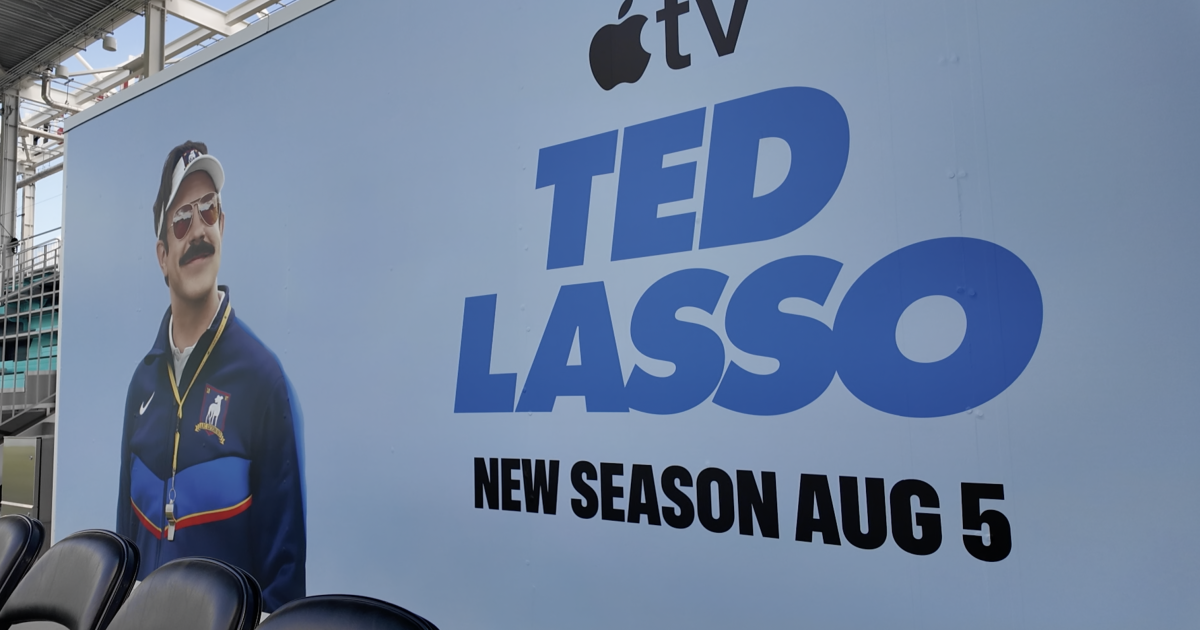
New season of ‘Ted Lasso’ brings Kansas City back into global spotlight
-
Kentucky19 minutes ago
Lucas Glover hangs onto lead in ISCO Championship in Kentucky
-

 Louisiana24 minutes ago
LSP: Ascension Parish resident dies in two-vehicle crash
-

 Maine31 minutes ago
Collins confident as Maine Democrats move to replace Platner
-

 Maryland34 minutes ago
The Final Stretch for Maryland’s 2027 Class: Identifying the Remaining Must‑Gets


