Culture
I Swear This Poem Didn’t Make Me Cry


Poems aren’t pictures, but sometimes they try to make us see, and to make us feel in ways we might associate with acts of seeing. Some poems evoke the drama of famous paintings or the frozen beauty of Grecian urns. This one dwells on a more private image, a family snapshot, and on the elusive emotions and memories that live inside it.
And there is a real picture.
George Oppen and his daughter, Linda.
Mary Oppen, via New Directions
Who are we looking at? This candid photo of George Oppen and his daughter, Linda, was taken in the early 1940s, many years before “From a Photograph” was written, at a time when Oppen was a former and future poet. Is that an apple in Linda’s hand? It’s hard to tell. Maybe the fruit was a metaphor all along.
In the early 1930s, as part of a cluster of poets who called themselves Objectivists, Oppen published a formally ambitious book (“Discrete Series”) and tried to run a small publishing house. Then in 1934 he stopped writing altogether, a hiatus that would last a quarter century. In that time, he worked as a tool-and-die maker, a furniture designer and a labor organizer; he fought in World War II; and, with his family, he lived in Mexico as a political exile during the McCarthy era. In 1958, the Oppens returned to the United States and George returned to poetry.
None of that information is, strictly speaking, relevant to this poem. One of the reasons Oppen gave up poetry was to keep politics out of it. His aesthetic allegiances made him wary of personal confession. Objectivism (which had nothing to do with Ayn Rand’s political philosophy) was an aesthetic grounded not in psychology or sentiment but in a cleareyed reckoning with the material facts of the world.
A photograph, though, is a special kind of object. It’s made — the old, predigital kind, anyway — of paper and silver emulsion, and also of less tangible substances: light; time; memory; love.
We’re looking at a family portrait. It isn’t a selfie. Someone is behind the camera, a person whose presence quietly suffuses the poem.
That would be Mary Oppen.
Mary and George Oppen in 1928. George Oppen Sr., via New Directions
She and George met at Oregon State University in 1926. On their first date, they stayed out all night, which got them both kicked out of school. They would be together for the next 58 years, until George’s death in 1984. Linda was their only surviving child, born in 1940, after the Oppens had endured a series of stillbirths and a crib death.
In 1978, Mary published “Meaning a Life,” a memoir about the collaborative work of their couplehood — as artists, as activists, as parents. “From a Photograph” is an artifact of that collaboration and a tribute to its power.
According to an old friend of theirs, George and Mary once had a pair of binoculars that they cut in half, so that they could look at the same thing at the same time. Of course such perfect symmetry of vision isn’t really possible, but it is present in this poem as an ideal of creativity: The poem, like the child, is something the two of them made together.



Welcome to Great Adaptations, the Book Review’s regular multiple-choice quiz about printed works that have gone on to find new life as movies, television shows, theatrical productions and more. This week’s challenge highlights offbeat television shows that began as comic books. Just tap or click your answers to the five questions below. And scroll down after you finish the last question for links to the comics and their screen versions.

new video loaded: Our Spring Book Recommendations
By Jennifer Harlan, MJ Franklin, Joumana Khatib, Edward Vega and Laura Salaberry
March 19, 2026

Welcome to Literary Quotable Quotes, a quiz that tests your recognition of memorable lines. With a nod to St. Patrick’s Day, this week’s installment celebrates memorable lines from classic Irish poems. In the five multiple-choice questions below, tap or click on the answer you think is correct. After the last question, you’ll find links to both poetry collections and the individual poems cited, just in case you’re inspired to read more.

Michigan ‘adventure seekers’ take flight at new experiential venues

Barricaded suspect in standoff with police in San Francisco’s Tenderloin neighborhood

Jack Hughes scores twice as Devils beat Stars 6-4, end Dallas streak with four-goal first period

Tommy Paul’s Fiancée Paige Lorenze Stuns in Pink Crop Top at Miami Open

Press Room: Marco Sturm | Boston Bruins

Florida High School Football Rankings: Top 25 teams – Oct. 21

How old is Bo Nix? What to know about Oregon quarterback ahead of 2024 NFL Draft

Cleary's 21 help Le Moyne down Central Connecticut State 69-64 in OT

99th annual Pony Swim held in Virginia

Indiana Members Credit Union announced as new anchor tenant at Bottleworks District

Video: Passengers Wait in Long Security Lines at LaGuardia After Deadly Crash

King Charles to address Congress in historic first state visit to Washington

Iran names successor to security chief killed in US-Israeli attack

See How the LaGuardia Plane Crash Unfolded

Mullin confirmed as DHS chief as lawmakers near solution on shutdown standoff
-

 Detroit, MI6 days ago
Drummer Brian Pastoria, longtime Detroit music advocate, dies at 68
-

 Georgia1 week ago
How ICE plans for a detention warehouse pushed a Georgia town to fight back | CNN Politics
-

 Movie Reviews6 days ago
‘Youth’ Twitter review: Ken Karunaas impresses audiences; Suraj Venjaramoodu adds charm; music wins praise | – The Times of India
-

 Alaska1 week ago
Police looking for man considered ‘armed and dangerous’
-

 Education1 week ago
Video: Turning Point USA Clubs Expand to High Schools Across America
-
 Science1 week ago
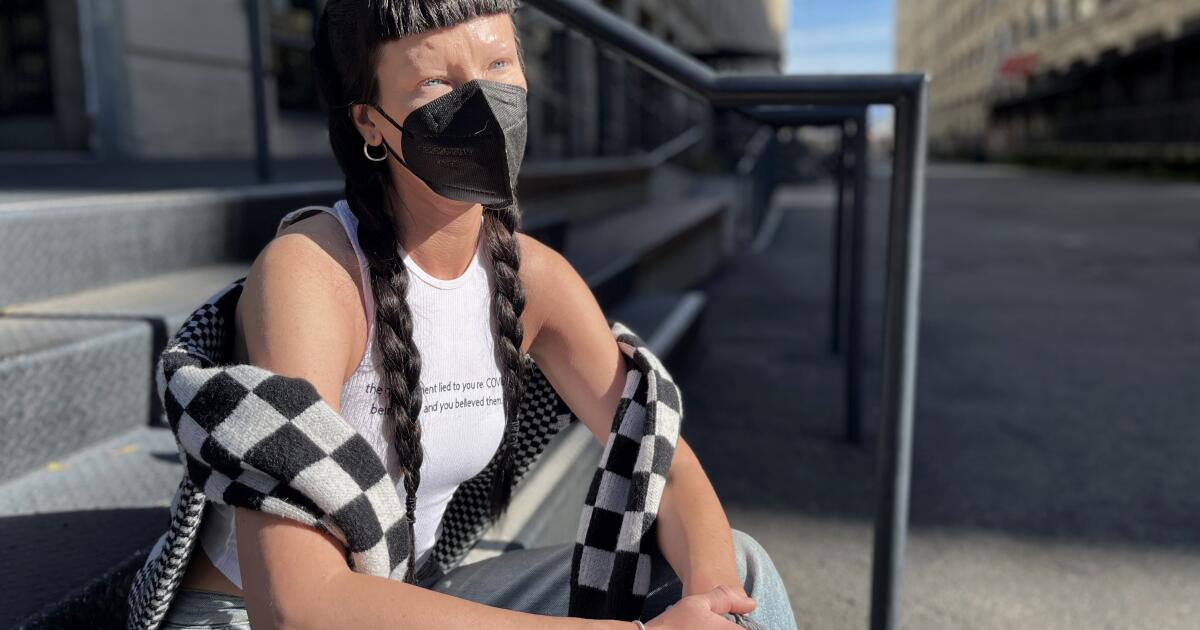
Long COVID leaves thousands of L.A. county residents sick, broke and ignored
-

 Sports3 days ago
IOC addresses execution of 19-year-old Iranian wrestler Saleh Mohammadi
-
 Science1 week ago
Industrial chemicals have reached the middle of the oceans, new study shows