Culture
How a cafe brought the viral Olympic Village muffins to NYC — and back again for Paralympics


Like many culture-shaping trends, it started on TikTok.
Posts by Norwegian swimmer Henrik Christiansen, now widely known as the “muffin man,” showcased the chocolate muffins served in the Olympic Village during the Summer Games. Christiansen’s posts, highlighting his adoration of the fudgy morsels, drew millions of views as he competed at the Paris Olympics and led to numerous duplicate muffin recipes (including one in The New York Times).
But one New York City-based fan of Christiansen’s posts didn’t want to settle for only a reproduction.
Instead, Kelin Carolyn Zhang, a 32-year-old independent designer, wondered if she could try the real deal. There was an initial hurdle, however, since the supplier of the famed Olympic chocolate muffins, Coup de Pates, completes only wholesale orders such as those placed by restaurants and businesses rather than direct-to-consumer, she said. As she attempted to obtain the authentic muffins, Zhang documented her research and her quest to bring them stateside on TikTok, leading to a connection in the restaurant industry that helped make her wish possible.
“The entire situation just kept escalating, and I found it incredibly hilarious, and so I kept going,” Zhang said.
The “extremely random rabbit hole” of muffin research, as she described it, eventually resulted in a shipment of 15 cases containing 300 of the chocolate muffins — presumably the same ones served to athletes at the Olympics and Paralympics, though Coup de Pates did not respond to requests for comment on the topic. The muffins were air-freighted overnight on dry ice on a flight from Paris Orly Airport to Newark Liberty International Airport in New Jersey, Zhang said. The shipment required FDA approval, and the muffins had to clear customs before they were transported by van to the New York cafe Isshiki Matcha in the East Village, where the first pop-up event was held Aug. 17.
Once the event was announced, something of a local frenzy ensued. The first customer lined up outside the cafe at 6 a.m. — the event started four hours later. The line wrapped around the block twice, and the muffins — limited to one per customer for $10 — sold out in roughly two hours, according to Isshiki Matcha owner Angel Zheng, who said her friends who arrived late didn’t get one.
Zheng became involved after a friend tagged her in one of Zhang’s TikTok posts and suggested the two women work together to bring the muffins to New York City.
“I just really like side quests,” Zheng said. “I like doing things for the plot. I’m very young — I’m 24. I’m not a big corporation. I don’t have a boss with a 20-person chain of command. I open restaurants and it brings so much joy to people. So I was like, if it works, it works. And if it doesn’t, at least we tried.”
Pulling off the event was no small feat, as the process included many logistical hurdles, which Zhang recounted in detail on X. Coup de Pates had never exported to New York before, so there was no system in place to get the goods from the plane to the restaurant, as Zheng was used to with other suppliers, meaning she and Zhang had to coordinate ground transportation. Zheng also said she purchased a new fridge for the restaurant big enough to store all the muffins, and that costs accounting for customs and transportation were expensive, but she was “glad to do it.”
Plus, it wasn’t a one-off. Isshiki Matcha announced a second pop-up event beginning at 10 a.m. Saturday with the Paralympics underway. This time, they placed a bigger order — for 1,000 muffins, which Zhang said they’ll sell until supplies run out.
Zhang said she expects a smaller turnout this time given the late notice on the announcement and figures potential customers may be out of town for the holiday weekend.
olympic muffins are back in nyc for the paralympics!
available 10am tomorrow (sat 8/31), 1 per person, first come first serve @ isshiki matcha
got 1000 muffs this time. popup continues to sunday if supplies last https://t.co/sPoxMoLnH2 pic.twitter.com/E26ajZAach
— kelin (@kelin_online) August 30, 2024
But Zhang said she was already able to try a second muffin thanks to the latest shipment. Despite all the coordination of the first event, she tried only one given the demand.
“Can you believe it?” she said.
According to Zhang and Zheng, the hype surrounding the muffins is valid. And yes, Zhang confirmed, they are chocolate cakes. Zheng said she thinks it’s the best muffin she’s ever tried, adding to a chorus of positive reviews of the treats, many shared on TikTok, including by American Olympians Gabby Thomas, Tara Davis-Woodhall, Abbey Weitzeil and Torri Huske. More reviews could be forthcoming during the Paralympics, as the Paralympic Games X account seemed to indicate the muffins were available to competitors.
Okay…we need to know if any of our Paralympians have tried THE chocolate muffin in the athlete’s village yet 🍫
Athletes tag in and let us know…
📸 Getty Images pic.twitter.com/r8jgZ6BSwE
— Paralympic Games (@Paralympics) August 29, 2024
The popularity of the pastries has transcended the athlete’s village, and thanks to Zhang and Zheng, the muffins have reached a new set of reviewers on another continent.
“I feel like the magic of these muffins is that no one could get their hands on them besides Olympic athletes,” Zheng said. “I don’t think that it’s about making chocolate muffins.”
Zheng added that her takeaway from the endeavor was that “anything’s possible with the power of the internet.”
Zhang, whose background is in digital product design, said she had never worked in partnership with a restaurant or cafe before her muffin search and that “hopefully this whole story can inspire other people to take matters into their own hands.”
“The (first) muffin pop-up itself was so wholesome,” she said. “People were having fun in line. That’s what I’m really proud of — is just helping people have a good time and come together.”
She wasn’t aware of any plans for a third pop-up and highlighted the relevant events.
“I do think it’s pretty special to keep it just around the Olympics and Paralympics,” she said. “And that adds to the overall excitement.”
Regardless, Zhang’s quest had a satisfying end. She and Zheng — along with those dedicated enough to their shared muffin pursuits to wait out the lines — finally ate like Olympians.
(Photo courtesy of Kelin Carolyn Zhang)



Homer’s “Odyssey” has been translated into English countless times, with versions ranging from contemporary and accessible to highly poetic. A.O. Scott, critic at large for The New York Times Book Review, breaks down three translations and explains which one might be right for you.

Among the many complaints made about the modern American novelist, the loudest, if not the most intelligent, has been the charge that he is not speaking for his country. A few seasons back an editorial in Life magazine asked grandly, “Who speaks for America today?” and was not able to conclude that our novelists, or at least our most gifted ones, did.
This opening paragraph is from an essay titled “The Fiction Writer and His Country” by a writer whose work was influenced by Catholicism, the rural South and peacocks. Who was it?

Welcome to Lit Trivia, the Book Review’s regular quiz about books, authors and literary culture. This week’s challenge is all about an influential group of writers, editors and other creative types known as the Algonquin Round Table. In the five multiple-choice questions below, tap or click on the answer you think is correct. After the last question, you’ll find links to related books and other information about the era if you’d like to do further reading.
-

 Detroit, MI5 minutes ago
Metro Detroit weather forecast, July 10, 2026 — 11 p.m. Update
-

 San Francisco, CA15 minutes ago
Classical music series helps reconnect downtown San Francisco community
-

 Dallas, TX20 minutes ago
Dallas police officers, paramedics recall saving woman stuck in a ravine for days;
-

 Boston, MA30 minutes ago
Red Sox win 7th straight game just hours after landing in New York
-
 Denver, CO35 minutes ago
One tree at a time: Denver nonprofit works to close shade gap as heat dome threatens neighborhoods
-

 Seattle, WA42 minutes ago
VIDEO: West Seattle Summer Fest 2026 day 1, evening report
-

 San Diego, CA45 minutes ago
The World’s Number One Wellness Retreat is Right in Our Backyard
-
 Milwaukee, WI50 minutes ago
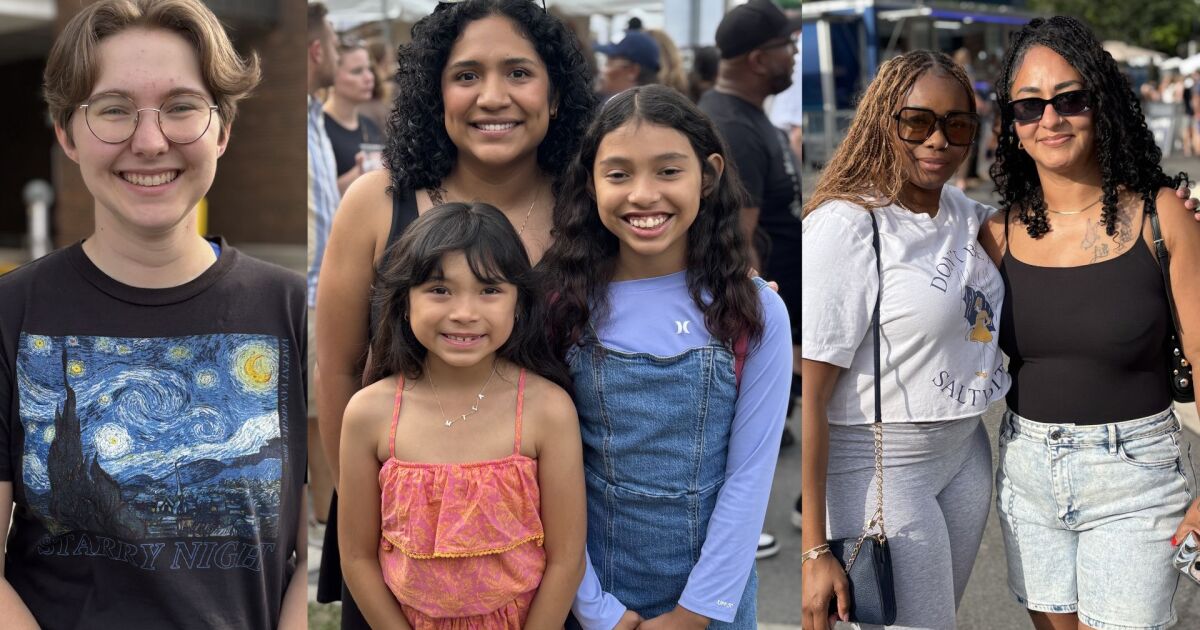
Festivalgoers say Milwaukee’s summer events fill a gap in downtown entertainment

