Culture
Antony: From a €95m Man Utd signing to a low-key loan exit in under three years


For INEOS, a regime intending to get to grips with Manchester United’s status as a loss-making enterprise, the potential €100million deal to bring Antony to Old Trafford stands out as a particularly acute example of the kind of lavish spending that has put the club in a precarious financial position.
With the Brazilian now in the Spanish city of Seville, having joined La Liga’s Real Betis on loan until the end of the season, United fans will be left contemplating how a player with such a price tag — £84.1million/$105.1m at the current exchange rate, the second-most expensive transfer in club history behind the re-signing of Paul Pogba in summer 2016 — could deliver just 12 goals and five assists in two and a half seasons.
The truth is United knew they were paying over the odds even at the time, according to sources familiar with the matter, speaking to The Athletic on condition of anonymity to protect relationships.
That awareness can be seen in Antony’s salary, which is akin to that of a mid-ranking member of the squad rather than a star signing. Antony agreed terms worth £140,000 per week for seasons when United are in the Champions League, plus bonuses based on individual performances, but because they are only competing in the second-tier Europa League this term, thus invoking the standard 25 per cent cut for their players, his salary has been around £105,000 a week.
Antony’s representatives had, when negotiating his deal, pitched at £250,000 per week, which would typically be commensurate with a transfer involving such a fee. Securing that would have represented a five-fold rise on what he had been earning at his previous club, Ajax of the Netherlands.
But his leverage in talks with United was weakened because he had told Ajax he wanted the move and, in his attempts to secure it, he stopped turning up for training in the closing days of that summer 2022 window. Figures at United were able to push back in contract talks in the knowledge Antony was desperate to join the Premier League club and they intimated improved terms could be on the cards if he did well, but that he would have to accept entry-level terms at first.
Antony scored on his United debut against Arsenal in September 2022 (Shaun Botterill/Getty Images)
Sticking to a relatively modest salary for a club of their revenue meant United had options when surveying the market for Antony this window. Betis, whose median salary is around £40,000 per week, according to Capology, could afford to push the boat out a little for the 24-year-old. They will cover 84 per cent of his wage at a minimum, plus potential bonuses based on achievements, with only former Real Madrid and Spain forward Isco thought to be earning more than him in their squad.
But the disparity in Antony’s wage compared to his transfer fee, which is still the 18th highest in football history, is evidence of United appreciating that they were paying an excessive amount to Amsterdam-based Ajax even while signing the paperwork.
There was internal pushback over the money involved from people minded to protect the club’s finances and the decision on confirming the move was not unanimous, but senior figures decided they could live with the transfer premium given the circumstances, partly because the salary was not that high. Financial fair play (FFP) regulations and the club’s cash levels were a consideration, but they did not dominate thoughts in 2022 the way they do at present.
Antony was intended to be a starting winger, which would have made the overall cost more palatable, but his status on the periphery of the side for the majority of his time at United has accentuated his enormous cost.
How United got to that point is a case study of everything those now in charge of the club are determined to avoid.
Erik ten Hag’s first summer as Manchester United manager, in 2022, was overshadowed by the failed pursuit of Frenkie de Jong, which coloured conversations for months. The €85million set aside for midfielder De Jong’s proposed move from Barcelona caused a blockage on spending in other areas, with United only freeing up major funds for Ajax defender Lisandro Martinez (in a deal worth £57m) by the time Ten Hag went off on pre-season (Christian Eriksen, a free agent, and Feyenoord full-back Tyrell Malacia were the other signings).
Ten Hag wanted Martinez and Antony from his previous club, but at that stage, Ajax would only sell one and the manager prioritised the Argentina international centre-back.
United had scouted Antony since his days at Sao Paulo’s academy, when he was only 15 years old. Reports to the club at that time said he had very good pace and technique but strongly favoured his left foot and had predictable decision-making. It was proposed he would need to get stronger and develop his weaker right side to succeed in the Premier League.
Antony’s summer 2020 move to Ajax saw United’s European scouts track his progress in the Netherlands, but during Ole Gunnar Solskjaer’s time as manager, some staff still valued him at only around £25million.
His record in the 2021-22 season of 12 goals and 10 assists in 33 games, including the Champions League, put him on the radars of Premier League sides looking for right-wingers the following summer. Liverpool, with Mohamed Salah’s contract up for renewal, had Antony on a list, as did Tottenham Hotspur. The anticipated fee at that stage was regarded as between £40million to £50m. He was also a full Brazil international, having made 11 senior appearances for his country to that point.

Antony had played under Erik ten Hag at Ajax before joining United (Michael Regan/Getty Images)
Midway through that window, United cut off talks with Ajax on Antony and privately communicated they would not pay more than £60million.
United had alternatives for the right-wing role, most prominently his fellow Brazilian Raphinha, who had scored 11 goals in 35 Premier League games to save Leeds United from relegation, but the Old Trafford recruitment team, together with Ten Hag’s personal influence, rated Antony as the better signing, partly due to him being three years younger. In any case, Raphinha indicated he preferred Barcelona and his £55million transfer to the Camp Nou was sealed in mid-July.
Cody Gakpo was another alternative to Antony, albeit he typically operated on the left or up front for another Dutch club, Eindhoven’s PSV. At one point, United looked to bring in both players, as doubts about Cristiano Ronaldo’s future back at the club continued (he would eventually leave in the November).
United agreed personal terms with Gakpo but, in the final days of the window, stopped short of making a bid to PSV as the rising cost of Antony became clear. The following January, Gakpo joined Liverpool in a deal worth up to £44million.

GO DEEPER
Antony, Manchester United’s €95million problem
Player recruitment is an inexact science and there are a multitude of reasons for how signings work out, but comparing Antony’s post-transfer impact with those of Raphinha and Gakpo, who cost their new clubs £14million more in combined fees, is a painful case of sliding doors for United fans. This season, Raphinha has 22 goals and 11 assists in 30 games for Barcelona and is currently ranked second top-scorer in the Champions League, while Gakpo has 14 goals and five assists in 32 games for Liverpool.
Back in August 2022, United returning to the bargaining table for Antony was partly triggered by the continued uncertainty over Mason Greenwood’s availability — on a football level, his absence took away a right-wing option — and more sharply the back-to-back defeats to Brighton and Brentford which kicked off Ten Hag’s reign.
United, with football director John Murtough leading the sporting department, did not want a manager they had chosen after a five-month process to fail. Meanwhile, chief executive Richard Arnold was alarmed at the prospect of missing out on Champions League revenues and the threat of kit manufacturer Adidas cutting payments due to a non-Champions League participation clause. United’s kit sponsorship deal at that time meant Adidas would shave 30 per cent off the £75million-per-year contract for a second season absent from Europe’s elite competition, equating to £22.5m.
Several sources reported a sense of panic at Carrington, the club’s training complex, during those days. Pressure was also being felt from supporters eager to see a new attacker, with Ten Hag pushing to sign a forward.

Antony celebrates scoring against fourth-tier Newport in the FA Cup in January 2024, ending a 31-game goal drought (Athena Pictures/Getty Images)
Arnold and Murtough held talks with Ajax chief executive Edwin van der Sar, bidding €80million, €90m, then €100m. In an interview with The Athletic in November 2022, Van der Sar said: “We would have liked to keep him here one year longer — there was not a dire need to sell him, we had money in the bank — but the fee got so high. We challenged United to go as far as possible. They have a potential world star.”
Ajax stood firm on their valuation, having let five other players leave that summer and being aware that another sale might seriously damage their new head coach Alfred Schreuder. Ten Hag’s replacement lost his job five months later.
Joel Glazer, then United’s co-chairman, was convinced to sanction the spending after seeing how much Antony wanted to join United.
The final terms were €95m guaranteed, with a potential €5m more in add-ons, which are not thought to have been realised.
Antony started well, scoring in each of his first three Premier League appearances, against Arsenal, Manchester City and Everton, and he delivered an excellent winner against Barcelona to crown a stirring European night at Old Trafford in February 2023. In the middle of that season, he started a group game for Brazil at the 2022 World Cup and came on in their quarter-final against Croatia. Ultimately, United qualified for the Champions League by finishing third in the Premier League, going some way to justifying his move.
In the summer of 2023, fellow winger Anthony Elanga was sold to Nottingham Forest for £15million, with his minutes at United restricted.
That September, Antony spent a month out of the squad after police launched an investigation due to his former partner, Gabriela Cavallin, making allegations of assault against him. Antony denied those allegations and similar ones by two other women — Rayssa de Freitas and Ingrid Lana — made in Brazilian media. The case in Brazil is now closed, but as of last week, Greater Manchester Police were still investigating the alleged incidents that are said to have occurred in the United Kingdom.
As previously reported by The Athletic, the potential police action did not show up on background checks made by United before signing Antony.

Antony scored the decisive goal as United beat Barcelona 4-3 on aggregate in the Europa League knockout round play-offs in 2023 (Alex Livesey – UEFA/UEFA via Getty Images)
His form, which had undulated during his first season, hit the skids. He then fell out with Ten Hag over being asked to play left-back.
In February, Ten Hag overlooked Antony for the visit of Fulham, turning to Omari Forson, a 19-year-old academy graduate who was making his first senior start. The next month, Ten Hag gave Antony brutal criticism in the dressing room after his display from the bench in a 2-0 win against Everton, to the extent that the player looked affected.
Antony featured in around half of United’s Premier League games last season, totalling 1,323 minutes from a possible 3,420.
During an interview in pre-season in Los Angeles last August, Antony said that he had learnt from his issues and would look for self-improvement by writing himself notes. By the final stages of Ten Hag’s United tenure in the autumn, he was getting more minutes, notably being sent on ahead of Amad away to Fenerbahce in the Europa League on October 24.
On the sidelines that night, Amad appeared deeply frustrated. Ten Hag defended his decision by pointing to Antony’s performances in training. Given Amad’s emergence to prominence since Ruben Amorim’s November appointment as Ten Hag’s replacement, fans will see another link in the chain reaction of Antony’s arrival.
Amorim tried playing Antony as a wing-back, but his exit now will make room in his squad, and in the accounts, for a new arrival to more suitably fit the new head coach’s 3-4-2-1 system.
United are in talks with Italian club Lecce for 20-year-old Denmark international Patrick Dorgu and are considering triggering the buyback option on Alvaro Fernandez Carreras, 21, who has impressed since moving to Benfica last summer.
United will hope Antony can enjoy a productive loan at Betis to raise his value ahead of an expected permanent summer exit.
At a cost of £82million upon signing, his transfer fee can be spread over the length of his five-year contract, meaning a remaining book value of £34.2m. Getting a club to match that figure, allowing United to offset his price for the purposes of financial regulations, will still be a tough ask.
GO DEEPER
‘Good or bad, he tells us everything’ – Understanding Ruben Amorim’s brutal honesty
(Top photo: Yagiz Gurtug/Middle East Images/AFP via Getty Images)



Whatever you do, don’t think of a bird.
Now: What kind of bird are you not thinking about? A pigeon? A bald eagle? Something more poetic, like a skylark or a nightingale? In any case, would you say that this bird you aren’t thinking about is real?
Before you answer, read this poem, which is quite literally about not thinking of a bird.
Human consciousness is full of riddles. Neuroscientists, philosophers and dorm-room stoners argue continually about what it is and whether it even exists. For Wallace Stevens, the experience of having a mind was a perpetual source of wonder, puzzlement and delight — perfectly ordinary and utterly transcendent at the same time. He explored the mysteries and pleasures of consciousness in countless poems over the course of his long poetic career. It was arguably his great theme.
Stevens was born in 1879 and published his first book, “Harmonium,” in 1923, making him something of a late bloomer among American modernists. For much of his adult life, he worked as an executive for the Hartford Accident and Indemnity Company, rising to the rank of vice president. He viewed insurance less as a day job to support his poetry than as a parallel vocation. He pursued both activities with quiet diligence, spending his days at the office and composing poems in his head as he walked to and from work.
As a young man, Stevens dreamed of traveling to Europe, though he never crossed the Atlantic. In middle age he made regular trips to Florida, and his poems are frequently infused with ideas of Paris and Rome and memories of Key West. Others partake of the stringent beauty of New England. But the landscapes he explores, wintry or tropical, provincial or cosmopolitan, are above all mental landscapes, created by and in the imagination.
Are those worlds real?
Let’s return to the palm tree and its avian inhabitant, in that tranquil Key West sunset of the mind.
Until then, we find consolation in fangles.

When the director Rob Reiner cast his leads in the 1986 film “Stand by Me,” he looked for young actors who were as close as possible to the personalities of the four children they’d be playing. There was the wise beyond his years kid from a rough family (River Phoenix), the slightly dim worrywart (Jerry O’Connell), the cutup with a temper (Corey Feldman) and the sensitive, bookish boy.
Wil Wheaton was perfect for that last one, Gordie Lachance, a doe-eyed child who is ignored by his family in favor of his late older brother. Now, 40 years later, he’s traveling the country to attend anniversary screenings of the film, alongside O’Connell and Feldman, which has thrown him back into the turmoil that he felt as an adolescent.
Wheaton has channeled those emotions and his on-set memories into his latest project: narrating a new audiobook version of “The Body,” the 1982 Stephen King novella on which the film was based.
A few years ago, Wheaton started to float the idea of returning to the story that gave him his big break — that of a quartet of boys in 1959 Oregon, in their last days before high school, setting out to find a classmate’s dead body. “I’ve been telling the story of ‘Stand By Me’ since I was 12 years old,” he said.
But this time was different. Wheaton, who has narrated dozens of audiobooks, including Andy Weir’s “The Martian” and Ernest Cline’s “Ready Player One,” says he has come to enjoy narration more than screen acting. “I’m safe, I’m in the booth, nobody’s looking at me and I can just tell you a story.”
The fact that he, an older man looking back on his younger years, is narrating a story about an older man looking back on his younger years, is not lost on Wheaton. King’s original story is bathed in nostalgia. Coming to terms with death and loss is one of its primary themes.
Two days after appearing on stage at the Academy Awards as part of a tribute to Reiner — who was murdered in 2025 alongside his wife, Michele — Wheaton got on the phone to talk about recording the audiobook, reliving his favorite scenes from the film and reexamining a quintessential story of childhood loss through the lens of his own.
This interview has been edited and condensed.
“I felt really close to him, and my memory of him.”
Wheaton on channeling a co-star’s performance.
There’s this wonderful scene in “Stand By Me.” Gordie and Chris are walking down the tracks talking about junior high. Chris is telling Gordie, “I wish to hell I was your dad, because I care about you, and he obviously doesn’t.”
It’s just so honest and direct, in a way that kids talk to each other that adults don’t. And I think that one of the reasons that really sticks with people, and that piece really lands on a lot of audiences, and has for 40 years, is, just too many people have been Gordie in that scene.
That scene is virtually word for word taken from the text of the book. And when I was narrating that, I made a deliberate choice to do my best to recreate what River did in that scene.
“You’re just a kid,
Gordie–”
“I wish to fuck
I was your father!”
he said angrily.
“You wouldn’t go around
talking about takin those stupid shop courses if I was!
It’s like
God gave you something,
all those stories
you can make up, and He said:
This is what we got for you, kid.
Try not to lose it.
But kids lose everything
unless somebody looks out for them and if your folks
are too fucked up to do it
then maybe I ought to.”
I watched that scene a couple of times because I really wanted — I don’t know why it was so important to me to — well, I know: because I loved him, and I miss him. And I wanted to bring him into this as best as I could, right?
So I was reading that scene, and the words are identical to the script. And I had this very powerful flashback to being on the train tracks that day in Cottage Grove, Oregon. And I could see River standing next to them. They’re shooting my side of the scene and there’s River, right next to the camera, doing his off-camera dialogue, and there’s the sound guy, and there’s the boom operator. There’s my key light.
I could hear and feel it. It was the weirdest thing. It’s like I was right back there.
I was able to really take in the emotional memory of being Gordie in all of those scenes. So when I was narrating him and I’m me and I’m old with all of this experience, I just drew on what I remembered from being that little boy and what I remember of those friendships and what they meant to me and what they mean to me today.
“Rob gave me a gift. Rob gave me a career.”
Wheaton recalls the “Stand By Me” director’s way with kids on set, as well as his recent Oscars tribute.
Rob really encouraged us to be kids.
Jerry tells the most amazing story about that scene, where we were all sitting around, and doing our bit, and he improvised. He was just goofing around — we were just playing — and he said something about spitting water at the fat kid.
We get to the end of the scene, and he hears Rob. Rob comes around from behind the thing, and he goes, “Jerry!” And Jerry thinks, “Oh no, I’m in trouble. I’m in trouble because I improvised, and I’m not supposed to improvise.”
The context for Jerry is that he had been told by the adults in his life, “Sit on your hands and shut up. Stop trying to be a cutup. Stop trying to be funny. Stop disrupting people. Just be quiet.” And Jerry thinks, “Oh my God. I didn’t shut up. I’m in trouble. I’m gonna get fired.”
Rob leans in to all of us, and Rob says, “Hey, guys, do you see that? More of that. Do that!”
The whole time when you’re a kid actor, you’re just around all these adults who are constantly telling you to grow up. They’re mad that you’re being a kid. Rob just created an environment where not only was it supported that we would be kids — and have fun, and follow those kid instincts and do what was natural — it was expected. It was encouraged. We were supposed to do it.
They chanted together:
“I don’t shut up,
I grow up.
And when I look at you I throw up.”
“Then your mother goes around the corner
and licks it up,”
I said, and hauled ass out of there,
giving them the finger over my shoulder as I went.
I never had any friends later on
like the ones I had when I was twelve.
Jesus, did you?
When we were at the Oscars, I looked at Jerry. And we looked at this remarkable assemblage of the most amazingly talented, beautiful artists and storytellers. We looked around, and Jerry leans down, and he said, “We all got our start with Rob Reiner. He trusted every single one of us.”
And to stand there for him, when I really thought that I would be standing with him to talk about this stuff — it was a lot.
“I was really really really excited — like jumping up and down.”
The scene Wheaton was most looking forward to narrating: the tale of Lard Ass Hogan.
I was so excited to narrate it. It’s a great story! It’s a funny story. It’s such a lovely break — it’s an emotional and tonal shift from what’s happening in the movie.
I know this as a writer: You work to increase and release tension throughout a narrative, and Stephen King uses humor really effectively to release that tension. But it also raises the stakes, because we have these moments of joy and these moments of things being very silly in the midst of a lot of intensity.
That’s why the story of Lard Ass Hogan is so fun for me to tell. Because in the middle of that, we stop to do something that’s very, very fun, and very silly and very celebratory.
“Will you shut up and let him tell it?”
Teddy hollered.
Vern blinked.
“Sure. Yeah.
Okay.”
“Go on, Gordie,”
Chris said. “It’s not really much—”
“Naw,
we don’t expect much from a wet end like you,”
Teddy said,
“but tell it anyway.”
I cleared my throat. “So anyway.
It’s Pioneer Days,
and on the last night
they have these three big events.
There’s an egg-roll for the little kids and a sack-race for kids that are like eight or nine,
and then there’s the pie-eating contest.
And the main guy of the story
is this fat kid nobody likes
named Davie Hogan.”
When I narrate this story — whenever there is a moment of levity or humor, whenever there are those brief little moments that are the seasoning of the meal that makes it all so real and relatable — yes, it was very important to me to capture those moments.
I’m shifting in my chair, so I can feel each of those characters. It’s something that doesn’t exist in live action. It doesn’t exist in any other media.
“I feel the loss.”
Wheaton remembers River Phoenix.
The novella “The Body” is very much about Gordie remembering Chris. It’s darker, and it’s more painful, than the movie is.
I’ve been watching the movie on this tour and seeing River a lot. I remember him as a 14- and 15-year-old kid who just seemed so much older, and so much more experienced and so much wiser than me, and I’m only a year younger than him.
What hurts me now, and what I really felt when I was narrating this, is knowing what River was going through then. We didn’t know. I still don’t know the extent of how he was mistreated, but I know that he was. I know that adults failed him. That he should have been protected in every way that matters. And he just wasn’t.
And I, like Gordie, remember a boy who was loving. So loving, and generous and cared deeply about everyone around him, all the time. Who deserved to live a full life. Who had so much to offer the world. And it’s so unfair that he’s gone and taken from us. I had to go through a decades-long grieving process to come to terms with him dying.
Near the end
of 1971,
Chris
went into a Chicken Delight in Portland
to get a three-piece Snack Bucket.
Just ahead of him,
two men started arguing
about which one had been first in line. One of them pulled a knife.
Chris,
who had always been the best of us
at making peace,
stepped between them and was stabbed in the throat.
The man with the knife had spent time in four different institutions;
he had been released from Shawshank State Prison
only the week before.
Chris died almost instantly.
It is a privilege that I was allowed to tell this story. I get to tell Gordie Lachance’s story as originally imagined by Stephen King, with all of the experience of having lived my whole adult life with the memory of spending three months in Gordie Lachance’s skin.

Welcome to Great Adaptations, the Book Review’s regular multiple-choice quiz about printed works that have gone on to find new life as movies, television shows, theatrical productions and more. This week’s challenge highlights offbeat television shows that began as comic books. Just tap or click your answers to the five questions below. And scroll down after you finish the last question for links to the comics and their screen versions.

Tiger Woods involved in rollover crash in Florida less than 2 weeks before Masters: reports

Fox News AI Newsletter: Family turns down $26M from AI giant to keep farmland

Commentary: How a custody fight over an old dog showed why lawyers should never trust AI to tell the truth
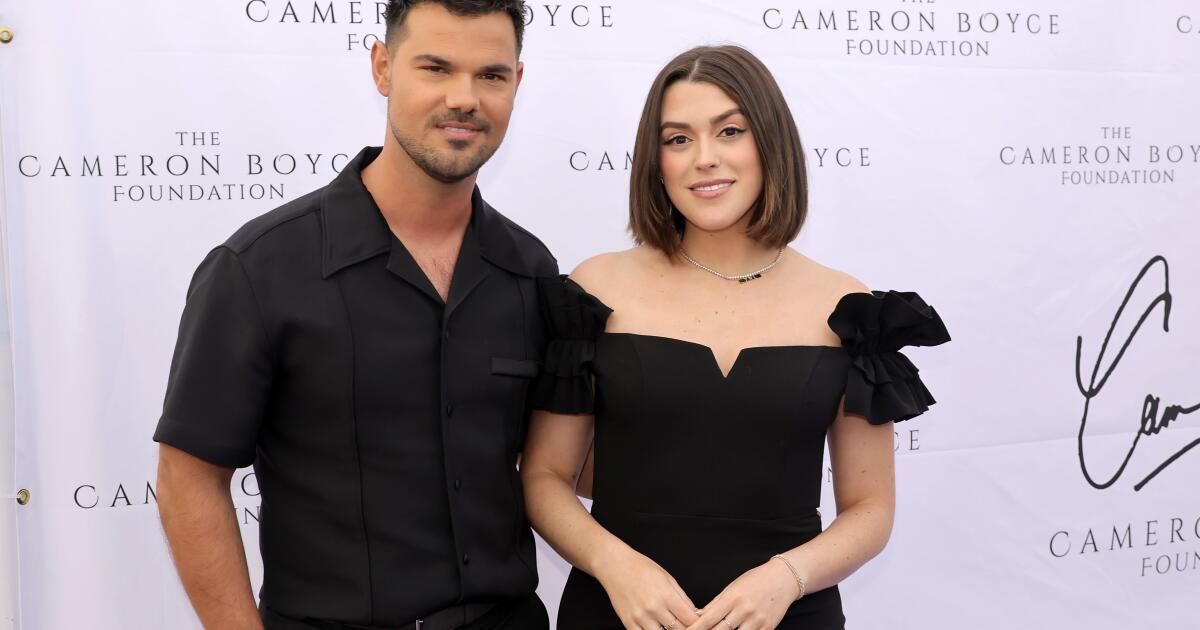
The two Taylor Lautners announce a baby Lautner is on the way

L.A. Affairs: Our night together reminded me of what I’d been missing this entire time

Florida High School Football Rankings: Top 25 teams – Oct. 21

How old is Bo Nix? What to know about Oregon quarterback ahead of 2024 NFL Draft

Cleary's 21 help Le Moyne down Central Connecticut State 69-64 in OT

99th annual Pony Swim held in Virginia

Indiana Members Credit Union announced as new anchor tenant at Bottleworks District

US diplomat Marco Rubio denounces settler violence, tolls in Hormuz strait

Iran-linked hackers have breached FBI Director Kash Patel’s personal emails | CNN Politics

Live: CPAC 2026 Day 2

Video: Will ICE Change Under Its New Leader?

DHS shutdown breakthrough comes at cost for Republicans as funding fights nears end
-

 Detroit, MI1 week ago
Drummer Brian Pastoria, longtime Detroit music advocate, dies at 68
-

 Movie Reviews1 week ago
‘Youth’ Twitter review: Ken Karunaas impresses audiences; Suraj Venjaramoodu adds charm; music wins praise | – The Times of India
-

 Sports6 days ago
IOC addresses execution of 19-year-old Iranian wrestler Saleh Mohammadi
-

 New Mexico5 days ago
Clovis shooting leaves one dead, four injured
-
 Business1 week ago
Disney’s new CEO says his focus is on storytelling and creativity
-

 Technology5 days ago
YouTube job scam text: How to spot it fast
-

 Tennessee4 days ago
Tennessee Police Investigating Alleged Assault Involving ‘Reacher’ Star Alan Ritchson
-

 Texas1 week ago
How to buy Houston vs. Texas A&M 2026 March Madness tickets