Crypto
SEC Alleges NovaTech Ltd Ran Fraudulent Crypto-Centered Scheme


The Securities and Exchange Commission (SEC) charged NovaTech Ltd, its operators, Cynthia and Eddy Petion, and the company’s top promoters with running a fraudulent scheme centered on crypto assets.
The defendants are charged with running a multi-level marketing company that claimed it would invest victims’ funds in crypto assets but did so with only a fraction of the funds, the SEC said in a Monday (Aug. 12) press release.
“NovaTech and the Petions caused untold losses to tens of thousands of victims around the world,” Eric Werner, director of the SEC’s Fort Worth Regional Office, said in the release.
NovaTech Ltd. did not immediately reply to PYMNTS’ request for comment.
The SEC’s complaint said that the Petions told investors that NovaTech would invest their funds on crypto asset and foreign exchange markets but instead used most of those funds to make payments to other investors, to pay commission to promoters or to be taken by the Petions, with only a fraction of the funds used for trading, according to the release.
The complaint also alleged that when NovaTech collapsed, most investors suffered substantial losses because they were unable to withdraw their funds, per the release.
The company raised over $650 million in crypto assets from more than 200,000 investors around the world, the release said.
In addition to its charges against the company and the Petions, the SEC charged six of NovaTech’s top promoters, saying that they recruited investors and promoters and were paid “substantial commissions” for doing so, according to the release.
“As we allege, MLM schemes of this size require promoters to fuel them, and today’s action demonstrates that we will hold accountable not just the principal architects of these massive schemes, but also promoters who spread their fraud by unlawfully soliciting victims,” Werner said in the release.
In another case related to crypto, the SEC said in March that it charged 17 individuals connected with Houston-based CryptoFX, alleging that they were involved in a Ponzi scheme.
The SEC’s complaint alleged that leaders of the CryptoFX network solicited investors by promising that the organization’s trading in crypto assets and foreign exchange would deliver returns of 15% to 100%, raised $300 million, and then used most of the funds to pay “supposed returns” to other investors and to pay commissions and bonuses to themselves.



Bitcoin Tumbles Amid U.S.-Iran Clashes
Bitcoin tumbled to the $62,000 range Monday as a weekend exchange of gunfire between U.S. and Iranian forces threatened to spark another energy crisis. Market data showed the top cryptocurrency plunged from a 24-hour peak of $64,385 late Sunday to $62,037 by 10:15 a.m. EST Monday.
While the cryptocurrency attempted to reclaim the $63,000 resistance level, another sell-off saw it retreat to $62,200, reversing earlier gains and leaving it down nearly 3%. The decline dragged its market capitalization down from $1.28 trillion to approximately $1.25 trillion as of 12:40 p.m. EST. The slide, in turn, helped trim the crypto economy’s aggregate market capitalization to $2.24 trillion.
Meanwhile, the slide triggered the liquidation of $83 million in long leveraged positions and $12 million in shorts. Overall, liquidations across the crypto economy topped $322 million, with liquidated long bets accounting for $267 million of the total.
Following earlier strikes in the week, the U.S. military upped the ante Sunday, striking more than 100 targets across Iran. The U.S. maintains the strikes were in response to Iranian attacks on shipping vessels transiting the Strait of Hormuz. In addition to the strikes, some media reports suggested the U.S. military was contemplating a blockade on Iranian ports.
Iran, which rejects the allegations, launched retaliatory strikes targeting U.S. bases and installations across five Gulf countries, including Qatar and Tehran’s ally Oman. Iran insists Washington is violating a memorandum of understanding (MoU).
The apparent return to full combat operations came days after U.S. President Donald Trump declared the ceasefire between the two sides over. The U.S. leader also accused Tehran of violating the terms of the MoU, which requires Iran to reopen the Strait of Hormuz.
Following the latest escalation, oil prices jumped 4.5%, with the global benchmark Brent crude breaching the $80-per-barrel mark. According to analysts, market concern is expanding beyond crude oil prices, with investors increasingly focused on disruptions to global refining capacity and fuel supply chains. Ongoing conflicts have affected refinery operations across the Middle East and, recently, key global shipping routes in the Russia-Ukraine region.
“Even if crude oil prices stabilize, gasoline and diesel prices could remain elevated due to limited refined fuel availability. This creates a risk that energy inflation may prove more persistent than markets currently anticipate,” a Bitunix analyst asserted in a recent report.
For global markets, including crypto, the central question for this week extends beyond whether U.S. inflation rises again. The bigger issue is whether global capital costs continue moving higher.
With AI investment absorbing significant funding, energy supply chains facing uncertainty, and Federal Reserve policy remaining unsettled, risk assets are likely to remain driven by the interaction among interest rates, liquidity conditions and corporate financing costs.
“For bitcoin, reclaiming and holding above $64,000 could improve short-term momentum. However, continued pressure from higher capital costs may keep BTC trapped within a broader consolidation range,” the analyst said.
Crypto
The Tech Billionaire Takeover review – a surprisingly fun look at the crypto bros threatening democracy

Matt Shea’s documentary is bookended by two stark facts. One is that the wealth of the world’s 12 richest people is equal to that of the poorest 50% of humanity (you can argue about whether 12 is exactly right, but it’s certainly a horrifyingly small number). The other is that in recent US election cycles, the fossil fuel industry has been replaced as the biggest political donor by a new force: cryptocurrency.
In an hour that manages to be more entertaining than terrifying despite sailing into very murky waters, Shea explores how a fresh breed of tech billionaires are looking to make a bold new move. He shows that in a traditional western democracy, the principle that citizens all have an equal vote and are all equally beholden to the law is heavily compromised by a tiny minority of rich citizens. These people influence what the electorate votes for, by bankrolling politicians and owning media companies, as well as using their wealth to ensure rules do not properly apply to them. But plutocrats still find this system frustrating, thanks to those pesky elections and that annoying rule of law. What’s next?
Shea meets people who have made silly amounts of wonga from cryptocurrency – a sector that claims to be dedicated to freedom and transparency, but is notoriously resistant to proper accountability. First, he observes as Justin Sun, a Chinese tech entrepreneur with personal wealth of around $8.5bn, gets his crypto trading network Tron listed on Nasdaq without going through the standard process of listing the company, via a “reverse merger” with a failing company. That is to say, he buys the business – which is already listed – and changes its name to Tron Inc.
That’s all perfectly legal and not too remarkable, but soon we’re off to a muddy peninsula in the Danube between Croatia and Serbia. This has been claimed by crypto bros as Liberland, a “micronation” that will supposedly become a hi-tech utopia where no tax is paid and regulatory red tape is eliminated. At the moment, though, it’s a few tents that are regularly raided by Croatian police, who disagree about the land having no pre-existing owner.
Shea meets the president, a man named Vit Jedlicka who tries and fails to control what his acolytes talk to the film-maker about. One of them escapes for a one-on-one with Shea, where he stumbles as he attempts to counter the argument that Liberland’s electoral system, under which the purchase of more crypto “merits” gives you more voting power, means its version of liberty is available to relatively few people. The elected prime minister of Liberland? Justin Sun.
At this point Shea is jousting for fun with weirdos, as he is when he talks to the writer Curtis Yarvin, who believes democratic governments are inferior to rule via corporate boards headed up by CEO “monarchs”. The programme gets wackier still when Shea arrives in Singapore for Token 2049, a conference for people who believe crypto is the future and governments can’t be trusted. A man with bitcoin logos all over his suit babbles something about a “new world order” imminently implementing a satanic global dominion.
There’s more fun and games as Shea tours the crypto-themed stands, but one of the main sponsors of the event is Tron, and the keynote speaker is Donald Trump Jr. He’s there on behalf of World Liberty Financial, the crypto company co-founded by the Trump family, who are estimated to have made more than $2bn from their various cryptocurrency ventures. Several investors in World Liberty – among them Justin Sun, before he spectacularly fell out with the Trumps – have subsequently benefited from favourable legal or regulatory decisions by the US government. Trump has denied any link between investments in his family companies and government decisions affecting the investors. His representative calls it: “the same, tired narrative that Democrats have pushed … for a decade. … There are no conflicts of interest.” When Shea raises the issue with Sun, a PR adviser heckles from behind the camera and shuts the question down.
Here is where Shea’s thesis falters slightly. Replacing governments with digital hegemonies might make sense to crypto billionaires, who don’t have to worry about things a functional society offers such as reliable physical infrastructure or a healthy workforce, because they just want machines to turn their money into more money. But taking over countries, or setting up new ones, is unnecessary for now thanks to the Trump regime. There’s no need to form your own government if the current US administration already offers frictionless routes to even greater wealth.
Either way, though, none of this is good and all of it is to be monitored, albeit probably from a position of helpless impotence. The rich keep getting richer and the powerful keep finding ways to help them do it.

Key Takeaways
- Bitcoin difficulty fell 5% to 127.17 trillion on July 11, its 14th adjustment of 2026.
- Hashrate dropped 7.9% in ten days to 908 EH/s, driving the difficulty cut.
- Hashprice rose 12.5% to $31.1 per PH/s but stayed 37.2% below its October 2025 peak.
The adjustment landed at block height 957600. Difficulty moved from 133.87 trillion to 127.17 trillion, a decline of roughly 6.70 trillion. The change took effect at 4:09:11 p.m., based on the block timestamp. The prior epoch ran about 14 days, 18 hours, and 9 minutes, longer than Bitcoin’s 14-day target for 2,016 blocks. That pace works out to an average block time of 10 minutes, 32 seconds, about 5.1% slower than the protocol’s 10-minute target. The 5% cut brought the network back toward that target.
A Year Defined by Wide Swings
Eight of the 14 difficulty adjustments so far in 2026 have been negative and six positive. The average adjustment was negative 0.87%, but the average absolute move was 5.30%, a gap that points to sharp back-and-forth activity hiding behind a mild-looking average. Compounded from the difficulty in place before the first adjustment on Jan. 8, the network has dropped approximately 14.22%. The July 11 reading ranks as the third-lowest of the year, behind only June 13’s 124.93 trillion and Feb. 7’s 125.86 trillion.
Hashrate Slides Toward Its 2026 Range
The seven-day average hashrate via hashrateindex.com stood near 908 EH/s on July 11, down about 14.8% from the Jan. 1 level of roughly 1,065 EH/s. That figure sits about 21.3% below the one-year peak of 1,154 EH/s reached in October 2025, and just 3.3% above the 2026 low of 879 EH/s set in early February.
The most recent drop happened fast. Hashrate was near 986 EH/s on July 1 and fell to about 908 EH/s by July 11, a decline of roughly 7.9% in ten days. That pullback slowed block production and fed directly into the 5% difficulty cut.
Hashprice Climbs but Stays Deeply Discounted
Hashprice, the expected revenue miners earn per petahash per second, closed near $31.1 on July 11. That marks a recovery of about 12.5% from the $27.6 level seen around July 1, but the metric remains down roughly 16.4% since Jan. 1 and about 37.2% below its one-year high of $49.4, reached in late October 2025. The 2026 low of $27.2 came in early June.
How Difficulty, Hashrate, and Hashprice Fit Together
Difficulty is a lagging measure. It does not track hashrate directly, but it reacts to how fast the previous 2,016 blocks were mined. When hashrate falls, blocks slow, and difficulty drops at the next adjustment. Lower difficulty then raises the expected revenue for each unit of hashpower still running, which can lift hashprice if Bitcoin’s price and fee income hold steady.
The June-to-July stretch shows the mechanism in motion. Hashprice bottomed near $27.2 in early June. Difficulty fell 10.09% on June 13. Hashrate then returned and difficulty rose 7.15% on June 26. Hashrate weakened again, and difficulty fell another 5% on July 11, with hashprice ending the period at $31.1.
All three measures have traced a pattern of lower highs in 2026. Difficulty peaked at 146.47 trillion on Jan. 8 and has not come close since, topping out near 138.97 trillion in April and 133.87 trillion in June. Hashprice peaked at $49.4 in October 2025, then $41.8 in January, then $39 in May. Hashrate peaked at 1,154 EH/s in October 2025, 1,087 EH/s in late February, and has struggled to hold 1,000 EH/s since.
What It Means for Miners and Traders
Each recovery in hashrate and hashprice has fallen short of the one before it. Difficulty relief has softened the blow for miners still operating, but it has not been enough to restore hashprice to earlier levels. For traders, the pattern points to a mining sector adjusting to tighter margins rather than one in a single sustained pullback. Effective computing power has repeatedly returned to a band between roughly 880 and 910 EH/s before rebounding, though it remains unclear whether that range marks a durable floor or another stop on the way lower.
-

 Politics5 minutes ago
Hegseth announces joint task force with DOJ to prosecute leaks to journalists ‘with the full force of the law’
-

 Health11 minutes ago
Microwaved squishy toy explodes onto boy’s face and chest amid viral trend, causing horrific burns
-

 Sports17 minutes ago
FBI, Atlanta police target unauthorized drones flying near World Cup venues
-

 Technology23 minutes ago
Why careful people still end up on data broker sites
-
 Business29 minutes ago
Netflix to add videos from digital publishers to its homepage
-
 Entertainment35 minutes ago
Tom Segura and Christina Pazsitzky split after 18 years of marriage
-
 Lifestyle41 minutes ago
Like ‘rotten flesh’? Thousands rush to whiff double corpse flower at Huntington
-
 Politics47 minutes ago
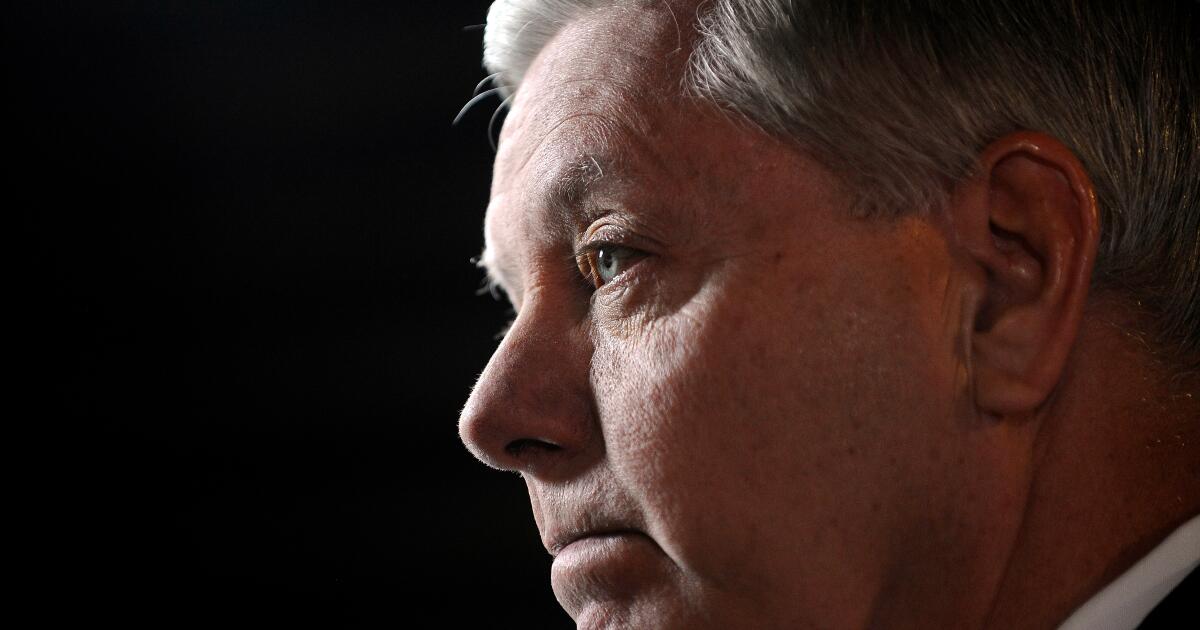
Preliminary report reveals cause of death for Sen. Lindsey Graham

