Crypto
FBI Issues New Warning If You Buy Crypto From An Exchange


FBI issues new crypto warning
With the billions of dollars held by cryptocurrency exchanges, it’s little surprise to find them being actively targeted by scammers. The FBI has just warned that scammers are “impersonating cryptocurrency exchange employees to steal funds.”
As scams go, this is fairly simple. An unexpected call or text from a supposed exchange staffer warns the consumer that there’s an issue with the account, suggesting that a theft or fraud might be underway. Then login details are either requested or a login link provided. Either way, those credentials are then misused.
While no details have been released as regards a specific campaign, this is just the latest socially engineered campaign that plays a frightening numbers game—call many, fool few. I’d hope that most of you reading this wouldn’t ever disclose login details to any such call. Remember, banks and exchanges will never request security credentials. You’d always be asked to login the usual way.
With that in mind, if you do receive a call from an exchange—or any other financial institution, always assume the caller is a fraudster unless they’re able to identify themselves beyond’s any reasonable doubt. You can always insist on calling back using usual contact numbers.
The FBI’s advice if you do receive such a call is straightforward:
- If you receive a call or message indicating any kind of account problem or compromise, do not respond, even if it appears official and indicates you must act immediately.
- Hang up. Call the cryptocurrency exchange’s official phone number to verify if there is a problem. Do not use any phone number the caller provides.
- Do not go to any websites or click on links the caller sends you. Navigate to the official cryptocurrency exchange website separately.
- If anyone asks for your account log-in information at any point, do not provide it.
- Avoid clicking links, downloading files, or opening attachments in unsolicited messages.
- Be cautious of services that claim they can recover any lost cryptocurrency funds.
If you do believe you have been defrauded, then contact the exchange immediately and you can also report the suspected crime to the FBI’s IC3 at www.ic3.gov.
It’s only three months since the FBI’s last crypto warning, which was a much more sophisticated token impersonation scam. This, by contrast, is ridiculously simple.
Whether it’s crypto or simple banking, call scams are surging in the US. In its “State of the Call” report published earlier this year, Hiya reported that “threats to the security and trustworthiness of voice calls also remain as prevalent as ever–and have only grown worse over the past year.”
The voice company’s stats make stark reading: “28% of all 46.75 billion unknown calls processed by Hiya in 2023 were flagged as suspected spam and fraud. And consumers believe the problem is getting worse, with nearly 60% reporting that phone spam has increased in the last 12 months, and some even report there is no communication channel they trust.”
Most such scam calls are not specifically targeted and will simply play the laws of averages, citing the names of a well-known institution to find targets randomly. It’s no different to the scourge of emails and texts doing the same.
In any case, the FBI has issued a warning and so exchange users should be even more vigilant than usual over the coming days and weeks.



Crypto
British Airline Jet2 Shares Jump 9% After $536M Fuel Hedge Gain Offsets Middle East Travel Fears

Key Takeaways
- Jet2 recorded a $536 million balance sheet windfall on July 8 after locking in low-cost fuel derivatives.
- The Middle East conflict triggered a 67% decline in annual cash inflows as travelers delayed holiday bookings.
- CEO Steve Heapy announced a $335 million buyback program and expanding operations at London Gatwick Airport.
Sector Resilience Amid Fuel Volatility
British airline and package holiday provider Jet2 defied intense geopolitical instability and travel sector panic triggered by the Middle East war by reporting a more than $500 million balance sheet boost, fueled by the rising price of jet fuel.
As the conflict in the Middle East escalated, spiking fuel rates caused the value of the company’s fuel derivatives to soar. According to Jet2’s full financial results released July 8, an extra $536 million in income was primarily driven by these favorable fair value movements.
The financial buffer comes after widespread fears earlier this year that rising energy costs could push airlines into bankruptcy and force massive summer holiday cancellations. In the United States, higher fuel prices contributed to the collapse of low-budget airline Spirit in May. The United Kingdom had been labeled as the nation “most exposed” to the jet fuel crisis, forcing government ministers to scramble to protect airline fuel access and temporarily suspend airport capacity rules.
While Jet2 was able to mitigate the price shock, the broader conflict still took a toll on booking behaviors. The airline conceded that ongoing travel uncertainty from the war caused holidaymakers to delay their trips and book much closer to their departure dates than usual. As a result, Jet2’s cash inflow plummeted by 67% to approximately $103 million for the fiscal year ending March 31.
Financially, Jet2 reported mixed full-year results. Group revenue climbed 4% to $10.05 billion, but pre-tax profit slipped 7% to $738.6 million, hit hard by lower income earned on its cash deposits.
Despite the profit dip, operational metrics showed strong consumer demand. Jet2 increased its total seat capacity by 8% to 24 million and flew 20.8 million passengers — a 5% increase year-over-year. The company also announced a new $335 million share buyback program, pointing to robust liquidity and confidence in its midterm outlook.
On the stock market, shares of the AIM-listed company jumped 9% to $19.92 at Wednesday’s opening bell, leaving the stock up 5% for the year.
Chief Executive Issues Tax Warning
The financial report coincided with an aggressive political warning from Jet2 Chief Executive Steve Heapy. Speaking to shareholders, Heapy cautioned political figures — specifically naming prominent politician Andy Burnham — against treating the aviation and holiday industry as a “cash cow.”
Burnham is widely anticipated to enter Downing Street later this month following recent political shifts.
“Don’t treat the aviation or holiday industry as a cash cow, because taxes increase the price of flying,” Heapy said, pointing out that Jet2 had to absorb $67 million in additional regulatory and tax costs over the last year. “I think, you know, enough is enough.”
Operationally, Jet2 is pushing a major expansion strategy designed to challenge the UK’s dominant legacy carriers. In March, the airline launched a six-aircraft hub at London Gatwick Airport, signaling an aggressive move out of its traditional northern England strongholds. The company notes it now operates within a 90-minute drive of more than 90% of the UK population.


Key Takeaways
- LAB token cratered 90% over 48 hours, wiping out billions in market cap.
- ZachXBT slammed top centralized exchanges for failing to halt the July manipulation.
- Investors surged to avoid trading LAB as team token unlocks are set for later in July 2026.
LAB Trade Blames ‘Large Market Participants’
LAB, the native token of the multi-chain trading platform LAB Trade, suffered a catastrophic collapse this week, plunging from just over $7 to $1.25 on Wednesday—a staggering 80% decline in under 24 hours. This crash followed an equally brutal sell-off on Tuesday, which saw the token slide from nearly $17. In total, LAB wiped out nearly 90% of its value in just 48 hours.
The financial fallout was swift: a market capitalization that exceeded $5 billion on Tuesday morning evaporated to just $390 million by 3:30 p.m. EST on Wednesday. The freefall prompted the LAB Trade team to address the panic on X, where they expressed disappointment and deflected blame toward external heavy-sellers:
“While today’s market activity is disappointing, our product roadmap and long-term focus remain unchanged. We’re seeing significant selling pressure from large market participants. Several independent trading firms also hold substantial LAB positions that are not affiliated with our team. We’re working closely with our liquidity partners and continue to monitor market conditions,” the team said on X.
With this crash, LAB joins a notorious lineup of volatile tokens, such as RAVE, RIVER and SIREN. Each of these projects experienced meteoric rises followed by near-instantaneous erasures, sparking widespread “pump-and-dump” allegations against their respective teams and murky distribution networks.
Crypto Sleuth Slams Centralized Exchanges
Prominent on-chain detective ZachXBT, who previously flagged suspicious insider loans and market-maker coordination back in May, blasted major centralized exchanges ( CEXs) for failing to protect retail investors. Taking to X, ZachXBT criticized the lack of proactive intervention:
“Disappointing to see how no action was taken by Binance, Bitget, and Gate earlier to prevent it. If CEXs cared, profits from the accounts manipulating the price would be distributed to users at a minimum. Unlocks for investors were scheduled to begin later this month, however, multiple late vesting changes occurred in the past.”
ZachXBT reiterated his previous warnings that insiders have effectively controlled the entire circulating supply, allowing market makers to orchestrate extreme price manipulation on major exchanges. His final advice to the community was blunt: avoid trading LAB under any circumstances.

ZachXBT Names RAVE, RIVER, SIREN, and LAB as Victims of Bitget-Enabled Market Maker Fraud
Blockchain investigator ZachXBT has renewed his assault on Bitget, accusing the exchange of knowingly enabling market makers to run supply…


ZachXBT Names RAVE, RIVER, SIREN, and LAB as Victims of Bitget-Enabled Market Maker Fraud
Blockchain investigator ZachXBT has renewed his assault on Bitget, accusing the exchange of knowingly enabling market makers to run supply…
ZachXBT Names RAVE, RIVER, SIREN, and LAB as Victims of Bitget-Enabled Market Maker Fraud
Blockchain investigator ZachXBT has renewed his assault on Bitget, accusing the exchange of knowingly enabling market makers to run supply…
-

 Technology5 minutes ago
Microsoft’s carbon emissions went up 25 percent last year
-

 World8 minutes ago
Jailed Catholic woman’s hunger strike highlights Iran religious persecution — US demands action
-

 Politics13 minutes ago
Israel shares intelligence warning Iran plotted new assassination attempt against Trump: report
-

 Health20 minutes ago
Parasitic infection causing ‘explosive’ stomach illness exceeds 1,000 cases in northern state
-

 Sports23 minutes ago
London descends into disorder as Morocco fans flood streets after World Cup elimination by France
-

 Technology28 minutes ago
Google turns old phones into cloud servers
-
 Business35 minutes ago
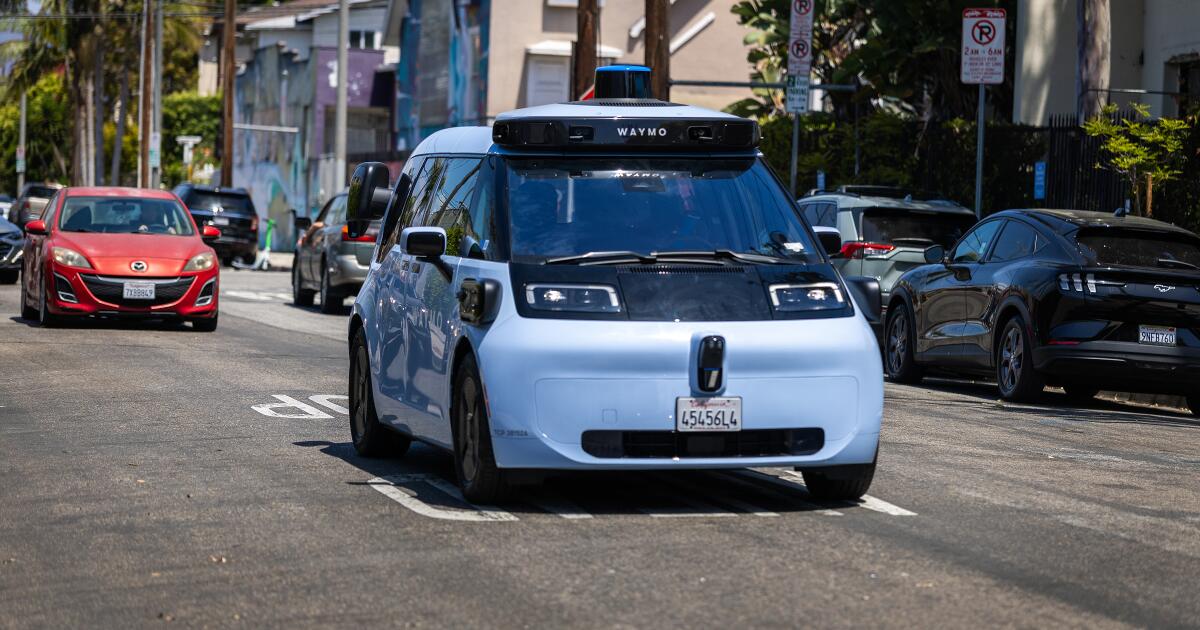
Waymo is starting robotaxi service in San Diego
-
 Entertainment38 minutes ago
‘Children of Blood and Bone’ author won’t see film after feud with star Amandla Stenberg

