Crypto
Cryptocurrency Market News: Reddit's Crypto Stash, Bitcoin Tops $53,000

:max_bytes(150000):strip_icc()/CryptoRoundup-RedditandBotcoin-56739f63ecb84cad91413fca042d8b72.png?ssl=1 "Cryptocurrency Market News: Reddit's Crypto Stash, Bitcoin Tops ,000")
Key Takeaways
- Bitcoin reclaimed $53,000 after more than two years Monday.
- Reddit revealed it owns bitcoin and ether in regulatory filings ahead of its initial public offering.
- Former U.S. President Donald Trump seemingly softened his stance on cryptocurrencies.
- The Federal Reserve released an analysis of the U.S. dollar-denominated stablecoin market.
- The U.S. Department of Energy has temporarily suspended an energy consumption survey of bitcoin miners after a lawsuit.
What Happened in Crypto Markets Last Week?
Bitcoin (BTC) started the week on a strong note, rising 3% Monday afternoon to top $53,000, its highest level since December 2021. Reddit’s disclosure of its cryptocurrency holdings, and former President Donald Trump’s seemingly softer stance on bitcoin last week may have added to the price momentum for the largest cryptocurrency.
Reddit’s Cryptocurrency Stash
As it gears up for an initial public offering (IPO), social media platform Reddit unveiled its ownership of bitcoin and ether (ETH) in a filing with the U.S. Securities and Exchange Commission last week. That adds to the list of mainstream companies such as MicroStrategy (MSTR) and Tesla (TSLA) that own bitcoin.
But that’s not all of Reddit’s crypto exposure. The company also has some of Polygon’s Matic (MATIC) for use in specific virtual goods transactions. Although the exact number of tokens remains undisclosed, Reddit clarified in the filing that the net value of these digital assets is considered “immaterial.” This strategic move underscores Reddit’s longtime engagement with cryptocurrencies and blockchain technology, which began as far back as 2014.
Trump Softens Bitcoin Stance
Former President and Republican candidate Donald Trump seemingly softened his stance toward cryptocurrency last week. In a recent interview on Fox News, Trump admitted that bitcoin has gained popularity, while still expressing his preference for the U.S. dollar.
This seems a bit of a walkback from the hardline anti-crypto stance he posted on Twitter (now X) in 2019.
USDC Dumps Tron
Stablecoin issuer Circle will cease to support its USD Coin (USDC) stablecoin on the Tron blockchain network, citing alignment with its commitment to maintaining the trustworthiness, transparency, and security of USDC.
Fed’s New Report On Stablecoins
On Friday, the Federal Reserve released a report on stablecoins, which was particularly focused on how the market operates during times of stress. Notably, the report found that, despite their assumed similarities, the USDC and Tether (USDT) stablecoins operate as their own distinctive markets.
“Even stablecoins that might appear to operate similarly on paper—fiat-backed stablecoins like USDT and USDC, for example—are distributed through primary markets with distinct characteristics in terms of frequency, number of participants, and response to external shocks,” the report said.
The report, which also covered BUSD and DAI, indicated further study of the stablecoin market is necessary, as these assets maintain a pivotal role in decentralized finance (DeFi).
Bitcoin Miners Get Energy Department To Pause Survey
The U.S. Department of Energy (DOE) has agreed to temporarily suspend its emergency survey on energy consumption by cryptocurrency miners after a lawsuit by bitcoin miner Riot Platforms (RIOT) and the Texas Blockchain Council.
The DOE’s statistical branch—the U.S. Energy Information Administration (EIA)—has paused its mandatory survey for a month and will safeguard the data already collected since Feb. 5. The lawsuit is aimed at halting the survey, citing potential harm to businesses from disclosing sensitive information.
What To Expect From Crypto Markets This Week
So far this week, its been a mixed bag. While bitcoin continued its onward march, there are some pockets of not-so-great news.
Cryptocurrency exchange BitForex has plunged into darkness amid reports of a $57 million outflow. According to reports, customers are currently unable to access the exchange as withdrawals ceased processing. The abrupt disappearance of the exchange’s online presence follows the departure of former CEO Jason Luo in January. Previously, the exchange faced allegations of faking trading volume and regulatory scrutiny for operating without a license in Japan.
Analysts will also be tracking spot bitcoin exchange-traded fund (ETF) inflows this week, as a drop in activity last week coincided with a stalling of the crypto asset’s recent price rise. Despite the relative drop in activity, last week was the fourth straight week of positive net inflows for digital asset investment products, according to CoinShares.

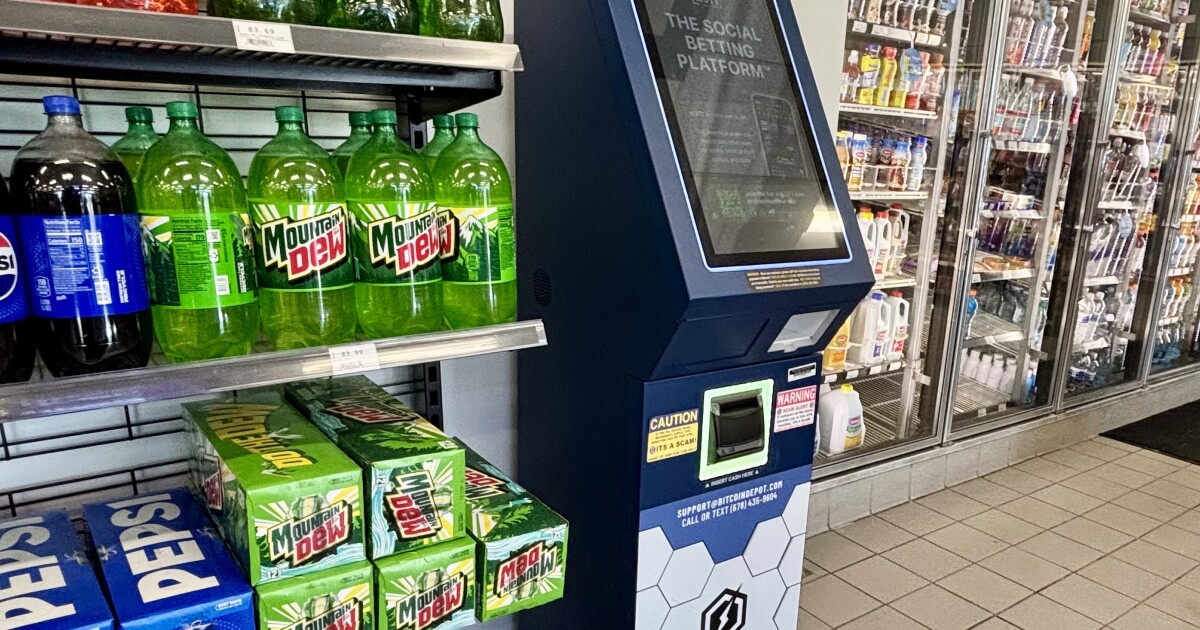
Victims scammed at cryptocurrency ATMs in New Hampshire could be reimbursed if they report the fraud within 14 days under a bill that cleared the Senate Thursday. The bipartisan legislation aims to stem an increase in cryptocurrency scams that cost Granite Staters $22 million in 2024.
A crypto scam plays out like most financial fraud, except the scammer persuades the victim to deposit cash into a cryptocurrency ATM. Once the ATM converts the money into cryptocurrency, it becomes very difficult to trace and reclaim.
Hampton’s police chief told lawmakers just over $2.6 million was lost to scammers in his town in 2024. The average age of the victims was 66.
Sen. Virginia Birdsell, a Hampstead Republican, urged colleagues to pass the legislation in the Senate Thursday.
“This is becoming a scourge on our elderly,” she said.
Under the bill, cryptocurrency ATM operators would have to hold a person’s first deposit for 48 hours to give them time to cancel it if they detect a scam. Operators could not accept more than $2,000 a day from a person. And operators would have to refund a scam victim if the victim reports fraud to the operator and authorities within 14 days.
Nearly 25 other states have similar laws, though many allow a victim to be funded within 90 days of a deposit.
Massachusetts is suing a crypto ATM operator, Bitcoin Depot, for allegedly allowing criminals to scam victims with its machines. Maine reached a $1.9 million settlement with the same operator this year and is giving victims until Wednesday to file a claim.
The New Hampshire bill heads next to the House.

Crypto ATM Data 2026: 597 Net Removals
Recent figures show the global count of crypto ATMs edged close to the 40,000 mark this month, yet data recorded on March 29, 2026, reveals a net reduction of 769 machines. The year opened with a drop of 139 crypto ATMs, followed by the addition of 231 new installations in February.
An additional 80 units were installed at the beginning of March, according to Coin ATM Radar’s net growth logs, though the removal of 769 machines ultimately pushed the year’s total to a net loss of 597. As of this weekend, the global tally of crypto ATMs sits at 38,928 machines. Geographic data from Coin ATM Radar shows the U.S. holds 30,247 of those units, representing 77.7% of the total.
Canada follows with 3,839 crypto ATMs, accounting for 9.9% of the worldwide figure. Europe maintains 1,727 machines, or roughly 4.4% of the overall count of 38,928. Taken together, the U.S., Europe, and Canada host 35,813 machines, comprising 92% of the global share. The remaining 8% is distributed across Asia, Oceania, and other regions.
The crypto ATM tracking site further indicates that the top ten global operators collectively oversee 30,450 machines, representing 78.2% of the total. The industry’s leading provider is Bitcoin Depot, which runs a commanding 9,246 machines (23.8% market share). It is followed by Coinflip with 5,493 machines (14.1%) and Athena Bitcoin with 4,045 machines (10.4%).
Rockitcoin holds a solid footprint with 2,757 machines (7.1%), while Bitstop and Margo operate 2,372 (6.1%) and 2,138 (5.5%) machines, respectively. Stats further show that bitcoin ( BTC) remains the most widely supported asset, available across nearly all machines tracked worldwide by Coin ATM Radar.
Following bitcoin, altcoins as a collective category are supported by 38,910 machines, suggesting that nearly every ATM offering bitcoin also includes at least one alternative asset. Among individual altcoins, ethereum ( ETH) leads with support at 22,200 locations, closely followed by litecoin ( LTC) at 21,292 and tether ( USDT) at 19,894.
Roughly 91.6% of crypto ATMs are configured to facilitate cryptocurrency purchases, while the remaining machines support both buying and selling of digital assets. Logs from Coin ATM Radar offer a revealing snapshot of recent crypto ATM reductions in 2026, showing that the 40,000 threshold remains just out of reach for the industry at present.
Whether the crypto ATM count clears 40,000 this year depends largely on whether operators expand or continue pulling machines. The numbers show a market sorting itself out; large providers like Bitcoin Depot, Coinflip, and Athena hold the majority of installations, while smaller operators account for the gap. With North America controlling over three-quarters of the global count, the industry’s direction remains tied closely to conditions in a single market.
FAQ 🔎
- How many crypto ATMs are there in the world in 2026? As of March 29, 2026, Coin ATM Radar tracks 38,928 active crypto ATMs globally.
- Which country has the most Bitcoin ATMs? The United States leads with 30,247 machines, representing 77.7% of the worldwide total.
- Who is the largest crypto ATM operator in 2026? Bitcoin Depot operates 9,246 machines, giving it a 23.8% share of the global market.
- What cryptocurrencies do crypto ATMs support? Bitcoin is available at nearly all machines, with ethereum supported at 22,200 locations and litecoin at 21,292.
Global Legal Insight publishes a yearly print-and-digital series that investigates urgent themes in business and law with contributions from legal experts worldwide. In the 2025 volume on Blockchain and Cryptocurrency, Ernst & Young Tax and Law Norway wrote the country chapter, which addresses whether cryptocurrency is lawful in Norway and surveys how cryptoassets are positioned domestically under Norwegian regulation.
Norway generally permits cryptoasset ownership and trading, while placing the strongest compliance expectations on intermediaries that exchange, safeguard, or facilitate transfers for others.
Cryptocurrency Regulation in Norway: Institutions and Policy Signals
The chapter presents perspectives from the Financial Supervisory Authority of Norway, the Ministry of Finance, and the Norwegian Central Bank on current market conditions and responsible approaches to a fast‑moving sector. It also distills the operative legal framework and key tax rules for digital assets. In practice, the Financial Supervisory Authority of Norway is the primary supervisory body for many compliance questions that arise when a business provides crypto-related services (for example, exchange services or custody-like safeguarding for clients), while tax reporting and assessment are handled by the Norwegian Tax Administration.
For crypto businesses, the most relevant requirements typically relate to anti-money laundering compliance, including customer due diligence, transaction monitoring, and internal controls. Businesses that provide exchange services between cryptoassets and fiat currency, or that provide services for holding or administering cryptoassets on behalf of others, may need to register with the Financial Supervisory Authority of Norway before offering services, and should be prepared to document ownership and management, governance arrangements, risk assessments, routines for customer checks, and recordkeeping. If you are looking for a “crypto license” in Norway, the practical path is usually a registration-based process tied to anti-money laundering obligations rather than a single, universal license for all crypto activity.
Legal Status and Compliance Overview
This piece is a practical reference for readers seeking clarity on how Norway governs crypto asset activity. It delivers a concise, trustworthy roundup of regulation in Norway, touching on consumer protection and practical themes for participants in digital finance. For individuals, that often means understanding which activities are permitted, how to document transactions, and which authorities oversee intermediaries versus taxation.
From a consumer-use perspective, self-custody wallets such as Trust Wallet are generally available in Norway through standard app distribution channels, and individuals commonly use them as they do in other markets. Using a self-custody wallet does not typically require registration by the individual, but it does not remove tax obligations or documentation expectations; users should keep clear records of purchases, transfers, swaps, and disposals so gains, losses, and income can be reported correctly. Some banks and payment providers may apply their own risk controls around transfers to and from crypto platforms, so users may encounter practical friction even when the underlying activity is lawful.
PayPal availability for purchasing Bitcoin in Norway depends on the specific service route. Some crypto platforms may support PayPal-funded purchases or deposits in certain cases, but many do not due to chargeback and fraud-risk controls, and availability can vary by provider and user verification status. Where PayPal is supported, users should expect identity checks, potentially higher fees, and limits that depend on the platform’s compliance and risk settings.
To buy Tether in Norway, individuals typically use a crypto exchange or broker that lists the stablecoin and supports onboarding for Norwegian residents. The usual flow is to complete identity verification on the platform, fund the account using the supported payment method (commonly bank transfer or card, depending on the provider), and then place an order for the stablecoin. Practical banking considerations can matter, including a bank’s willingness to process payments to particular platforms and the platform’s own requirements for source-of-funds information.
Bitcoin mining is generally lawful in Norway, but it can trigger ordinary business, tax, and local compliance considerations depending on scale (for example, zoning, noise, and commercial electricity arrangements). Norway’s electricity pricing is market-based and can be attractive in some regions, but miners should not assume dedicated government subsidies specific to crypto mining; any favorable power costs typically come from standard industrial contracts, local grid conditions, or general schemes that are not exclusive to mining and may change based on policy and eligibility criteria.
On taxation, cryptoassets are generally treated as taxable assets in Norway, and taxpayers are expected to report disposals and income tied to crypto activity. As a rule of thumb, gains and losses on sales, exchanges between cryptoassets, and spending crypto can be taxable events, while income-like receipts (such as rewards that function like compensation or yield) may be taxed when received, with later disposal potentially creating an additional gain or loss based on value changes. The applicable tax rate will typically follow the ordinary income tax rate for individuals, and accurate recordkeeping is essential for cost basis, acquisition dates, fees, and fair value at the time of each taxable event.
Legal ways to reduce crypto-related taxes in Norway tend to be documentation- and planning-driven rather than loophole-driven. Common approaches include ensuring all allowable losses are captured and reported, deducting eligible transaction costs where permitted, maintaining consistent cost-basis tracking so gains are not overstated, and planning disposals with an eye to offsetting gains with realized losses when that matches the taxpayer’s broader financial situation. For higher-activity traders or mining operations, it can also be important to assess whether the activity resembles a business in substance, since that can affect how income, expenses, and reporting are treated under Norwegian rules.

USC baseball takes two of three from Maryland to win another series

Hail, damaging winds possible late Monday, all day Tuesday for Southeast Michigan

‘That comes with a price tag’: How snow removal is busting town budgets – The Boston Globe

April Snowflakes Expected Across Central Minnesota And Western Wisconsin This Week

When will you get your April 2026 SSI check in MS? See payment schedule

Florida High School Football Rankings: Top 25 teams – Oct. 21

How old is Bo Nix? What to know about Oregon quarterback ahead of 2024 NFL Draft

Cleary's 21 help Le Moyne down Central Connecticut State 69-64 in OT

99th annual Pony Swim held in Virginia

Indiana Members Credit Union announced as new anchor tenant at Bottleworks District

Video: Iran to Allow More Oil Ships Through Strait of Hormuz, Trump Says

Dem senator warns deportation could let Virginia woman’s illegal immigrant killer ‘escape accountability’

Newsletter: G7 ministers to hold talks on war’s economic fallout
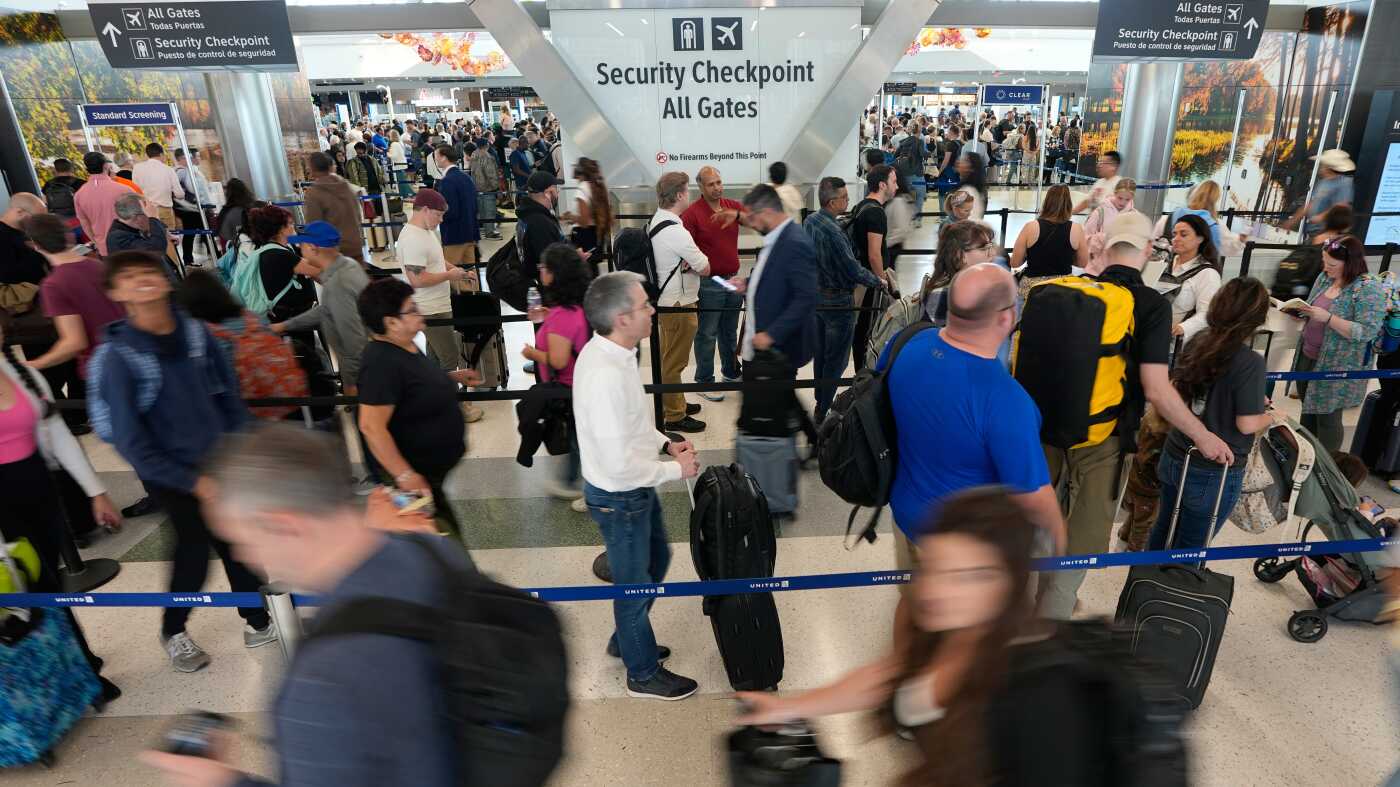
ICE officers could remain at airports after TSA workers are paid

Scathing report claims nation’s oldest labor union ‘betrayed’ MAGA members through ‘shocking’ spending
-

 Sports1 week ago
IOC addresses execution of 19-year-old Iranian wrestler Saleh Mohammadi
-

 Miami, FL4 days ago
Jannik Sinner’s Girlfriend Laila Hasanovic Stuns in Ab-Revealing Post Amid Miami Open
-

 New Mexico1 week ago
Clovis shooting leaves one dead, four injured
-

 Politics1 week ago
Schumer gambit fails as DHS shutdown hits 36 days and airport lines grow
-

 Tennessee7 days ago
Tennessee Police Investigating Alleged Assault Involving ‘Reacher’ Star Alan Ritchson
-

 Minneapolis, MN4 days ago
Boy who shielded classmate during school shooting receives Medal of Honor
-

 Science1 week ago
Record Heat Meets a Major Snow Drought Across the West
-

 Technology1 week ago
YouTube job scam text: How to spot it fast