Crypto
Certik Unveils ‘Anti-Virus for AI Agents’ as Skill Marketplaces Face Hidden Threats


Key Takeaways
- Certik launched a security platform to provide an “anti-virus” layer for agent ecosystems.
- Sector audits reveal high risks, but CertiK aims to protect marketplaces with 90.5% scanning precision.
- Finchip.ai is among platforms expanding integrations ahead of future consumer-facing scan updates.
The Security Challenge
Blockchain and AI security firm Certik, on May 27, unveiled a new security platform designed to evaluate risks in third-party artificial intelligence (AI) skills. Dubbed the “anti-virus for AI agents,” the release comes amid growing industry concern over the security of AI skill marketplaces.
Security researchers have warned that many of these skills are unvetted, can execute system-level actions and may contain hidden malicious behavior, creating a new software supply chain risk for the AI era. Security audits across the sector have identified risks ranging from credential harvesting and data exfiltration to fund-transfer manipulation and prompt-based override attacks.
Despite these concerns, AI skill marketplaces have expanded rapidly as agent ecosystems mature. However, unlike traditional app stores, most skills are sourced from public repositories with little or no review. Analysts say this creates opportunities for attackers to embed harmful instructions, trigger unauthorized data access or manipulate autonomous execution flows.
In a recent blog post, Certik said its skill scanner platform is designed specifically to evaluate risks that emerge during execution, including scenarios involving financial transactions or fund calls. The scanner produces a numerical score from 0 to 100, along with “pass,” “warn” or “fail” verdicts and categorized findings. According to the company, the system achieves up to 90.5% precision in identifying security risks.
“As AI agents become more deeply integrated into financial systems, enterprise workflows and everyday digital interactions, the security model around third-party skills becomes critically important,” said Ronghui Gu, Certik’s CEO and co-founder. “CertiK Skill Scanner was built to establish a standardized trust layer before execution, helping users and platforms identify hidden risks before sensitive data, assets or systems are exposed.”
Certik said AI skill marketplaces can integrate the scanner directly into publishing pipelines, automatically reviewing skills before they go live and displaying security verdicts to users. Enterprises can deploy the tool as part of internal compliance and risk-management workflows, while independent developers can use it to self-audit skills before publishing.
The company said future updates will allow everyday users to scan skills themselves before installation. The scanner has already been deployed in select Web3 AI agent infrastructure environments. Certik is also expanding integrations with additional platforms, including Finchip.ai.
“Trust is the prerequisite for any skill economy to function at scale,” said Gary Yang, incubation investor at Finchip.ai. “CertiK’s work on skill security verification is exactly what this ecosystem needs. It’s what makes Finchip’s mission of programmable skill ownership and distribution worth building.”
The launch follows Certik’s expansion into AI-focused security infrastructure. Earlier this year, the company introduced its AI Auditor initiative to address risks tied to autonomous systems and AI-driven execution environments.
“AI applications are moving toward increasingly autonomous execution, which creates a new category of security and trust challenges,” Gu said. “We believe security infrastructure for the AI era must function proactively, not reactively.”



Crypto
FBI Seizes Over $8 Billion In Cryptocurrency As Part Of The Largest Forfeiture In US Government History

The FBI seized over $8 billion in cryptocurrency, freed nearly 2,000 trafficked workers, and arrested nearly 300 people in a recent international operation.
As part of the operation, authorities shut down several “scam compounds” and crime organizations, including groups known as the Prince Group in Cambodia, Operation Sand Dollar in Dubai, and the Democratic Karen Benevolent Army in Myanmar.
“Scam compounds are modern-day criminal enterprises built to steal from Americans, launder money, and exploit trafficked workers,” FBI director Kash Patel wrote on X announcing the results of the operation.
Fox News reports that the U.S. The Democratic Karen Benevolent Army, an armed militia named after a region in Myanmar that is allegedly connected to the Chinese mob, faces sanctions imposed by the U.S. Treasury. The government has classified it as a transnational criminal organization.
Images from an operation in Thailand reveal that the FBI confiscated office supplies and thousands of smartphones.
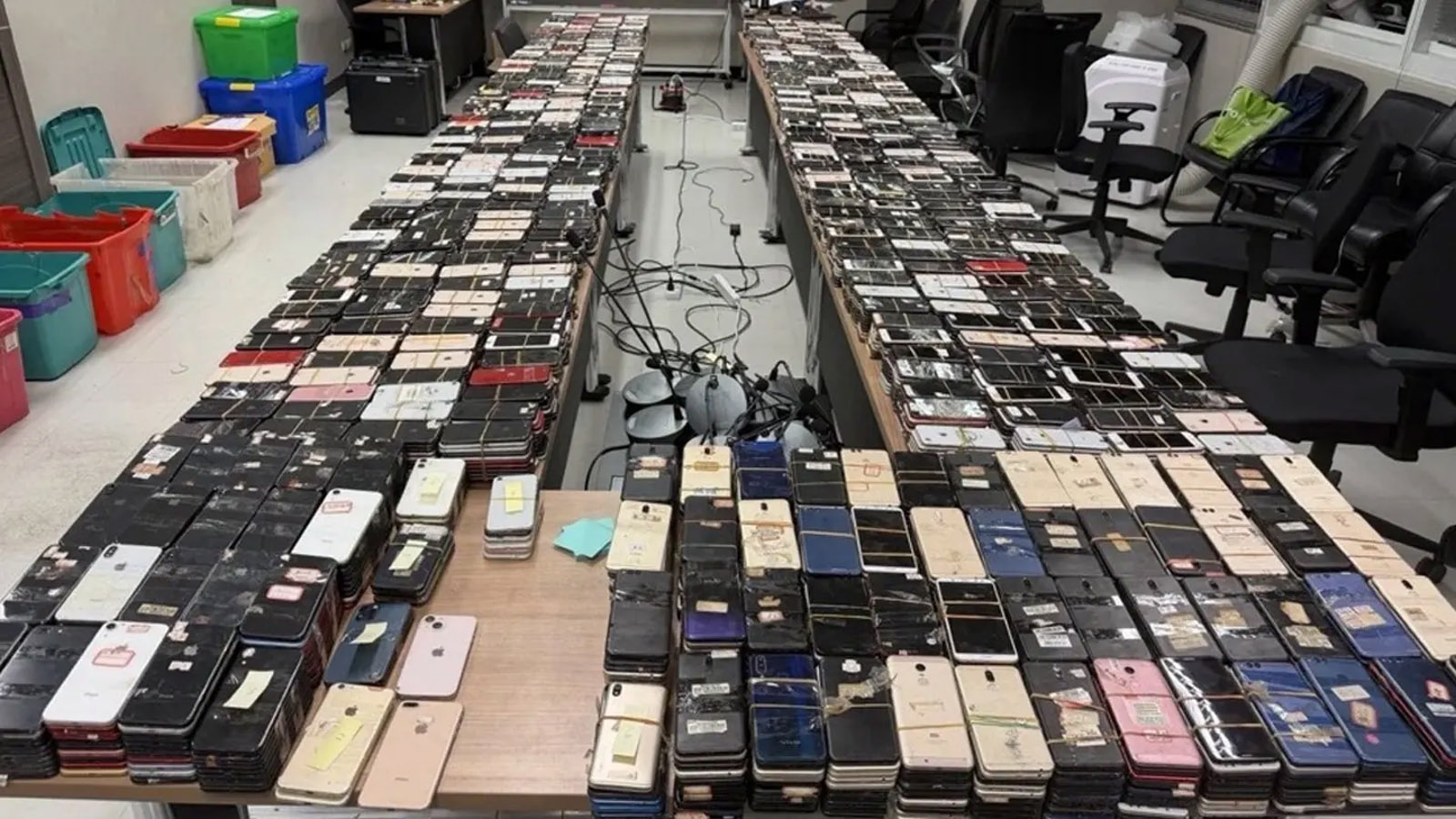
The FBI in Dubai will extradite six of the 275 individuals they and local police detained there to the United States to face federal charges, according to the FBI. The authorities raided nine “scam compounds” in Dubai, each allegedly generating $6 million in fraud proceeds annually.
Cryptocurrency scams in the US reached a record high in 2025
In April, an FBI report revealed that cryptocurrency scams in the U.S. reached a record high in 2025, with reported losses of almost $11.4 billion. According to the FBI, cyber-enabled crimes defrauded Americans of almost $21 billion in 2025, with the costliest complaints involving cryptocurrency and artificial intelligence (AI).
“The FBI’s 2025 Internet Crime Complaint Report highlights the ever-evolving tactics of internet scammers,” the FBI’s Baltimore office wrote on X. “From fake social media profiles to voice cloning and AI-generated content, cyber criminals are evolving.”
The Internet Crime Complaint Center (IC3) received over one million complaints in 2025, up from 859,532 in 2024. The most common complaints were about investment schemes, extortion, and phishing/spoofing.

Key Takeaways
- U.S. strikes in Iran and IRGC retaliation in Kuwait threatened Qatar peace talks on Thursday.
- Bitcoin fell 3.6% to $72,622, wiping out $870 million in total long positions over 24 hours.
- The escalation will likely torpedo future diplomacy and embolden anti-settlement hardliners.
Geopolitical Escalation Triggers Crypto Sell-off
Bitcoin plunged below $73,000 early Thursday following reports of fresh U.S. military strikes inside Iran. Market data shows bitcoin tumbled to a multi-week low of $72,622—its lowest level since April 13—before staging a modest recovery back to $73,000. This downturn continues a weekly bearish trend, contrasting sharply with broader global markets that had previously rallied on optimism for a permanent peace agreement between the U.S. and Iran.
The sharp decline pushed bitcoin’s daily losses to 3.6%, dragging its market capitalization down to $1.46 trillion and pulling the aggregate crypto market cap below the $2.6 trillion threshold. Since May 25, when bitcoin last attempted to test the $78,000 resistance level, the asset has shed over 6% of its value. Despite kicking off May on an upward trajectory, this latest price action positions the cryptocurrency to close the month in the red.
Retaliatory Strikes Threaten Peace Talks
According to reports, the latest U.S. military strikes targeted a strategic site in the Iranian port city of Bandar Abbas. In retaliation, Iran’s Islamic Revolutionary Guard Corps (IRGC) reportedly launched strikes against a U.S. military base in Kuwait, where local authorities confirmed that air defense systems engaged incoming missiles and drones.
This escalation comes just days after the U.S. military struck Iranian naval vessels and an alleged missile launch site in Bandar Abbas, citing self-defense. Iranian forces responded at the time by downing U.S. drones. Notably, these hostilities unfolded while U.S. and Iranian negotiators were actively convening in Qatar to finalize a peace agreement. While the Trump administration initially downplayed the earlier friction to keep diplomatic channels open, this latest exchange will likely torpedo the talks and embolden hardliners on both sides who oppose a negotiated settlement.
Meanwhile, the decline in bitcoin and the broader cryptocurrency market resulted in the liquidation of more than $930 million in leveraged positions. Coinglass data showed that liquidations on bitcoin alone topped $366 million, with wiped-out long bets accounting for $348 million of that total. Overall, the market saw $870 million in long positions wiped out over 24 hours.
Bitcoin Slips to $74,530 as Long Traders Face $106M Wipeout
Bitcoin trended downward on Wednesday, dropping beneath the $75,000 threshold to trade at $74,570 at the time of writing. This…


Bitcoin Slips to $74,530 as Long Traders Face $106M Wipeout
Bitcoin trended downward on Wednesday, dropping beneath the $75,000 threshold to trade at $74,570 at the time of writing. This…
Bitcoin Slips to $74,530 as Long Traders Face $106M Wipeout
Bitcoin trended downward on Wednesday, dropping beneath the $75,000 threshold to trade at $74,570 at the time of writing. This…

HOLYOKE, Mass. (WWLP) – The Holyoke Police Department recently prevented a resident from falling victim to a Bitcoin scam and is urging community members to remain cautious of cryptocurrency fraud.
Holyoke Police Chief Brian Keenan stated that this recent scam involved a caller stating over the phone that the person had an active arrest warrant for missing jury duty. The scammer claimed that if the victim owed $6,000 or they would be at risk of arrest.
The victim was then instructed to withdraw money from a bank and take it to a local Bitcoin kiosk to deposit it. After depositing some money, the victim realized they were being scammed and called the Holyoke Police Department.
Detective James Parnell assisted the resident and canceled the transaction before it closed out. The victim is expected to receive a refund from the kiosk operator. In most cases involving these types of transactions, the money cannot be recovered, as it can be processed within minutes.
Holyoke Police say that these types of Bitcoin scams have defrauded western Massachusetts residents of more than $2 million in the past two to three years. If you receive a phone call claiming you owe money and must deposit cash into a Bitcoin kiosk, you are urged to immediately hang up.
Local News Headlines
WWLP-22News, an NBC affiliate, began broadcasting in March 1953 to provide local news, network, syndicated, and local programming to western Massachusetts. Download the 22News Plus app on your TV to watch live-streaming newscasts and video on demand.
-
 Science5 minutes ago
Oxnard man smuggled baby crocodiles, among 1,700 reptiles, gets 5 years
-
 Sports11 minutes ago
A new board game mocks Shai Gilgeous-Alexander for ‘foul baiting.’ He wants it destroyed
-

 World23 minutes ago
Israel, Russia among new additions on UN sexual violence ‘blacklist’
-
 News53 minutes ago
Which first lady feared her husband might be having a stroke? The quiz knows
-

 Los Angeles, Ca2 hours ago
Rescued sea lion pups released in Manhattan Beach
-

 Detroit, MI3 hours ago
Sunda New Asian brings bold flavors to Detroit
-

 San Francisco, CA3 hours ago
Driver Arrested After Pedestrian Killed, Three Injured In Mission District Crash
-

 Dallas, TX3 hours ago
McAllen Welcomes Texas Hockey | Dallas Stars

