Business
Video: New Tariffs Worry Furniture Sellers


new video loaded: New Tariffs Worry Furniture Sellers
transcript
transcript
New Tariffs Worry Furniture Sellers
New tariffs on imported furniture, kitchen cabinets and lumber came into effect on Tuesday. President Trump has threatened more.
-
Everybody is going to be slowly raising their price once every three months or once every six months, you know. But everybody is going to be raising their price — that’s for sure. I wasn’t against the president trying it, because I think we need better trade deals. The longer it goes on, the more it hurts, so I’d like to see something resolved as soon as possible to try to get a fair deal for everybody.

By Monika Cvorak
October 14, 2025



Netflix on Thursday reported higher revenues and profit in the second quarter as it sought to assure investors about its growth prospects.
The streaming giant reported revenue of $12.6 billion in the second quarter, up 13% from a year ago. Net income during the period rose 9% to $3.4 billion.
Netflix said it expects revenue to grow 12% in the third quarter, but lowered its 2026 revenue forecast to $51 billion from $51.4 billion.
The results were roughly in line with what analysts had predicted and were driven by recent price increase and growth in advertising revenue. The latter is expected to reach $3 billion this year, the company said.
In a presentation with analysts, Netflix executives touted global expansion plans.
“We’re entertaining an audience approaching a billion people with still lots of room to grow into our addressable market on every measure,” said Spencer Neumann, Netflix’s chief financial officer, in the earnings presentation. “We believe we’ve got lots and lots of runway for solid growth ahead of us.”
Those comments appeared intended to assuage investors who’ve grown concerned that people could be spending less time on the streaming service as rivals like YouTube gain market share.
Netflix’s share of TV viewing time in the U.S. has steadily declined in recent months as rivals have gained market share, according to Nielsen data.
The streamer represented 7.8% of all TV viewing in the U.S. in April — the lowest percentage since May 2025. It was 7.5% in April 2025, Nielsen said.
By comparison, YouTube has seen its share of the streaming audience grow. YouTube’s TV viewing share in April rose to 13.4%, up from 12.4% a year earlier, Nielsen said.
Some investors fear that if viewership is down, subscribers could cancel the service, which would negatively affect the platform’s growing advertising business. It could also undercut Netflix’s ability to raise prices in the U.S. and other countries.
Those worries have caused Netflix’s stock price to plummet 41% in the last year. The stock closed on Thursday at $74.35 a share, up 1%. In after hours trading, the stock fell 8%.
“The engagement elephant continues to rear its head and investors are on edge that an earlier price hike in a seasonally tough period and lighter content slate could have driven more churn than usual,” wrote Morgan Stanley Research analysts in a research note.
On Thursday, Netflix said in a letter to shareholders it has a sophisticated understanding of its consumers and “we know not all hours are equal” and that engagement on its platform is “healthy.”
“The entertainment industry remains dynamic and competitive,” Netflix told shareholders. “We aim to stay ahead by executing against our three areas of focus: delivering more entertainment value, leveraging technology to improve every aspect of our service, and improving monetization.”
The Los Gatos-based company said it plans to allocate more than 5% of its content spend on live programming this year. Live content has been a key driver for subscriptions, accounting for six of the top 10 new member sign-up days over the last five years, the company said.
In the first half of 2026, Netflix said members watched more than 97 billion hours, up 2% from a year ago. Among the most popular shows: the crime thriller “I Will Find You,” which had 87 million views; and the romantic comedy film “Voicemails for Isabelle,” which garnered 71 million views.
Netflix has been adding new types of content to its platform, including video podcasts to help increase engagement with subscribers during the day.
As part of the diversification efforts, the platform has expanded its portfolio of live programming over the years, including adding NFL games and streaming Major League Baseball’s opening day game.
In 2022, Netflix had also faced investor pressure when it reported declining subscribers for the first time in more than a decade. That pushed the company to delve into other areas including advertising, gaming and cracking down on password sharing.

SpaceX stock dropped below its initial public offering price for the first time on Wednesday, signaling dwindling hype around the Elon Musk company.
Shares dipped below their IPO price of $135 on Wednesday morning for the first time since listing, a humbling loss for the stock, which had skyrocketed more than 50% in its first days of trading last month.
The shares regained some ground later in the day, closing at $135.27.
The initial offering gave the company a market cap of $2.2 trillion, making it one of the world’s most valuable public companies. For a short period, the IPO also made owner Elon Musk the world’s first trillionaire, though his net worth now is about $800 billion.
On July 7, the company was added to the Nasdaq-100 after a rule change allowed companies to join 15 days after their IPOs.
SpaceX raised a total of $86 billion after underwriters exercised their right to sell additional shares, on top of the $75 billion initially raised. It was the largest IPO in history.
SpaceX, based near Austin, Texas, is the leading launch services company in the world, with its Falcon 9 rocket accounting for the vast majority of satellites launched last year.
It is also the leading satellite-based broadband provider with its Starlink service. The extraordinary interest in the IPO was driven by Musk’s plans to make the company an AI leader — including plans to launch orbiting satellite data centers powered by the sun that crunch AI data.
The company’s headquarters moved from Hawthorne to Texas in 2024, but it retains large operations in the South Bay city and blasts off regularly from Vandenberg Space Force Base in Santa Barbara County.
Since the IPO, SpaceX has used its newfound wealth to expand in the AI space.
It announced last month that it was acquiring the AI coding startup Cursor for $60 billion, with the deal expected to close in the third quarter. The San Francisco company, founded in 2022, enables engineers to instruct software in English to run coding tasks autonomously.
Musk also merged his xAI artificial intelligence company into SpaceX earlier this year. The combined entity recently announced it was leasing computing power to rivals Anthropic and Google at two terrestrial data centers it has constructed.
Since the IPO, investors have expressed concerns about the company’s spending plans and debt load.
Even with the volatility of the last month, there’s still more uncertainty to come.
The stock could fall further as locked-up shares held by current and former employees are released.
At least 20% of the shares will be released after second-quarter results are disclosed sometime in the coming months, with all the lockups expiring in December.
But Space X isn’t the only megacap stock to experience ups and downs early on.
Shares of Meta, then named Facebook, fell significantly below the IPO price of $38 before recovering. After its May 2012 launch, shares plummeted by nearly 50% and hit a record low of $19.69 in August 2012.
The company took more than 14 months to rebound, finally surpassing its $38 IPO price in July 2013.

In the latest lawsuit against Paramount Skydance, a corporate shareholder has alleged corruption at the highest levels of the company, which is battling to complete its $111-billion takeover of rival Warner Bros. Discovery to create a new media behemoth.
Controlling shareholders Larry Ellison and his son David have presided over a firm that allegedly made “illegal promises and payments to secure regulatory approval,” for the Ellison family’s Paramount purchase last summer, according to the shareholder lawsuit filed this week in Delaware court.
Larry Ellison allegedly discussed with President Trump how Paramount’s pending Warner Bros. acquisition would result in a shake-up at CNN, states the lawsuit filed by Paramount shareholder Paul Robbins.
“The Ellisons [won] the bidding war for Warner Bros. by promising sweeping changes at CNN and other personal benefits to President Trump,” according to the 59-page complaint.
The case was brought on Robbins’ behalf by the nonprofit Public Integrity Project and the advocacy group Freedom of the Press Foundation, which has been critical of the Trump administration‘s policies toward the media.
The complaint noted that Netflix withdrew from the bidding in February — the same day Co-Chief Executive Ted Sarandos met at the White House with then-Atty. Gen. Pam Bondi and another top official.
The lawsuit suggests Netflix dropped out after recognizing the challenges of dealing with the Trump administration and that Trump always wanted to see the prize go to Paramount because of his close ties to the Ellison family, who have ushered in more favorable news coverage of Trump and the departure of late-night comedian Stephen Colbert.
Robbins does not appear to have firsthand accounts supporting his claims, which are based on public documents and media reports about dealings between the Ellisons and Trump. He has owned Paramount stock since 2021, but the lawsuit does not say how many shares he owns.
He could not be reached for comment.
Paramount, in a statement, pushed back against his claims, saying the “lawsuit recycles allegations that have already been reported and already addressed.”
“As we’ve said consistently: No commitments from either David or Larry Ellison have been made to any government body, state AG or federal agency regarding the future of CNN or any other news property, other than the goal to deliver truth-based journalism,” Paramount said.
It’s the third lawsuit lobbed at Paramount this week. On Monday, California Atty. Gen. Rob Bonta led a coalition of 12 Democratic state attorneys general that filed a federal antitrust lawsuit seeking to block the Paramount-Warner merger due to concerns about consolidation in movie distribution and cable channels.
The Writers Guild of America added another antitrust lawsuit against Paramount on Tuesday, alleging the massive merger would result in fewer jobs and lower pay for writers.
Many in Hollywood are opposed to the deal due to fears that another studio consolidation would bring more layoffs, programming cutbacks and a fragile business environment due to the heavy debt burden — nearly $80 billion — that Paramount would have to take on to buy Warner Bros.
The shareholder lawsuit noted that Paramount participated in a raucous event with UFC fighters on the White House lawn in June to celebrate Trump’s 80th birthday and the nation’s 250th anniversary. Paramount has UFC broadcast rights.
The event came two days after Trump’s Justice Department wrapped its regulatory review of Paramount’s Warner Bros. proposal, giving the merger a key green light.
Justice Department investigators reportedly did not have a chance to express potential antitrust concerns when high-level Justice Department officials closed the inquiry — a major win for Paramount and the Ellisons, the lawsuit states.
“There have been some line attorneys in the DOJ that have reviewed this [merger] and have some concerns,” New York Atty. Gen. Letitia James said Tuesday during a virtual town hall with opponents of the merger. “Their analysis of this particular case was ignored by the front office, if you will, at 1600 Pennsylvania Ave. [the White House] That’s the front office.”
Ellison’s Skydance Media emerged with its deal to buy Paramount two years ago. Previous controlling shareholder Shari Redstone was desperate for an exit and Trump was mounting his White House comeback by battling then-President Biden, then Vice President Kamala Harris.
Trump declined an invitation to appear on CBS’ “60 Minutes,” then under Redstone control. He became infuriated by an October 2024 interview with Harris on “60 Minutes.”
Trump filed a $10-billion lawsuit against CBS (he later upped it to $20 billion). After Trump won the election, he had considerable sway over Paramount because it needed his administration’s approval for the sale to the Ellisons.
Paramount agreed to pay Trump $16 million to end his “60 Minutes” lawsuit, allowing the sale to go forward. The Ellisons acquired Paramount in August, then set their sights on Warner Bros. Discovery, which owns CNN.
“The Ellisons proceeded to remake CBS in the President’s image, bought properties he enjoyed, and even hosted events to honor him,” the lawsuit said. “This helped the Ellisons, but it appears to have hurt Paramount and its media outlets.”
On Wednesday, Paramount said Ellison and other high-level executives had dealings with administration officials but “throughout … the review of the proposed acquisition of Paramount, Skydance has fully complied with all applicable laws, including our nation’s anti-bribery laws.”
In late April, David Ellison hosted an elaborate dinner in Washington to honor the “Trump White House,” according to invitations to the event, “even though President Trump continually insulted journalists at CBS and elsewhere,” the lawsuit said.
On Wednesday, during a confirmation hearing on Capitol Hill, Sen. Cory Booker (D-N.J.) blasted acting Atty. Gen. Todd Blanche for his attendance at the dinner while his agency was reviewing the Paramount deal.
Also on Wednesday, the nonprofit news site ProPublica reported Federal Communications Commission Chairman Brendan Carr has accepted $63,000 in free tickets from CBS in recent years — while Paramount mergers were pending.
Times staff writer Ben Wieder contributed to this report.
-

 Los Angeles, Ca1 hour ago
LADWP begins long-term repairs after West Hollywood water main rupture
-

 Detroit, MI2 hours ago
Livestream: Mayor Sheffield, Detroit health chief to address wildfire smoke threat
-
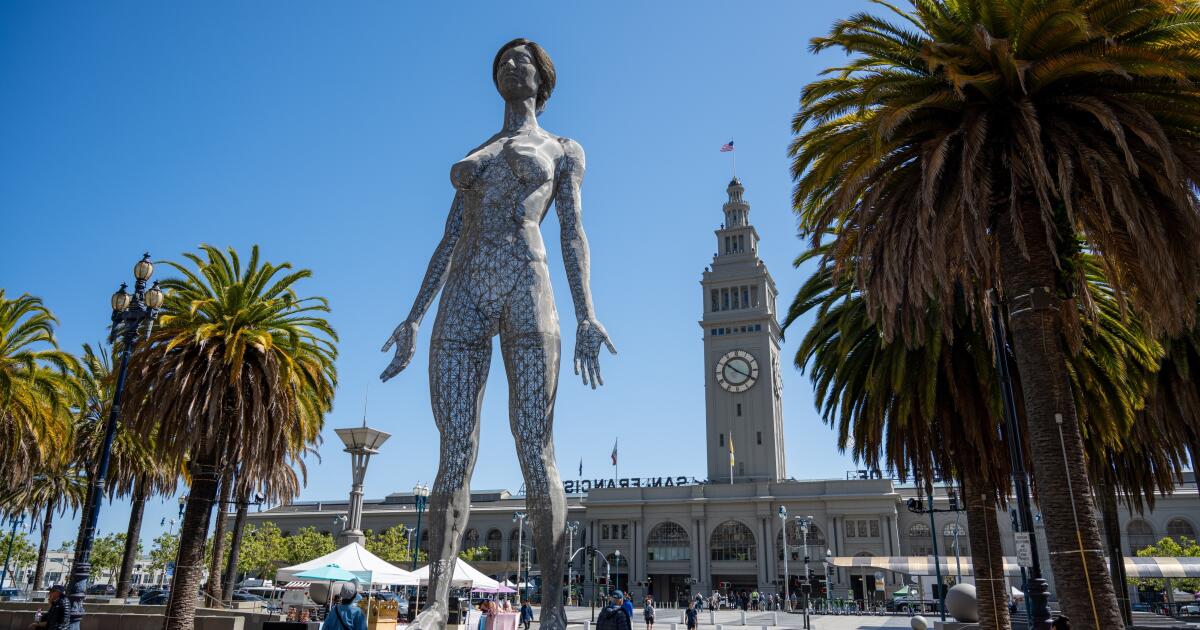 San Francisco, CA2 hours ago
A sculpture of a giant naked woman goes on sale in San Francisco. Bring a crane
-

 Dallas, TX2 hours ago
No ‘straight answer’: Why Pioneer Cemetery is the latest battleground at City Hall
-

 Miami, FL2 hours ago
TSA hosts news conference ahead of World Cup third place match at Miami Stadium
-

 Boston, MA2 hours ago
ICE Boston arrests Barbados national during targeted operations in Attleboro
-

 Denver, CO2 hours ago
Denver Broncos training camp is 2 weeks away
-

 San Diego, CA2 hours ago
Daily Business Report: July 17, 2026, San Diego Metro Magazine

