Business
The Fallout From the End of the U.S. Steel Deal


The end of a troubled takeover bid
President Biden is set to officially block Nippon Steel’s $14 billion takeover of U.S. Steel as soon as Friday, most likely putting an end to an industrial megadeal that ran up against widespread political opposition.
But the decision could set off a cascade of consequences, including whether it would dissuade foreign investment in key industries, even from crucial U.S. allies like Japan. There’s one near-certainty: Expect a lot of litigation.
The deal’s demise seemed increasingly inevitable. In March, Biden said it was “vital” that U.S. Steel remained American-owned. The United Steelworkers’ union opposed the transaction from the start, questioning Nippon Steel’s commitment to maintaining the American company’s production and unionized employment levels. (That U.S. Steel is headquartered in Pennsylvania, a crucial election battleground state, escaped no one’s notice.)
Last month, the federal government panel, known as CFIUS, that reviewed the deal on national security grounds expressed concern that the Japanese suitor’s global business considerations could eventually outweigh any commitments it made to preserve U.S. Steel production levels.
President-elect Donald Trump also pledged to block the takeover once he took office.
Others have worried that blocking the deal could chill foreign investment. In recent days, some senior Biden advisers warned that rejecting the transaction could damage relations with Japan, The Washington Post reported.
Japanese officials pressed Biden to approve the deal. Rejecting it “will send a stark message that investment from Japan, regardless of lack of security concerns, is not welcome in the U.S.,” Takehiko Matsuo, a senior trade minister, wrote to Biden administration officials last month.
The matter will probably head to court. Nippon Steel has complained of the White House’s “impermissible influence” in the CFIUS process. That lays the groundwork for the Japanese company or U.S. Steel to sue over Biden’s expected move.
DealBook also wonders whether the companies would sue each other, perhaps citing a failure to do enough to win approval. (The deal agreement requires Nippon Steel to pay its American counterpart $565 million if regulators block the transaction.)
What next for U.S. Steel? The company’s C.E.O., David Burritt, has warned that the steel maker needs investment to upgrade its aging plants. Even CFIUS acknowledged that the company had a “history of inadequate attempts to improve its competitiveness.”
One possibility is another bidder — such as Cleveland-Cliffs, which had been previously rebuffed by U.S. Steel and whose stock has been under pressure — could swoop in. But there’s bad blood between Burritt and his Cleveland-Cliffs counterpart, raising the question of whether U.S. Steel investors would need to heap on the pressure to get a deal done.
HERE’S WHAT’S HAPPENING
Mike Johnson faces a nail-biter vote on Friday for House speaker. Johnson has the backing of President-elect Donald Trump and Elon Musk, but is hampered by a razor-thin majority and a fractious House Republican conference. Corporate America will closely watch the vote’s outcome for what it says about the chamber’s ability to pass legislation once Trump takes office.
The authorities identify the driver of the Las Vegas Cybertruck explosion. The man was an Army master sergeant on leave from active duty, who killed himself immediately before the rented Tesla detonated outside a Trump hotel in Las Vegas on New Year’s Day. The F.B.I. said it had found no link between the incident and the deadly New Orleans rampage hours earlier involving an Army veteran.
China places trade restrictions on dozens of U.S. companies. The Ministry of Commerce announced on Thursday that export-control limits would be put on 28 companies, including Boeing and Lockheed Martin. The move comes just weeks before Trump takes office, and will probably escalate a trade war between Washington and Beijing. More shots could be fired soon: The Biden administration is weighing a ban on Chinese-made drones.
Does Tesla sales stall matter?
At any other car company, the sales numbers announced by Tesla on Thursday would have been a catastrophe. Deliveries for the year fell slightly in a growing market, the first annual decline in the company’s history.
Yet the reaction on Wall Street was relatively muted when compared to the huge rally in Tesla’s share price in recent months, The Times’s Jack Ewing writes for DealBook. That reflects how much Elon Musk has sold investors on the idea that the cars are a piece of a much bigger vision that includes self-driving taxis and humanoid robots — and his close ties to President-elect Donald Trump.
Shares closed down but the stock is up more than 55 percent since Election Day. Musk’s relationship with Trump has given him a direct line to the White House that he can use to promote his business interests.
“Investors have shifted,” Erik Gordon, a professor at the Ross School of Business at the University of Michigan, told DealBook. “They thought of it as an E.V. company. Now they think of it as a technology platform. ‘What will Elon think of next?’”
Musk has revealed little detail about his plans. During conference calls with investors and analysts, he has focused on what he says will be trillions of dollars in revenue from self-driving taxis that are probably years away from mass production.
Yet Musk may find it difficult to realize his grand visions if the company keeps losing market share to rivals such as General Motors, BMW and BYD. (The Chinese car maker reported record sales in 2024.)
Does Musk need to accelerate plans for a lower-cost Tesla? He told investors in October that the company would begin selling a car this year that would cost substantially less than a Model 3 sedan, which starts at $42,500 before state and federal incentives.
But Musk has sounded ambivalent about the new vehicle, calling it “pointless” unless it’s capable of driving autonomously. And Tesla has not displayed a prototype yet.
That has led to speculation that Musk is not that interested in mass-market cars anymore. “What excites Musk is the technology for the day after tomorrow,” Gordon said. “An econobox E.V. just doesn’t ring his bell.”
One thing to watch in 2025: Musk’s reaction if car sales remain tepid and Tesla shares fall further. Would that prompt him to deploy more of the skills he used to build Tesla into the world’s largest maker of electric cars?
A blow to net neutrality
A federal appeals court has knocked down one of President Biden’s biggest tech policy accomplishments: the F.C.C.’s net neutrality rules on broadband internet providers that sought to safeguard consumers’ access to online content.
The dismantling comes as companies brace for the incoming Trump administration to usher in a new era of deregulation, and further limit regulatory reach.
The decision is a win for cable and telecom companies such as AT&T and Comcast, ending a two-decade effort to regulate them like utilities. It also shows the impact of a recent Supreme Court ruling that is expected to limit federal agencies’ power.
A recap: The regulations, which have been championed by Google, Facebook and Netflix, were put in place under the Obama administration amid concern that internet service providers could become de facto gatekeepers with the power to slow or block access to content. The rules were revoked during the first Trump term, only to be reinstated by the F.C.C. in April.
Brendan Carr, President-elect Donald Trump’s pick to lead the F.C.C., has been a vocal critic of the rules.
The ruling could inspire other legal challenges. It relies on the Supreme Court’s upending last year of the Chevron doctrine requiring courts to defer to federal agencies’ interpretation of ambiguous statutes. “The F.C.C.,” Judge Richard Allen Griffin wrote, “lacks the statutory authority to impose its desired net-neutrality policies.”
Tim Wu, a former Biden administration official who coined the term “net neutrality,” slammed the decision, calling it “blatant judicial activism that puts corporate interests over American democracy.”
What’s next? The fight over net neutrality isn’t over: The decision doesn’t affect state laws, including those in California, Washington and Colorado. And Democrats at the F.C.C. called on Congress to enshrine net neutrality into law. Still, many commentators note that net neutrality isn’t the hot-button consumer issue it had once been.
“The market no longer thinks it’s a big deal and hasn’t for a while,” Blair Levin, a former chief of staff to the F.C.C., told The Times.
A big reshuffle at Meta
In the latest sign of how Big Tech is repositioning itself for the new Trump administration, Meta has tapped a prominent Republican to head its global policy team.
Joel Kaplan, a longtime Meta employee and a deputy chief of staff under former President George W. Bush, will take over from Nick Clegg, as first reported by Semafor.
Meta has tried to take itself out of the political spotlight. Clegg, a former deputy prime minister of Britain, joined the tech giant when the company was facing fierce blowback, including for its handling of disinformation on its platform during the 2016 election.
He’s credited with smoothing relations with regulators, especially in Washington and Brussels.
Could his leftish politics have become a liability? Clegg may have been planning his exit before the election, but he didn’t hide his opinions. Last month, he warned that Elon Musk, whose X and xAI compete with Meta, could become a “political puppet master” and criticized Musk’s stewardship of X.
The remarks came as many businesses worry about retribution from President-elect Donald Trump and Musk — and as Big Tech C.E.O.s have gone out of their way to curry favor with them.
Kaplan’s deep Republican roots could help Meta in the new Trump era. He joined Facebook in 2011, and later served as Clegg’s deputy. Before that, he clerked for Justice Antonin Scalia on the Supreme Court and is a close friend of Justice Brett Kavanaugh. (He appeared at Kavanaugh’s contentious confirmation hearings, and later apologized to Meta employees who thought his presence showed a political preference).
He has also been one of the loudest voices inside Meta pushing against restrictions on political content.
Mark Zuckerberg has largely turned away from politics. For years, the tech mogul publicly campaigned for liberal causes but has shifted after coming under sustained fire. Trump criticized Zuckerberg and threatened to put him in jail after accusing Meta of censoring conservative views.
But Zuckerberg, like other Big Tech leaders, has made efforts to court Trump, having traveled to Mar-a-Lago to meet the president-elect after the November election.
THE SPEED READ
Deals
-
Several prominent hedge funds — including Millennium, D.E. Shaw, Bridgewater Associates and Ken Griffin’s Citadel — reported double-digit returns last year. (Reuters)
-
Hindenburg Research, the activist short-seller, announced a bet against Carvana, accusing the used-car sales platform of accounting manipulation. (CNBC)
Politics and policy
-
President-elect Donald Trump picked Ken Kies, a longtime tax lobbyist for clients including Microsoft, as the Treasury Department’s assistant secretary for tax policy. (Bloomberg)
-
“How Silicon Valley won a powerful House committee” (Politico)
Best of the rest
-
The U.S. surgeon general, Vivek Murthy, called for cancer warnings to be placed on alcoholic beverages; doing so would require Congress to act, however. (NYT)
-
Richard Easterlin, an economist whose work challenged the assumption that more money always leads to more happiness, died Dec. 16. He was 98. (NYT)
-
“The Rise Of Big Potato” (The Lever)
We’d like your feedback! Please email thoughts and suggestions to dealbook@nytimes.com.



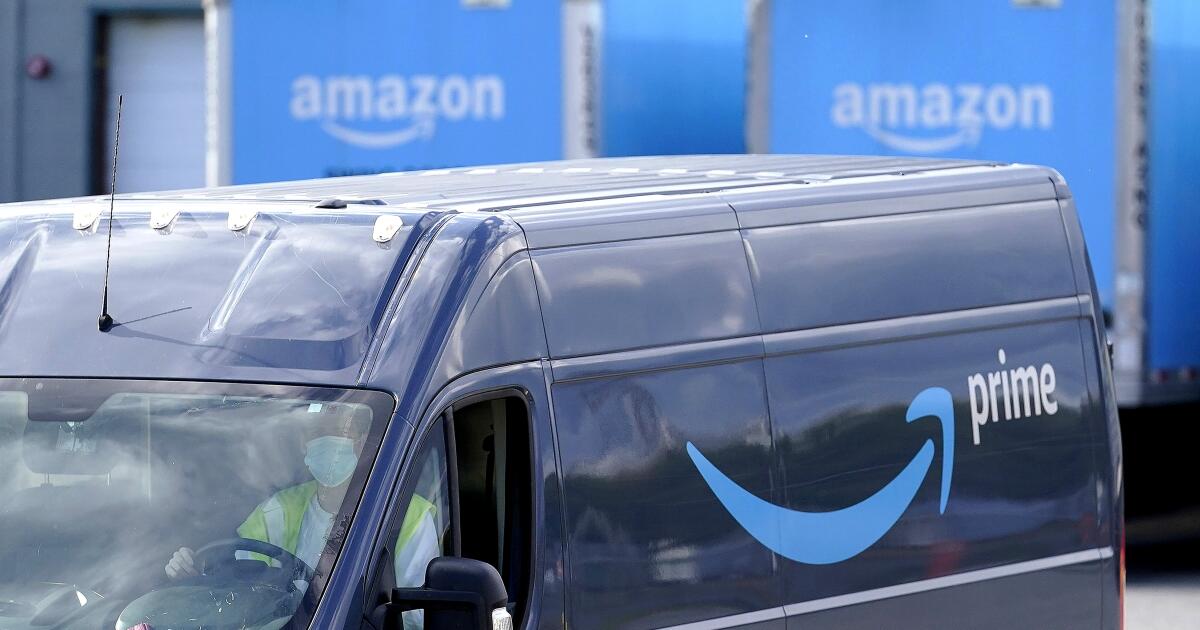
Two Amazon delivery service partners are shutting offices and laying off hundreds.
Xpress Delivery, located in Oakland, will be laying off 80 employees. OnPoint Logistics will be ceasing operations at its San Francisco location and cutting 96 jobs, according to a government filing.
Amazon delivery service partners are independent businesses that partner with Amazon to deliver packages from a local fulfillment center to the delivery station using Amazon delivery vans and provided devices.
In January, Amazon announced it would cut 16,000 jobs from its workforce and announced additional layoffs in May in its selling partner services team.
These are only joining a growing list of layoffs across California’s tech and business hubs. LinkedIn, Cisco, Meta, and Oracle have all announced layoffs this year. Both LinkedIn and Cisco cut around 5% of their workforce overall, with hundreds of those layoffs occurring in California. Meta and Oracle slashed over 10% of their workforces in favor of implementing AI into its operations.
Both OnPoint and Xpress delivery stations will permanently cease operations, and no replacement companies have been announced yet to operate there.
Amazon did not respond to a request for comment.

Netflix has long been seen as the winner in the streaming wars, with more than 325 million subscribers globally and hits like “Stranger Things” and “KPop Demon Hunters.”
For months, Netflix had been telling investors how it planned to scale its business to new heights by acquiring Warner Bros. Discovery, a potentially transformative media deal.
But after the streaming giant passed on buying the media company in February, Netflix has faced persistent questions from investors about its plans for staying on top.
Reflecting the investor unease, Netflix’s stock price, which closed Tuesday at $73.68 a share, has declined 21% this year and is down 42% from a year ago.
“Obviously, they have a very successful business,” said Ross Benes, a senior analyst at research firm eMarketer, adding that most of Netflix’s revenue comes from its subscriptions. “Your investors always want to just see more and more and more, and they mostly provide that one thing.”
Part of the reason investors are anxious is that Netflix’s share of TV viewing time in the U.S. has steadily declined in recent months as rival YouTube has gained market share, according to Nielsen data.
Netflix represented 7.8% of all TV viewing in the U.S. in April — the lowest percentage since May 2025. It was 7.5% in April 2025, Nielsen said.
By comparison, YouTube has seen its share of the streaming audience go up. YouTube’s TV viewing share in April rose to 13.4%, up from 12.4% a year earlier, Nielsen said.
Some investors fear that if viewership is down, subscribers could cancel the service, which would negatively affect the platform’s growing advertising business. It could also undercut Netflix’s ability to raise prices in countries like the U.S.
Despite the investor jitters, equity analysts estimate Netflix will have a strong second quarter, with revenue increasing 14% to $12.58 billion and net income rising 8% to nearly $3.38 billion, according to FactSet. One reason is continued growth in its advertising business and the popularity of new programming such as crime series “I Will Find You.”
Netflix will release its second quarter earnings results on Thursday. The company declined to comment for this story.
Netflix has noted that it has a low churn rate compared to competitors. The company said it has a long runway for growth, penetrating only about 5% of global TV viewing, according to a letter to shareholders in April. A number of its shows and movies appear on Nielsen’s most-watched streaming lists.
Among the company’s key priorities are broadening its entertainment offerings in areas such as live programming, games and video podcasts as well as growing its advertising business.
“A measure of our performance is engagement, which is not just the quantity of hours watched, but also the quality of that experience for our audiences,” Netflix said in its April letter, adding that its primary internal quality metric reached an all-time high in the first quarter.
“We believe we have meaningful advantages as we strive to become a must‑have service for consumers: a strong global brand, a wide range of high‑quality programming, a best‑in‑class product experience, and a frequent role at the center of culture,” Netflix said in its April letter.
Several equity analysts believe the Los Gatos-based company is still growing and remain bullish on the stock.
The last time Netflix came under major scrutiny from investors was in 2022, when it reported subscriber declines in the first quarter of that year. That pushed Netflix into pursuing other initiatives including selling cheaper subscriptions with ads, cracking down on password sharing and offering games on its service.
Last year, Netflix said it generated more than $1.5 billion in advertising and expects to roughly double that to $3 billion this year.
“We believe this is a long-term growth company,” said Jessica Reif Ehrlich, senior media and entertainment analyst at BofA Securities, who has a buy rating on the stock.
As part of its diversification, Netflix has expanded its portfolio of live programming over the years, including adding NFL games and streaming Major League Baseball’s opening day game.
But some analysts say Netflix needs to have a larger share of live sports content to draw sports fans into subscribing.
“They’re getting a lot of casual sports fans, but avid sports fans don’t need Netflix at all really, not yet,” Benes said.
Additionally, Netflix is adding new content to its platform by partnering with YouTube creators, adding video podcasts such as “The Breakfast Club” and partnering with media companies like BuzzFeed Studio to bring videos as short as three minutes to its service, which could help with viewer engagement.
“They help existing subscribers use the service more,” Benes said. “Let’s say I get in the habit of watching all these video podcasts on Netflix. It might not be the reason why I pay for it, but I might say, ‘Oh, I don’t know if I want to cancel it.’”
Some analysts think Netflix should consider other acquisitions to fuel future growth after walking away from Warner Bros. Discovery, which was scooped up by Paramount.
Comcast earlier this year announced that it plans to spin off NBCUniversal, which has properties including “Minions” and “Jurassic Park.” Some analysts speculated that Netflix could be interested in buying it.
“From our point of view, it makes a ton of sense,” Reif Ehrlich said. “Universal also has a great film and TV library. Maybe not as deep as Warner Bros., but very strong.”
Netflix executives also are considering launching live channels, including ones that are based on genres, and bundling with other streaming services, according to a person familiar with the matter who was not authorized to speak publicly. The Wall Street Journal was the first to report on the internal discussions.
Netflix launched TF1 live channels this year on its service in France in a partnership with media company TF1 Group. TF1 said its audience targets that were set for the 18-month horizon were achieved in less than three weeks.
When it comes to Netflix’s next move, anything is possible.
“Years ago, they said they wouldn’t get into advertising. They wouldn’t get into sports. They wouldn’t have theatrical releases,” Reif Ehrlich said, naming efforts that Netflix initially was adverse to doing before changing course . “So the business will continue to evolve and change.”

In a case that has become a local flashpoint, environmental groups seeking to halt a lithium operation in Imperial County until it gets further review argued before a state appeals court in San Diego on Thursday.
Controlled Thermal Resources wants to extract lithium from hot brine that will be used to power a geothermal electricity plant it plans to build. This type of lithium removal is different from traditional hardrock mining or evaporation ponds. The project also would need 6,500 acre-feet of fresh water annually for washing the mineral and cooling.
Earthworks, a nonprofit focused on the impacts of mining, and Comité Cívico del Valle, an Imperial County environmental justice group, allege the county didn’t adequately examine the project’s effects on water supply, air quality and tribal cultural resources when it granted approvals.
The groups filed suit in March 2024 and Imperial County Superior Court Judge Jeffrey Jones ruled against them in January 2025, saying the county met its legal requirements.
Before a panel of three judges for the California Court of Appeals 4th Appellate District, plaintiffs’ lawyer Doug Carstens argued that if water becomes scarcer, the project may rely on agricultural runoff that currently feeds the shrinking Salton Sea, exacerbating dust and air quality issues. He also said the environmental review did not account for future water-thirsty projects in the desert area.
“There will be a lot of straws dipping into the pool,” Carstens said.
The project, called Hell’s Kitchen, also failed to adequately involve local tribes in assessing the effect on cultural resources, he said.
Controlled Thermal Resources attorney Suzanne Varco said that the company reached out to 26 area tribes in 2021 and received no reply. She noted that one elder from Kwaaymii Laguna Band of Indians responded with concerns about mud pots and other resources in the area, but it was more than five months after the consultation period closed.
Justice Julia Kelety’s questions suggested the tribes provided names for resources in the area but failed to say how they would be affected.
Justice Truc Do said it was hard to assess fully how the project will affect the region’s water because the environmental review was unclear whether it will last 30 or 50 years. The region primarily relies on water from the overtapped and shrinking Colorado River.
The case is important because Imperial County has pegged its future to lithium, a mineral critical for electric car batteries. Two other companies are trying to reach commercial extraction near the Salton Sea. Gov. Gavin Newsom called Imperial Valley “the Saudi Arabia of lithium” in 2022, and has touted the industry’s potential to bring jobs and community benefits to one of the poorest counties in the state.
Multiple setbacks and deadline extensions later, lithium has yet to materialize even as industry job training programs graduate students into careers that have not arrived in the area. The county has blamed the lawsuit for the slow start. The boom and bust nature of mining as well as shifting federal policies have also played a role.
The court could decide within a few weeks to several months.
Earthworks and Comité Cívico del Valle have repeatedly said they don’t outright oppose lithium development in the area, but want CTR to acknowledge and minimize potential harm.
“We are not trying to stop the Hell’s Kitchen Project, we think it should be fixed, with enforceable protections for the environment, tribal cultural resources, and the health of frontline communities,” said Jared Naimark, senior manager at Earthworks.
Imperial County and CTR declined to comment on pending litigation, but Controlled Thermal Resources spokesperson Lauren Rose articulated a commitment to advancing geothermal and lithium development “as core components of our Hell’s Kitchen Project.” The company recently announced a plan to power local data centers which led some to worry about the company’s commitment to lithium.
Earlier this year the company delayed its plans for lithium production to 2028. Rose said the project is still progressing toward initial construction and will announce timing “as key development, financing, and construction milestones are achieved.”
-

 Kentucky11 minutes ago
La Familia takes down The Ville to win Game 1 of TBT
-

 Louisiana17 minutes ago
OSPD pays tribute to former officer, Deputy U.S. Marshal killed while serving warrant in Louisiana
-

 Maine23 minutes ago
Platner replacement should support single-sex private spaces and sports at school | Opinion
-

 Maryland29 minutes ago
BGE reports 28,874 customers without power across Maryland
-

 Michigan35 minutes ago
Taylor Farms recall: Check your fridge for iceberg lettuce products sold in Michigan amid cyclosporiasis outbreak
-

 Massachusetts41 minutes ago
Woman killed in Taunton car crash
-

 Minnesota47 minutes ago
New air quality alert issued through Monday for Minnesota
-

 Mississippi53 minutes ago
David Turner, a three-time Mississippi State football assistant, announces retirement

