Business
Labor and business reach deal on law that addresses workplace abuses

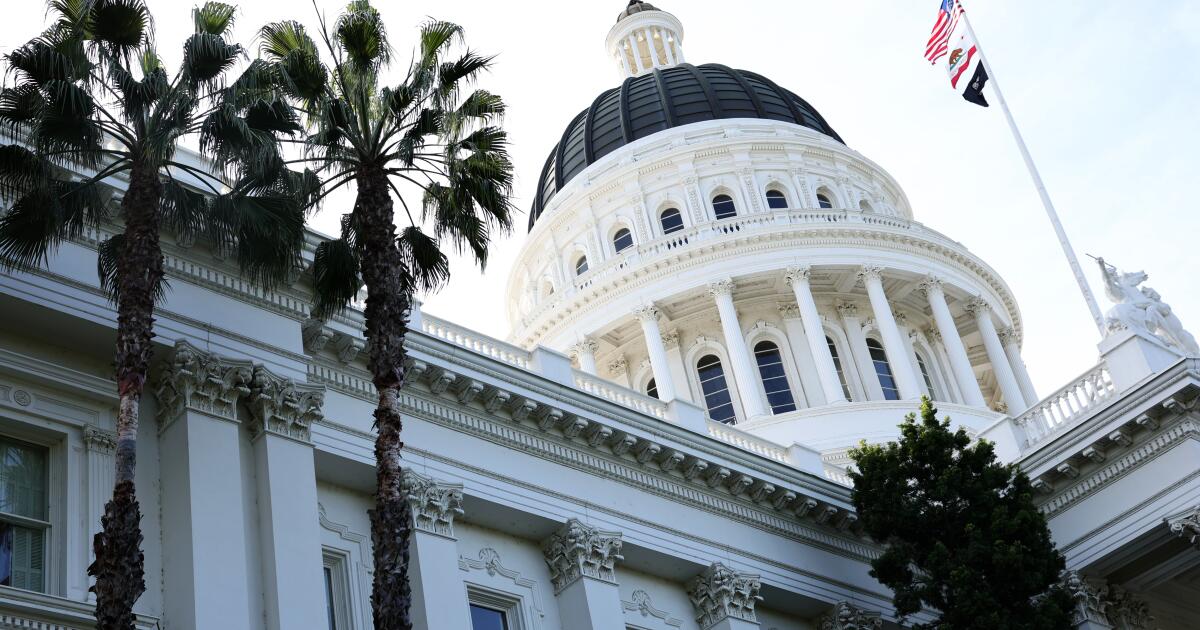
A deal has been struck between business and labor groups that puts an end to a long battle over a unique California law that allows workers who believe they have been victims of wage theft or other workplace abuses to sue employers not only for themselves but also for other workers.
Some of the largest companies in the state had banded together to place a measure on the November ballot that sought to effectively repeal the law, known as the Private Attorneys General Act, or PAGA. But backroom negotiations this month with unions and Democrats who opposed the initiative have resulted in a compromise that takes the initiative off the November ballot.
Instead, the deal reforms PAGA in a way that both businesses and workers say resolves problems with the law.
Concessions to business groups in the deal mainly involve changes to the penalty structure, making it more difficult for lawyers to simply demand a payout from a company. If companies can show they are trying to correct a violation, by giving back pay to workers and agreeing to change the offending practices, their penalties will be low.
“This package provides meaningful reforms that ensure workers continue to have a strong vehicle to get labor claims resolved, while also limiting the frivolous litigation that has cost employers billions,” said Jennifer Barrera, president and chief executive of the California Chamber of Commerce, according to a Tuesday news release from Gov. Gavin Newsom’s office announcing the deal.
Labor groups say the changes will help ensure that bad behavior by employers is halted, rather than simply awarding them a settlement and allowing a company to go back to problematic practices. The deal also allows workers to more quickly be paid back for wage theft and other violations.
“We want things fixed, changes that actually do help workers,” said Lorena Gonzalez, head of the California Labor Federation. “We are happy with the deal.”
The legislative deal would impose a time limit on lawsuits brought: Alleged violations must have occurred within the last year, and the workers bringing the claims must have personally experienced the alleged violations.
The deal also folds in labor-backed Assembly Bill 2288, introduced by Ash Kalra (D-San José), which aims to give PAGA more teeth by giving courts the power to order employers to correct violations.
Various labor organizations praised the deal in a news release, saying that it upholds core tenets of PAGA that aim to let workers hold abusive employers accountable for widespread wage theft, safety violations and misclassification of workers as independent contractors.
“PAGA is one of workers’ strongest protections against wage theft that drains at least $2 billion from workers’ pocketbooks each year. Today’s agreement protects this landmark law’s fundamental strength: workers’ right to access justice through our courts,” Alexandra Suh, co-president of the California Coalition for Worker Power and executive director of Koreatown Immigrant Workers Alliance, said in a statement.
The measure, initially set to appear on the California ballot in November, had been the culmination of long-standing efforts by corporate and industry groups to undo the law.
Business groups had criticized PAGA for causing what they described as a proliferation of frivolous and costly lawsuits that hurt small businesses and nonprofits. According to one study, the mounting lawsuits have cost businesses $10 billion during the last decade.
Under the PAGA law, workers would end up getting less money after a long legal process than if they had filed complaints through state agencies, groups backing the measure had said.
The law has helped workers sue companies such as Walmart, Uber Technologies and Google for workplace violations.
“There is near universal consensus that PAGA is broken and not working for workers or employers,” said Brian Maas, president of the California New Car Dealers Assn., according to a news release from businesses that sought to repeal PAGA. “We need sensible reforms to fix the broken system. We support this legislative reform and encourage lawmakers to swiftly pass the measure.”
Negotiations over PAGA came amid broader discussions around the 2024 ballot as well as budget conversations in Sacramento underway this month. The governor must sign a balanced state budget by June 30, and the deadline to put measures on the November ballot is June 27. Talks are ongoing over another business-backed ballot measure that would make it harder for the state to increase taxes.
Proposed changes to PAGA aim to encourage compliance with labor laws by capping penalties on employers that quickly take steps to fix bad practices. For employers that take steps to comply with the labor code before even receiving notice that they will be sued under PAGA, penalties are capped at 15% of the amount that would have otherwise been awarded. For employers that work to correct violations after receiving a PAGA notice, penalties are capped at 30%.
More of the penalty money would go to workers, with their allocated share increasing from 25% to 35%.
The reform would levy a new, higher penalty of $200 per pay period on employers that act “maliciously, fraudulently or oppressively” in violating labor laws.
Changes also aim to protect smaller companies by creating a process through which they can correct violations through the state labor department, to reduce their litigation costs.
“Small businesses throughout the state have been targeted by frivolous PAGA lawsuits for decades, even forcing some restaurants to shut down,” Jot Condie, president and CEO of the California Restaurant Assn., said in a statement. The reform package will “reduce shakedown lawsuits against small businesses.”
The Legislature will consider the reform legislation agreed to under the deal as early as this week. If the compromise is approved and signed by the governor, the coalition of businesses backing the initiative, called the Fix PAGA coalition, will remove its measure from the ballot.
Labor groups had raised an alarm about the ballot initiative in recent months, arguing that PAGA is a crucial tool for workers, since California struggles to enforce basic labor laws.
Although California has some of the toughest labor laws in the country, a study released last month by a team of researchers from UC San Francisco and Harvard University found that workers routinely experience abuses over pay, work schedules and other issues.
A recent audit of the California labor commissioner’s office found that claims of wage theft filed by California workers are routinely left in limbo for years by state investigators. The labor commissioner’s office would need to hire hundreds of additional staffers to effectively address a massive backlog.
Newsom’s office, as part of the deal, will pursue a budget-related bill to give the California Department of Industrial Relations the ability to expedite hiring in order to improve enforcement of wage theft claims.
Negotiations over the deal have lasted months and appeared to be going nowhere, but Newsom’s office, which was mediating the discussions, stepped in with a firmer hand this month. The deal came together over the last few weeks and was finalized on Monday, said a source familiar with the negotiations.
“Though we’ve successfully negotiated a dangerous measure off the November ballot — we can only hope that this deal encourages more employers to follow the law and pay their workers what they are owed. California’s worker advocate attorneys will continue to work vigilantly to ensure that they do,” said Kathryn Stebner, president of Consumer Attorneys of California.


In 2016, Walt Disney Co.’s “Moana” became a box office hit, captivating audiences with catchy earworms from Lin-Manuel Miranda and a spunky young heroine who rejected the label of princess.
Now, just 10 years later, it’s the latest Disney animated film to be given the live-action treatment.
Burbank-based Disney has long reached into its vault in search of animated classics to redo in a live-action format. But a decade is the shortest time between one of the company’s original animated movies and the reimagined film. (2025’s “Lilo & Stitch,” which originally debuted in 2002, is the next closest with a gap of 23 years.)
Why go back to “Moana” so soon? The Polynesian wayfarer is extremely popular.
The 2016 animated film grossed more than $643 million at the global box office, then spawned a 2024 sequel that made more than $1 billion worldwide. The original is the most-watched movie in Disney+ history with more than 1.5 billion hours of viewing.
“Every once in a while in Hollywood, we make a film that is more than a film,” actor Dwayne Johnson, who reprises his role as the demigod Maui, said onstage during the movie’s premiere Tuesday at the Hollywood Bowl after a Polynesian dance performance. “I think you could feel it already tonight, with our culture and with what we have represented. But also not only our Polynesian culture … it’s also a shared culture around the world.”
The latest “Moana,” out this weekend, will join a cadre of family films at the multiplex.
That includes Disney and Pixar’s “Toy Story 5,” which has now racked up more than $774 million worldwide, and Universal Pictures and Illumination’s “Minions & Monsters,” which debuted domestically last week to a softer-than-expected opening of $62 million for the five-day Fourth of July holiday weekend.
The weaker haul for “Minions & Monsters” has led to questions about whether there are too many family films in theaters, which could affect the reception for the latest iteration of “Moana.” But as the last of this summer’s trio of major animated films, the runway could be clear for the film to build steam.
“I don’t think two movies make saturation,” said Andrew Cripps, head of theatrical distribution for Walt Disney Studios. “There’s a huge fanbase for the ‘Moana’ franchise.”
But with two “Moana” movies in the last decade, will audiences flock to another film? Analysts are expecting an opening weekend haul of $75 million, though studio estimates are closer to $60 million to $65 million. The film’s production budget is about $250 million.
“When you look at these massive movies that were just incredible — ‘The Lion King,’ ‘Aladdin,’ ‘Beauty and the Beast’ — they were brought back after years and years,” said David A. Gross, who writes the industry newsletter FranchiseRe. “I think there’s an argument that says absence makes the heart grow fonder with some of these. We’ll see.”
Early reviews of the film have been mixed, and “Moana” has so far notched a 37% rating on aggregator Rotten Tomatoes. The movie is a nearly frame-by-frame re-creation of the original.
Disney’s live-action remakes have largely been box-office boons for the company, with a few exceptions.
In the last 16 years, five films have grossed more than $1 billion globally, including 2017’s “Beauty and the Beast” and 2019’s “The Lion King” and “Aladdin.” (Other live-action spin-offs based on classic animated movies, such as 2024’s “Mufasa: The Lion King” and 2014’s “Maleficent,” also had solid performances.)
“It goes back to the original [intellectual property] of these movies,” Cripps said of the importance of live-action films for Disney’s slate. “People grow up with it, they become fans of it, they live with it. When you’ve got IP that resonates so well literally around the world with fans, I just think it’s a clever extension.”
There have been some notable misfires, including last year’s “Snow White,” which cratered at the box office amid a myriad of controversies, including racist backlash to the casting of Rachel Zegler, who is of Colombian descent, as the titular princess, its depiction of little people and its lead actors’ views on the Israel-Hamas war.
In general, live-action retellings have also typically performed well overseas — a marketplace that isn’t always reliable these days.
Across 13 recent live-action films from Disney and other studios, all made more than 60% of their global box office revenue in international markets, Gross said.
By comparison, films across all genres typically bring in about half of their revenue overseas, he said.
“When these movies connect,” Gross said, “they work everywhere.”
Business
Meta discontinues Instagram feature on new AI image generation tool after Hollywood backlash

A new tool that let people take publicly posted Instagram photos and use AI to generate new images from them drew such a big backlash in Hollywood that Meta has discontinued one of the features.
Instagram’s parent company, Meta, on Tuesday rolled out the new AI tool, called Muse Image, which makes it easy to “turn your ideas into high-quality visuals you can download and share anywhere.”
In a promotional video, Meta showed examples like adding a friend into a band photo.
But the tool came under fire from talent agencies, managers and union officials. They noted that many Instagram accounts were opted in by default, allowing users to manipulate the image and likeness of celebrities without their consent.
“I just think it’s wrong again to expect people to opt themselves out of something that literally has been proven to be able to create harm,” said Kyle Hjelmeseth, chief executive of Los Angeles-based influencer talent management firm G&B.
By Friday, Meta said a feature on Muse Image that helps pull photos from public Instagram accounts was no longer available.
“Earlier this week, we announced that one way for people to generate images in Meta AI is by @-mentioning public Instagram accounts that they want to reference,” Meta said in a blog post. “Our intent was to provide a useful creative tool and to give people control over whether their public content could be referenced in this way. We’ve heard the feedback that this feature missed the mark, so it’s no longer available.”
Creative Artists Agency, which raised concerns to Meta on behalf of its clients, commended the tech company for its swift decision.
“Putting individual rights and consent at the forefront is essential to building responsible technology,” the Century City-based talent agency said in a statement. “We look forward to ongoing conversations to ensure creators stay protected as technology evolves.”
Hollywood has long been wary of AI, after a string of deepfakes — videos or images depicting celebrities doing or saying things they never authorized. Jamie Lee Curtis and others have appeared in ads for products they never endorsed. Last year, OpenAI’s Sora 2 video tool drew outrage in Hollywood after users conjured up dead celebrities without their estates’ consent. OpenAI later said it would give rights holders more granular controls.
After Meta rolled out its new tool, there was immediate backlash from Hollywood.
“Anything other than a clear and conspicuous OPT-IN for these types of uses of Instagram users’ images is unacceptable, and an utter miscalculation of public sentiment regarding the obvious dangers and harms inherent in such use,” performers union SAG-AFTRA said in a statement.
United Talent Agency was also critical of Meta, saying it demands opt-in for the use of likeness, image and intellectual property of its clients on any platform.
“The use of such property without OPT-IN consent, credit and compensation is exploitation, not innovation,” the Beverly Hills-based talent agency said.
Meta’s initial response on Wednesday was that users can choose to opt out of having their photos used by Muse Image by changing their settings.
“We built Muse Image with strong controls and safety guardrails from day one,” Meta said in a statement. “Private accounts and those belonging to users under 18 are automatically excluded and adult users with public accounts can opt out with just a couple clicks. We will take action against any content that violates our Community Standards.”
Two days later, Meta removed a key feature from Muse Image, saying it received feedback that it “missed the mark.”
The launch fits a familiar Silicon Valley pattern — ship products first, ask for forgiveness later.
“They leverage their scale to make it easy to use the tools as well as to scale out the content that is available,” said Mickey Maher, chief business officer at Vermillio, which tracks people’s digital likenesses and intellectual property. “It’s not unique to this Meta product.”
Others said opt-out should be the default.
“This dark pattern of AI overreach, where essentially it’s a free-for-all when it comes to your content, information, is something that nobody actually wants,” said Lori Fena, former chair and executive director of the Electronic Frontier Foundation and co-founder of New York-based Personal Digital Spaces. “What we need in this new AI ecosystem is the ability to create trust and to have some sort of understanding and authenticity, and this does exactly the opposite.”

Television City, one of the most famous studios in the entertainment industry where generations of TV shows have been created, is expected to hit the market again as its owner grapples with debt.
It’s the latest sign of distress in Hollywood as the film and TV industry struggles from a sharp falloff in production activity across Southern California.
Television City’s owner, Hackman Capital Partners, is already in the process of selling the historic Radford Studio Center, which gave L.A.’s Studio City neighborhood its name. Hackman defaulted on a $1.1-billion mortgage in January and investment bank Goldman Sachs took over the property, which is now escrow for a sale to Netflix.
The sprawling Television City property is one of the most desirable locations in Los Angeles, sharing fences with the Original Farmers Market and the luxury Grove outdoor shopping center, each of which attracts millions of visitors every year.
If the studio at Beverly Boulevard and Fairfax Avenue where “American Idol,” “All in the Family” and scores of other shows were filmed becomes available as expected, the owners of the Grove and the Farmers Market would be among the likely contenders for the property for potential expansion of their businesses, said sources familiar with the matter who were not authorized to comment.
Grove owner Rick Caruso was among the bidders for Television City, formerly known as CBS Television City, last time it was on the market and could emerge as a possible bidder.
The highest bid when broadcaster CBS sold the studio in 2019 came from Hackman Capital Partners, an international movie studio operator and commercial property landlord that paid $750 million for the 25-acre site that is near Hollywood, Beverly Hills and and the Sunset Strip.
Hackman Capital’s plan to recoup its investment included continuing to operate Television City as a studio for rent while adding new revenue-generating features.
Last year the city approved Hackman Capital’s $1-billion plan to add 980,000 square feet of offices, sound stages, production facilities and retail space.
The original studio designed by famed Los Angeles architect William Pereira erected in 1952 has city landmark protections, but newer structures on the property do not and there are acres of surface parking that could be converted to other uses.
Both Caruso and Farmers Market owners A.F. Gilmore have sued to limit the planned expansion of the studio, calling it a “massively scaled” development that “would overwhelm, disrupt, and forever transform the community.”
The debate over the development has played out amid a serious downturn in the region’s entertainment industry, with studios shifting film and television production to Georgia, New Mexico and other out-of-state locations.
L.A.’s entertainment industry also suffered a series of blows including the COVID-19 shutdown, strikes by writers and directors in 2023 and cutbacks at studios that reduced demand for sound stages.
A group of Hackman Capital’s lenders led by Deutsche Bank filed a notice of default last month, saying they’re owed more than $357 million. Hackman Capital is still trying to renegotiate its debt.
“The studio market is evolving, and the financing environment for studio assets remains complex,” Chief Executive Michael Hackman said in a statement. “We are engaged in active discussions with our lending partners and are carefully evaluating all of the alternatives.”
A person familiar with the process but not authorized to speak about it publicly said Hackman Capital will be hard-pressed to pay its debt in light of challenges facing the industry. The notice of default is “the baby step to put Television City in play” for new buyers, the source said, “and it is in play.”
Already in play is Manhattan Beach Studios, another Hackman Capital property encumbered by a $240-million loan from Deutsche Bank that the lender is in the process of selling. A buyer could foreclose on the property and potentially change its use to advanced manufacturing such as aerospace or defense, which is in high demand in Southern California.
Brokerage Cushman & Wakefield, which is managing the sale, emphasized in marketing materials that the 22-acre site has “significant available power capacity” and “offers flexible uses” on “some of the most irreplaceable underlying land in the South Bay.”
-

 Augusta, GA4 minutes ago
Augusta urgent care gives away 300 backpacks for back to school
-

 Washington, D.C11 minutes ago
Why a road trip is the best way to see the US Capital Region
-

 Cleveland, OH14 minutes ago
PAUL ANTHONY FORTUNATO Obituary – Cleveland, OH (1941-2026)
-

 Austin, TX19 minutes ago
Suspect killed in officer-involved shooting in downtown Austin
-

 Alabama26 minutes ago
Cullman’s Alabama Strawberry Festival adds another statewide award
-
 Alaska29 minutes ago
Commentary: What’s in a name? A confounding U.S. Senate race
-

 Arizona34 minutes ago
Arizona firefighter killed in wildfire remembered as brainy, ‘goofy’
-

 Arkansas41 minutes ago
Bentonville’s Dave Peel Park to become new downtown entertainment space | Arkansas Democrat Gazette

