Business
How Iran War Is Threatening Global Oil and Gas Supplies


Ships near the Strait of Hormuz before and after attacks began
Every day, around 80 oil and gas tankers typically pass through the Strait of Hormuz, the narrow waterway off Iran’s southern coast that carries a fifth of the world’s oil and a significant amount of natural gas.
On Monday, just two oil and gas tankers appear to have crossed the strait, according to a New York Times analysis of shipping activity from Kpler, an industry data firm. Since then, one tanker passed through.
“It’s a de facto closure,” said Dan Pickering, chief investment officer of Pickering Energy Partners, a Houston financial services firm. “You’ve got a significant number of vessels on either side of the strait but no one is willing to go through.”
Tankers have been staying away from Hormuz since the U.S.-Israeli attacks on Iran that began on Saturday. A prolonged conflict could ripple broadly across the global economy, threatening the energy supplies of countries halfway around the world and stoking inflation.
International oil prices have climbed 12 percent since the fighting began, trading Tuesday around $81 a barrel, and natural gas prices have surged in Europe and in Asia.
A senior Iranian military official threatened on Monday to “set on fire” any ships traveling through the Strait of Hormuz. Vessels in the region have already come under attack. Several oil and gas facilities have also been struck or affected by nearby shelling, though the damage did not initially appear to be catastrophic.
Where ships and energy facilities have been damaged
A fire broke out Tuesday at a major energy hub in Fujairah, United Arab Emirates, from the falling debris of a downed drone, the authorities said. On Monday, Qatar halted production of liquefied natural gas, or fuel that has been cooled so that it can be transported on ships, after attacks on its facilities.
The sharp reduction in tanker traffic is reducing the supply of oil and gas to world markets, pushing up prices for both commodities. And the longer that ships stay away from the Strait of Hormuz, the less oil and gas get out to the world, which could raise prices even more.
Shipping companies have paused their tankers to protect their crew and cargo, and because insurance companies are charging significantly more to cover vessels in the conflict area.
On Tuesday, President Trump said that “if necessary,” the U.S. Navy would begin escorting tankers through the strait. He also said a U.S. government agency would begin offering “political risk insurance” to shipping lines in the area.
In addition to tankers, other large vessels regularly go through the strait, including car carriers and container ships. In normal conditions, nearly 160 make the trip each day.
Some ships in the region turn off the devices that broadcast their positions, while others transmit false locations — making it hard to give a full picture of the traffic in the strait.
The Shiva is a small oil tanker that has repeatedly faked its location, according to TankerTrackers.com, which tracks global oil shipments. It is suspected of carrying sanctioned Iranian oil, according to Kpler. The Shiva was one of the two tankers that crossed the strait on Monday.
The oil and gas that typically move through the strait come from big producing countries like Saudi Arabia, Iraq, Iran and United Arab Emirates, and are exported around the world.
Where tankers moving through the Strait have traveled
In 2024, more than 80 percent of the oil and gas transported through the Strait of Hormuz went to Asia. China, India, Japan and South Korea were the top importers, according to the U.S. Energy Information Administration.
Countries have energy stockpiles that could last them into the coming months, but a continued shutdown of the strait could damage their economies.
Several big disruptions have roiled supply chains in recent years, but the tanker standstill in the Strait of Hormuz could have an outsize impact.



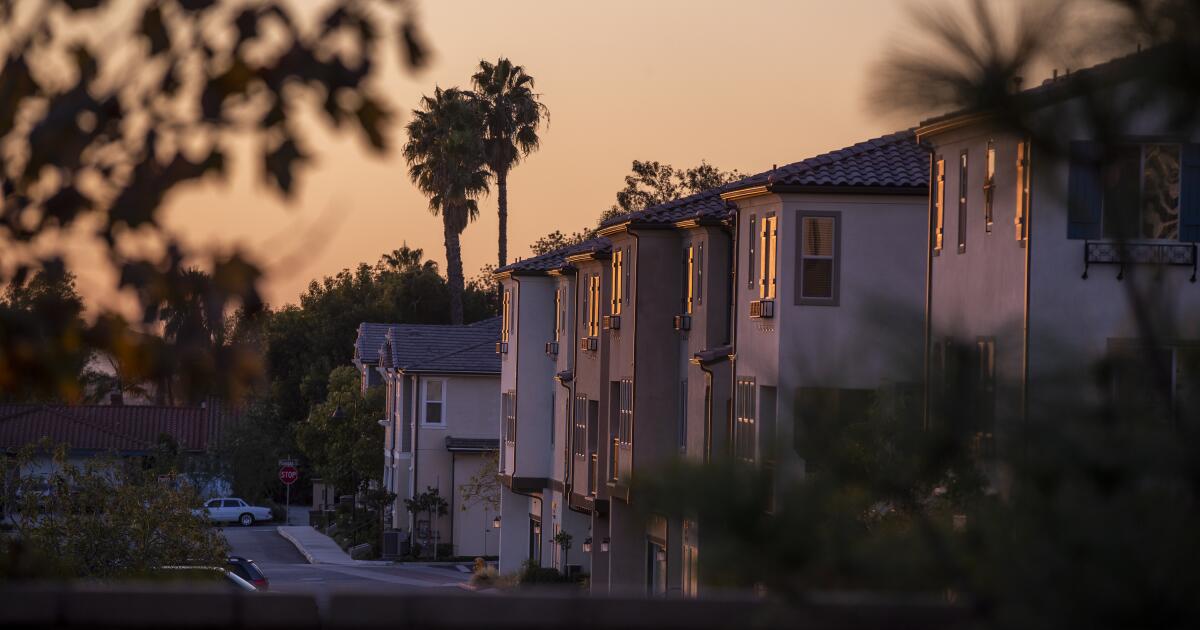
In California’s spendy cities, living comfortably costs more than almost anywhere else.
From the Bay Area to Orange County, living well requires incomes north of $150,000 in the pricier places, according to a recent study. A family with two kids needs more than $400,000 per year in some spots.
The study, conducted by financial technology company SmartAsset, analyzed 100 of the largest cities in the country.
San José ranked as the second-most expensive city, where a single adult must make nearly $160,000 and a family of four needs over $400,000 to live comfortably, the study found. Orange County cities — Irvine, Anaheim and Santa Ana — followed closely behind.
New York City topped the list, with a salary for comfortable living at about $900 higher than in San José.
Los Angeles ranked 16th on the list, where a single adult must make $120,307 to live comfortably. A family of four should bring in just over $280,000 annually.
San Diego and Chula Vista tied for seventh place, with a $136,781 salary for a single adult. San Francisco came in ninth, followed by Fremont and Oakland, which tied for 10th.
Santa Clarita, Long Beach, Riverside and Sacramento also made the top 20 list.
The study measured comfortable living using the 50/30/20 rule, in which half of a household’s post-tax income should go to needs, 30% to wants and 20% to savings.
The company used the MIT living wage calculator to determine cost of living by region for single adults and families of four.
A family of four faces the toughest living costs in the Bay Area, taking up four of the top five cities with the highest salaries needed to live comfortably.
San Francisco topped that list, with income for two parents projected at $407,597. Projected income in San José was slightly lower at $402,771, followed by Fremont and Oakland.
The study’s findings are in line with existing research that paints a grim picture of the statewide housing crisis, said Carolina Reid, an associate professor of city and regional planning at UC Berkeley.
“California is one of the more expensive places to live, and that definitely is true when we’re talking about families who are juggling multiple competing demands on their incomes,” Reid said.
Housing costs, groceries and gas prices — all considered necessities in the study — have skyrocketed nationwide, while wages have largely remained stagnant.
California housing costs are about double the national average. The state has struggled to keep up with demand, largely due to the lingering impacts of decades-long missteps in housing policies, said Paavo Monkkonen, a professor in urban planning at UCLA.
“It’s a problem that we created very slowly over a long period of time,” Monkkonen said.
The expected salary needed to live comfortably was significantly higher than the median household income for some California cities.
The difference is especially stark in Santa Ana, where the median salary is $95,118 — over $56,000 less than the projected salary needed to live comfortably in the city for a single adult.
Los Angeles had a $38,000 gap between the city’s median household income of $82,263 and the projected salary.
Cost of living is often hard to measure given the variability in how households choose to spend their money, Reid said. Housing is also the primary driver for living costs, which Monkkonen said is difficult to measure given the market’s unpredictability.
“People are living here somehow, right?” he said. “If you just look at the incomes and rents separately, you don’t really get a picture of how people are doing it…they’re spending a lot of their incomes on rents, but they’re also doubling up.”

A Los Angeles jury dealt a blow to social media giants Meta and YouTube this week when it found that the platforms were negligent for designing addictive features that harmed the mental health of a California woman.
Both companies plan to appeal, but the ruling has ignited uncertainty around the tech companies’ future and sparked questions about the potential fallout.
The seven-week trial kicked off in February, featuring testimony from Meta and YouTube executives.
Kaley G.M., a 20-year-old Chico, Calif., woman, sued the platforms in 2023, alleging that using social media at a young age led to her mental health problems such as body dysmorphia and depression. She also sued TikTok and Santa Monica-based Snap and those companies settled ahead of the trial.
Lawyers representing the woman argued that the platforms hook in young users with features such as infinite scrolling, autoplaying videos and beauty filters.
People use social media to keep up with their friends and family, but teens can also feel inadequate, sad or anxious when they compare themselves to a curated version of other people’s lives online. They’re also spending a lot of time watching a seemingly endless amount of short videos.
A jury determined that Meta was 70% responsible for Kaley’s harms and YouTube was 30% responsible. They awarded her a total of $6 million. The ruling came shortly after a New Mexico jury found Meta liable for $375 million in damages after the state Atty. Gen. Raúl Torrez alleged the platform’s features enabled predators and pedophiles to exploit children.
“These verdicts mark an unsurprising breaking point. Negative sentiment toward social media has been building for years, and now it’s finally boiled over,” said Mike Proulx, a director at Forrester, a market research company.
How have the companies reacted to the verdict?
Meta and Google, which owns YouTube, said they disagreed with the ruling and plan to appeal.
“This case misunderstands YouTube, which is a responsibly built streaming platform, not a social media site,” said Jose Castañeda, a Google spokesman, in a statement.
Meta spokesman Andy Stone posted the company’s statement on social media site X.
“Teen mental health is profoundly complex and cannot be linked to a single app. We will continue to defend ourselves vigorously as every case is different, and we remain confident in our record of protecting teens online,” the statement said.
Tech companies have been responding to mental health concerns, rolling out new parental controls so parents can keep track of their children’s screen time and moderating harmful content. Instagram and YouTube have versions of their apps meant for young people.
Some child advocacy groups and lawmakers, though, say these changes aren’t enough.
The ruling could affect how much money YouTube’s parent company, Alphabet, and Meta earn as they spend more on legal battles. While they make billions of dollars from advertising, investors are wary about higher expenses. The companies are already spending billions of dollars on artificial intelligence and developing new hardware such as smartglasses.
On Thursday, Meta’s stock fell more than 7% to $549 per share. Alphabet saw its share price drop more than 2% to roughly $280.
In 2025, Meta’s annual revenue grew 22% from the previous year to $200.97 billion.
Last year, YouTube’s annual revenue surpassed more than $60 billion. Both Google and Meta have been laying off workers as they spend more on AI.
The ongoing backlash hasn’t stopped tech companies from growing their users.
A majority of U.S. teens use YouTube, TikTok, Instagram and Snapchat, according to a 2025 Pew Research Center survey. More than 3.5 billion people use one of Meta’s products, which include Instagram and Facebook.
Social media has continued to change over the years as companies double down on short videos and AI chatbots.
Mental health concerns have only heightened as AI chatbots that respond to questions and generate content become more popular. Families have sued OpenAI, Character.AI and Google after their loved ones who used chatbots killed themselves.
Some analysts remain skeptical that Meta and YouTube would make drastic changes to their products because they’ve weathered crises before.
“Neither Meta nor YouTube is going to do anything different until a court orders them to, or there’s a significant drop in user or advertiser use,” said Max Willens, Principal Analyst at eMarketer.
Other analysts said legal risks could also affect how tech companies develop new AI-powered products and features.
“It’s likely that tech firms will now face increased scrutiny over the design of their platforms, which should drive more thoughtful inclusion of features that foster healthier interactions and safeguard mental health,” said Andrew Frank, an analyst with Gartner for Marketing Leaders.
At the very least, the verdicts serve as a “dire warning about how we handle the next wave of technology,” Proulx said.
“If we’re still struggling to put effective guardrails around social media after nearly two decades, we’re far from prepared for the growing harms of AI, which is moving faster, scaling wider, and embedding itself far deeper into people’s lives,” he said.
Times staff writer Sonja Sharp contributed to this report.

Justin Vineyards & Winery has agreed to workplace reforms and to pay $1.49 million to settle a federal lawsuit accusing it of allowing female employees to be sexually harassed and then retaliating against them for reporting it.
The Paso Robles business reached the settlement with the federal Equal Employment Opportunity Commission. It was was approved Thursday by a federal judge.
Also named in the lawsuit and settlement is the Wonderful Co., the Los Angeles agribusiness owned by Beverly Hills billionaires Lynda and Stewart Resnick.
In 2010, Wonderful acquired Justin, which includes production facilities, a tasting room, inn and Michelin-starred restaurant.
The lawsuit, filed in 2022, alleged that female employees were subject since August 2017 to comments about their appearance; texts containing inappropriate photos; touching of their breasts, buttocks and genitals; forced kissing and other harassment by their male supervisors.
It further alleged that the companies “knew or should have known” about the hostile work environment.
The lawsuit also said that when complaints were made about the harassment, they were not properly investigated and the employees were subject to retaliation, including being given double shifts, being accused of wrongdoing and being berated and yelled at by supervisors.
Aside from the monetary penalty, the settlement requires Justin and Wonderful to halt any harassment or retaliation, undergo compliance audits and take other measures at the vineyard operations.
The companies denied all the allegations and agreed to the settlement to resolve the litigation, according to the consent decree.
In a statement, Justin said that the matter “dates back many years and was dealt with immediately and decisively the moment we became aware of any allegations of conduct that did not align with what is appropriate in the workplace.
“With this agreement reached, we look forward to putting this chapter fully behind us and continuing to focus on the incredibly talented team we have in place today,” the statement said.
Beatriz Andre, acting regional attorney for the EEOC’s Los Angeles District Office, commended Justin and Wonderful for reaching the settlement.
“The policy changes and reporting to which the companies agreed are important steps in ensuring a workplace free of discrimination,” she said in a statement.
In 2016, workers cut down dozens of oaks trees on land managed by Justin to make room for new grape plantings, stirring up controversy.
The Resnicks said they were unaware of the cutting, apologized, donated the land to a nature conservancy and agreed to plant thousands of trees on vineyard property.
After buying Justin, Wonderful acquired Landmark Vineyards in Sonoma County and Lewis Cellars in Napa Valley.

‘The Comeback’ is back. That’s something to Cherish

The best deals we’ve found from Amazon’s Big Spring Sale (so far)

Zelenskyy offers cutting-edge drone defense to Gulf allies as Ukraine seeks missile support

JD Vance says he was ‘obsessed’ with UFOs, believes aliens are actually ‘demons’

Hormone therapy boosts weight loss drug results by 35% in women, study finds

Florida High School Football Rankings: Top 25 teams – Oct. 21

How old is Bo Nix? What to know about Oregon quarterback ahead of 2024 NFL Draft

Cleary's 21 help Le Moyne down Central Connecticut State 69-64 in OT

99th annual Pony Swim held in Virginia

Indiana Members Credit Union announced as new anchor tenant at Bottleworks District
JD Vance says he was ‘obsessed’ with UFOs, believes aliens are actually ‘demons’
The EU's recipe for trade deals : easy on beef, tough on wine

Photos: ‘No Kings’ protests across the country

Jeffries declines to break with indicted Democrat after ethics panel’s guilty verdict

Hundreds of thousands march through London in stand against the far right
-

 Sports1 week ago
IOC addresses execution of 19-year-old Iranian wrestler Saleh Mohammadi
-

 New Mexico6 days ago
Clovis shooting leaves one dead, four injured
-

 Tennessee5 days ago
Tennessee Police Investigating Alleged Assault Involving ‘Reacher’ Star Alan Ritchson
-

 Technology7 days ago
YouTube job scam text: How to spot it fast
-

 Minneapolis, MN3 days ago
Boy who shielded classmate during school shooting receives Medal of Honor
-

 Texas1 week ago
How to buy Houston vs. Texas A&M 2026 March Madness tickets
-

 Science1 week ago
Record Heat Meets a Major Snow Drought Across the West
-

 Politics1 week ago
Schumer gambit fails as DHS shutdown hits 36 days and airport lines grow