Business
Google and Meta used to champion DEI efforts. Why Big Tech is pulling back

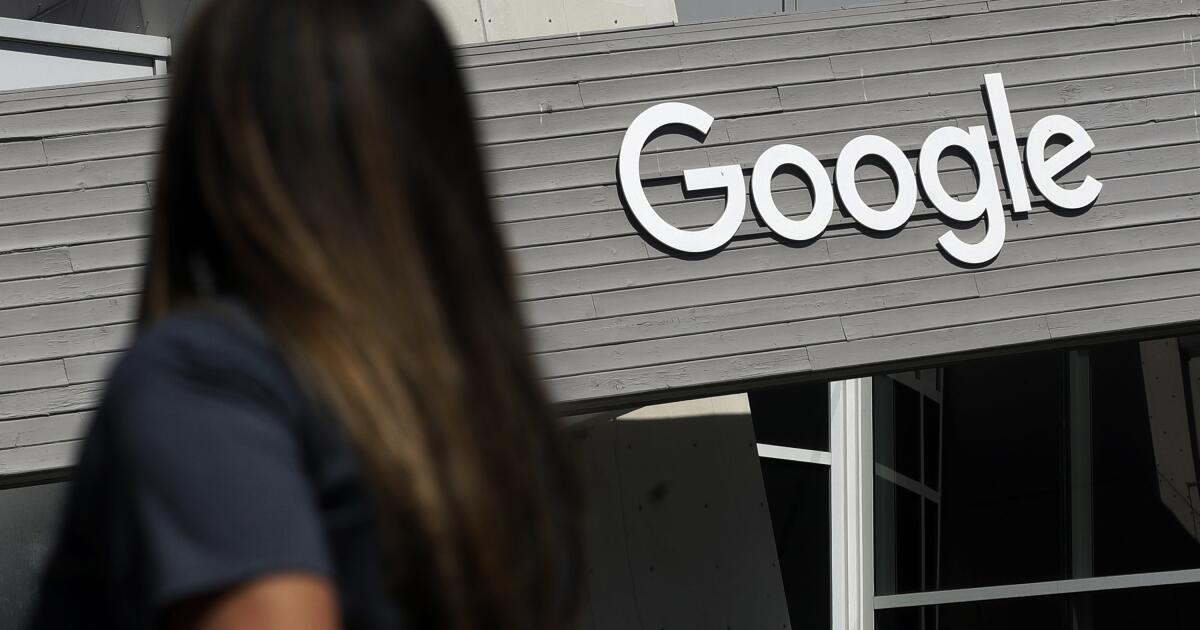
More than a decade ago, outcries about the lack of diversity in the tech industry reverberated across major Silicon Valley companies from Facebook to Google.
Women and minorities spoke out about feeling out of place in male-dominated professions, civil rights activists urged businesses to do more and tech workers like Tracy Chou, who was a software engineer at Pinterest at the time, pushed companies to release diversity data.
“There was already some movement in that direction, at least a feeling like we should do this,” said Chou, who wrote a viral Medium post in 2013 about the lack of female engineers. “What I happened to crystallize was a line of thinking that really resonated with the more data-driven side of the industry.”
For diversity advocates like Chou, the tide has now turned. Facing more political pressure and legal risks during President Trump’s second administration, tech companies that previously championed diversity including Google, Meta (Facebook’s parent company) and Amazon are scaling back, scrapping or rethinking their diversity, equity and inclusion (DEI) efforts.
It’s part of a broader retrenchment across the business community. About 20% of companies in the Standard & Poor’s 100 have retreated from DEI commitments since Trump was elected, according to a Bloomberg News analysis. Those include Target Corp., McDonald’s Corp. and Disney.
Trump and Elon Musk, who spent more than $200 million to help elect the president to a second term, have been vocal critics of DEI programs. In a fact sheet about Trump’s executive order, the White House said many corporations use DEI as “an excuse for biased and unlawful employment practices,” sending a message to businesses that they could get sued. Companies such as Google and Amazon also contract with federal agencies.
“They’re reading the room, especially with Trump and Elon running the country,” said Chou, now the chief executive of Block Party, a tool that helps users combat online harassment.
Corporate pledges to fight racism including from Musk’s company Tesla heightened after the 2020 police murder of George Floyd, sparking massive protests against police brutality.
But legal threats emerged in 2023 after the U.S. Supreme Court struck down race-based affirmative action in college admissions. As tech companies cut thousands of jobs, the massive cuts also hit DEI teams.
Spending on DEI roles at S&P 500 companies started to fall in 2022 as mass layoffs swept the tech industry, data from Revelio Labs show. In November 2024, these businesses spent an estimated $1.3 billion on DEI roles, down 10% compared to the same month in 2022.
From December 2022 to December 2024, tech companies including Google’s parent company Alphabet, Netflix and Amazon spent less on roles that promoted diversity and inclusion.
During this period, Tesla’s DEI spending was down by 84% and Meta’s DEI spending declined by 53%, according to Revelio Labs, which analyzes data from various sources including online profiles on sites like LinkedIn or Jobcase.
Tech companies have pointed to legal risks in internal memos about why they’re rethinking how they approach their DEI programs.
“They wanted to keep President Trump on their good side, because they don’t want to deal with any legal ramifications from the federal government,” said Jared Slater, partner at Ervin Cohen & Jessup.
The White House didn’t respond to a request for comment.
Meta’s Chief Executive Mark Zuckerberg, a former Trump critic who also said previously that improving diversity in tech is important, has in recent months aligned himself with the president and talked about the benefits of “masculine energy.” The company told its employees in an internal memo that the legal and policy landscape surrounding DEI changed and pointed to Supreme Court decisions.
“The term ‘DEI’ has also become charged, in part because it is understood by some as a practice that suggests preferential treatment of some groups over others,” said Janelle Gale, Meta’s head of human resources, in an internal memo.
The company said it wanted to serve everyone and would no longer use its “diversity slate approach” in which hiring managers consider candidates from underrepresented backgrounds when interviewing for an open role.
Meta also ended representation goals for women and minorities, a program to source supplies from diverse-owned businesses and scrapped its DEI teams. Maxine Williams, Meta’s chief diversity officer, became the vice president of accessibility and engagement.
Websites for Meta’s unconscious bias training and TechPrep, a resource hub for underrepresented people and their parents to learn about computer science, are no longer online.
Meta declined to comment but confirmed the memo, first published by Axios.
Google said this month it was reevaluating its DEI programs “following recent court decisions and executive orders on this topic.” The company said it would no longer set hiring targets tied to improving diversity after previously setting a goal of increasing by 30% the proportion of “leadership representation of underrepresented groups” by 2025.
And Amazon told its employees that it’s “winding down” certain programs after evaluating their “effectiveness, impact and ROI [return on investment]” but didn’t specify which ones.
In a December memo to employees reviewed by The Times, the company’s Vice President of inclusive experiences and technology Candi Castleberry told employees that the company is focused on “programs with proven outcomes” while also aiming to “foster a more truly inclusive culture.” Amazon shared the memo.
Amazon Studios — which announced a series of ambitious inclusion goals in June 2021 — also has been making changes. Last September, the Culver City-based studio removed a public-facing inclusion playbook from its website along with a goal that films or series with three or more people in above-line roles such as directors and producers included at least 30% women and 30% members of an underrepresented group.
“We’ve said from the beginning that our efforts to ensure diverse and inclusive storytelling would be fluid and change over time,” Amazon spokesperson Brad Glasser said in a statement. He added that the company strives to “tell the very best stories, while empowering diverse voices in our storytelling wherever possible.”
Meanwhile, some tech companies such as Apple are fighting back against anti-DEI proposals from conservative shareholders. The National Center for Public Policy Research, a conservative think tank, is asking that Apple consider ending its DEI programs, policies, departments and goals.
“The risks to the company’s bottom line stem from potentially getting sued by individuals for discrimination, potentially getting legal action from the government for violating civil rights law, and then the market backlash,” said Stefan Padfield, executive director of the center’s Free Enterprise Project.
Apple recommended that shareholders reject the proposal at the company’s annual shareholder meeting on Feb. 25.
Apple didn’t respond to a request for comment, but the company said in a document to shareholders that the anti-DEI proposal was “unnecessary” partly because its board and management oversee legal and regulatory risks.
Netflix has remained committed to DEI after Trump’s executive order, stating in its annual report that a “major focus” is “fostering a work environment that is culturally diverse, inclusive and equitable” because it wants more people and cultures to see themselves reflected on screen.
The Los Gatos-based streaming giant said in its annual report released in January that it educates its recruiters on how to hire more inclusively.
A Netflix spokesperson didn’t respond to a request for comment.
“What we need to do in this moment in time is to stand up, to speak up, to be strategic and to keep moving forward,” said Vernā Myers, former Netflix vice president of inclusion strategy and founder of the Vernā Myers Co., a consultancy on diversity, equity and inclusion. “We can’t allow this kind of bullying to make us so fearful that we are paralyzed and that we draw back from our core values.”
The backlash against DEI is not only affecting workplace culture, but nonprofits focused on recruiting more women and minorities into the tech industry.
Last year, Women Who Code, a nonprofit that got its start in California, closed because of a lack of funding. AnitaB.org, which brings together women in tech at its annual Grace Hopper Celebration, cut its workforce in 2024 and pointed to a downturn in corporate DEI investments.
Some diversity advocates like Freada Kapor Klein, co-chair of the Kapor Center, question whether some tech companies ever took DEI that seriously.
Tech giants seemed more open to diversity efforts in times of talent shortages because it helps open up a pool of potential hires, she said. Now they’re rolling back DEI efforts amid layoffs and a political climate in which Republicans hold more power.
“It is now fashionable to be anti-DEI. It’s now fashionable to talk about masculine energy. It’s now fashionable … to align oneself with MAGA interests,” she said. “So you have to kind of ask, what is it that people actually, really and truly believe?”



It has been a bumpy road for the electric vehicle market as declining federal support and plateauing public interest have eaten away at sales.
But EV sellers could soon receive a boost from an unexpected source: The war in Iran is pushing up gas prices.
As Americans look to save money at the pump, more will consider switching to an electric or hybrid vehicle. Average gas prices in the U.S. have risen nearly 17% since Feb. 28 to reach $3.48 per gallon. In California, the average is $5.20 per gallon.
Electric vehicles are pricier than gasoline-powered cars and charging them isn’t cheap with current electricity prices, but sky-high gas prices can tip the scales for consumers deciding which kind of vehicle to buy next.
“We probably will see an uptick in EV adoption and particularly hybrid adoption” if gas prices stay high, said Sam Abuelsamid, an auto analyst at Telemetry Agency. “The last time we had oil prices top $100 per barrel was early 2022 and that’s when we saw EV sales really start to pick up in the U.S.”
In a 2022 AAA survey, 77% of respondents said saving money on gas was their primary motivator for purchasing an electric vehicle. That year, 25% of survey respondents said they were likely or very likely to purchase an EV.
As oil prices cooled, the number fell to16% in 2025.
In California, annual sales of new light-duty zero-emission vehicles jumped 43% in 2022, according to the state’s Energy Commission. The market share of zero-emission vehicles among all light-duty vehicles sold rose from 12% in 2021 to 19% in 2022.
“Prior to 2022, we didn’t really have EVs available when we had oil price shocks,” Abuelsamid said. “But every time we did, it coincided with a move toward more fuel-efficient vehicles.”
Dealers are anticipating a windfall.
Brian Maas, president of the California New Car Dealers Assn., predicted enthusiasm for EVs will rebound across California if oil prices don’t come down.
“If prior gasoline price spikes are any indication, you tend to see interest in more fuel-efficient vehicles,” he said.
Rising gas prices could be a lifeline for EV makers at a time when federal support for green cars has been declining.
Under President Trump, a federal $7,500 tax incentive for new electric vehicles was eliminated in September, along with a $4,000 incentive for used electric vehicles.
In California, the zero-emission vehicle share of the total new-vehicle market was 22% through the first 10 months of 2025, then dropped sharply to 12% in the last two months of the year, according to the California Auto Outlook.
Meanwhile Tesla, the most popular EV brand in the country, has grappled with an implosion of its reputation with some consumers after its chief executive, Elon Musk, became one of Trump’s most vocal supporters and helped run the controversial Department of Government Efficiency.
Over the last several months, Ford, General Motors and Stellantis have pared back EV ambitions.
Other automakers, including Nissan, announced plans to stop producing their more affordable electric models.
The Trump administration has moved to roll back federal fuel economy standards and revoked California’s permission to implement a ban on new gas-powered car sales by 2035.
David Reichmuth, a researcher with the Clean Transportation program in the Union of Concerned Scientists, said the shift in production plans will affect EV availability, even if demand surges.
That could keep people from switching to cleaner vehicles regardless of higher gas prices.
“This is a transition that we need to make for both public health and to try to slow the damage from global warming, whether or not the price of gasoline is $3 or $5 or $6 a gallon,” he said.
According to Cox Automotive, new EV sales nationally were down 41% in November from a year earlier. Used EV sales were down 14% year over year that month.
To be sure, oil prices can fluctuate wildly in times of uncertainty. It will take time for consumers to decide on new purchases.
Brian Kim, who manages used car sales at Ford of Downtown LA, said he has yet to see a jump in the number of people interested in EVs, hybrids or more fuel-efficient gas-powered engines.
Still, if the price at the pump stays stuck above its current level, it could happen soon.
“Once the gas prices hit six [dollars per gallon] or more and people feel it in their pocket, maybe things will start to change,” he said.

A total of 59 gigawatts of U.S. clean energy projects are facing delays at a time when demand for power from AI data centers is surging, according to a trade group study.
Developers are seeing an average delay of 19 months over issues such as long interconnection times, supply constraints and regulatory barriers, the American Clean Power Assn. said in a quarterly market report.
The backlog is happening despite the growing need for power on grids that are being taxed by energy-hungry data centers and increased manufacturing. The Trump administration has implemented a slew of policies to slow the build-out of solar and wind projects, including delaying approvals on federal lands.
The potential energy generation facing delays is the equivalent of 59 traditional nuclear reactors, enough to power more than 44 million homes simultaneously.
“Current policy instability is beginning to impact investor confidence and negatively impact project timelines at a time when demand is surging,” American Clean Power Chief Policy Officer JC Sandberg said in a statement.
Despite the hurdles, developers were able to bring more than 50 gigawatts of wind, solar and batteries online in 2025, accounting for more than 90% of all new power capacity in the U.S., the report found. Clean power purchase agreements declined 36% in 2025 compared with 2024, signaling that the build-out of clean power in the U.S. could be lower in the 2028 to 2030 time period, according to the report.
Chediak writes for Bloomberg.

The high-stakes feud between Paramount Skydance President Jeff Shell and Las Vegas gambler and self-professed “fixer” Robert James “R.J.” Cipriani spilled into court on Monday.
Cipriani filed a lawsuit against Shell on claims of fraud and eight other counts, alleging that he reneged on an oral agreement to develop an English-language version of a Spanish music show that streams on Roku TV.
He is seeking $150 million in damages.
In the 67-page lawsuit, filed in Los Angeles County Superior Court, Cipriani claims that in exchange for providing “sophisticated, high-value crisis communications services, entirely without compensation” over 18 months, Shell had agreed to develop the show “Serenata De Las Estrellas,” (Star Serenade), but failed to do so. Cipriani and his wife were to be named as co-executive producers.
“This case arises from the oldest form of fraud: a powerful man took everything a less powerful man had to offer, promised to repay him, lied to him when he asked about it, and then refused to compensate him at all,” states the complaint.
Cipriani — who has producer credits on a 2020 documentary about Vegas, “Money Machine: Behind the Lies,” and the 2015 movie “Wild Card” — intended to make “Serenata” as a “lasting legacy for his mother,” Regina, saying the effort “has been the driving force and the most important thing consuming [Cipriani’s] entire life of almost sixty-five years,” according to the suit.
The show was inspired by a song that the Philadelphia-born Cipriani used to sing to his late mother when he was growing up.
The litigation is the latest twist in a simmering behind-the-scenes scandal that has left much of Hollywood slack-jawed.
For weeks, Cipriani had threatened to file a lawsuit against Shell, with the potential to derail his comeback at Paramount, three years after he lost his job as NBCUniversal’s chief executive over an inappropriate relationship with an underling.
Cipriani’s suit alleges Shell wasdesperate for help in quelling negative stories about him.
It also portrays him as someone who was indiscreet, allegedly sharing sensitive information during the period when the Ellison family, through Skydance Media, was preparing to close its deal to acquire Paramount and then was actively pursuing Warner Bros. Discovery to add to its growing entertainment and media empire.
The eventual rift between the unlikely pair began in August 2024. Patty Glaser, the high-powered entertainment litigator, convened a meeting between the two men.
During the meeting with Shell, the executive expressed to Cipriani his concern that emails and texts between him and Hadley Gamble, the CNBC anchor Shell had been involved with, would come out, saying “that would absolutely destroy me,” according to the suit.
Cipriani claims in his lawsuit Shell was facing “catastrophic personal exposure arising from his conduct toward yet another woman in the media industry,” similar to what had prompted his ouster from NBCUniversal and that he “solicited” his “crisis communications services.”
According to the suit, Cipriani was in a position to help him, having engaged in a “longstanding practice of exposing misconduct in the entertainment and media industries.”
Robert James “R.J.” Cipriani in Amazon Prime Video’s 2025 series “Cocaine Quarterback.”
(Courtesy of Prime)
A high-rolling blackjack player, Cipriani’s colorful résumé includes aiding the FBI in the arrest and conviction of USC athlete-turned global drug kingpin Owen Hanson, who was sentenced to 21 years in federal prison, and filing a RICO suit against Resorts World Las Vegas.
Leveraging his “unique media relationships and industry influence,” Cipriani said in his complaint that he provided Shell with “ongoing threat-monitoring and intelligence services,” and “took proactive steps to suppress, redirect, or neutralize” negative coverage against Shell before publication.
Cipriani said Shell expressed “effusive gratitude” to him after he planted a story about another entertainment industry figure “in order to divert media attention” away from Shell. “Thank you thank you thank you,” Shell wrote in a text to Cipriani, according to the lawsuit, which included a copy of the text.
During tense negotiations over Paramount’s streaming rights for the highly successful “South Park” franchise last summer, Shell allegedly asked to talk to Cipriani about the matter. Cipriani then “orchestrat[ed] the placement of a highly favorable news article,” that was “devastating to Shell’s and Paramount’s adversaries in the dispute,” the suit states.
After a story published in a Hollywood trade, Cipriani wrote to Shell on WhatsApp, “I’m the one that put the article out for you!!!” and “I didn’t want to tell you till it hit so you have plausible deniability.”
According to a message cited in the lawsuit, Shell responded, “I love you!!!! …Thank you Rj,” adding “I owe you dinner at least!”
Despite those boasts, Paramount ultimately paid “South Park” creators millions more than Skydance had intended. To remove obstacles from Skydance’s path to buy Paramount, the media company agreed to two blockbuster deals that include paying the “South Park” production company more than $1.25 billion to continue the cartoon — making it one of the richest deals in television history.
During the course of their relationship, Cipriani further alleges that Shell alerted him to a then-pending $7.7-billion Paramount deal for the rights to UFC fights, while Netflix “believed” it had a “handshake deal” for the same rights, according to the suit.
Cipriani disclosed in his lawsuit that he filed a whistleblower complaint with the Securities and Exchange Commission over the disclosure of material information, claiming that Shell told him that not even UFC President Dana White knew of the transaction. In a WhatsApp message cited in the lawsuit, Shell told Cipriani that the deal was “very hush, hush until we sign.”
While the gambler continued to provide his services to Shell gratis, their relationship began to sour.
Cipriani became enraged that Shell did not uphold his end of the alleged deal to help him with the TV show, viewing it as a slap to him and his mother.
In February, the pair met to resolve their growing dispute. According to the lawsuit, also in attendance was an unidentified entertainment attorney who had represented both men in separate matters.
Patty Glaser has been widely reported as having represented Shell and Cipriani. She introduced them in summer 2024, as The Times reported Saturday.
“We were presented with a draft complaint riddled with clear errors of fact and law,” Glaser said in a statement last week. “We will strongly respond.”
The February meeting did not go well.
Shell not only “refused to compensate” Cipriani, but also told him that he could not “assist” him “in obtaining a television show or other entertainment industry opportunity.”
Cipriani further alleged in his lawsuit that during their “failed summit,” Shell revealed his “disdain” for David Zaslav, the Warner Bros. Discovery CEO, and disclosed that Paramount intended to “sweeten” its pending hostile offer for the studio to fend off Netflix prior to announcing its intention to do so publicly.
After the meeting, Cipriani stated in his complaint that Shell’s attorney privately offered Cipriani a “$150,000 personal loan” to resolve the dispute.

Mississippi First Congressional District Primary 2026: Live Election Results, Buck vs. Johnson

Missouri Supreme Court hears arguments on congressional redistricting map – Missourinet
Montana AG letter alleges Helena violates law banning ‘sanctuary cities’

Shelter in place issued after suspicious object found in mailbox

Visitors flock to Death Valley National Park in California and Nevada for rare superbloom

Florida High School Football Rankings: Top 25 teams – Oct. 21

How old is Bo Nix? What to know about Oregon quarterback ahead of 2024 NFL Draft

Cleary's 21 help Le Moyne down Central Connecticut State 69-64 in OT

99th annual Pony Swim held in Virginia

Indiana Members Credit Union announced as new anchor tenant at Bottleworks District

Map: 2.3-Magnitude Earthquake Reported North of New York City

Trump stirs GOP primary drama with visit to Massie’s Kentucky home turf

Israeli air strike targets building in south Lebanon

Ed Martin, outspoken Justice Department lawyer, is formally accused of ethical violations | CNN Politics

Trump reveals top issues GOP should focus on to secure midterms victory: ‘I’ve never been more confident’
-

 Wisconsin1 week ago
Setting sail on iceboats across a frozen lake in Wisconsin
-

 Massachusetts1 week ago
Massachusetts man awaits word from family in Iran after attacks
-

 Maryland1 week ago
AM showers Sunday in Maryland
-

 Pennsylvania5 days ago
Pa. man found guilty of raping teen girl who he took to Mexico
-

 Florida1 week ago
Florida man rescued after being stuck in shoulder-deep mud for days
-

 Sports6 days ago
Keith Olbermann under fire for calling Lou Holtz a ‘scumbag’ after legendary coach’s death
-

 Detroit, MI4 days ago
U.S. Postal Service could run out of money within a year
-

 Miami, FL6 days ago
City of Miami celebrates reopening of Flagler Street as part of beautification project