Business
Driverless Waymo taxis under investigation after failing to stop for a school bus


Around 2,000 Waymo vehicles are under investigation following reports of one of the self-driving taxis navigating around a school bus while children disembarked.
The National Highway Traffic Safety Administration opened a preliminary investigation on Oct. 17 to examine the performance of Waymo’s autonomous technology around stopped school buses and how the system is designed to comply with school bus traffic safety laws, according to the investigation filing.
The incident occurred on Sept. 22 in Atlanta, Georgia, when a Waymo using the Mountain View, Calif. company’s fifth generation automated driving system approached the right side of a stopped school bus. The vehicle initially stopped, but then drove around the front of the bus and past the left side, the filing said.
The vehicle ignored the bus’s extended stop arm on the left side and its traffic crossing control arm on the right side, near where students were unloading. The bus was also flashing a red light. Prior similar incidents have likely occurred, NHTSA said.
“Safety is our top priority, as we provide hundreds of thousands of fully autonomous paid trips every week in some of the most challenging driving environments,” a Waymo spokesperson said. “NHTSA plays a vital role in road safety, and we will continue to work collaboratively with the agency as part of our mission to be the world’s most trusted driver.”
Waymo has already made software updates to improve its self-driving performance, and has plans for additional updates, the spokesperson said. The school bus was partially blocking a driveway that the Waymo was exiting from during the incident, the company said, and the vehicle kept a safe distance from children.
According to Waymo, the driverless taxis are improving road safety conditions in the communities they operate in, achieving a fivefold reduction in injury-related crashes compared to human drivers. The company’s operations have seen glitches and recalls, however.
Last month, police officers in San Bruno, CA, observed a self-driving Waymo make an illegal U-turn at a traffic light. Officers could not issue a ticket because there was no human driver present, the San Bruno Police Department said. Instead, the department contacted the company to let them know about the violation.
When self-driving cars violate the rules of the road, law enforcement can’t penalize them the same way that they can humans. The way state law has been interpreted, traffic tickets can be issued only to an actual driver.
California lawmakers have sought to close the enforcement loophole with legislation that will take effect in July, but critics say the law isn’t strong enough.
Waymo spokesperson Julia Ilina said that the company’s vehicles are already subject to close, ongoing oversight by California regulators, and that the company’s autonomous driving system “is designed to respect the rules of the road.”
Waymo, which has offered rides in Los Angeles since November, expanded its service area in the city and in San Francisco this summer.



The Port of Los Angeles expects it will move than 10 million container units for the second year in a row despite President Trump’s tariffs — but that number is likely to drop off in 2026 as the fallout of the administration’s trade war persists.
This year’s volume will reflect a decision by importers to get ahead of the tariffs before the duties took effect — with trade later slowing, according to the monthly report by the nation’s largest container port.
“In a word, 2025 was a roller coaster,” port Executive Director Gene Seroka said during the webcast.
In November, there was a 12% decrease in volume with about 782,000 TEUs, or 20-foot equivalent container units, processed by the port. The decrease was driven by an 11% fall in year-over-year import volume.
“Much of that difference is tied to last year’s rush to build inventories and now with some warehouse levels still elevated, importers are pacing their orders a bit more carefully,” Seroka said.
Still, by the end of November, the port had moved almost 9.5 million container units, 1% more than last year, leading to the expectation that volume will top 10 million for the year.
The port moved 10.3 million container units last year and set a record in 2021 when it moved 10.7 million container units.
However, exports — cargo shipments from the port — fell for the seventh time in 11 months in November, sliding 8%, which will lead to the first annual decline since 2021. Seroka blamed the drop on the response to the tariffs.
“We’re also seeing the effects of retaliatory tariffs and third country trade deals on U.S. ag and manufacturing exports,” Seroka said. “This is a headwind we may face for some time to come.”
The port director said he expects that imports will decline in the “single digits” next year because of continued high inventory levels, but he doesn’t anticipate a drastic downturn in overall trade.
“I don’t see the port volume falling off a cliff, and it’s a pretty good leading indicator to the U.S. economy that we should take stock in,” said Seroka, who added that there is much economic uncertainty entering next year.
The question of where the economy is headed was highlighted Tuesday by the latest jobs figures, which were delayed by the government shutdown.
They showed the economy lost 105,00 jobs in October as federal workers departed after the Trump administration cuts but gained 64,000 jobs in November.
The November job gains came in higher than the 40,000 that economists had forecast, but the unemployment rate still rose to 4.6%, the highest since 2021.
Constance Hunter, chief economist at the Economist Intelligence Unit, who provided a 2026 U.S. national economic forecast for the port on Tuesday, said the jobs figures offer mixed signals.
The job gains were driven by the health and human services sector, reflecting a narrowing of where job growth is occurring. At the same time, more types of companies are adding jobs rather than subtracting them.
Hunter forecast that the economy will grow in the first half of the year, as consumers receive tax cuts called for in Trump’s “One Big Beautiful Bill Act” tax-and-spending measure. However, tariffs will weigh down the economy later.
One key issue driving uncertainty, she said, is whether the U.S. Supreme Court will uphold the tariffs Trump imposed under the International Emergency Economic Powers Act.
The Trump administration announced Tuesday that the government had collected more than $200 billion in tariff revenue this year. Trump has talked about sending out $2,000 rebate checks to consumers with some of the funds.
However, a Supreme Court loss would force the government to return, by various estimates, $80 billion or more of the money to importers, putting a crimp in the president’s plans for economic stimulus.
Other factors driving uncertainty, Hunter said, are the Ukraine-Russia war, U.S.-China tensions over Taiwan and the “durability of peace in the Middle East.”
“All of these things are going to conspire to keep what we call the uncertainty index elevated,” she said.
Business
Commentary: Serious backlash to a Netflix/Warner Bros deal may come from European regulators

If you’re looking for where the most crucial governmental backlash to a merger deal involving Warner Bros. Discovery, you might want to turn your attention east — to Europe, where regulators are girding to take an early look at any such deal.
Both of the leading bidders — Netflix, which has the blessing of the WBD board, and Paramount, which launched a hostile takeover bid — could face obstacles from the European Union. EU officials have spoken only vaguely about their role in judging whatever deal emerges, since the outcome of the tussle remains in doubt.
The European Commission “could enter to assess” the outcome in the future, Teresa Ribera, the EU’s top antitrust official, said last week at a conference in Brussels, but she didn’t go beyond that. Pressure is mounting within Europe for close scrutiny of any deal.
A deal with Netflix as the buyer likely will never close, due to antitrust and regulatory challenges in the United States and in most jurisdictions abroad.
— Paramount makes its appeal to the Warner board
As early as May, UNIC, the trade organization of European cinemas, expressed opposition to a Netflix deal. The exhibitors’ concern is Netflix’s disdain for theatrical distribution of its content compared to streaming.
“Netflix has time and again made it clear that it doesn’t believe in cinemas and their business model,” UNIC stated. “Netflix has released only a handful of titles in cinemas, usually to chase awards, and only for a very short period, denying cinema operators a fair window of exclusivity.”
Neither WBD nor Netflix has commented on the prospect of EU oversight of their deal. Paramount, however, has made it a key point in its appeals to the WBD board and shareholders.
In both overtures, Paramount made much of the size and potential anti-competitive nature of Netflix’s acquisition of WBD. In a Dec. 1 letter sent via WBD’s lawyers, Paramount asserted that the Netflix deal “likely will never close due to antitrust and regulatory challenges in the United States and in most jurisdictions abroad. … Regulators around the world will rightfully scrutinize the loss of competition to the dominant Netflix streamer.”
Netflix’s dominance of the streaming market is even greater in Europe than in the U.S., Paramount said, citing a Standard & Poor’s estimate that Netflix holds a 51% share of European streaming revenue. That figure swamps the second-place service, Disney, with only a 10% share. Paramount made essentially the same points in its Dec. 10 letter to WBD shareholders, launching its hostile takeover attempt at Warner.
European business regulators have been rather more determined in scrutinizing big merger deals — and about the behavior of major corporate “platforms” such as Google and X.com — than U.S. agencies, especially under Republican administrations. One reason may be the role of federal judges in overseeing antitrust enforcement by the Federal Trade Commission.
“Despite the European Commission (EC) successfully doling out fines numbering in the billions of euros for giants like Apple and Google for distorting competition, the FTC has struggled significantly in court, losing virtually all its merger challenges in 2023,” a survey from Columbia Law School observed last year.
The survey pointed to differing legal standards motivating antitrust oversight: “American courts have placed undue weight on preventing consumer harm rather than safeguarding competition; by contrast, the EU has remained centered on establishing clear standards for competitive fairness.”
In September, for example, the European Commission fined Google nearly $3.5 billion for favoring its own online advertising display services over competing providers. (Google has said it will appeal.) The action was the fourth multi-billion-dollar fine imposed on Google by the EC since 2017; Google won one appeal and lost another; an appeal of the third is pending.
As an ostensibly independent administrative entity, the EC at least theoretically comes under less political pressure from the 27 individual members of the European Union than the FTC and Department of Justice face from U.S. political leaders.
President Trump has made no secret of his doubts about the Netflix-WBD deal. As I reported last week, Trump has said that Netflix’s deal “could be a problem,” citing the companies’ combined share of the streaming market. Trump said he “would be involved” in his administration’s decision whether to approve any deal.
That feels like a Trumpian thumb on the scale favoring Paramount. The Ellison family is personally and politically aligned with Trump, and among those contributing financing to the bid is the sovereign wealth fund of Saudi Arabia, a country that has recently received lavish praise from Trump. Another backer is Affinity Partners, a private equity fund led by Jared Kushner, Trump’s son-in-law.
The most important question about European oversight of the quest for WBD is what the regulators might do about it. The European Commission tends to be reluctant to block deals outright. The last time the EC blocked a deal was in 2023, when it prohibited a merger between the online travel agencies Booking.com and eTraveli. The EC ruling is under appeal.
At least two proposed mega-mergers were withdrawn in 2024 while they were under the EC’s penetrating “Phase II” scrutiny: the acquisition of robot vacuum cleaner maker iRobot by Amazon, and the merger of two Spanish airlines, IAG and Air Europa.
Typically, the EC addresses potentially anticompetitive mergers by requiring the divestment of overlapping businesses. In the case of Netflix and WBD, the likely divestment target would be HBO Max, which competes directly with Netflix in entertainment streaming. Paramount’s streaming service, Paramount+, also competes with HBO Max but not on the same scale as Netflix.
Antitrust rules aren’t the only possible pitfall for Netflix and Paramount. Others are the EU’s Digital Services Act and Digital Markets Act, which went into effect in 2022. The latter applies mostly to social media platforms—the six companies initially deemed to fall within its jurisdiction were Alphabet (the parent of Google), Amazon, Apple, ByteDance (the parent of TikTok), Meta and Microsoft. Those “gatekeepers” can’t favor their own services over those of competitors and have to open their own ecosystems to competitors for the good of users.
The Digital Services Act imposes rules of transparency and content moderation on large digital services. No platforms owned by Netflix, Paramount or WBD are on the roster of 19 originally named by the EU as falling under the law’s jurisdiction, but its regulations could constrain efforts by a merged company to move into social media.
The EU also has begun to show greater concern about foreign investments in strategic assets. Traditionally, these assets are those connected with national security. But defining them is left up to member countries. As my colleague Meg James reported, the sovereign funds of Saudi Arabia, Abu Dhabi and Qatar have agreed to back the Ellisons’ WBD bid with $24 billion — twice the sum the Ellison family has said it would contribute.
The Gulf states’ role has already raised political issues in the U.S., since the cable news channel CNN would be part of the sale to Paramount (though not to Netflix). Paramount says those investors, along with a firm associated with Kushner, have agreed to “forgo any governance rights — including board representation.”
That pledge aims to keep the deal out of the jurisdiction of the U.S. government’s Committee on Foreign Investment in the United States, or CFIUS, which must clear foreign investments in U.S. companies. But whether it would satisfy any European countries that choose to see Warner Bros. Discovery as a strategically important entity is unknown.
Then there’s Trump’s apparent favoring of the Paramount bid. Trump is majestically unpopular among European political leaders, who resent his pro-Russian bias in efforts to end Russia’s invasion of Ukraine. Trump has castigated European leaders as “weak” stewards of their “decaying” countries.
The administration’s recently published National Security Strategy white paper advocated “cultivating resistance to Europe’s current trajectory” and extolled “the growing influence of patriotic European parties,” which many European leaders interpreted as support for antidemocratic movements.
The document “effectively declares war on European politics, Europe’s political leaders, and the European Union,” in the judgment of the bipartisan Center for Strategic and International Studies.
How all these forces will play out as the bidding war for WBD moves toward its conclusion is imponderable just now. What’s likely is that the rumbling won’t stop at the U.S. border.
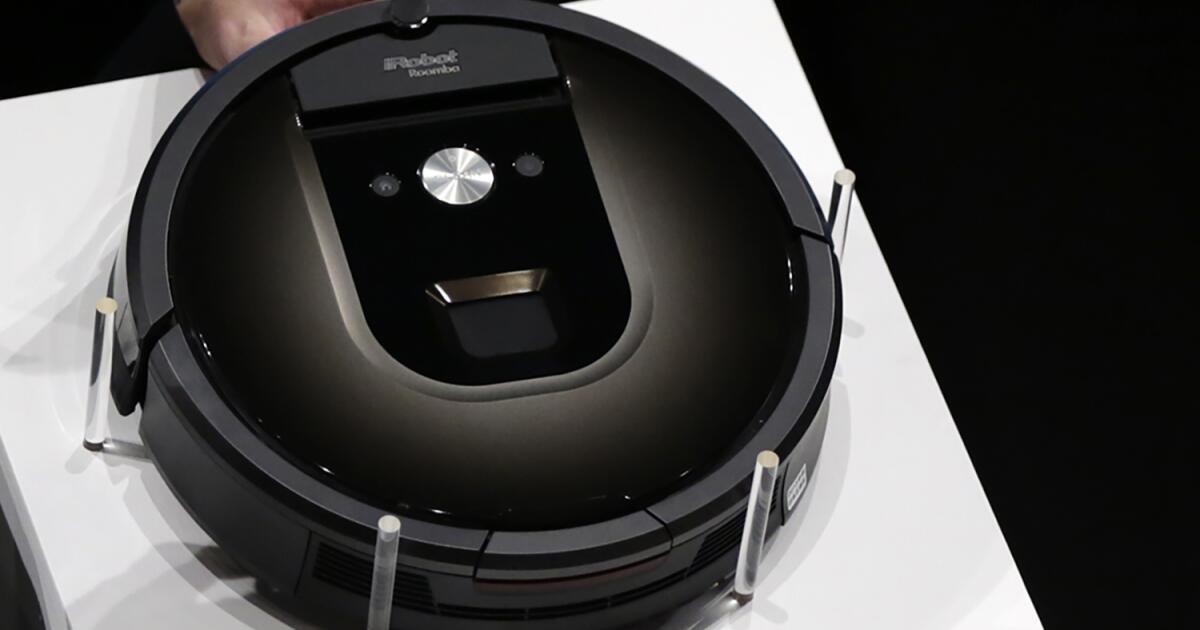
Roomba maker IRobot filed for bankruptcy and will go private after being acquired by its Chinese supplier Picea Robotics.
Founded 35 years ago, the Massachusetts company pioneered the development of home vacuum robots and grew to become one of the most recognizable American consumer brands.
Over the years, it lost ground to Chinese competitors with less-expensive products. This year, the company was clobbered by President Trump’s tariffs. At its peak during the pandemic, IRobot was valued at $3 billion.
The bankruptcy filing, which happened on Sunday, has raised fear among Roomba users who are worried about “bricking,” which is when a device stops working or is rendered useless due to a lack of software updates.
The company has tried assuaging the fears, saying that it will continue operations with no anticipated disruption to its app functionality, customer programs or product support.
The majority of IRobot products sold in the U.S. are manufactured in Vietnam, which was hit with a 46% tariff, eroding profits and competitiveness of the company. The tariffs increased IRobot’s costs by $23 million in 2025, according to its court filings.
In 2024, IRobot’s revenue stood at $681 million, about 24% lower than the previous year. The company owed hundreds of millions in debt and long-term loans. Once the court-supervised transaction is complete, IRobot will become a private company owned by contract manufacturer Picea Robotics.
Today, nearly 70% of the global smart vacuum robot market is dominated by Chinese brands, according to IDC, with Roborock and Ecovacs leading the charge.
The sale of a famous household brand to a Chinese competitor has prompted complaints from Silicon Valley entrepreneurs and politicians, citing the case as a failure of antitrust policy.
Amazon originally planned to acquire IRobot for $1.4 billion, but in early 2024, it terminated the merger after scrutiny from European regulators, supported by then-Federal Trade Commission Chair Lina Khan. IRobot never recovered from that.
The central concern for the merger was that Amazon could unduly favor IRobot products in its marketplace, according to Joseph Coniglio, director of antitrust and innovation at the think tank Information Technology and Innovation Foundation.
Buying IRobot could have expanded Amazon’s portfolio of home devices, including Ring and Alexa, he said, bolstering American competition in the robot vacuum market.
“Blocking this deal was a strategic error,” said Dirk Auer, director of competition policy at the International Center for Law & Economics. “The consequence is that we have handed an easy win to Chinese rivals. IRobot was the only significant Western player left in this space. By denying them the resources needed to compete, regulators have left American consumers with fewer alternatives to Chinese dominance.”
“While IRobot has become a peripheral player recently, Amazon had the specific capacity to reverse those fortunes — specifically by integrating IRobot into its successful ecosystem of home devices,” Auer said. “The best way to handle global competition is to ensure U.S. firms are free to merge, scale and innovate, rather than trying to thwart Chinese firms via regulation. We should be enabling our companies to compete, not restricting their ability to find a path forward.”

The 10 best Pittsburgh concerts of 2025

Coroner confirms Augusta moped driver has died after police pursuit

DC leaders considering transit options for new RFK Stadium

Last minute holiday events and toy giveaways in Cleveland

WebJi® Expands 20+ Years of SEO Expertise to Serve Austin, TX Businesses, Focusing on Local SEO

Florida High School Football Rankings: Top 25 teams – Oct. 21

Cleary's 21 help Le Moyne down Central Connecticut State 69-64 in OT

How old is Bo Nix? What to know about Oregon quarterback ahead of 2024 NFL Draft

99th annual Pony Swim held in Virginia

Video: ‘It Didn’t Have to Happen This Way:’ U.Va. Faculty Call for Review of Police Response to Protests

Video: Prosecutors Charge Nick Reiner With Murdering His Parents

HHS probes Minnesota’s use of billions in federal social service funds amid fraud concerns: report
Thousands of dinosaur footprints discovered on rock faces in northern Italy

Nick Reiner will be charged with first degree murder in his parents’ killing

DA: Nick Reiner will be charged with first-degree murder in deaths of Rob & Michele Reiner
-

 Iowa2 days ago
Addy Brown motivated to step up in Audi Crooks’ absence vs. UNI
-

 Washington1 week ago
LIVE UPDATES: Mudslide, road closures across Western Washington
-

 Iowa1 week ago
Matt Campbell reportedly bringing longtime Iowa State staffer to Penn State as 1st hire
-

 Iowa4 days ago
How much snow did Iowa get? See Iowa’s latest snowfall totals
-

 Cleveland, OH1 week ago
Man shot, killed at downtown Cleveland nightclub: EMS
-
World1 week ago
Chiefs’ offensive line woes deepen as Wanya Morris exits with knee injury against Texans
-

 Technology6 days ago
The Game Awards are losing their luster
-

 Maine14 hours ago
Elementary-aged student killed in school bus crash in southern Maine

