Business
Data centers under scrutiny by California lawmakers as fears rise about health and energy impacts


IMPERIAL — Whenever the weather changes suddenly, or the skyline becomes shrouded in a windy haze, Fernanda Camarillo braces herself for an asthma attack.
Her condition has become more manageable, but the 27-year-old said it’s still scary when her chest tightens and she starts to wheeze. It was one of her first thoughts when she heard about plans to develop a massive data center next to her home in Imperial County, a farming community near the border of Mexico that struggles with poor air quality.
“A lot of people in the county are asthmatic,” she said, explaining that she worries the new center would add more pollution. “I’ve been anxious — so many of us are voicing our concerns.”
Data centers have existed for decades but are rapidly changing and expanding due to the worldwide boom in artificial intelligence, or AI as it’s known. States and communities nationwide have started pushing back, citing concerns that the projects could strain power grids, increase utility bills and have negative health and environmental impacts.
In California, state legislators are debating how to protect residents and natural resources without creating so much red tape that developers go elsewhere, taking their jobs and taxable earnings with them.
No Data Center signs are posted in the front yard of a home that is right behind the proposed site.
“We can be supportive of innovation and a technology that is needed but also protect our communities and our health and our environment,” said state Sen. Steve Padilla (D-San Diego). “We can do both at the same time.”
The California Legislature is considering bills to prohibit the projects from being exempted from the state’s stringent environmental law and to impose new tariffs on new major energy users that strain power supplies. Lawmakers also have proposed restrictions on new data centers, requiring companies to provide verifiable estimates on expected water and energy usage before they can be granted a business permit.
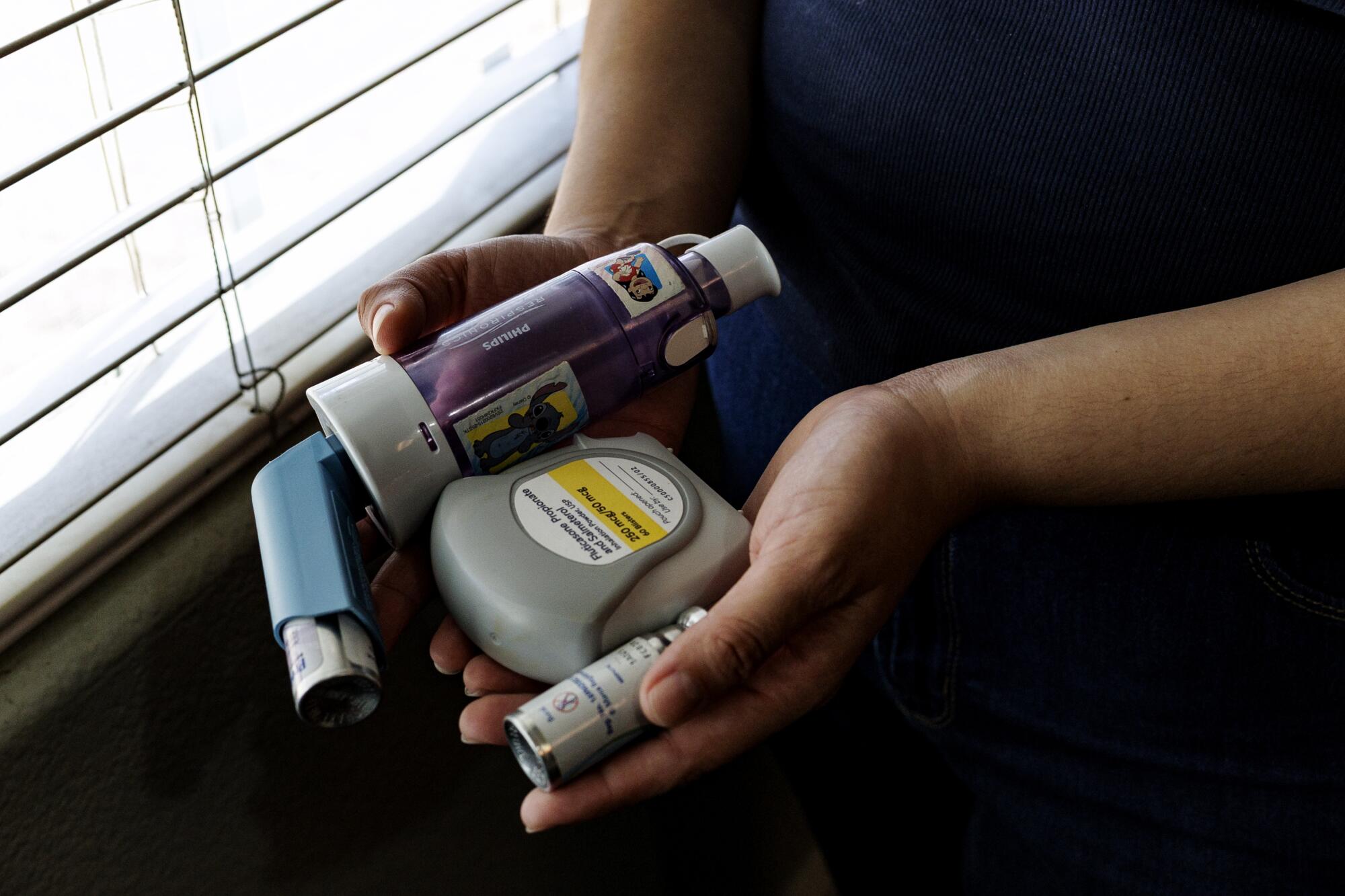
Imperial resident Fernanda Camarillo, who is an asthmatic, holds some of her medications.
Members of Congress also expressed concerns. Rep. Ro Khanna, speaking at a town hall about AI last month at Stanford University, said legislators must ensure data centers serve the communities that power them.
“We live in a new gilded age,” said Khanna (D-Fremont). “What kind of future are we going to build?”
::
Eric Masanet, a professor at UC Santa Barbara specializing in sustainability science for emerging technologies, described the facilities as the “brains” of the internet. The sprawling centers are filled with banks of specialized computers that process online shopping orders, stream movies, host websites, encode Zoom and other videoconferencing apps, store data and serve as switching stations for the digital world that’s now woven into daily life.
Data centers, particularly those that power AI, use significant amounts of water and energy. The facilities accounted for about 4.4% of the nation’s total electricity consumption in 2023, up from 1.9% in 2018, according to a report provided to Congress from the Lawrence Berkeley National Laboratory. The researchers projected that figure will reach 6.7% to 12% by 2028.
Many companies, including big tech giants like Meta, Google and Amazon, are making major investments in AI.
“We are building a lot more data centers faster than we ever did — and a new AI data center is 10 to 20, maybe 30 times, the size of the largest data centers we had before,” Masanet said.
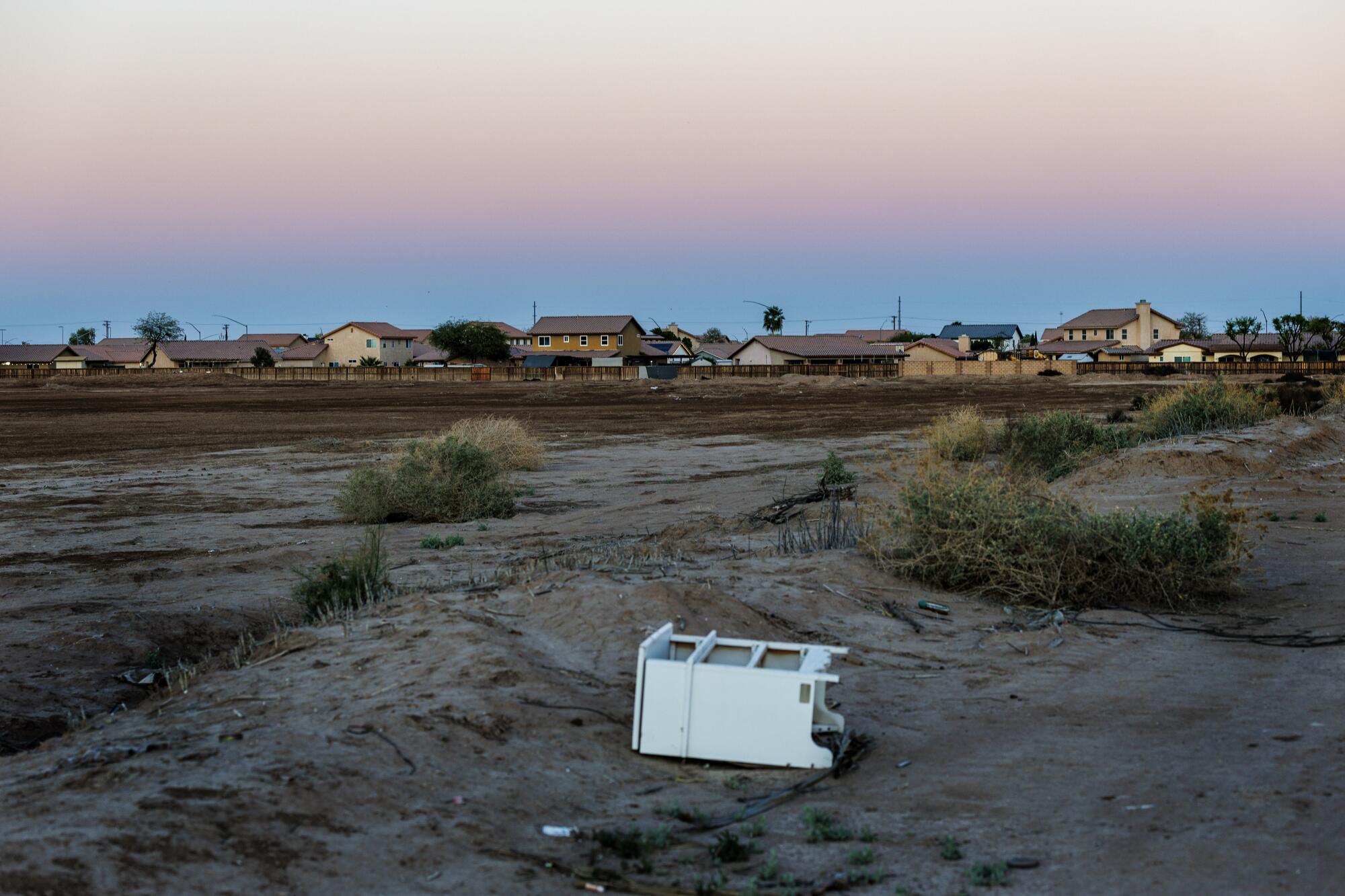
The proposed site of the 950,000-square-foot data center is on a dusty parcel that is next to the Victoria Ranch housing community and adjacent to farmland in Imperial, Calif.
It’s unclear how many data centers are in the state. A California Energy Commission spokesperson told the Los Angeles Times it does not track this information. Data Center Map, a nongovernmental website that tracks data centers across the world, lists 289 facilities in California, with more than 4,000 nationwide.
The federal government has, so far, largely left it to states or localities to regulate data centers.
The facilities can generate significant revenue for local governments due to sales and property taxes.
But some new proposals are sparking a backlash. More than 200 community and environmental organizations, including a dozen from California, sent an open letter to Congress in December calling for a national moratorium on new data centers.
Robert Gould, a pathologist with San Francisco Bay Physicians for Social Responsibility, one of the organizations that signed the letter, explained data centers are causing a shift away from renewable energy and back toward fossil fuels because the facilities need a reliable and constant stream of power.
Cornell University researchers last year estimated that AI growth could add 24 to 44 million metric tons of carbon dioxide to the atmosphere annually by 2030, unless steps are taken to change course.
Gould said fossil fuel emissions are associated with various cancers, an increase in hospitalizations for older adults due to respiratory conditions, and asthma attacks or stunted lung growth in children. Particulate matter from fossil fuel emissions is also linked to cardiovascular events and negative effects on maternal fetal health.
Gould’s organization has noticed an alarming trend.
“These are generally placed in communities that are the least able to defend themselves,” he said.

Farmworkers toil in the noon heat to pick vegetables in Imperial. Agriculture is an important part of the Imperial Valley economy.
::
The debate over data centers is heating up in the Imperial Valley, a rural desert region in southeastern California where a proposed center faces fierce opposition from residents.
The county in 2025 granted the project an exemption for the California Environmental Quality Act, known as CEQA. The landmark 56-year-old state law has been credited with helping to preserve California’s natural beauty and protecting communities from hazardous impacts of construction projects — but also blamed for stymieing construction.
Imperial Valley Computer Manufacturing, a California-based limited liability company that started two years ago, plans to develop a 950,000-square-foot facility in the county that’s designed for advanced artificial intelligence and machine learning operations. The company says it will use reclaimed wastewater and EPA-certified natural gas generators, and create 2,500 to 3,500 construction jobs and 100 to 200 permanent positions.
“We are committed to Imperial County and to creating lasting economic opportunity,” the company website states. “The project will generate $28.75 million in annual property tax revenue for local schools, fire departments, libraries, and essential services.”
The Imperial County Board of Supervisors is moving toward finalizing the proposal.

Farmland spreads out in front of the Imperial Valley Fair near a proposed data center in Imperial.
Sebastian Rucci, an attorney and chief executive officer of Imperial Valley Computer Manufacturing, said he commissioned multiple studies assessing the proposed center’s potential effect on issues like traffic or the environment that found no or minimal harms. He threatened to pull his proposal if a CEQA review was required.
“CEQA leaves you in an unknown territory — some of the environmental groups have used it for extortion, they sue, they have no basis for the suit but they delay you, and then they can squeeze money out of you for settling the lawsuit,” said Rucci.
The exemption, however, has alarmed residents, who have spoken up at county board meetings and launched a community organization, Not in My Backyard Imperial, to protest the data center and demand a CEQA review.
“It feels like it’s us against the county,” said Camarillo, adding that many feel the board has dismissed their questions and concerns.
None of the Imperial County Board of Supervisors responded to requests for comment.
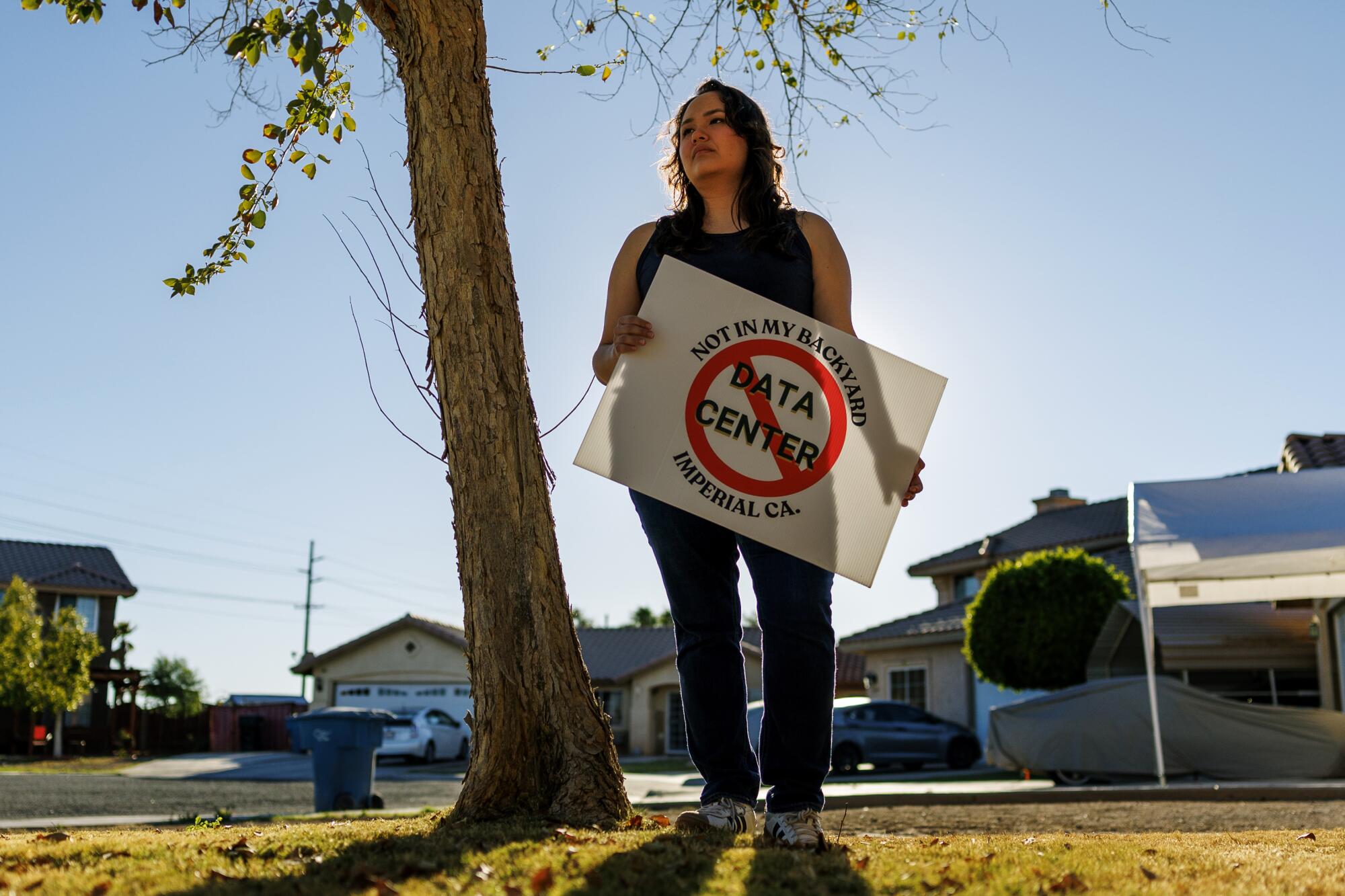
Resident Fernanda Camarillo’s home is right behind the proposed site of the data center in Imperial.
The center would be a neighbor to Camarillo’s house in Victoria Ranch, a family-friendly area with beige stucco homes topped with terracotta tile roofs. She worries about noise, pollution and spiking utility bills. Power companies that have to upgrade grids to meet data centers’ energy demands sometimes seek to recoup that cost by hiking up rates for all consumers.
Camarillo, a substitute teacher, is also scared for her students. The air quality in Imperial Valley is already so poor that schools use a system of color-coded flags to signal whether it’s safe for children to go outside during gym or recess, she said.
“I think they see [the valley] as easy pickings because we are a low-income community and we have such a large population of Latinos here,” Camarillo said.
A quick drive around the neighborhood shows others share her concerns. Signs protesting the data center pop up throughout the community, displayed on front lawns or nestled into rocky garden beds.
Victoria Ranch was quiet and peaceful on a sunny Sunday in late February. Francisco Leal, a resident and lead organizer for NIMBY Imperial, said that’s a major part of its appeal.
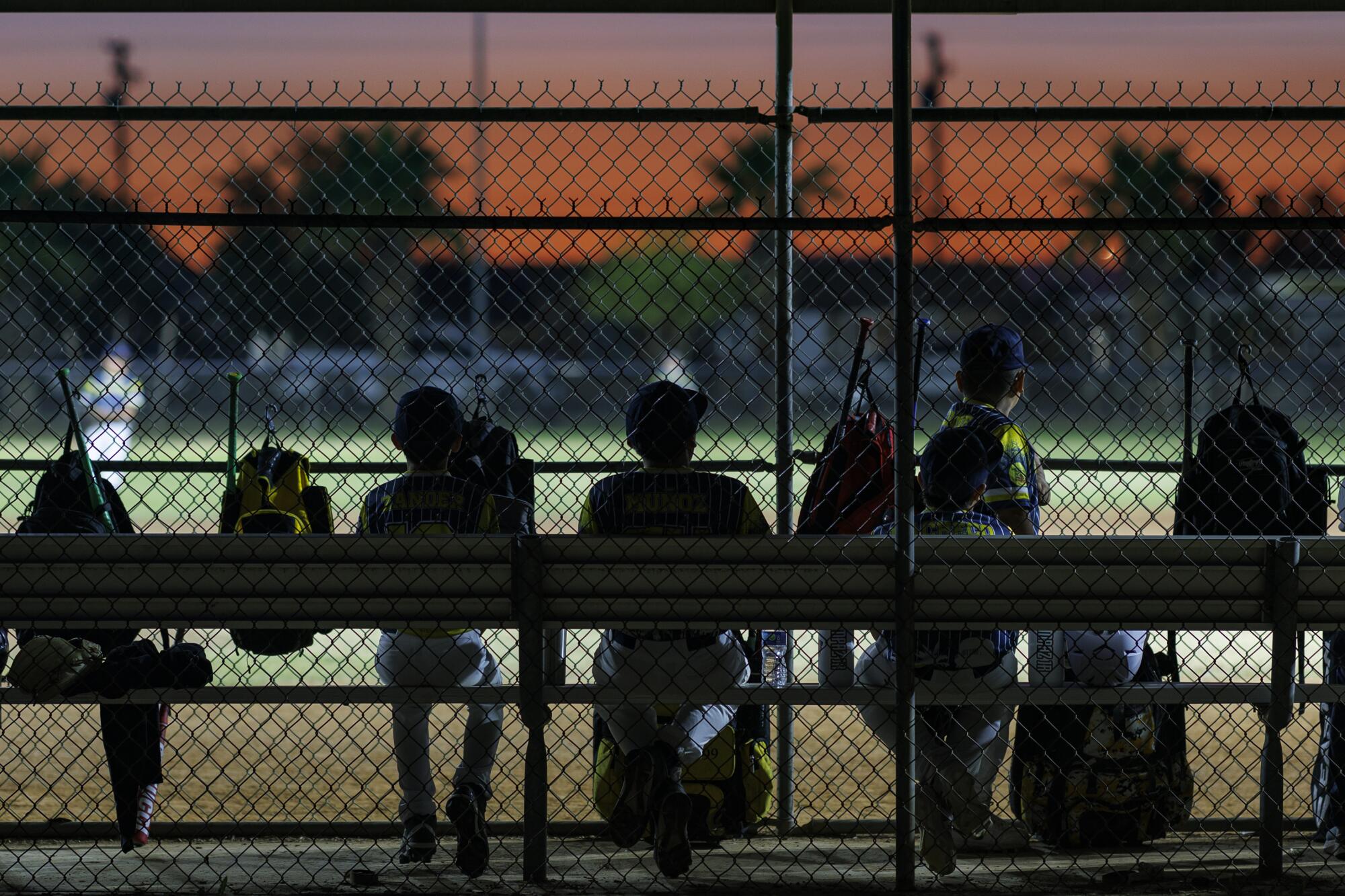
The colorful dusk sky hovers over a Little League baseball game at Freddie White Park in Imperial. The debate over data centers is heating up in the Imperial Valley, a rural desert region in southeastern California.
Leal wants answers about everything from potential health hazards and impacts on the local water supply to whether the fire department is equipped to handle a large-scale electrical blaze. But without a CEQA review, he says residents are left to trust assurances from the developer or privately hired consultants.
Leal plans to sell his property if the project goes forward, but the thought makes him emotional.
“It’s not just a house; it’s a home,” he said. “This is the only home my kids have ever known and all of our family memories are here.”
Gina Snow, another resident, isn’t necessarily against bringing a data center to the county. But she wants the proposal to undergo a CEQA review.
“Clearly we understand that there is economic development and the potential for that to be positive for the county, but at what cost?” she said.
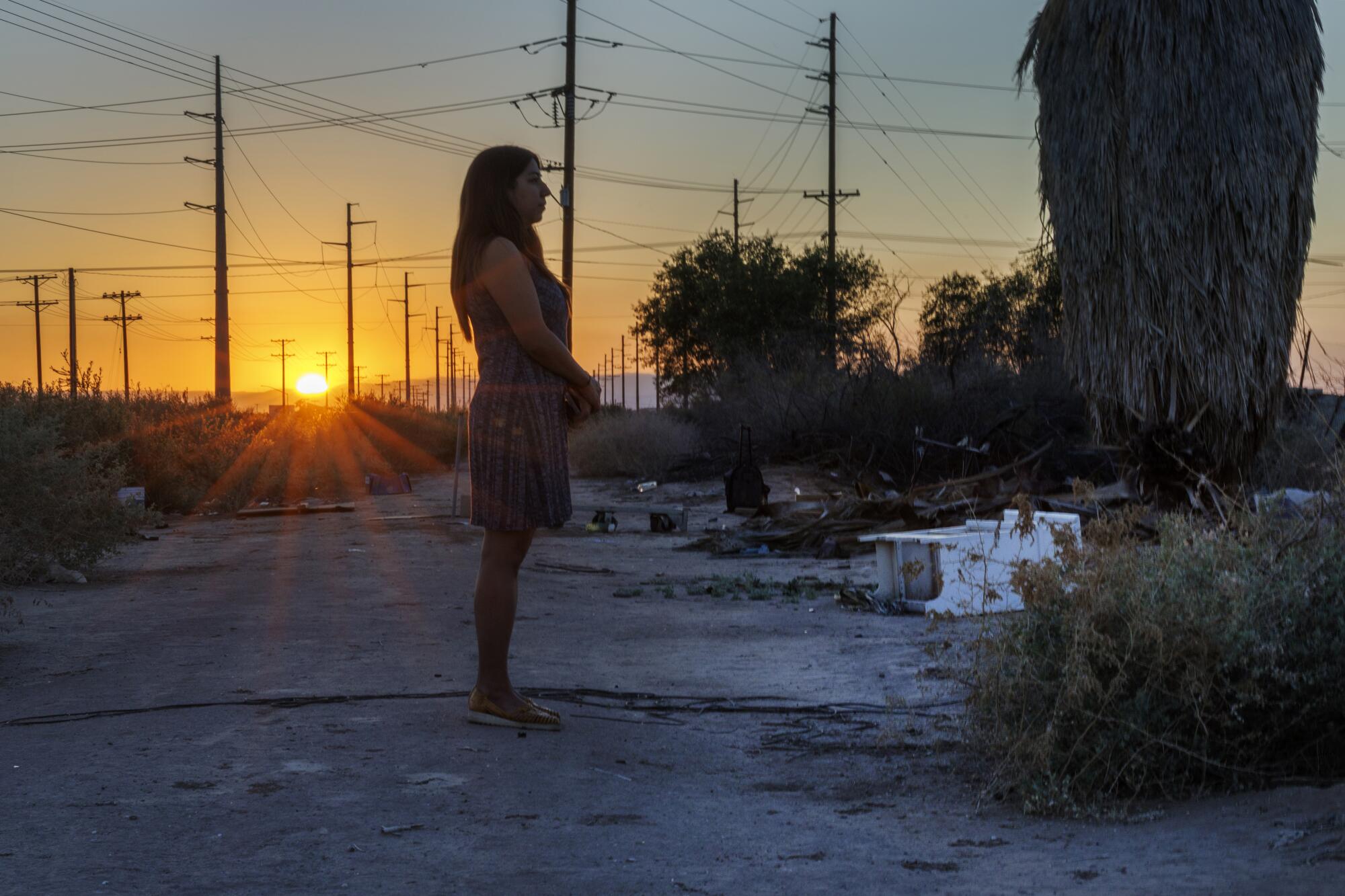
Daniela Flores, executive director of Imperial Valley Equity and Justice, a nonprofit that works for social and environmental equality, stands on the site of the proposed data center.
::
Daniela Flores, executive director of Imperial Valley Equity and Justice, a nonprofit that works for social and environmental equality, said the community has good reason to be wary. Various industries have come into the region over the years and made grand promises that never panned out.
“We became a sacrifice zone,” she said, adding industries use the area’s resources while ultimately doing little to permanently improve the lives of most residents.
Flores said the community continues to struggle with a range of problems, including poor air quality, high poverty rates, weak worker protections and crumbling infrastructure. She believes a data center could add new and potentially dangerous challenges.
The valley has long, brutal summers with temperatures that swell to 120 degrees. If the data center strains the grid and causes a lengthy blackout, or low-income residents have their power shut off because they can’t afford the rising bills, Flores fears the situation could quickly turn deadly.
The city of Imperial also has concerns. The city has filed a lawsuit calling on the county to halt the project, arguing it should not have received a CEQA exemption.
The controversy has drawn attention from Padilla, whose district includes Imperial Valley. Padilla has echoed residents’ calls for more transparency from the county and introduced Senate Bill 887, which would ban data centers from receiving exemptions from CEQA.
“I am not anti-data center or anti-artificial intelligence,” Padilla said. But, he added, we need to “find a way to do this right and make sure there is adequate review and understanding.”
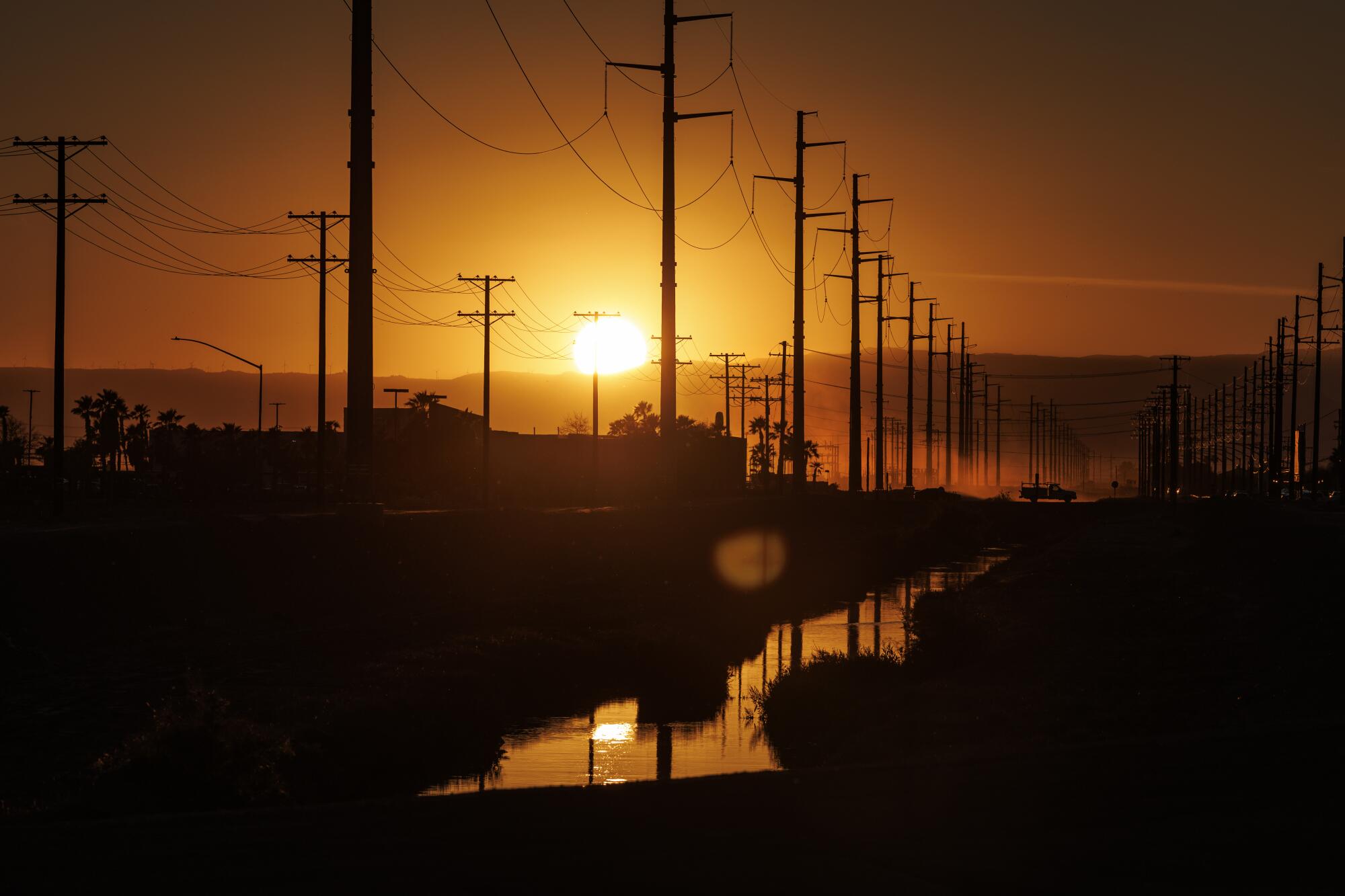
A dusty haze settles over the city of Imperial at dusk near the site of a proposed data center.
Another measure from Padilla, Senate Bill 886, would direct the Public Utilities Commission to create an electrical corporation tariff to cover the cost of data center-related grid upgrades.
Other related legislation this year includes Assembly Bill 2619 from Assemblymember Diane Papan (D-San Mateo) that would require data center owners to provide an estimate about expected water usage and sources before applying for a business license, and Assembly Bill 1577, by Assemblymember Rebecca Bauer-Kahan (D-Orinda), which would require data center owners to submit monthly information to a state commission about water and fuel consumption and energy efficiency.
While lawmakers weigh new policies at the statehouse, Camarillo said she hopes the priority will be protecting communities.
“Innovation is important, but innovation for the sake of innovation has never really been something that hasn’t had negative impacts,” she said. “Think about human lives.”


A rule intended to prevent rent gouging in the wake of the Eaton and Palisades fires has lapsed in Los Angeles County, possibly exposing some renters to hikes.
The executive order that blocked rent increases was issued by Gov. Gavin Newsom amid the devastating wildfires last year. Under the order, landlords couldn’t increase rents by more than 10% above their prefire levels.
The rule, which was supposed to be temporary and was repeatedly extended, ended Friday after a vote to extend it again failed to garner enough votes. Supervisor Lindsey Horvath, whose district includes Pacific Palisades, sounded the alarm in a motion to extend price protections that failed to pass at the Board of Supervisors’ May 19 meeting.
“These price gouging protections continue to be necessary as construction and rebuilding continue, and as thousands of people remain displaced,” the motion said. “Families which signed short-term leases could face drastic price increases of 50% or more without further price gouging protection.”
Los Angeles County is home to more than 1 million rental properties, though not all of them needed protection from the new rule. There are already stricter rent increase caps for many residences, depending on the location, type and age of the building. Despite the rent control in the region, the people of Los Angeles pay among the highest rents in the country.
It is uncertain whether renters will face rapidly rising rents now that the protection has lapsed. But some real estate experts and policymakers said there was no need for the temporary rule that was part of the governor’s state of emergency.
Supervisors Kathryn Barger, Janice Hahn and Holly Mitchell abstained from voting on the motion to extend the protection, while Supervisors Hilda Solis and Horvath supported it.
“I abstained because I did not see sufficient evidence to justify extending this emergency ordinance, nor did I see evidence to eliminate it entirely,” Hahn said.
Barger’s office said she supported allowing the protections to sunset while waiting to see whether new information emerged.
“Market data already shows countywide rents are only about 2% above pre-emergency levels and rental inventory has grown,” Barger representative Helen E. Chavez Garcia said. “The Supervisor is also mindful of the burden these ongoing protections place on small property owners throughout the county.”
Mitchell did not immediately respond to a request for comment.
There haven’t been steep rent hikes in neighborhoods within three miles of the Palisades fire, according to a Times analysis of data from Zillow, the property listing company.
In ZIP Codes within three miles of the Palisades fire, rent increased 4.8% from December 2024 to April 2025. In areas around the Eaton fire, which destroyed swaths of Altadena, rent jumped 5.2% in the same period.
In L.A. County, ZIP Codes farther from the fires saw only about a 2% increase.
A landlords representative, Jesus Rojas of the Apartment Owners Assn. of Greater Los Angeles, told the supervisors during public comment at the meeting that the county’s rent-gouging rules have “long outlived the emergency they were intended to address” and are now being “wrongfully used to harm thousands of rental housing providers throughout the county.”
“There is no proof that multifamily rental housing providers are hugely increasing rents for impacted homeowners,” Rojas said.
Indeed, there are strong signs that the property market in the Los Angeles area has at last begun to cool.
L.A. metro-area rent prices recently fell to a four-year low, with the median rent slipping to $2,167 in December.
Meanwhile, condominium sales had their slowest start of the year in decades. Condo sales in Los Angeles have plummeted to a 20-year low, with fewer than 2,000 units sold in January and February — the worst start to the year since 2005.
Newsom defended the price-gouging protections shortly after they went into effect.
“In the days following the Los Angeles firestorms, we worked quickly to protect Los Angeles survivors from any form of exploitation,” he said in February 2025. “The state has the tools in place to not only block price gouging during this emergency, but also to prosecute bad actors.”
The Los Angeles County Department of Consumer and Business Affairs said it received more than 2,000 complaints after the fires, alleging that retailers and landlords were taking advantage of people put in hardship by their losses, and sent out more than 2,000 cease-and-desist letters to businesses and landlords for alleged price gouging, said Morine Merritt, who oversees department investigations into consumer and real estate fraud.
“Close to 90% of the complaints that we received involved allegations of rent increases,” Merritt said in an interview. Now that the fire-related protections have expired, existing laws and “regular market conditions determine price increases for goods and services, including rents,” she said.
Crackdowns on fire-related rent gouging have been rare, said Chelsea Kirk of the activist organization the Rent Brigade, which analyzed L.A. County’s rental market in the year after the fires. It reported 18,360 potential examples of price gouging in listings but said that few lawsuits had been filed by authorities so far.
Last week, Rent Brigade announced what it said was the first private civil lawsuit brought by a family that claimed to be rent-gouged in the aftermath of the wildfires. Plaintiffs Randall and Candy Renick, whose Altadena home was damaged, said they were charged nearly three times the maximum permitted rate for nearly 10 months. They seek restitution of $96,000 plus civil penalties and attorneys’ fees.
The rental market has probably stabilized since the fires, Kirk said, but other families may still be “locked into illegal rents” that they agreed to pay when they were in a rush to find housing after they were displaced.


Dear Mr. Pelley:
I meant what I said in my letter last week to the 60 Minutes team: joining 60 Minutes is the honor of my career and I am grateful to be working alongside the people who have contributed to the most important television journalism brand this country has ever produced. While I’m new to 60 Minutes, I’ve devoted my career to investigative journalism and storytelling. I started this job excited to collaborate and to benefit from the wisdom and experience of the 60 Minutes veterans, with you among them. For that reason, one of the first things I did in my new role was call you to talk and invite you to dinner. It is a profound disappointment that you rejected that overture and chose ambush instead. Yesterday, you hijacked my first meeting with staff to disparage me, my qualifications, and my intentions with remarkable incivility and contempt. I welcome a diversity of viewpoints and respectful debate among the team, but this was nothing of the sort. Yesterday’s performative display of hostility enacted in front of the staff instead of in a civil, private conversation-demonstrated that you have no interest in contributing to the future success of the show, or approaching my new tenure with a mind open to collaboration and progress. I am here to deliver first-in-class news programming, not to make headlines about newsroom drama. I am eager to work alongside those who share this goal.
Despite yesterday’s misconduct, I had hoped that in sitting down with you today we could find a path forward together. You made clear that you are not interested in such a path.
Your antipathy to the future of the show has come through loud and clear. And I have heard you. I therefore write on behalf of CBS News, Inc. (“CBS”) to inform you that your employment with CBS is terminated for cause effective immediately. Enclosed is your formal termination letter.
Sincerely,
Nick Bilton
Executive Producer, 60 Minutes

The co-founder of Aspiration, Joseph Sanberg, was sentenced to 14 years in prison on Monday after defrauding investors and lenders of over $248 million.
The startup, an eco-friendly digital banking company boasting fossil fuel-free investments, carbon offsets for gas purchases, and a debit card with cash-back benefits for shopping at clean companies, was founded by Sanberg and Andrei Cherny. Cherny left the company in 2022 and has not been charged.
Sanberg, an Orange County native, pleaded guilty to wire fraud in October after being arrested in March last year. Aspiration subsequently filed for bankruptcy and liquidated all of its assets by July.
Sanberg and venture capitalist Ibrahim AlHusseini, who also faces charges, together forged a series of bank statements in order to obtain loans. From 2020 to 2021, the pair forged AlHusseini’s bank statements to show millions of dollars in assets in order to obtain millions of dollars from lenders.
Additionally, they forged a letter from their audit committee stating that $250 million in funds were available, when in reality Aspiration had less than $1 million. The amount of loans defrauded exceeded $248 million.
In 2021, Sanberg artificially inflated Aspiration’s 2021 revenue by $44 million by recruiting 27 fake customers to sign letters of intent pledging tens of thousands of dollars per month for tree planting services. Sanberg himself funded the contracts and used the inflated revenue numbers to obtain more loans.
The charges sparked an NBA investigation into salary cap allegations due to Aspiration’s connections with Clippers owner Steve Ballmer.
Ballmer personally invested $60 million in Aspiration, all of which was lost. He is now the target of a civil lawsuit alleging his participation in the scheme. Ballmer denies the allegations.
The team announced a $300-million sponsorship deal with Aspiration, and Clippers player Kawhi Leonard signed a four-year, $28-million marketing contract with the company, which reportedly performed no duties. The issue has raised concerns about how players are circumventing the NBA’s salary cap.
The team lost the $300-million sponsorship deal and an additional $20 million paid for carbon offset purchases.
-

 World6 minutes ago
Video: A Death at the Epicenter of Ebola
-

 News11 minutes ago
Map: 5.1-Magnitude Earthquake Strikes off the Coast of California
-

 Politics18 minutes ago
Video: Steve Hilton Holds Slim Early Lead in California Governor’s Race
-
 Lifestyle48 minutes ago
We’re having a main character summer. Are you? : It’s Been a Minute
-

 Technology56 minutes ago
Microsoft AI chief Mustafa Suleyman says there are three labs that matter — and he wants Microsoft to be the fourth.
-

 World1 hour ago
US ally Kuwait condemns ‘brutal and ongoing Iranian attacks’ after airport was hit
-

 Politics1 hour ago
Spencer Pratt surges to runoff in LA mayor’s race after angry voters send message to Karen Bass
-

 Health1 hour ago
One extra serving of processed meat a day linked to higher cancer risk

