Business
Column: Trump-friendly billionaires are taking aim at the federal agencies that protect workers and consumers

“If the law is against you, talk about the evidence. If the evidence is against you, talk about the law, and, … if the law and the evidence are both against you, then pound on the table and yell like hell.”
Thus the poet Carl Sandburg’s version of an ancient lawyer’s adage in his epic poem, “The People, Yes.” It isn’t his fault that his rendering is incomplete, since he was writing in 1936 and the modern legal mind has cooked up a further advisory, applicable when the entity against you is a government agency: If pounding the table and yelling won’t succeed, then get your adversary declared unconstitutional.
That’s the weapon being wielded at this moment against the National Labor Relations Board and the Consumer Financial Protection Bureau. The first was created by Congress in 1935 to protect workers’ organizing and bargaining rights, the second in 2010 to protect consumers from ripoffs by financial service firms.
The NLRB and the courts have recognized for years that delay to a union certification and the bargaining process causes irreparable loss of support among employees.
— Teamster attorney Julie Gutman Dickinson
Those agencies are under assault by two of the richest men in the world: Elon Musk, who controls Tesla and SpaceX, among other enterprises, and Jeff Bezos, the founder and executive chair of Amazon. To put it succinctly, these are agencies devoted to serving the little guy by fighting battles against Big Business. Is there any mystery about why they’re targeted by billionaires?
I reported in January on the effort by SpaceX to persuade a federal judge to declare the NLRB unconstitutional.
Amazon is pursuing the same goal in its own fight with the NLRB, in which it’s trying to stave off an order that it enter into contract negotiations with 8,000 workers at a warehouse in Staten Island, N.Y. Amazon is also trying to overturn the victory in the workers’ 2022 vote by a union that subsequently affiliated with the Teamsters.
As for the CFPB, Musk on Nov. 26 tweeted, “Delete CFPB…. There are too many duplicative regulatory agencies.” He was responding to a fatuous spiel by venture investor Marc Andreessen, who in an appearance on Joe Rogan’s webcast called the CFPB “Elizabeth Warren’s personal agency, which she gets to control.” Sen. Warren (D-Mass.) conceived of the agency and pushed for its creation after the recession of 2008, but she has zero “control” over it.
As Helaine Olen of the American Economic Liberties Project has observed, what really sticks in Andreessen’s craw about the CFPB is that it has worked to protect consumers from financial services outfits, including fintech firms in which Andreessen, along with other Silicon Valley bros, has invested. (I asked Andreessen via his substack column to expand on his claims, but haven’t heard back.) Rogan, wearing his persona as a babe-in-the-woods naif, listened to this nonsense in slack-jawed stupefaction.
“Duplicative”? What makes the CFPB so important is that it’s virtually unique among federal agencies in possessing the explicit responsibility to protect ordinary Americans from the depredations of financial snake-oil sales forces.
In its more than 13 years of existence, the bureau has secured more than $17.5 billion in compensation and other relief for consumers mulcted by the financial services industry and built up a victims relief fund worth more than $4 billion.
Musk’s campaign against these two agencies warrants notice because of his elevated role within the coming Trump administration. Along with Vivek Ramaswamy, another right-wing activist, he has been anointed as head of a Department of Government Efficiency, with the goal of rooting out supposed sources of government waste. If Musk uses that perch to wage his personal campaign against the NLRB, that could make things, um, complicated for Trump’s nominee for Secretary of Labor, the pro-union Lori Chavez-DeRemer.
That brings us to the claims that the agencies are unconstitutional. I asked SpaceX and Amazon to comment on their lawsuits. SpaceX hasn’t replied. Amazon, through spokesperson Eileen Hards, said it filed its lawsuit raising the issue “because we believe the NLRB is acting beyond its mandate, including by having its Members serving as both prosecutors and judges on the same case. This is a clear violation of separation of powers, and furthermore, they feel emboldened to do so because they are unconstitutionally insulated from removal.”
The company said further that it doesn’t believe the “election process was fair, legitimate, or representative of what the majority of our team wants…. We’ll continue to use all legal avenues available to us as we believe the decision will be overturned when it’s reviewed by an unbiased court.”
The unconstitutionality charge was laid against the CFPB by payday lending firms, supported by credit unions, the U.S. Chamber of Commerce and a passel of right-wing legal organizations, which based their case on the fact that the bureau’s funding comes from the Federal Reserve rather than the U.S. Treasury.
The Supreme Court rejected that argument by a 7-2 vote in May.
The claims against the National Labor Relations Board are different. In separate lawsuits, SpaceX and Amazon assert that because the board members and the board’s administrative law judges are insulated from at-will removal by the president, it’s in violation of several constitutional principles and provisions.
SpaceX’s case arose from an NLRB accusation that it improperly fired nine employees in 2022 for publishing an open letter complaining about safety provisions at the company’s plants. union organizing activities, among other illegal acts. Its lawsuit has had a complicated procedural history.
SpaceX originally filed its lawsuit in federal court in Brownsville, Texas, where it had a 50-50 chance of drawing a Trump-appointed judge but where appeals go to the notably conservative 5th Circuit Court of Appeals, in what appeared to be a flagrant example of forum-shopping.
As it happened, the case came before Rolando Olvera, an Obama appointee. He didn’t think much of a Hawthorne-based company suing the NLRB, which is located in Washington, D.C., over the firings of employees who mostly worked in California. (The lone exception was an employee located in Washington but whose supervisors were in California.)
“It is undisputed that no party resides in the Southern District of Texas,” Olvera ruled. He ordered the case transferred to federal court in Los Angeles. SpaceX appealed to the 5th Circuit Court, which obligingly ordered the case returned to Texas. The case is currently held in abeyance while the appeals court ponders various issues.
Amazon filed its case against the NLRB in September in San Antonio federal court, where three of the five judges are Republican-appointees but appeals also go to the 5th Circuit, even though the company’s dispute with the NLRB involves Teamster-represented workers in Staten Island, N.Y. It was assigned to Xavier Rodriguez, an appointee of George W. Bush.
One can’t overstate the stakes in this battle for the company and the union. The Staten Island warehouse was the first Amazon facility to win a union representation campaign.
Amazon is seeking an injunction blocking the NLRB from “pursuing unconstitutional administrative proceedings,” asserting that the board members are “insulated from removal in contravention of Article II of the Constitution.” The NLRB’s structure, the company argues, “violates the constitutionally mandated separation of powers and Amazon’s due process rights.”
The Teamsters, which represents the Staten Island workers, sees the quest for an injunction as nothing but an effort to use the courts to delay the company’s obligation to meet the workers at the bargaining table.
“Granting the injunction would send the message to all these workers that it’s irrelevant that their bargaining representatives have been certified by the NLRB,” which creates a duty to start bargaining, Julie Gutman Dickinson, the Los Angeles labor attorney representing the Teamsters, told me.
“The NLRB and the courts have recognized for years that delay to a union certification and the bargaining process causes irreparable loss of support among employees,” Dickinson says. “The chilling effect goes far beyond the Amazon employees in the New York facility but extends to hundreds of thousands of employees across the country, many of whom are involved in organizing campaigns to seek union representation, who will see that the NLRB’s legal process is completely futile.”
Oral arguments in a second case, involving unionized drivers and dispatchers at a warehouse in Palmdale that the workers maintain is jointly operated by Amazon and a labor subcontractor, are scheduled for Dec. 18 in Los Angeles federal court.
The Teamsters argues that Amazon appears to be a recent convert to the idea that the NLRB is unconstitutional. For more than two years, or since the Staten island election, Amazon pursued the NLRB’s administrative process to overturn the vote.
“At no time did Amazon assert any constitutional claims or allege the NLRB or its processes were constitutionally deficient,” the union said in a legal filing. Not until September, when it was facing an order to explain why it hadn’t bargained with the union, did the company raise the constitutional question.
It’s worth noting that the constitutionality of the NLRB has already been reviewed by the Supreme Court. That happened in 1937, with a 5-4 vote (the minority votes came from the cadre of reactionary justices known then as the Four Horsemen).
The majority opinion by Chief Justice Charles Evans Hughes didn’t explicitly address the president’s authority to remove the board members at will, but he did find that the “procedural provisions” of the National Labor Relations Act, which created the NLRB, met constitutional muster.
Amazon may be right to believe that it will prevail before what it calls “an unbiased court.” If it’s referring to the Supreme Court, it’s in with a chance, given the overt hostility the current court majority has shown toward organized labor. But declaring the NLRB to be unconstitutional, some 90 years since it was created by Congress, would be a big step indeed.



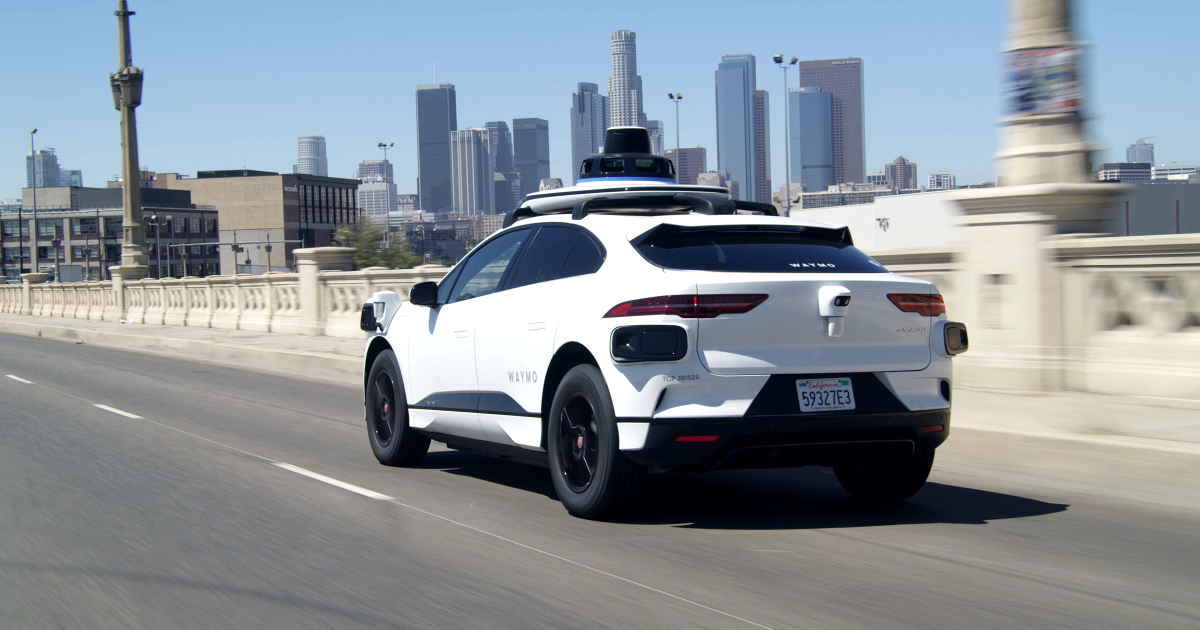
Waze and Waymo are teaming up to help combat Los Angeles’ growing pothole problem.
The companies announced a program that will use Waymo’s self-driving cars to better detect potholes in the city. The data will be available to city officials through Waze’s traffic data-sharing platform, according to a news release last week.
The number of potholes in L.A. jumped early this year after an intense rainy season soaked the city. Residents reported over 6,700 potholes in January and nearly 5,000 reports were submitted in February and again in March, according to data from the city’s 311 tip line analyzed by the nonprofit newsroom Crosstown L.A.
The partnership is the most recent effort in Waymo’s long-standing commitment to making roads safer, Arielle Fleisher, the company’s policy development and research manager, said in the release.
The Waze navigation app will also use the data to warn users as they approach a pothole, the company said.
Drivers will then be able to verify the Waymo-identified pothole in real time.
L.A. has been slow to repair pavement issues on its 23,000 miles of streets in recent years.
The city repaired 310 miles of road in fiscal year 2025, which ended in June — a nosedive from the 850 miles it paved a decade before in 2015, according to Crosstown. Only 216 miles of street lanes were paved in fiscal year 2024.
The Bureau of Street Services, the department in charge of paving the city’s streets, is in communication with Waymo regarding the pilot program, said Dan Halden, a spokesperson for the city department.
“The bureau proactively manages the city’s streets, ensuring roadways are treated not only for repair but also to strengthen the street network and prevent future potholes,” he said.
Many cities, including L.A., rely on residents to report potholes through the nonemergency 311 service. The process provides an incomplete picture of road health, according to Waymo and Waze.
The pilot program intends to fill in reporting gaps and was developed based on feedback from city officials.
“We want to build on the safety benefits of our service by partnering with organizations and city officials to help improve the infrastructure we all depend on,” Fleisher said
The pilot program is running in five cities, including San Francisco, and has already identified 500 potholes. The program is also underway in the metropolitan areas of Phoenix; Austin, Texas; and Atlanta.
The companies plan to expand into cities with colder weather, which can worsen the pothole problem.
“Working together helps our community and makes our roads better for everyone,” Andrew Stober, the strategic partner manager at Waze, said in the release.
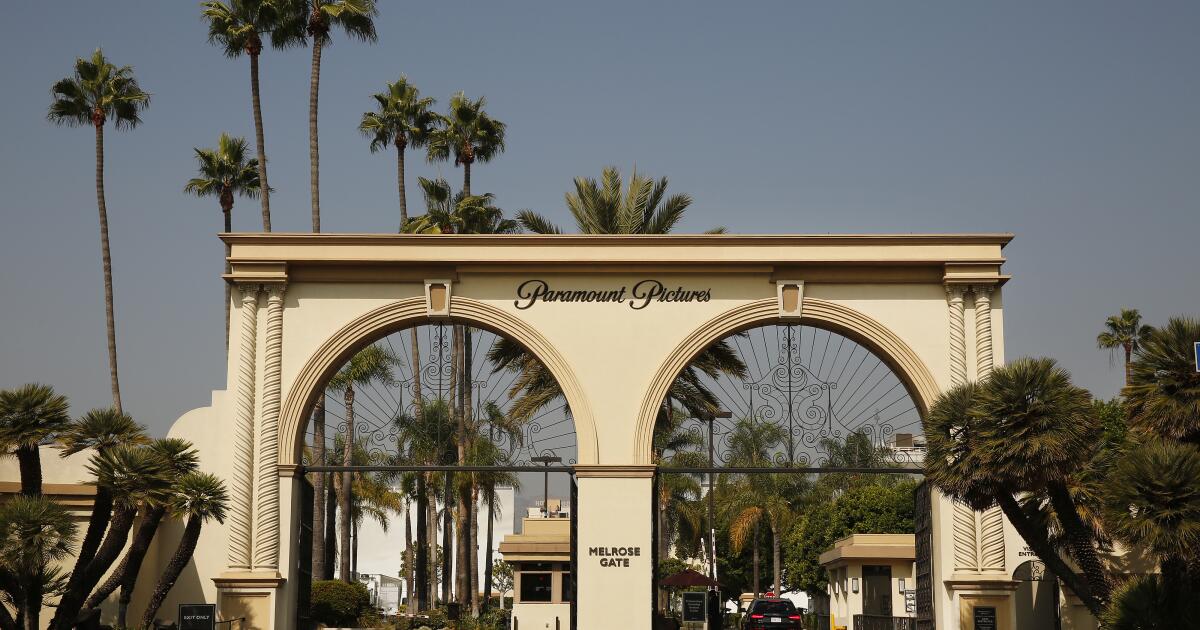
A constellation of stars are lining up against Paramount’s proposed takeover of Warner Bros. Discovery, expressing fears the blockbuster merger would devastate the industry and shrink production jobs.
The letter was signed by nearly 1,000 artists and movie creators, including such big names as Ben Stiller, Bryan Cranston, Noah Wyle, Joaquin Phoenix, Kristen Stewart and Jane Fonda, whose Committee for the First Amendment helped organize the campaign.
“This transaction would further consolidate an already concentrated media landscape, reducing competition at a moment when our industries — and the audiences we serve — can least afford it,” according to the letter. “The result will be fewer opportunities for creators, fewer jobs across the production ecosystem, higher costs, and less choice for audiences in the United States and around the world.”
Paramount, in a statement, pushed back against the artists’ concerns. Tech scion David Ellison and his team believes the blockbuster deal makes sense — particularly because of turmoil in the entertainment business, the company said.
“This is also a moment when the industry has been facing significant disruption—and the need for strong, creative-first and well-capitalized companies that can continue to invest in storytelling has never been greater,” Paramount said.
The Hollywood workforce has shrunk by more than 42,000 jobs between 2022 and 2024, according to a recent study. The economy has not bounced back following shutdowns due to the COVID-19 pandemic, followed by the twin labor strikes three years ago.
Thousands of film workers have been searching for work — but many of the big opportunities have moved abroad.
The strikes prompted studio executives to reset their output after previously spending big to build streaming services to compete with Netflix.
Two other consolidations led to widespread cutbacks: Walt Disney Co.’s acquisition of Fox entertainment assets in 2019, and Discovery’s takeover of AT&T’s WarnerMedia four years ago.
The resulting entity — Warner Bros. Discovery, led by David Zaslav — instituted deep cost cuts and thousands of layoffs to cut expenses because the firm was nearly drowning in deal debt — $43 billion — from the day Zaslav took the helm.
Paramount’s proposed takeover of Warner Bros. would result in a significantly higher debt load, $79 billion in debt, prompting concerns from the group and others about further downsizing.
Ellison, the 43-year-old son of billionaire Oracle co-founder Larry Ellison, is leading the effort to buy Warner Bros. Discovery to prop up Paramount, which the family acquired in August.
In late February, Ellison’s Paramount Skydance prevailed in a nearly six-month bidding war after Netflix unexpectedly bowed out when the elder Ellison agreed to financially back his son’s $111-billion deal.
“We have been clear in our commitments to do just that: increasing output to a minimum of 30 high-quality feature films annually with full theatrical releases, continuing to license content, and preserving iconic brands with independent creative leadership,” Paramount said, adding that such promises should ensure that “creators have more avenues for their work, not fewer.”
Warner shareholders will be asked to approve the merger April 23.
Ellison is pushing to wrap the deal up this summer.
“We are deeply concerned by indications of support for this merger that prioritize the interests of a small group of powerful stakeholders over the broader public good,” the letter said. “The integrity, independence, and diversity of our industry would be grievously compromised. Competition is essential for a healthy economy and a healthy democracy. So is thoughtful regulation and enforcement.”
The group urged California Atty. Gen. Rob Bonta and his fellow state attorneys general to sue to block the transaction.
Bonta has told The Times that his office is reviewing the transaction to see if it violates antitrust rules. Two historic movie studios, several streaming services and dozens of cable channels would be brought under one roof.
“Media consolidation has already weakened one of America’s most vital global industries,” the group said, “one that has long shaped culture and connected people around the world.”
Bonta’s office is leading the charge against another merger, TV station giant Nexstar Media Group’s $6.2-billion takeover of Virginia-based Tegna. Eight state attorneys general, including Bonta, have sued to block that deal. A judge is expected to rule on whether to issue a preliminary injunction later this week.
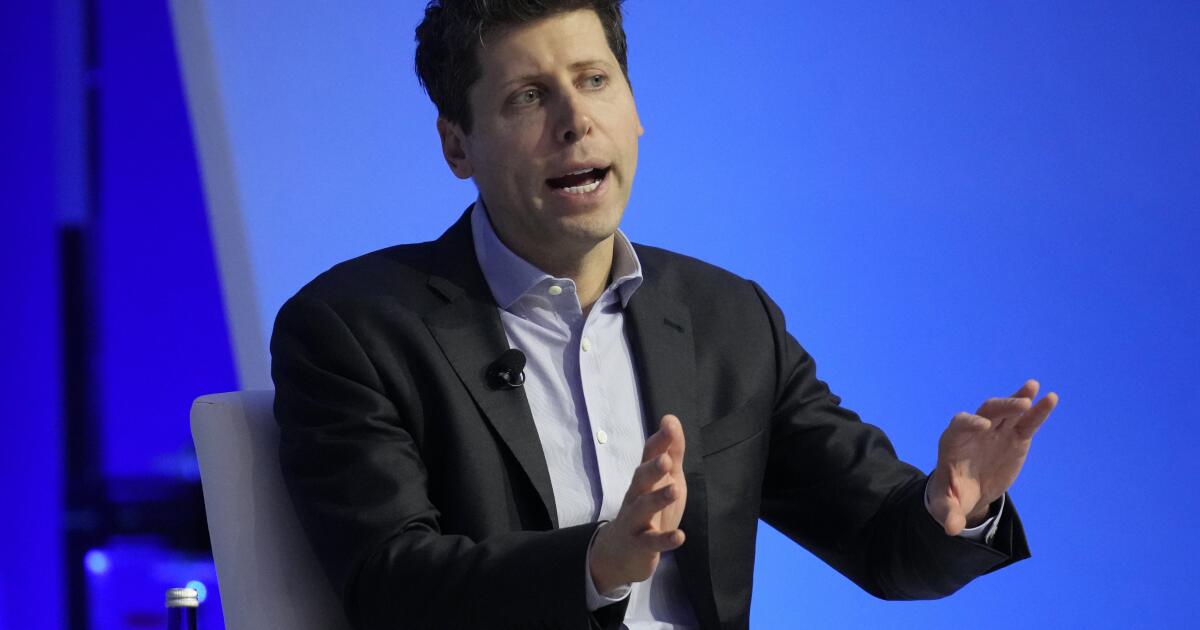
Hours after a Molotov cocktail was thrown at his San Francisco home, OpenAI Chief Executive Sam Altman addressed the criticism surrounding artificial intelligence that appears to have been the impetus for the attack.
In a lengthy blog post, Altman shared a family photo of his husband and child, stating he hopes it might convince people not to repeat the attack despite their opinions on him.
The San Francisco Police Department arrested a 20-year-old man in connection with the Friday morning attack but did not publicly comment on the motivation. Altman and his company, the maker of ChatGPT, have been at the center of a heated debate about whether AI will change the world for better or worse.
“While we have that debate, we should de-escalate the rhetoric and tactics and try to have fewer explosions in fewer homes, figuratively and literally,” Altman wrote.
The rise of AI chatbots that can generate text, images and code has raised concerns about whether there are enough guardrails around the development of the powerful technology.
From job displacement to the effects of AI on mental health and war, critics have been vocal about their fears. Families have also sued technology companies including OpenAI and Google, alleging in lawsuits that their chatbots contributed to the death of their loved ones. OpenAI has faced backlash after striking a deal with the Department of Defense shortly after its rival Anthropic raised AI safety concerns and lost its contract.
Politicians in California and other states have been passing new laws that target AI safety. And groups that aim to stop the development of AI have regularly protested outside OpenAI’s San Francisco headquarters.
In the blog post, Altman acknowledged the fear and anxiety surrounding AI was “justified” because “we are in the process of witnessing the largest change to society in a long time, and perhaps ever.” But he also said that people will do “incredible things” with AI and that “technological progress can make the future unbelievably good.”
Altman has become a controversial figure as companies race to advance AI. In 2023, OpenAI’s board of directors fired Altman, stating that he wasn’t “consistently candid” in his communications with the board and that board members had lost confidence in his ability to lead the company. OpenAI’s mission is to “ensure that artificial general intelligence benefits all humanity,” the board said at the time. Facing pressure from its employees and investors, OpenAI reinstated Altman as chief executive less than a week after he was pushed out. A new board was put in place and members who supported ousting Altman left.
Altman said in the blog post that he has made mistakes and done things he’s not proud of, describing himself as “conflict-averse.”
“I am not proud of handling myself badly in a conflict with our previous board that led to a huge mess for the company,” he wrote.
Since his return, OpenAI has expanded its presence in healthcare, retail, defense and other industries. But controversy has followed the company. OpenAI is currently in a legal battle with billionaire Elon Musk, who has accused the company of abandoning its nonprofit founding mission in a case that’s expected to head to trial. Musk, a co-founder and early investor in OpenAI, alleges he was manipulated into funding what he thought was a nonprofit but turned into a “moneymaking endeavor.” OpenAI alleges that Musk, who runs rival xAI, is suing to slow down a competitor.
Last week, the New Yorker published a lengthy story about Altman that posed the question about whether he could be trusted.
In his blog post, Altman referenced an “incendiary article” published about him but didn’t name the publication, adding that “words have power.” OpenAI didn’t immediately respond to a request for comment on Saturday. On the social media site X, Altman said he regretted using certain words in his blog after an editor from the AI newsletter Transformer pointed out that Altman implied that a critical piece of journalism was responsible for the attack.
Altman said the attack happened at 3:45 a.m. on Friday but the Molotov cocktail “bounced off the house and no one got hurt.”
The San Francisco Police Department and OpenAI previously confirmed the attack on Friday. The suspect allegedly made threats to OpenAI’s headquarters after the attack at Altman’s home.
Several news outlets, including the San Francisco Chronicle, identified the suspect as Daniel Alejandro Moreno-Gama.
Moreno-Gama was booked on Friday on suspicion of making criminal threats, arson, attempted murder, possession of a destructive device and other charges. The Chronicle also cited a Substack that appeared to be from the suspect that includes posts titled “AI Existential Risk.”
The Times asked the San Francisco Police Department on Saturday whether the account belonged to the suspect.
“At this time we have no further updates to provide,” the department said in an e-mail.

Aviation safety bill based on DC midair collision faces House vote Tuesday

A tornado touched down in Taylor County on April 13, NWS confirms

Former four-star Georgia Tech freshman center commits to Big 12 program

TV Show Explores Wyoming’s Strangest House

Deutsche Börse Invests $200 Million in Crypto Exchange Kraken

Florida High School Football Rankings: Top 25 teams – Oct. 21

How old is Bo Nix? What to know about Oregon quarterback ahead of 2024 NFL Draft

Cleary's 21 help Le Moyne down Central Connecticut State 69-64 in OT

99th annual Pony Swim held in Virginia

Indiana Members Credit Union announced as new anchor tenant at Bottleworks District

Video: How Stephen Miller Is Adjusting Trump’s Immigration Agenda

Biden DOJ weaponized FACE Act against pro-life Americans, 882-report alleges

Mass drone warfare is Europe’s rising security threat
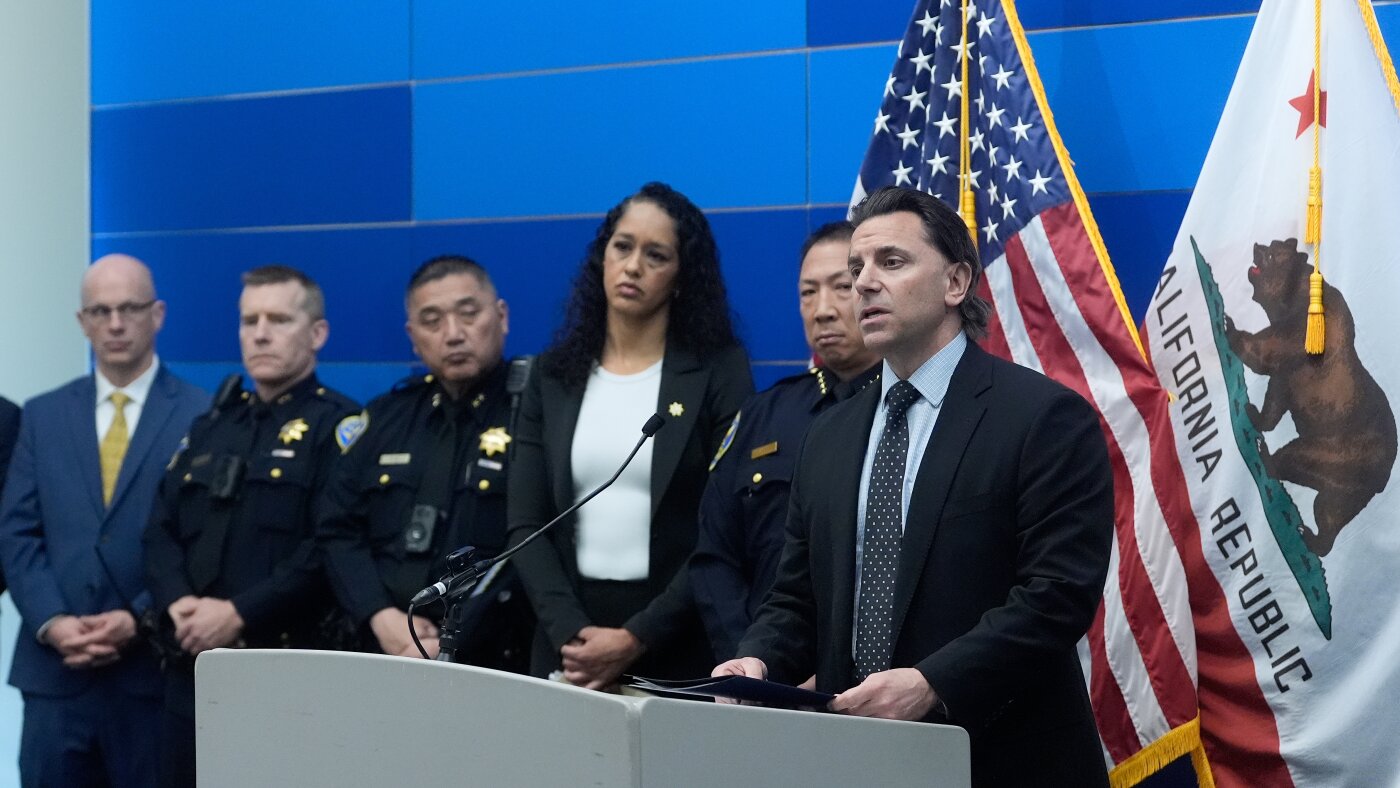
Man accused in Molotov cocktail attack of OpenAI CEO’s home charged with attempted murder

Embattled Rep Tony Gonzales announces plans to resign amid sexual misconduct allegations
-

 Atlanta, GA1 week ago
1 teenage girl killed, another injured in shooting at Piedmont Park, police say
-

 Georgia7 days ago
Georgia House Special Runoff Election 2026 Live Results
-

 Arkansas4 days ago
Arkansas TV meteorologist Melinda Mayo retires after nearly four decades on air
-

 Pennsylvania1 week ago
Parents charged after toddler injured by wolf at Pennsylvania zoo
-
 Milwaukee, WI1 week ago
Potawatomi Casino Hotel evacuated after fire breaks out in rooftop HVAC system
-

 Austin, TX6 days ago
ABC Kite Fest Returns to Austin for Annual Celebration – Austin Today
-

 World1 week ago
Zelenskyy warns US-Iran war could divert critical aid from Ukraine
-

 World1 week ago
Indonesia receives bodies of peacekeepers killed in southern Lebanon