Business
Column: Did business leaders do enough to head off Trump's tariff saber-rattling? Obviously not


Former Treasury Secretary Lawrence H. Summers posted some well-chosen words Saturday about Donald Trump’s bewildering and pointless tariff war, which had been launched earlier that day.
In a string of tweets he called the 25% tariffs Trump proposed on goods from Canada and Mexico “inexplicable and dangerous,” joined the near-unanimous chorus of economists in predicting that the tariffs would raise domestic prices on “automobiles, gasoline, and all kinds of things that people buy,” and noted that the arbitrary imposition of tariffs would lead other countries to view the U.S. as a “bad partner,” which will “undermine our economy, our power and our national security.”
The tariffs, Summers wrote, are “an important test for the business community,” which knows that “this is not a pro-business strategy … I hope business leaders have the courage to say so.”
CEOs have kept their powder dry from public discourse knowing that Trump hates the humiliation of being trapped in a corner and can lash out like a wounded animal.
— Jeffrey A. Sonnenfeld, Yale
If only.
Summers’ plea came late, after the tariffs were announced. But with a few notable exceptions, America’s business leaders were silent about the sheer madness of Trump’s launching a trade war without legitimate justification.
In the months, weeks and days before the announcement, they spoke vaguely about how they would navigate tariff barriers affecting their own industries, but little about the broader ramifications. And even the fiercest critics of the tariffs bent a knee to Trump’s ostensible but exaggerated rationale for the tariffs, the flow of fentanyl and undocumented workers coming into the U.S. from Canada and Mexico.
For the most part, the business community’s pushback against tariffs played out via news releases covered largely by the business press, if at all. The impending economic crisis warranted a more direct response in which business leaders tried to seize the stage back from Trump, outlining in ways that ordinary Americans would understand the costs that every American household will shoulder if the tariffs continue.
They didn’t do that.
Business leaders may have calculated that Trump’s breast-beating about imposing higher tariffs was just talk, or part of a negotiating strategy. As it happened, they appear to be right. Monday, hours before the tariffs were to take effect, Trump backed away, agreeing to pause the tariffs for a month, pending negotiations with both cross-border partners.
But Trump’s actions rattled the financial markets, which didn’t fully recover losses sustained while the tariffs appeared to be imminent. Also rattled was the faith of foreign governments in America’s steadfastness, which may not recover as long as Trump is in the White House.
“CEOs have kept their powder dry from public discourse knowing that Trump hates the humiliation of being trapped in a corner and can lash out like a wounded animal,” says Yale business professor Jeffrey A. Sonnenfeld, whose insights into chief executive thinking are unmatched.
Let’s go deeper into the business community’s unsuccessful campaign, such as it was, against the tariffs.
On Saturday, the U.S. Chamber of Commerce called foul on Trump’s citing the Carter-era International Emergency Economic Powers Act as the statute giving him unilateral authority to impose tariffs by citing an “emergency situation” caused by “illegal aliens and drugs” coming from beyond the border.
“The imposition of tariffs under IEEPA is unprecedented, won’t solve these problems, and will only raise prices for American families and upend supply chains, chamber Senior Vice President John Murphy said.
On Jan. 16, in her annual address on the state of American business, chamber CEO Suzanne P. Clark warned that “blanket tariffs would worsen the cost-of-living crisis, forcing Americans to pay even more for daily essentials like groceries, gas, furniture, appliances, and clothing. And retaliation by our trading partners will hit our farmers and manufacturers hard, with ripple effects across the economy.”
The National Assn. of Manufacturers also issued a strongly worded response, noting that “a 25% tariff on Canada and Mexico threatens to upend the very supply chains that have made U.S. manufacturing more competitive globally. The ripple effects will be severe, particularly for small and medium-sized manufacturers that lack the flexibility and capital to rapidly find alternative suppliers or absorb skyrocketing energy costs. These businesses — employing millions of American workers — will face significant disruptions.”
From there, however, there’s a sharp drop-off in the vigor of comments from American industry about tariffs with the potential to upend the global economy. At General Motors, the American automaker most exposed to the impact of the tariffs, CEO Mary Barra wanly addressed the issue during the company’s fourth-quarter earnings announcement conference call Jan. 28.
Barra noted in response to a question that GM builds trucks in Mexico and Canada, “so we can look at where the international markets are being sourced from. So there’s plays that we can do on that perspective to minimize the impact if there are tariffs either on Canada or Mexico…. We’re doing the planning and have several levers that we can pull.”
That was it; no observations about tariff policy itself or its broader economic implications.
A spokesperson told me Monday that the company had “no new statements … at this time” and referred me to its trade groups, the Alliance for Automotive Innovation and the American Automotive Policy Council.
The council has merely asked that its cars and parts be exempted from any new tariffs without making any observations about the consequences of a tariff war. On Saturday, the alliance observed that “seamless automotive trade in North America accounts for $300 billion in economic value” and added, “We look forward to working with the administration on solutions that achieve the president’s goals and preserve a healthy, competitive auto industry in America.”
Drug overdose deaths have been falling sharply since mid-2023, raising questions about Trump’s rationale for tariffs at the Mexican and Canadian borders.
(Centers for Disease Control and Prevention)
I’ve written before that counting on corporate leaders to stand firm against policy threats to American democracy or the U.S. economy is a mug’s game. But these tariffs took direct aim at American businesses, which should have gotten them more stirred up.
The Business Roundtable, an organization of CEOs of top U.S. corporations, was especially mealymouthed. In a statement issued Sunday, it said, “We agree with the President’s goals of securing our borders and stopping the flow of illegal drugs into the country…. Business Roundtable hopes that Mexico, Canada and the U.S. can quickly reach a deal to strengthen security at the border.”
I asked the Roundtable whether it had anything to add, and got a rather snarky response from Michael Steel, its head of communications, that my question “seems a bit OTBE’ed at the moment.”
Steel meant “overtaken by events,” by which he was referring to an announcement Monday that Trump had decided to put Mexican tariffs on hold for a month, based on Mexico’s purported agreement to send 10,000 troops to the border.
As it happens, Mexico had already reached a similar agreement with the Biden administration without Biden’s having had to threaten to trash the global economy. There’s no indication that the 10,000 troops will be additional to the 15,000 troops deployed earlier. Trump is also said to be planning a talk with Canadian Prime Minister Justin Trudeau.
Could American CEOs have headed off the tariffs chaos either by a more focused publicity campaign or more jawboning with Trump? That’s impossible to say, in part because business leaders haven’t been out in front of Trump’s tariff policy in any broadly public way, and because no one can be sure why Trump had decided to impose steep tariffs on America’s most important trading partners without provocation.
More than two dozen CEOs had contacted Trump privately, Sonnenfeld told me, but their efforts to dissuade him plainly didn’t stop him from announcing the tariffs.
The corporate reaction to Trump’s tariff obsession shows that business leaders are still afraid of confronting Trump directly even as his policies threaten to erode their sales and profits, not to mention to undermine the rule of law in the U.S. in ways they will regret.
We know this because even the sternest statements from business organizations embraced Trump’s stated rationale of securing the borders. As a preface to its statement objecting to the tariffs, the Chamber of Commerce said “the President is right to focus on major problems like our broken border and the scourge of fentanyl.”
This isn’t an expression of fact about the border; it’s a shibboleth, designed to communicate that, all things considered, the chamber is still down with Trump’s leadership in general terms.
The truth is that Trump’s rationalizations don’t stand up to scrutiny. Under Biden, enforcement at the Mexican border was sharply stepped up, with 54,000 “encounters” recorded in September 2024, down from 250,000 in December 2023, according to the Migrant Policy Institute. In part this was the result of stronger enforcement by the Mexican government.
On fentanyl, the Centers for Disease Control and Prevention and the Drug Enforcement Administration both documented major victories in stemming the flow of illegal fentanyl into the country and sharply reduced overdose deaths. Drug overdoses peaked at about 114,000 in the year that ended June 2023, were down to less than 90,000 in the year that ended August 2024 and seemed destined to continue falling. Trump has claimed that 300,000 people are dying every year from drugs smuggled from Mexico, but that figure has never been true.
Nor is fentanyl smuggling a significant issue on the Canadian border; in fiscal 2024, U.S. agencies seized 21,000 pounds of fentanyl at the Mexican border, but only 43 pounds at the Canadian border.
All this points to the basic instability of American foreign relations in the Trump regime. Our business leaders need to acknowledge that such a situation won’t be good for anybody, and poses a particular threat to our relations with countries that have been loyal allies of the U.S.
That gives new meaning to the quip once offered by Henry Kissinger, in a different context: “It may be dangerous to be America’s enemy, but to be America’s friend is fatal.”



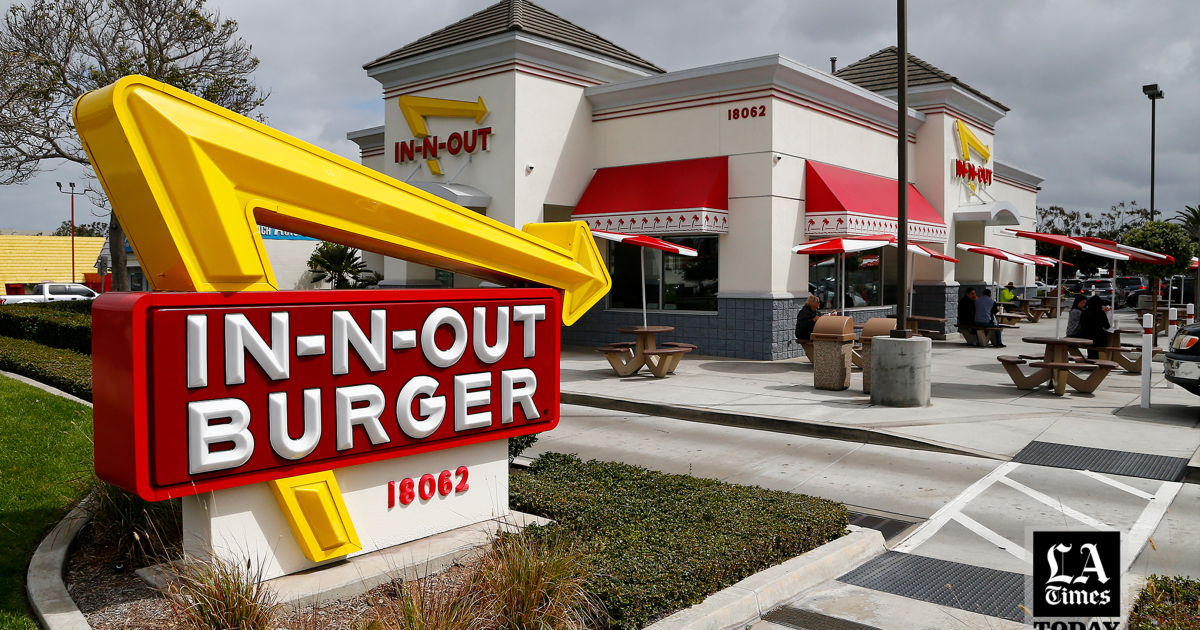
Two people allegedly used $100 counterfeit bills at dozens of In-N-Out Burger restaurants in Southern California in a wide-reaching scam.
Glendale Police officials said in a statement Friday that 26-year-old Tatiyanna Foster of Long Beach was taken into custody last month. Another suspect, 24-year-old Auriona Lewis, also of Long Beach, was arrested in October.
Police released images of $100 bills used to purchase a $2.53 order of fries and a $5.93 order of a Flying Dutchman.
The Los Angeles County District Attorney’s Office charged Lewis with felony counterfeiting and grand theft in November.
Elizabeth Megan Lashley-Haynes, Lewis’s public defender, didn’t immediately respond to a request for comment.
Glendale police said that Lewis was arrested in Palmdale in an operation involving the U.S. Marshals Task Force. Foster is expected in court later this month, officials said.
”Lewis was found to be in possession of counterfeit bills matching those used in the Glendale incident, along with numerous gift cards and transaction receipts believed to be connected to similar fraudulent activity,” according to a police statement.
A representative for In-N-Out Burger told KTLA-TV that restaurants in Riverside, San Bernardino and San Diego counties were also targeted by the alleged scam.
“Their dedication and expertise resulted in the identification and apprehension of the suspects, helping to protect our business and our communities,” In-N-Out’s Chief Operations Officer Denny Warnick said. “We greatly value the support of law enforcement and appreciate the vital role they play in making our communities stronger and safer places to live.”
The company, opened in 1948 in Baldwin Park, has restaurants in nine states.
An Oakland location closed in 2024, with the owner blaming crime and slow police response times.
Company chief executive Lynsi Snyder announced last year that she planned to relocate her family to Tennessee, although the burger chain’s headquarters will remain in California.
Business
Newsom’s budget includes $200 million to make up for Trump’s canceled EV rebates, among other climate items

Gov. Gavin Newsom on Friday doubled down on California’s commitment to electric vehicles with proposed rebates intended to backfill federal tax credits canceled by the Trump administration.
The plan would allocate $200 million in one-time special funds for a new point-of-sale incentive program for light-duty zero-emissions vehicles. It was part of a sweeping $348.9-billion state budget proposal released Friday, which also included items to address air pollution and worsening wildfires, amid a projected $3-billion state deficit.
EVs have become a flashpoint in California’s battle against the Trump administration, which moved last year to repeal the state’s long-held authority to set strict tailpipe emission standards and eventually ban the sale of new gas powered cars.
Last year, Trump ended federal tax credits of up to $7,500 for EV customers that were part of President Biden’s 2022 Inflation Reduction Act. In September, his administration also let lapse federal authorization for California’s Clean Air Vehicle decal program, which allowed solo EV drivers to use carpool lanes.
“Despite federal interference, the governor maintains his commitment to protecting public health and achieving California’s world leading climate agenda,” Lindsay Buckley, spokesperson for the California Air Resources Board, said in an email. “This incentive program will help continue the state’s ZEV momentum, especially with the federal administration eliminating the federal EV tax credit and carpool lane access.”
Newsom had previously flip-flopped on this idea, first vowing to restore a state program that provided up to $7,500 to buy clean cars and then walking it back in September. That same month, a group of five automakers including Honda, Rivian, Hyundai, Volkswagen and Audi wrote a letter urging Newsom and state legislators to establish a $5,000 EV tax rebate to replace the lost federal incentives, Politico reported.
During his State of the State speech Thursday — one year after the devastating Palisades and Eaton fires in Los Angeles — Newsom said California “refuse[s] to be bystanders” while China and other nations take the lead on electric vehicles and the clean energy transition. He touted the state’s investments in solar, hydrogen, wind and nuclear power, as well as its recent move away from the use of any coal-fired power.
“We must continue our prudent fiscal management, funding our reserves, and continuing the investments Californians rely on, from education to public safety, all while preparing for Trump’s volatility outside our control,” the governor said in a statement. “This is what responsible governance looks like.”
Several environmental groups had been urging Newsom to invest more in clean air and clean vehicle programs, which they say are critical to the state’s ambitious goals for human health and the environment. Transportation is the largest source of climate and air pollution in California and is responsible for more than a third of global warming emissions, said Daniel Barad, Western states policy manager with the nonprofit Union of Concerned Scientists.
“As federal attacks threaten California’s authority to protect public health, incentives are more essential than ever to scale up clean cars and trucks,” Barad said. “The governor and legislative leaders must act now to fully fund zero-emission transportation and pursue new revenue to grow and sustain climate investments.”
Katelyn Roedner Sutter, California senior director with the nonprofit Environmental Defense Fund, called it “an essential step to save money for Californians, cut harmful pollution, spur innovation, and support the global competitiveness of our auto industry.”
While the budget proposal does not include significant new spending proposals, it contains other line items relating to climate and the environment. Among them are plans to continue implementing Proposition 4, the $10-billion climate bond approved by voters in 2024 for programs geared toward wildfire resilience, safe drinking water, flood management, extreme heat mitigation and other similar efforts.
Among $2.1 billion in climate bond investments proposed this year are $58 million for wildfire prevention and hazardous fuels reduction projects in vulnerable communities, and nearly $20 million to assist homeowners with defensible space to prevent fire. Water-related investments include $232 million for flood control projects and nearly $70 million to support repairs to existing or new water conveyance projects.
The proposal also lays out how to spend money from California’s signature cap-and-trade program, which sets limits on greenhouse gas emissions and allows large polluters to buy and sell unused emission allowances at quarterly auctions. State lawmakers last year voted to extend the program through 2045 and rename it cap-and-invest.
The spending plan includes a new tiered structure for cap-and-invest that first funds statutory obligations such as manufacturing tax exemptions, followed by $1 billion for the high speed rail project, $750 million to support the California Department of Forestry and Fire Protection, and finally secondary program funding such as affordable housing and low-carbon transit options.
But while some groups applauded the budget’s broad handling of climate issues, others criticized it for leaning too heavily on volatile funding sources for environmental priorities, such as special funds and one-time allocations.
The Sierra Club called the EV incentive program a crucial investment but said too many other items were left with “patchwork strategies that make long-term planning harder.”
“Just yesterday, the Governor acknowledged in his State of the State address that the climate risk is a financial risk. That is exactly why California needs climate investments that are stable and ongoing,” said Sierra Club director Miguel Miguel.
California Environmental Voters, meanwhile, stressed that the state should continue to work toward legislation that would hold oil and gas companies liable for damages caused by their emissions — a plan known as “Make Polluters Pay” that stalled last year amid fierce lobbying and industry pressure.
“Instead of asking families to absorb the costs, the Legislature must look seriously at holding polluters accountable for the harm they’ve caused,” said Shannon Olivieri Hovis, California Environmental Voters’ chief strategy officer.
Sarah Swig, Newsom’s senior advisor for climate, noted that the state’s budget plan came just days after Trump withdrew the United States from the United Nations Framework Convention on Climate Change, a major global treaty signed by nearly 200 countries with the aim of addressing global warming through coordinated international action.
“California is not slowing down on climate at a time when we continue to see attack after attack from the federal government, including as recently as this week with the Trump administration’s withdrawal from the UNFCCC,” Swig told reporters Friday. “California’s leadership has never mattered more.”
Business
Abandoned shops and missing customers: Fire-scarred businesses are still stuck in the aftermath

The charred remains of the historic Pacific Palisades Business Block cast a shadow over a once-bustling shopping district along West Sunset Boulevard.
Empty lots littered with debris and ash line the street where houses and small businesses once stood. A year since the Palisades fire roared through the neighborhood, only a handful of businesses have reopened.
The Starbucks, Bank of America, and other businesses that used to operate in the century-old Business Block are gone. All that remains of the Spanish Colonial Revival building are some arches surrounding what used to be a busy retail space. The burned-out, rusty remnants of a walk-in vault squat in the center of the structure.
Nearby, the Shade Store, the Free-est clothing store, Skin Local spa, a Hastens mattress store, Sweet Laurel Bakery and the Hydration Room are among the many stores still shuttered. Local barbershop Gornik & Drucker doesn’t know if it can reopen.
“We have been going back and forth on what it would take to survive,” co-owner Leslie Gornik said. “If we open, we have to start over from scratch.”
Hundreds gathered around Business Block on the anniversary of he fire on Wednesday to witness a military-style white-glove ceremony to pay respects to the families who lost loved ones. Photos of those killed from the neighborhood were placed at the Palisades Village Green next door.
The Palisades fire burned for 24 days, destroying more than 6,800 structures, damaging countless others and forcing most of the neighborhood’s residents to move elsewhere. About 30 miles northeast, the Eaton fire burned more than 9,400 structures. Combined, the fires killed 31 people.
Remnants of the the Pacific Palisades Business Block, which was completed in 1924 and burned in the Palisades fire.
The few businesses that are back in Palisades serve as a beacon of hope for the community, but owners and managers say business is down and customers haven’t returned.
Ruby Nails & Spa, located near the Business Block, was closed for eight months before reopening in September. Now business is only half of what it was before the fires, owner Ruby Hong-Tran said.
“People come back to support but they live far away now,” she said. “All my clients, their houses burned.”

Ruby Hong-Tran, owner of Ruby Nails & Spa in Pacific Palisades, says her business is half of what it was since reopening.
It took months to clean all the smoke damage from her shop. The front is still being fixed to cover up burn damage.
The firestorms destroyed swaths of other neighborhoods, including Malibu, Topanga, Sierra Madre and Altadena, where businesses and homeowners also are struggling to build back.
Some are figuring out whether it is worth rebuilding. Some have given up.
The Los Angeles Economic Development Corporation estimated last year that more than 1,800 small businesses were in the burn zones in Pacific Palisades, Malibu and Altadena, impacting more than 11,000 jobs.
Businesses say they often have been on their own. The Federal Emergency Management Agency tasked the U.S. Army Corps of Engineers to clean up debris at private residences, some public buildings and places of worship — but not commercial properties.
Business owners had to clean up the charred debris and toxic waste on their properties. Many had to navigate complicated insurance claims and apply for emergency loans to stay afloat.
Rosie Maravilla, general manager of Anawalt’s Palisades Hardware, said damage to her store was limited, and insurance covered the cleaning, so she was able to open quickly. The store reopened just one month after the fire.

Rosie Maravilla, general manager of Anawalt Palisades Hardware, in front of of the store in Pacific Palisades.
Still, sales are 35% lower than what they used to be.
“In the early days, it was bad. We weren’t making anything,” Maravilla said. “We’re lucky the company kept us employed.”
The customer base has changed. Instead of homeowners working on personal projects, the store is serving contractors working on rebuilding in the area.

An archival image of the area in Pacific Palisades hangs over the aisles in Anawalt Palisades Hardware, where business is down despite a customer base of contractors who are rebuilding.
Across the street from the Business Block, the Palisades Village mall was spared the flames and looks pristine, but is still closed. Shop windows are covered with tarps. Low metal gates block entry to the high-end outlets. The mall is still replacing its drywall to eliminate airborne contaminants that the fire could have spread.
All of its posh shops still are shut: Erewhon, Lululemon ,Bay Theater, Blue Ribbon Sushi, athletic apparel store Alo, Buck Mason men’s and Veronica Beard women’s boutiques.
Mall owner and developer Rick Caruso said he is spending $60 million to reopen in August.
The need to bring back businesses impacted by the fires is urgent, Caruso said, and not just to support returning residents.
“It’s critical to bring jobs back and also for the city to start creating some tax revenue to support city services,” he said. ”Leaders need to do more to speed up the rebuilding process, such as speeding up the approval of building permits and stationing building inspectors closer to burn areas.”

Pedestrians walk past the Erewhon market in Palisades Village that plans to reopen this year.
(Genaro Molina/Los Angeles Times)
Wednesday, on the anniversary of the fire, Caruso sent three light beams into the sky over the mall, which met in one stream to honor the impacted communities of Pacific Palisades, Altadena and Malibu.
The nighttime display will continue through Jan. 31.
Business Block’s history dates to 1924, when it served as a home for the community’s first ventures. In the 1980s, plans to tear it down and build a mall sparked a local uprising to save the historic symbol of the neighborhood’s vibrancy. It was designated a Los Angeles Historic-Cultural Monument in 1984.
Tiana Noble, a Starbucks spokesperson, said the landlord terminated the company’s lease when the building burned down. Bank of America said it secured a new lease to rebuild nearby.
Business Block’s fate is still unclear. Some people want to preserve its shell and turn it into a memorial.
This week, it was ringed by a fence emblazoned with the words “Empowering fresh starts together.”
Caruso said the ruins should be torn down.
“It needs to be demolished and cleaned up,” he said. “It’s an eyesore right now and a hazard. I would put grass on it and make it attractive to the community.”

Twisted and scorched remnants of the the Pacific Palisades Business Block still are there a year after the fire.
A short walk from the Business Block and near a burned-down Ralphs grocery store is the Palisades Garden Cafe, one of the few places in the neighborhood to get food and drink. The small, vibrant cafe was closed for two months after the fire, during which the employees went without pay.
Manager Lita Rodriguez said business is improving, but misses the regulars.
“We used to get tons of students and teachers who live and work here,” she said. “Our customers are mostly contractors now.”

Isolated snow showers, wind gusts up to 35 mph in N.J. forecast for Sunday

Actor Timothy Busfield accused of child sex abuse in New Mexico

2 Important Keys to North Carolina Entering Wake

Bankruptcies for North Dakota and western Minnesota published Jan. 10, 2026

Ex-husband arrested in deaths of Ohio dentist and his wife | CNN

Florida High School Football Rankings: Top 25 teams – Oct. 21

Cleary's 21 help Le Moyne down Central Connecticut State 69-64 in OT

How old is Bo Nix? What to know about Oregon quarterback ahead of 2024 NFL Draft

99th annual Pony Swim held in Virginia

Video: ‘It Didn’t Have to Happen This Way:’ U.Va. Faculty Call for Review of Police Response to Protests

Video: Raising a Baby in Altadena’s Ashes

Trump signs order to protect Venezuela oil revenue held in US accounts
What Canada, accustomed to extreme winters, can teach Europe

New video shows fatal Minnesota ICE shooting from officer’s perspective

Federal judge blocks Trump from cutting childcare funds to Democratic states over fraud concerns
-

 Detroit, MI7 days ago
2 hospitalized after shooting on Lodge Freeway in Detroit
-

 Technology4 days ago
Power bank feature creep is out of control
-

 Dallas, TX5 days ago
Defensive coordinator candidates who could improve Cowboys’ brutal secondary in 2026
-

 Dallas, TX2 days ago
Anti-ICE protest outside Dallas City Hall follows deadly shooting in Minneapolis
-

 Iowa4 days ago
Pat McAfee praises Audi Crooks, plays hype song for Iowa State star
-

 Delaware1 day ago
MERR responds to dead humpback whale washed up near Bethany Beach
-

 Health6 days ago
Viral New Year reset routine is helping people adopt healthier habits
-

 Nebraska4 days ago
Oregon State LB transfer Dexter Foster commits to Nebraska