Business
California's tech titans say H-1B visas are vital. Will Trump defy MAGA and support them?

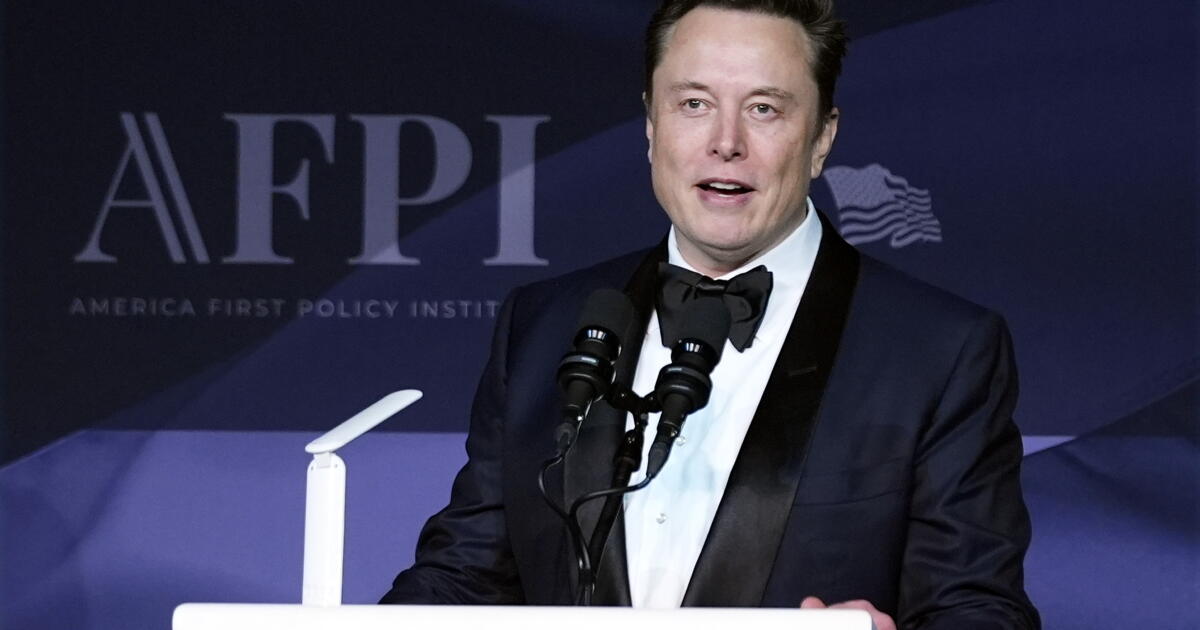
WASHINGTON — Of all the rich and powerful people cozying up to President-elect Donald Trump, few have rushed to Mar-a-Lago faster than the crowned heads of big tech, including California’s own chiefs of Google and Meta.
And few have a stronger motive to curry Trump’s favor than Silicon Valley: The fate of the H-1B visa program that permits foreign-born computer scientists, engineers and other highly skilled workers to migrate to the United States hangs in the balance.
Support for retaining H-1B from Elon Musk, the incoming president’s new closest associate, has stirred rage through much of Trump’s MAGA base, which is against immigration in almost any form. But keeping the pipeline open for tech and other skilled workers is seen by many business leaders as critical for the American economy, especially in California.
The state is by far the biggest user of the H-1B. More than 9,600 employers in California sought clearance for at least one H-1B worker in fiscal 2024, with 78,860 visa applications for new and continuing employment being approved, according to data from U.S. Citizenship and Immigration Services (USCIS).
They include all kinds of skilled work in various industries, including nurses and science teachers. But the top 10 beneficiaries of H-1B visas in California — accounting for almost one-third of all the approvals — were dominated by tech giants, most of them in the Bay Area.
“Those companies are the ones that can afford to hire outside firms that navigate the paperwork, the bureaucracy, and can jump through the hoops,” said Todd O’Boyle, who leads technology policy at the Chamber of Progress, a group backed by big tech firms.
The number of H-1B visas for new employment is capped at 65,000 a year nationally. An additional 20,000 are set aside for foreign nationals who have earned a master’s degree or higher in the U.S. H-1B visas are good for three years but can be extended for up to another three years.
Tech companies in California and elsewhere have relied on the program even as they made massive job cuts following the pandemic, during which many went overboard on hiring and other spending.
The fact that tech companies have fired thousands of American workers while hiring large numbers of foreign workers has added to the fury of anti-immigration Trump supporters, who have long argued immigrants take jobs away from Americans by working for less pay.
The question of whether that claim is valid does not have an easy or simple answer.
U.S. graduate school students in engineering and the sciences are disproportionately foreign-born, and even with that there are shortages of some highly skilled workers, particularly in high-tech engineering and emerging areas such as artificial intelligence.
Nvidia, the major Santa Clara supplier of AI hardware and software, got H-1B visa approvals for more than 1,500 workers last year in California, according to USCIS data. The company declined to comment, and other top tech users of the H-1B, including Google, Meta and Apple, didn’t immediately respond to requests for comment.
“If you lay off a programmer, it’s not the same skill set as somebody who has a post-doctorate in AI, so you have to look at the skills that are sought and why,” said Rep. Zoe Lofgren (D-San José), who sits on the House Subcommittee on Immigration and Citizenship.
But she said the H-1B isn’t without its challenges, pointing to cases in the past at UC San Francisco and Southern California Edison in which U.S. workers were reported displaced by lower-paid H-1B visa holders.
Employers who hire H-1B workers are required to pay wages at least as much as for similar U.S. professionals, but there are abuses. Lofgren said systemic improvements are needed, including stronger analysis on skill sets for the jobs available and more robust advertising on openings.
What’s more, workers from India dominate H-1B visas, in part because there are country quotas for permanent immigration, and temporary work visas are seen as a bridge to that, although the wait is often many years.
“People say the immigration system is broken, and this is part of the brokenness,” Lofgren said, adding that especially for California, “our economy is dependent on, and our prosperity is tied to, immigrants.”
The acrimony over the H-1B in recent days spiraled after far-right activist Laura Loomer attacked H-1B as a threat to American workers and national security.
She and other critics of worker visas say they lead to fewer jobs for U.S. workers, but academic research over the years has found little evidence to support that claim overall. And although some laid-off workers have been forced to retire or switch careers, studies have found many also have been re-employed relatively quickly.
For computer and mathematical occupations, the November unemployment rate was just 2.5%, up from 1.7% a year ago; and it was unchanged at 2% for architectural and engineering occupations, according to the U.S. Bureau of Labor Statistics.
Loomer suggested a major clash ahead between immigration hardliners like Stephen Miller, named as Trump’s deputy chief of staff for policy, and those including Vivek Ramaswamy, the former Republican presidential candidate who with Musk has been charged by Trump to cut government spending and regulation.
Musk, the world’s richest person who runs Tesla and SpaceX and is himself an immigrant and onetime H-1B visa holder, has come out championing the hiring of skilled foreign workers.
The visa program has certainly helped Tesla, which this fiscal year received H-1B approvals for 1,765 new and continuing workers, although SpaceX has grown with little benefit of H-1B workers. (Musk moved Tesla’s headquarters to Austin from Palo Alto at the end of 2021, and said this year that he was relocating SpaceX to Texas as well.)
“OF COURSE my companies and I would prefer to hire Americans and we DO, as that is MUCH easier than going through the incredibly painful and slow work visa process,” Musk wrote on Christmas Day on his social media platform, X. “However, there is dire shortage of extremely talented and motivated engineers in America.” He added: “It comes down to this: do you want America to WIN or do you want America to LOSE. If you force the world’s best talent to play for the other side, America will LOSE.”
Trump on Saturday seemed to side with Musk.
“I’ve been a believer in H-1B. I have used it many times,” he told the New York Post. “It’s a great program.”
(Trump’s businesses have used predominantly the H-2B program, which are for temporary seasonal workers that hotels and tourist businesses, for example, make heavy use of during summer. H-2A is for temporary farm workers.)
Despite his record and promises to seal the borders and deport millions of undocumented immigrants, Trump’s remarks raised hopes among some immigration advocates that the incoming president could take a softer tack on H-1B visas.
In his first term, Trump’s team made it a lot tougher for employers to get H-1B approvals, and denial rates jumped above 20% in fiscal years 2018 and 2019, triple the average of the prior administration, according to the National Foundation for American Policy, a Washington think tank that favors higher levels of immigration.
“At minimum it muddies the waters,” said Stuart Anderson, the group’s executive director. “It could signal a neutral policy rather than a hostile one.”
Stephen Yale-Loehr, an immigration expert at Cornell Law School, said that despite the deficiencies in H-1B, he believes that “most employers try to follow the rules. At the macro-level H-1B workers are helping our economy and creating more jobs for U.S. workers.”
Entrepreneurs, in particular, have talked about skilled worker visas as being critical for their growth.
Yale-Loehr also noted that recent changes have given U.S. immigration officials greater authority to tighten up the H-1B program, including imposing penalties and inspections.
That could strengthen enforcement and cut down on abuses, if Trump actually follows through on his supportive remarks.
“It’s too early to see. You’ve got some people in the administration like Elon Musk who want to preserve the H-1B category and other people like Stephen Miller who want to restrict all immigration, including H-1B,” Yale-Loehr said. “We’ll see which side wins over the four years of the Trump administration.”



In an expansion of its business of processing pharmaceuticals in Earth’s orbit, Varda Space Industries is renting a large El Segundo plant where toy manufacturer Mattel used to design Hot Wheels and Barbie dolls.
The plant in El Segundo’s aerospace corridor will be an extension of Varda Space Industries’ headquarters in a much smaller building on nearby Aviation Boulevard.
Varda will occupy a 205,443-square-foot industrial and office campus at 2031 E. Mariposa Ave., which will give it additional capacity to manufacture spacecraft at scale, the company said.
Originally built in the 1940s as an aircraft facility, the complex has a history as part of aerospace and defense industries that have long shaped the South Bay and is near a host of major defense and space contractors. It is also close to Los Angeles Air Force Base, headquarters to the Space Systems Command.
Workers test AstroForge’s Odin asteroid probe, which was lost in space after launch this year.
(Varda Space Industries)
Varda is one of a new generation of aerospace startups that have flourished in Southern California and the South Bay over the last several years, particularly in El Segundo, often with ties to SpaceX.
Elon Musk’s company, founded in 2002 in El Segundo, has revolutionized the industry with reusable rockets that have radically lowered the cost of lifting payloads into space. Though it has moved its headquarters to Texas, SpaceX retains large-scale operations in Hawthorne.
Varda co-founder and Chief Executive Will Bruey is a former SpaceX avionics engineer, and the company’s spacecraft are launched on SpaceX’s workhorse Falcon 9 rockets from Vandenberg Space Force Base in Santa Barbara County.
Varda makes automated labs that look like cylindrical desktop speakers, which it sends into orbit in capsules and satellite platforms it also builds. There, in microgravity, the miniature labs grow molecular crystals that are purer than those produced in Earth’s gravity for use in pharmaceuticals.
It has contracts with drug companies and also the military, which tests technology at hypersonic speeds as the capsules return to Earth.
Its fifth capsule was launched in November and returned to Earth in late January; its next mission is set in the coming weeks. Varda has more than 10 missions scheduled on Falcon 9s through 2028.
For the last several decades, the Mariposa Avenue property served as the research and development center for Mattel Toys. El Segundo has also long been a center for the toy industry as companies like to set up shop in the shadow of Mattel.
The Mattel facility “has always been an exceptional property with a legacy tied to aerospace innovation, and leasing to Varda Space Industries feels like a natural continuation of that story,” said Michael Woods, a partner at GPI Cos., which owns the property.
“We are proud to support a company that is genuinely pushing the boundaries of what’s possible, and are excited to watch Varda grow and thrive here in El Segundo,” Woods said.
As one of the country’s most active hubs of aerospace and defense innovation, El Segundo has seen its industrial property vacancy fall to 3.4% on demand from space companies, government contractors and technology startups, real estate brokerage CBRE said.
Successful startups often have to leave the neighborhood when they want to expand, real estate broker Bob Haley of CBRE said. The 9-acre Mattel facility was big enough to keep Varda in the city.
Last year, Varda subleased about 55,000 square feet of lab space from alternative protein company Beyond Meat at 888 Douglas St. in El Segundo, which it started moving into in June.
Varda will get the keys to its new building in December and spend four to eight months building production and assembly facilities as it ramps up operations. By the end of next year, it expects to have constructed 10 more spacecraft.
In the future, Varda could consolidate offices there, given its size. Currently, though, the plan is to retain all properties, creating a campus of three buildings within a mile of one another that are served by the company’s transportation services, Chief Operating Officer Jonathan Barr said.
“We already have Varda-branded shuttles running up and down Aviation Boulevard,” he said.

Ships near the Strait of Hormuz before and after attacks began
Every day, around 80 oil and gas tankers typically pass through the Strait of Hormuz, the narrow waterway off Iran’s southern coast that carries a fifth of the world’s oil and a significant amount of natural gas.
On Monday, just two oil and gas tankers appear to have crossed the strait, according to a New York Times analysis of shipping activity from Kpler, an industry data firm. Since then, one tanker passed through.
“It’s a de facto closure,” said Dan Pickering, chief investment officer of Pickering Energy Partners, a Houston financial services firm. “You’ve got a significant number of vessels on either side of the strait but no one is willing to go through.”
Tankers have been staying away from Hormuz since the U.S.-Israeli attacks on Iran that began on Saturday. A prolonged conflict could ripple broadly across the global economy, threatening the energy supplies of countries halfway around the world and stoking inflation.
International oil prices have climbed 12 percent since the fighting began, trading Tuesday around $81 a barrel, and natural gas prices have surged in Europe and in Asia.
A senior Iranian military official threatened on Monday to “set on fire” any ships traveling through the Strait of Hormuz. Vessels in the region have already come under attack. Several oil and gas facilities have also been struck or affected by nearby shelling, though the damage did not initially appear to be catastrophic.
Where ships and energy facilities have been damaged
A fire broke out Tuesday at a major energy hub in Fujairah, United Arab Emirates, from the falling debris of a downed drone, the authorities said. On Monday, Qatar halted production of liquefied natural gas, or fuel that has been cooled so that it can be transported on ships, after attacks on its facilities.
The sharp reduction in tanker traffic is reducing the supply of oil and gas to world markets, pushing up prices for both commodities. And the longer that ships stay away from the Strait of Hormuz, the less oil and gas get out to the world, which could raise prices even more.
Shipping companies have paused their tankers to protect their crew and cargo, and because insurance companies are charging significantly more to cover vessels in the conflict area.
On Tuesday, President Trump said that “if necessary,” the U.S. Navy would begin escorting tankers through the strait. He also said a U.S. government agency would begin offering “political risk insurance” to shipping lines in the area.
In addition to tankers, other large vessels regularly go through the strait, including car carriers and container ships. In normal conditions, nearly 160 make the trip each day.
Some ships in the region turn off the devices that broadcast their positions, while others transmit false locations — making it hard to give a full picture of the traffic in the strait.
The Shiva is a small oil tanker that has repeatedly faked its location, according to TankerTrackers.com, which tracks global oil shipments. It is suspected of carrying sanctioned Iranian oil, according to Kpler. The Shiva was one of the two tankers that crossed the strait on Monday.
The oil and gas that typically move through the strait come from big producing countries like Saudi Arabia, Iraq, Iran and United Arab Emirates, and are exported around the world.
Where tankers moving through the Strait have traveled
In 2024, more than 80 percent of the oil and gas transported through the Strait of Hormuz went to Asia. China, India, Japan and South Korea were the top importers, according to the U.S. Energy Information Administration.
Countries have energy stockpiles that could last them into the coming months, but a continued shutdown of the strait could damage their economies.
Several big disruptions have roiled supply chains in recent years, but the tanker standstill in the Strait of Hormuz could have an outsize impact.

Paramount Skydance’s jubilation over its come-from-behind victory to claim Warner Bros. Discovery has entered a new phase:
Call it the deal-debt hangover.
Two major ratings agencies have raised concerns about Paramount’s credit because of the enormous debt the David Ellison-led company will have to shoulder — at least $79 billion — once it absorbs the larger Warner Bros. Discovery, bringing CNN, HBO, TBS and Cartoon Network into the Paramount fold.
Fitch Ratings said Monday that it placed Paramount on its “negative” ratings watch, and downgraded its credit to BB+ from BBB-, which puts the company’s credit into “junk” territory. Fitch said it took action due to “uncertainty” surrounding Paramount’s $110-billion deal for Warner Bros. Discovery, which the boards of both companies approved on Friday.
S&P Global Ratings took similar action.
To finance the Warner takeover, Ellison’s billionaire father, Larry Ellison, has agreed to guarantee the $45.7 billion in equity needed. Bank of America, Citibank and Apollo Global have agreed to provide Paramount with more than $54 billion in debt financing.
“Potential credit risks include the prospective debt-funded structure, Fitch’s expectation of materially elevated leverage and limited visibility on post-transaction financial policy and capital structure,” Fitch said.
Late last week, Paramount sent $2.8 billion to Netflix as a “termination fee” to officially end the streaming giant’s pursuit of Warner Bros. That payment paved the way for Warner and Paramount’s board to enter into the new merger agreement.
Paramount hopes the merger will be wrapped up by the end of September. It needs the approval of Warner Bros. Discovery shareholders and regulators, including the European Union.
Paramount executives acknowledged this week the new company would emerge with $79 billion in debt — a considerably higher total than what Warner Bros. Discovery had following its spinoff from AT&T. That 2022 transaction left Warner Bros. Discovery with nearly $55 billion of debt, a burden that led to endless waves of cost-cutting, including thousands of layoffs and dozens of canceled projects.
Warner still has $33.5 billion in debt, a lingering legacy that will be passed on to Paramount.
Paramount plans to restructure about $15 billion in Warner Bros. Discovery’s existing debt.
Paramount CEO David Ellison at a 2024 movie premiere for a Netflix show.
(Evan Agostini / Invision / AP)
Paramount told Wall Street it would find more than $6 billion in cost cuts or “synergies” within three years — a number that has weighed heavily on entertainment industry workers, particularly in Los Angeles.
Hollywood already is reeling from previous mergers in addition to a sharp pullback in film and television production locally as filmmakers chase tax credits offered overseas and in other states, including New York and New Jersey.
Some entertainment executives, including Netflix Co-Chief Executive Ted Sarandos, have speculated that Paramount will need to find more than $10 billion in cost cuts to make the math work. More recently, Sarandos went higher, telling Bloomberg News that Paramount may need $16 billion in cuts.
Cognizant of widespread fears about additional layoffs, Paramount Chief Operating Officer Andrew Gordon took steps this week to try to tamp down such concerns.
Gordon is a former Goldman Sachs banker and a former executive with RedBird Capital Partners, an investor in Paramount and the proposed Warner Bros. deal. He joined Paramount last August as part of the Ellison takeover.
During a conference call Monday with analysts, Gordon said Paramount would look beyond the workforce for cuts because the company wants to maintain its film and TV production levels.
Paramount plans to look for cost savings by consolidating the “technology stacks and cloud providers” for its streaming services, including Paramount+ and HBO Max, Gordon said. The company also would search for reductions in corporate overhead, marketing expenses, procurement, business services and “optimizing the combined real estate footprint.”
It’s unclear whether Paramount would sell the historic Melrose Avenue lot or simply centralize the sprawling operations onto the Warner Bros. and Paramount lots in Burbank and Hollywood.
Workers are scattered throughout the region.
HBO, owned by Warner Bros. Discovery, maintains its West Coast headquarters in Culver City; CBS television stations operate from CBS’ former lot off Radford Avenue in Studio City; and CBS Entertainment and Paramount cable channels executive teams are located in a high-rise off Gower Street and Sunset Boulevard, blocks from the Paramount movie studio lot.
“The combination of PSKY and WBD could create a materially stronger business than either individual entity,” Standard & Poor’s said in its note to investors. “However, this transaction presents unique challenges because it would involve the combination of three companies, with the smallest, Skydance, being the controlling entity.”
David Ellison’s production firm, Skydance Media, was the entity that bought Paramount, creating Paramount Skydance.
Ellison has not announced what the combined company will be called.
Paramount shares closed down more than 6% Tuesday to $12.45.
Warner Bros. Discovery fell 1% to $28.20. Netflix added less than 1% to close at $97.70.

Georgia Lt. Gov. candidate releases controversial ‘Sharia law’ video

The Places Visitors Love Most In Hawaii Just Hit Their Limit

Gov. Little signs bill ending license plate registration stickers in Idaho

Andretti family’s popular go karting and gaming facility opening first Illinois location. See inside

Indiana basketball vs. Minnesota score, updates tonight: Start time, where to watch

Florida High School Football Rankings: Top 25 teams – Oct. 21

Cleary's 21 help Le Moyne down Central Connecticut State 69-64 in OT

How old is Bo Nix? What to know about Oregon quarterback ahead of 2024 NFL Draft

99th annual Pony Swim held in Virginia

Indiana Members Credit Union announced as new anchor tenant at Bottleworks District

US submarine sinks Iranian warship by torpedo in a first since World War II

Which oil and gas facilities in the Gulf have been attacked?

Mojtaba Khamenei, son of former supreme leader, tipped to become Iran’s next head of state

Video: Senators Question Kristi Noem on ICE Immigration Tactics

Combustible Republican Senate primary in Texas heading into overtime
-

 World7 days ago
Exclusive: DeepSeek withholds latest AI model from US chipmakers including Nvidia, sources say
-

 Massachusetts1 week ago
Mother and daughter injured in Taunton house explosion
-

 Denver, CO7 days ago
10 acres charred, 5 injured in Thornton grass fire, evacuation orders lifted
-

 Louisiana1 week ago
Wildfire near Gum Swamp Road in Livingston Parish now under control; more than 200 acres burned
-

 Florida4 days ago
Florida man rescued after being stuck in shoulder-deep mud for days
-

 Wisconsin3 days ago
Setting sail on iceboats across a frozen lake in Wisconsin
-

 Maryland4 days ago
AM showers Sunday in Maryland
-

 Oregon5 days ago
2026 OSAA Oregon Wrestling State Championship Results And Brackets – FloWrestling