Business
Boeing Max 9s start flying again, but critics question safety after door panel blowout

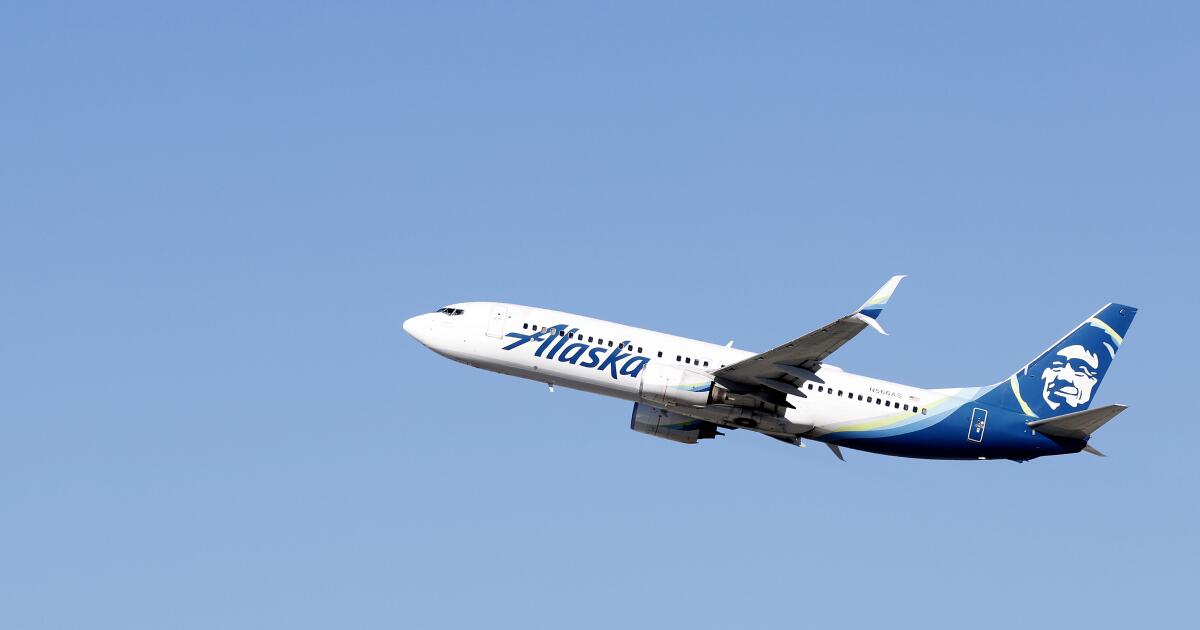
This weekend Alaska Airlines and United Airlines resumed flying some of their Boeing Max 9 planes, all of which were grounded after a door panel on a Max 9 blew out in midair Jan. 5.
Although airlines, regulators and Boeing maintain that the planes are safe after a federally approved inspection and maintenance process, critics argue that serious questions remain about the long-troubled Maxes. The Max 8 had two crashes in 2018 and 2019 that killed 346 people.
“I would absolutely not fly a Max airplane,” said Ed Pierson, a former Boeing senior manager. “I’ve worked in the factory where they were built, and I saw the pressure employees were under to rush the planes out the door. I tried to get them to shut down before the first crash.”
“I would tell my family to avoid the Max. I would tell everyone, really,” said Joe Jacobsen, a former engineer at Boeing and the Federal Aviation Administration.
Aviation safety experts have pointed to the blowout as just the latest example of a deeper problem at the manufacturer. They argue that the company needs a cultural change.
Pierson said that returning the Max 9 to service was “another example of poor decision making, and it risks the public safety.”
Boeing said it had no comment on Pierson’s remarks.
Last week, Federal Aviation Administration officials announced that Max 9 planes would be allowed to fly again, once the 171 grounded aircraft had undergone specified inspections and repairs. Most of those planes belong to Alaska Airlines and United Airlines.
Jacobsen, the former FAA engineer, said that allowing the planes to fly again was “premature,” noting that he and other safety advocates have been sounding the alarm about numerous safety problems on both the Max 8 and Max 9 for years.
“Instead of fixing one problem at a time and then waiting for the next one, fix all of them,” Jacobsen said. He compared it to playing whack-a-mole, waiting for the next problem to pop up: “Maybe it’s a week. Maybe it’s a month.”
Last year, the Seattle Times reported that Maxes have a serious defect in the engine anti-ice system. The FAA has warned that pilots must limit the use of the flawed system to five minutes, or else debris could break off that “could result in loss of control of the airplane.” Boeing was seeking an engineering exemption from the FAA for the anti-ice system on its Max 7, but withdrew it Monday, Reuters reported.
“Our long-term focus is on improving our quality so that we can regain the confidence of our customers, our regulator and the flying public,” Stan Deal, Boeing Commercial Airplanes chief executive, wrote in a message to employees Friday evening. “Frankly, we have disappointed and let them down.”
“Each of our 737-9 MAX [planes] will return to service only after the rigorous inspections are completed and each plane is deemed airworthy according to FAA requirements,” Alaska said in a statement.
The airline said half of its inspections were completed by the end of Monday, and the full Max 9 fleet is expected to be flying again by the end of the week. Its first Max 9 departed Friday from Seattle, landing about an hour late in San Diego that night.
United’s first Max 9 flight took off Saturday morning from Newark, N.J., to Las Vegas.
“As we always do, we’ll continue to work closely with Boeing and the FAA to make sure our entire fleet is reliable and, above all, safe. With that in mind, we are sending inspectors to the Boeing facility in Renton, Wash., to provide input on Boeing’s processes,” United Chief Executive Scott Kirby said in a statement.
“Let me be clear: This won’t be back to business as usual for Boeing,” FAA Administrator Mike Whitaker said in a statement Wednesday.
“The quality assurance issues we have seen are unacceptable,” Whitaker said. “That is why we will have more boots on the ground closely scrutinizing and monitoring production and manufacturing activities.”
The FAA also noted that it would not allow Boeing to expand production of its Max fleet, including the 737 Max 9.
The National Transportation Safety Board investigation into the Flight 1282 midair cabin panel blowout is ongoing.
Boeing has promised to cooperate with the investigation. After the incident, Chief Executive David Calhoun acknowledged that “a quality escape” had occurred, telling employees, “This event can never happen again.”
“This blowout — we’ve seen this pattern before. Something big happens, and Boeing makes all of these promises,” said Pierson, executive director of the Foundation for Aviation Safety, a watchdog group.
The safety problems on the Boeing Max planes go far beyond this one incident, Pierson said. In September, the group published a study that found airlines filed more than 1,300 reports about serious safety problems on Max 8 and Max 9 planes to the FAA.
“These same issues that were there in 2018 and 2019 [at Boeing] that were the precursors to the accidents are still there,” Pierson said. “This is a culture where money is everything. They measure success by how many airplanes are delivered, instead of how many quality airplanes are delivered. … When you factor all of this together, it’s just a disaster waiting to happen.”
Jacobsen agreed that Boeing had a cultural problem, saying the company has been “trying to maximize profits” and “go with the lowest bidder.”
“For the last 20 years, they’ve gone in this continual direction of towards financial engineering instead of technical engineering,” Jacobsen said.
Robert A. Clifford, an attorney representing families of the victims of the Max 8 crash in Ethiopia in 2019 that killed 157 people, criticized the FAA for allowing the Max 9 to resume flying.
“While we applaud the FAA for saying it will halt any Boeing 737 Max production expansion, it should not be rewarding the company by clearing Max 9 inspection instructions, paving the way for the planes to be ungrounded, until Congress and the regulators hold immediate hearings,” Clifford said. (A spokesperson for Boeing said the company had no comment.)
The FAA did not respond to a request for comment on Pierson and Clifford’s remarks.
Both United and Alaska had reported finding loose bolts on Max 9 planes during in-house inspections in the weeks after the Jan. 5 flight.
Pierson said that far greater action is needed on the Boeing Max, beyond door panel inspections.
“Imagine you had a new car that had a couple parts fall off of it, and the manufacturer went to go look at it and they found a couple other parts fell off. They go and fix it, but would you think there’s a possibility that something else would’ve been done improperly on that car?” Pierson said. “Now magnify that by 100.”

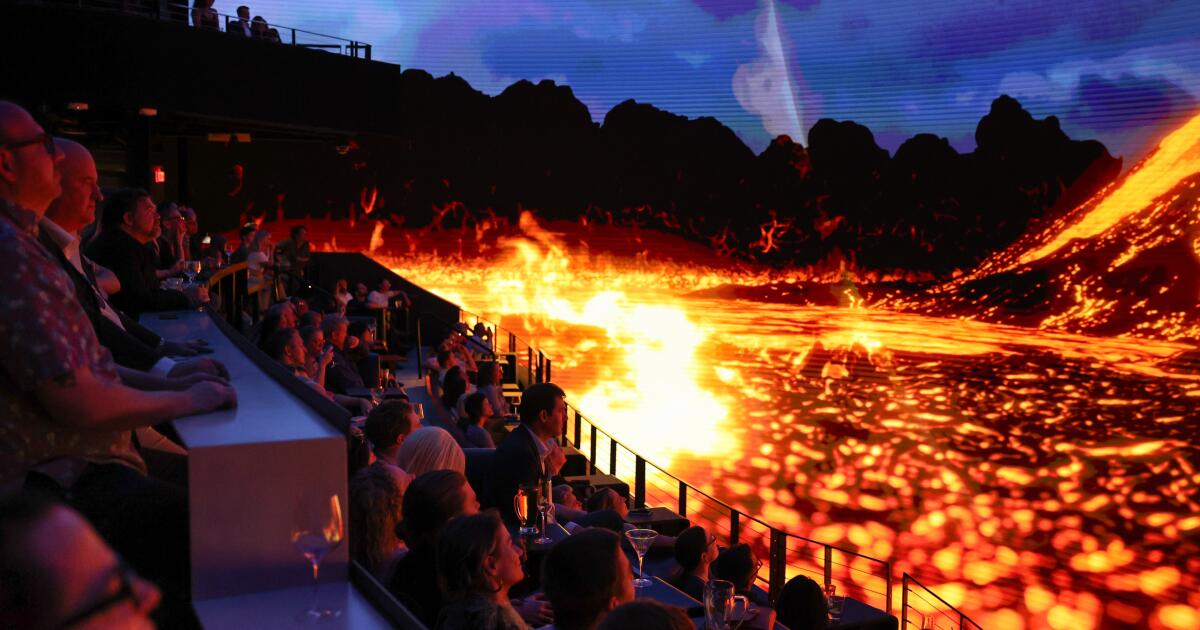
Sony Pictures will invest $100 million and take a minority stake in virtual reality venue operator Cosm, as the studio continues to build a business in communal experiences.
As part of the investment, Sony Pictures Chief Executive Ravi Ahuja will also join Cosm’s board of directors, the studio said Wednesday. The size of Sony’s minority stake was not disclosed.
The El Segundo-based Cosm currently operates three venues — one at Hollywood Park in Inglewood, and the others in Dallas and Atlanta. The company plans to open additional venues in Detroit and Cleveland.
Cosm bills itself as a “shared reality venue,” and its facilities center around a massive, wraparound screen that is intended to envelop viewers with additional digital effects. The company has largely focused on sports, though it has also shown Cirque du Soleil shows and done several collaborations with Warner Bros., including recent screenings of 2001’s “Harry Potter and the Sorcerer’s Stone” in honor of the film’s 25th anniversary.
“Cosm sits at the intersection of several trends shaping the future of entertainment,” Ahuja said in a statement. “We’ve followed Cosm since before launch and have been impressed with the quality of the experience and the enthusiasm it’s generating with audiences.”
The investment is Sony’s latest venture into experiential entertainment. In 2024, the Culver City-based studio acquired dine-in theater chain Alamo Drafthouse Cinema.

The Los Angeles City Council on Tuesday unanimously advanced an ordinance to halt new oil and gas drilling and phase out all existing production over the next 20 years. L.A. is home to more than 2,000 active oil wells.
The measure revives a similar ban passed in 2022, which was struck down by a judge following legal challenges from the oil and gas industry.
It must pass a second vote before final adoption later this summer, and would make L.A. the largest city in the United States to phase out existing oil wells.
“Today, Los Angeles is making a decision that aligns with our need to turn the page on urban oil drilling,” Councilmember Katy Yaroslavsky said during Tuesday’s council meeting. “The absence of an enforceable oil ordinance has had real consequences for our communities.”
The ban in 2022 was seen as a historic move for a region built on the petroleum industry.
But in 2024, a Los Angeles County Superior Court judge invalidated the law, ruling that the state, not the city, has jurisdiction over petroleum production. The legal challenge was brought by oil companies including Warren Resources, which operates a large oil field in Wilmington. Much of the field is beneath the city of Long Beach, but it also extends under Los Angeles.
Shortly after that, state legislators advanced Assembly Bill 3233, which reaffirmed city and county authority to regulate oil and gas activity. It was largely seen as the missing piece that made the original ordinance vulnerable.
“It’s now unequivocal that cities have the authority to regulate, limit and prohibit oil and gas operations within our jurisdiction,” Yaroslavsky said.
The new ordinance, written by the Department of City Planning, prohibits new oil and gas extraction, including drilling, redrilling or deepening existing oil wells for the purposes of production. It also designates all existing and active idle wells as “nonconforming uses,” meaning they may only operate during the phaseout period and are no longer compliant with current zoning.
Warren Resources, which led the lawsuit against the previous ban, did not immediately respond to a request for comment. The company previously argued that the 2022 ban was rushed and would lead to more oil imports to the area, causing increased emissions from tankers and trucks and other environmental consequences.
Many wells in the city operate near schools, homes and parks. Most are concentrated in low-income areas and communities of color, such as Wilmington and the harbor district, West L.A. and South L.A., where residents have long reported respiratory issues, headaches, throat irritation and other health problems. Studies have found oil wells can emit carcinogens and are linked to adverse health effects.
“This ordinance is such an important step toward giving every frontline community in Los Angeles access to clean air,” Silvia Esparza, a South L.A. resident and member of environmental justice group Stand-L.A., said in a news conference ahead of Tuesday’s vote.
Ashley Hernandez, a Wilmington resident and organizer with the nonprofit Communities for a Better Environment, said bloody noses and noxious fumes were a regular part of life in the neighborhood growing up.
She noted that in addition to oil drilling, L.A. residents continue to face other environmental hazards, such as the recent oil pipeline rupture that sent crude into the L.A. River or the ongoing cold storage warehouse fire in Boyle Heights that is spewing toxic smoke.
“I’m here to remind L.A. city and these toxic neighbors that Wilmington residents are more important than any ‘black gold’ under their homes,” Hernandez said. “We need our city to protect our families now and to stop the oil industry’s reign of power in our city. A passage of the oil phaseout ordinance today gives the city a chance to correct this wrong.”
Times staff writer Dakota Smith contributed to this report.

Shares in Elon Musk’s rocket company SpaceX halted their three-day slide that had erased roughly $600 billion off its market value.
SpaceX shares closed at $156.11 with a nearly 1% gain on Tuesday, a slight recovery from a 16% fall on Monday.
That loss dropped the stock below $160.95, where it ended the day June 12 after a 19% surge during its record initial public offering. The IPO gave it a market cap of $2.2 trillion, making SpaceX one of the world’s most valuable public companies.
It also turned Musk into the world’s first trillionaire, a status he retains despite the sell-off.
The downturn probably reflects investor unease over the company’s spending plans and potential debt load, analysts say.
SpaceX raised a total of $86 billion after underwriters exercised their right to sell additional shares, on top of the $75 billion initially raised. It was the largest IPO in history.
A little more than half a billion shares were distributed to institutional and retail investors at a price of $135, with the stock opening at $150 as some holders immediately flipped shares for a profit.
Shares rose as high as $176.52 during the IPO before settling at the $160.95 price. In the weeks since, shares reached a high of $225.64, meaning that some investors lost money or are underwater with paper losses.
Since the IPO, SpaceX has dropped some big bucks.
It announced last week that it was acquiring AI coding startup Cursor for $60 billion in a deal expected to close in the third quarter. The San Francisco company, founded in 2022, enables engineers to instruct software in English to run coding tasks autonomously.
It also sold $25 billion in bonds on Tuesday , unusual for a company that just went public, much less for one that just raised a record sum.
The IPO surpassed the 2019 offering by Saudi Aramco, Saudi Arabia’s state-owned oil giant, which raised $29.4 billion, the prior record holder.
S&P Global issued a report last week that assigned SpaceX a “BBB” credit rating, the lowest possible rating to qualify as an investment grade credit risk. It noted the company will have “elevated capital expenditure” through 2029.
SpaceX rivals OpenAi and Anthropic filed this month for initial public offerings that, while not expected to be as large as Musk’s company, will be large in their own right.
Wedbush analyst Dan Ives, who has been bullish on SpaceX stock, said the market is digesting “massive debt and equity raises from Big Tech players” in the coming years.
“This is part of an industry wave of debt offerings on Wall Street, like Alphabet and SpaceX among others,” he wrote in an email.
With the stock already giving up gains since the IPO, it will be further tested when tranches of locked-up shares held by current and former employees are released.
At least 20% of the shares will be released after second-quarter results are disclosed sometime in the coming months, with all the lockups expiring in December.
SpaceX, based in Texas, is the leading launch services company in the world, with its Falcon 9 rocket accounting last year for the vast majority of satellites sent into space.
It is also the leading satellite-based broadband provider with its Starlink service. But the extraordinary interest in the IPO was driven by Musk’s plans to make the company an AI leader — including plans to launch orbiting satellite data centers powered by the sun that crunch AI data.
He merged his xAI artificial intelligence company into SpaceX this year, with the combined entity recently announcing it was leasing computer power to rivals Anthropic and Google at two terrestrial data centers it has constructed.
Musk moved the company’s headquarters from Hawthorne to Texas in 2024, but it retains large operations in the South Bay city and blasts off regularly from Vandenberg Space Force Base in Santa Barbara County.
Investment research firm Morningstar placed a $780-billion valuation on SpaceX, focusing on its core rocket and Starlink broadband satellite businesses. It suggested investors wait a few months for the stock to settle before buying in.
“I think the day-to-day stock price movements are usually based on market sentiment,” said report co-author Nicolas Owens, an equity analyst at Morningstar. “So I was not surprised when it went way up right after the IPO — and I’m not surprised it [came down]. Not much has really changed in the fundamentals.”
Mike Alves, founder of Pasadena’s Vida Vision Fund, has a stake in SpaceX that accounts for 46% of his AI and robotics fund.
He said he was not perturbed by the stock drop, noting that Facebook fell under $18 a share just months after its May 2012 IPO closed at $38 a share. It has since risen more than 1,000% above its offering price.
“The volatility doesn’t really matter because you’re going to multiply your best investment many times, so I’m not so worried about it,” he said, adding that investors seeking shares could now “scoop them up at a good deal.”
-

 Cleveland, OH3 minutes ago
2 people killed in multi-vehicle crash on SR-176 crash in Cleveland
-

 Austin, TX5 minutes ago
Texas insurance costs surge 79% in six years as lawmakers question AI impact on rates
-

 Alabama10 minutes ago
Two Alabama laws target Mobile blight by speeding sales and giving neighbors first bid
-
 Alaska12 minutes ago
Crews continue making progress on Delta Fires
-

 Arizona18 minutes ago
Arizona State parts ways with head track and field coach Dion Miller
-

 Arkansas20 minutes ago
Arkansas basketball stars Meleek Thomas, Trevon Brazile selected in NBA Draft second round | Whole Hog Sports
-

 California25 minutes ago
First look: Space Shuttle Endeavour in ready-to-launch position at California Science Center
-

 Colorado33 minutes ago
Colorado man dies after dislodging rocks, getting crushed by 1,000 pound boulder

