Business
Are you a Stanley or Hydro Flask person? What your water bottle says about you

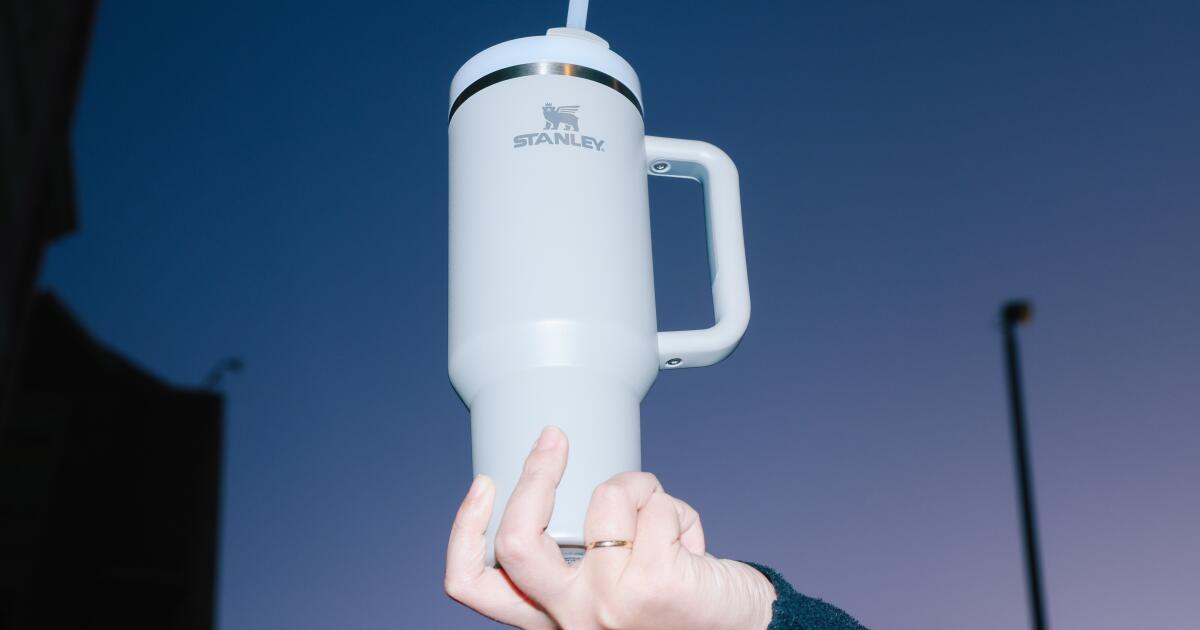
If you’ve spent any amount of time on TikTok or talking to your 12-year-old niece, you’ve probably heard of the Stanley cup by now.
The 40 oz. insulated tumbler with a handle has led to long lines, fights and a crazy resale market.
We’re only 11 days into the new year, and already some marketers have gone so far as to proclaim 2024 the “Year of the Water Bottle.” Hydration vessels, they say, may be this year’s “most covetable, most fashionable accessory.”
But the Stanley cup is just the latest in a long line of water bottle trends, aided by social media virality and declared cool by the arbitrators of the internet — teenage girls. Before Stanley, it was Hydro Flask, and before that, S’well. Owala took off on social media last year as well.
At the ripe old age of 24, I’ve remained faithful to my plastic Nalgene bottle, a brand that has seen its own surges in popularity, for more than five years. It’s covered in stickers from my college days and practically indestructible, perfect for my outdoor climbing trips and propensity for dropping things. I prefer to drink my water at room temperature rather than ice cold — controversial, I know — and I don’t want to lug around anything heavy. I’m unabashed Nalgene person, and I won’t be replacing it anytime soon.
Given the fierce devotion with which some fans wield their Stanleys, I wanted to know if water bottles really have become the latest extensions of our identities. So I spent a day traversing the city to see what Angelenos have to say. Here are my entirely unscientific findings.
Stanley: The trendsetter
Kimora Johnson poses for a portrait with a Stanley Cup branded water bottle outside her high school in Culver City. She recently purchased the cup, which has been selling out at retailers, from Urban Outfitters. (Dania Maxwell/Los Angeles Times)
One of the most coveted items currently by tweens across America, it seems, is the Stanley Quencher tumbler. Target shelves were devoid of them when I checked, but 15-year-old Kimora Johnson knew where to find one — Urban Outfitters.
Johnson proudly toted her light teal blue Stanley as she walked out of school in Culver City on Monday. It matched her nails.
“I just like the color and it keeps my water cold. It’s really nice,” she said. She was quite pleased to have snagged one over winter break after seeing it all over TikTok, Instagram and the news.
The cup’s popularity was likely initially sparked by a woman’s viral TikTok video in November of a Stanley cup that survived a car fire. In response, the Stanley company offered to replace her cup — and her car. Since then, influencers and popular collaborations have propelled the Stanley cup to new heights. (Stanley couldn’t be reached for comment on the trend.)
USC master’s student Hannah Gomez, on the other hand, initially thought people were talking about the National Hockey League’s Stanley Cup. She received the popular Stanley tumbler as a gift from her younger sister and did not realize the cachet it would have.
“I’ve gotten like five comments on it today,” the 26-year-old said after I accosted her on her way to grab dinner. “People don’t usually stop you for your water bottle.”
She likes the handle design and straw, which she said makes her drink more water throughout the day. Plus, it kept her water ice cold from 8 a.m. to 5 p.m.
Runyon Canyon hikers Priscilla Ramirez and Diana Gonzalez said they bought one for its ability to keep water cold — a must at Gonzalez’s warehouse job in the summer. — but they also were intrigued after hearing it could float in a pool. They confirmed that it does, indeed, float in a pool.
Gonzalez considered buying a red Stanley featured in Target’s Valentine’s Day collection but quickly changed her mind after seeing the hubbub around them.
“I wanted it, but I will not go and fight for one,” said Gonzalez, 33. For hiking purposes, they opted to buy something cheaper at Marshalls.
Hydro Flask: The populist
Leslie Compean shows off her Hydro Flask water bottle at the USC University Village. The bottle was a gift from her sister for the holidays. (Dania Maxwell/Los Angeles Times)
In 2020, the Hydro Flask was the “it” water bottle, the kind that middle schoolers put at the top of their Christmas lists just like the Stanley cup of today. Teens carried them separately rather than in their backpacks, covering them with stickers and artwork. They were a statement that you were cool and eco-conscious.
According to the company, the average Hydro Flask purchaser ranges from teens to mid-30s and “live full and active lives.” Of all the reusable water bottles I could identify in public, I saw the most Hydro Flasks.
On a Monday afternoon at USC, students lugged their Hydro Flasks across campus in backpacks and on skateboards in all different colors.
Leslie Compean, 22, carried a white Hydro Flask she received from her sister for Christmas. She already owned a gray bottle from the same brand but wanted a larger one.
“I feel like I’m a simple person,” Compean said. Even if unintentional, it seemed to match her white shoes, paired with black pants and a mustard yellow sweater.
She doesn’t care about trends, she said, but this bottle “does the job.”
Over at Santa Monica’s Third Street Promenade, Alfredo Torales, 39, sat outside during his lunch break with a black Hydro Flask. It came from the ever-growing lost-and-found pile at the high school his wife works at.
“These boys always leave Hydro Flasks behind as if they’re worth nothing,” Torales said. “If no one scoops it up after a few weeks, she brings them home.”
He doesn’t particularly care about what kind of water bottle he has, but he’s a Bruin, so that means “no SC colors ever.”
Owala: The color-forward accessory
Denai Blackshire sported an Owala water bottle that matched her outfit while hiking recently at Runyon Canyon. (Dania Maxwell/Los Angeles Times)
Unlike other reusable water bottles, Owala screams color.
Each iteration of its flagship FreeSip bottle has at least three different colors for the body, rim and spout. Online, they have names like “Can You See Me?” with bright pinks and reds, and “Gemstone Chic,” with rich jewel tones.
“Water bottles are a cool tool for self-expression,” said Chad Sorensen, senior brand manager for Owala. “We give you an outlet, a vehicle to do that.”
Sorensen said the brand has picked up older Gen Z and millennial women in particular as fans. As the water bottle space has become more and more about fashion, the company aims to market its products accordingly.
Denai Blackshire, 32, carried a white, black and gray Owala while hiking at Runyon Canyon that matched her gray sweats.
“When you go hiking, you still want to look aesthetically put together,” Blackshire said. An ex-partner bought her the water bottle after she said she wanted to hike more. Her main requirement: It had to be cute.
She also thought the design was clever — a straw for sipping and a larger spout for guzzling. It was named one of Time’s Best Inventions of 2023.
Owala has seen particular success with nurses, Sorensen said, who are stuck wearing the same thing every day but can use a colorful water bottle to “mix it up.”
Sorensen likens the water bottles to sneakers — you technically need only one, but you have multiple to match different wardrobes. Owala drops a limited-edition color every other Tuesday, like sneaker drops, and once they’re gone, they’re gone.
S’well: The stylish classic
Alex Holt said he chose his particular S’well water bottle, which he toted along for a hike at Runyon Canyon, because it matches his lunchbox. The stainless steel finish fits his personal brand, his friends told him. (Dania Maxwell/Los Angeles Times)
When I was in high school, everyone had a S’well bottle. I would call it the first “fashionable” water bottle, with an array of artsy finishes, including rose gold metallic, glossy faux marble and a smooth, understated wooden print.
It has a distinctive slim neck design and is small enough to fit in the side pocket of most backpacks. The downsides: It’s hard to fit ice cubes in the opening, and the svelte bottles are less visible carried inside a backpack.
Alex Holt, 44, carried one with a stainless steel finish during a morning hike at Runyon Canyon. He chose that one because it matches his lunchbox.
“It’s like your branding,” his co-workers told him. He said it’s also sturdy and keeps his water cold, sparkling or still.
“The idea is that we have them for a really long time,” Holt said, rather than changing them with trends. S’well declined to comment.
Nalgene: The sturdy workhorse
Carrying a backpack and rollerblades, Goksu Okar wandered around the Santa Monica REI’s water bottle section, carefully examining the plethora of brands that were available — Yeti, Nalgene, Stanley, Hydro Flask, Camelbak and more.
After a few minutes, she settled on a plastic Nalgene bottle. (I silently cheered from the sidelines.)
Okar, 32, said she already had a “really big” water bottle that she drinks from all day and wanted a smaller, more portable one. If she wanted to spend more, she would’ve bought a Yeti ($28 for a similar style). But the Nalgene is cheap and seemed sturdy — what more could she ask for? Before we could get into more specifics, she ran off to catch the bus.
While Nalgene bottles can’t keep your water cold, they’re relatively inexpensive. The standard 32-ounce wide-mouth bottle is only $16.99, while the other brands in this roundup cost $30 or more. And if you break it, the company will replace it.
Eric Hansen, Nalgene’s marketing director, described the average customer as: “18-45, professional, active, engaged and passionate.” But above all, they’re loyal. The company has received stories and photos of customers with tattoos of the Nalgene bottle silhouette. The brand has even received invitations to weddings and graduations.
“If that’s not engagement and passion, I don’t know what is,” said Hansen, who refers to Nalgene as the “OG” water bottle. At 75 years old, Nalgene doesn’t have to chase trends or consumers, he added.
The best water bottle? Anything reusable
Priscilla Ramirez, photographed at Runyon Canyon, packs a Hydrapeak water bottle she purchased from Marshalls because she said it keeps her water cold. (Dania Maxwell/Los Angeles Times)
“My rule of thumb is, don’t spend more than $20 on a water bottle,” said 18-year-old Sofie Fisher. “Maybe $25.”
Fisher had some thoughts about water bottle trends Monday afternoon after school in Culver City as she waited for her ride.
“Fads have been like a thing forever,” she said. It’s more important to “try to reuse what you have and not consume more.”
Hannah Gomez holds up her Stanley cup water bottle at USC University Village. Gomez was surprised at how much attention her new bottle gave her.
(Dania Maxwell / Los Angeles Times)
Fisher uses a Tripalink-branded water bottle she thinks her mom bought on Facebook Marketplace (Tripalink is a property management startup). She doesn’t care for Stanley or any other trendy bottle.
“It’s forced consumerism,” she said.
But if you’re still using single-use plastic bottles?
It’s 2024. Not a great look.



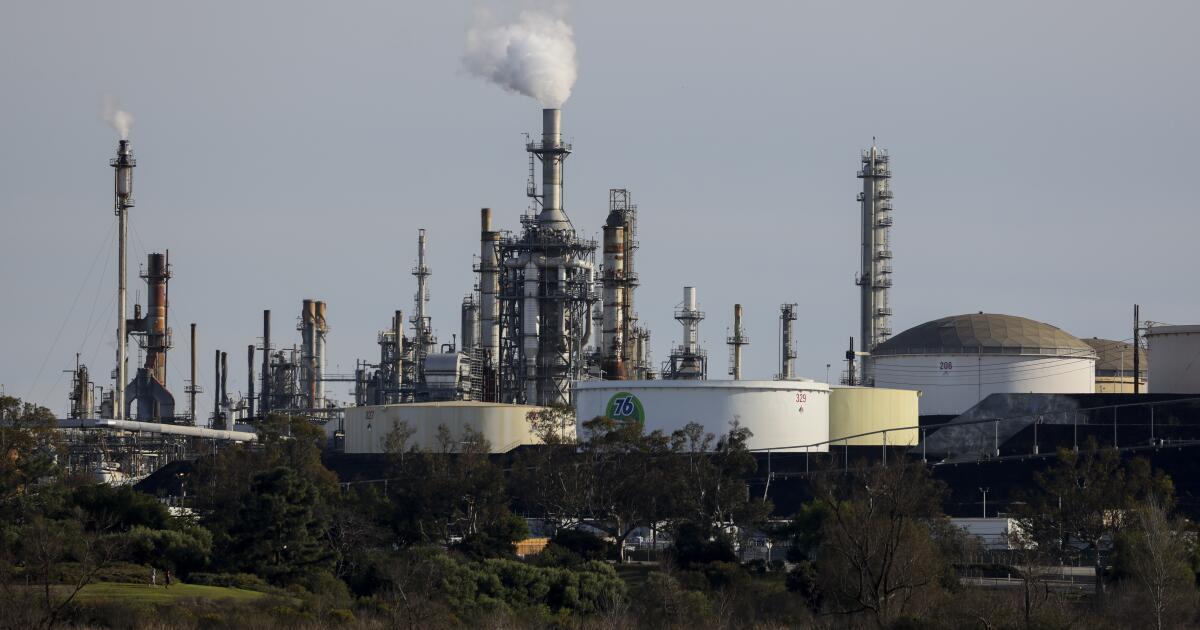
The U.S. attack on Iran is expected to have an unwelcome impact on California drivers — a jump in gas prices that could be felt at the pump in a week or two.
The outbreak of war in the Middle East, which virtually closed a key Persian Gulf shipping lane, spiked the price of a barrel of Brent crude oil by as much as $10, with prices rising as high as $82.37 on Monday before settling down.
The price of the international standard dictates what motorists pay for gas globally, including in California, with every dollar increase translating to 2.5 cents at the pump, said Severin Borenstein, faculty director of the Energy Institute at UC Berkeley’s Haas School of Business.
That would mean drivers could pay at least 20 cents more per gallon, though how much damage the conflict will do to wallets remains to be seen.
“The real issue though is the oil markets are just guessing right now at what is going to happen. It’s a time of extreme volatility,” Borenstein said. “We don’t know whether the war will widen or end quickly, and all of those things will drive the price of crude.”
President Trump has lauded the reduction of nationwide gas prices as a validation of his economic agenda despite worries about a weak job market and concerns of persistent inflation.
The upheaval in the Middle East could be more acutely felt in the state.
Californians already pay far more for gas than the rest of the country, with the average cost of a gallon of regular at $4.66, up 3 cents from a week ago and 30 cents from a month ago, according to AAA. The current nationwide average is about $3 per gallon.
The disruption in international crude markets also comes as refiners are switching to producing California’s summer-blend gas, which is less volatile during the state’s hot summers. The switch can drive up the price of a gallon of gas at least 15 cents.
The prices in California are largely driven by higher taxes and a cleaner, less polluting blend required year-round by regulators to combat pollution — and it’s long been a hot-button issue.
The politics were only exacerbated by recent refinery closures, including the Phillips 66 refinery in Wilmington in October and the idling and planned closure of the Valero refinery in Benicia, Calif., which reduced refining capacity in the state by about 18%.
California also has seen a steady reduction in its crude oil production, making it more reliant on international imports of oil and gasoline.
In 2024, only 23.3% of the crude oil refined in the state was pumped in California, with 13% from Alaska and 63% from elsewhere in the world, including about 30% from the Middle East, said Jim Stanley, a spokesperson for the Western States Petroleum Assn.
“We could see a supply crunch and real price volatility” if the Middle East supply is interrupted, he said.
The Strait of Hormuz in the Persian Gulf, through which about 20% of the world’s oil passes, was virtually closed Monday, according to reports. Though it produces only about 3% of global oil, Iran has considerable sway over energy markets because it controls the strait.
Also, in response to the U.S. attack, Iran has fired a barrage of missiles at neighboring Persian Gulf states. Saudi Arabia said it intercepted Iranian drones targeting one of its refinery complexes.
California Republicans and the California Fuels & Convenience Alliance, a trade group representing fuel marketers, gas station owners and others, have blamed Gov. Gavin Newsom’s policies for driving up the price of gas.
A landmark climate change law calls for California to become carbon neutral by 2045, and Newsom told regulators in 2021 to stop issuing fracking permits and to phase out oil extraction by 2045. He also signed a bill allowing local governments to block construction of oil and gas wells.
However, last year Newsom changed his stance and signed a bill that will allow up to 2,000 new oil wells per year through 2036 in Kern County despite legal challenges by environmental groups. The county produces about three-fourths of the state’s crude oil.
Borenstein said he didn’t expect that the new state oil production would do much to lower gas prices because it is only marginally cheaper than oil imported by ocean tankers.
Stanley said the aim of the law was to support the Kern County oil industry, which was facing pipeline closures without additional supplies to ship to state refineries.
Statewide, the industry supports more than 535,000 jobs, $166 billion in economic activity and $48 billion in local and state taxes, according to a report last year by the Los Angeles County Economic Development Corp.
Bloomberg News and the Associated Press contributed to this report.

Fintech company Block said Thursday that it’s cutting more than 4,000 workers or nearly half of its workforce as artificial intelligence disrupts the way people work.
The Oakland parent company of payment services Square and Cash App saw its stock surge by more than 23% in after-hours trading after making the layoff announcement.
Jack Dorsey, the co-founder and head of Block, said in a post on social media site X that the company didn’t make the decision because the company is in financial trouble.
“We’re already seeing that the intelligence tools we’re creating and using, paired with smaller and flatter teams, are enabling a new way of working which fundamentally changes what it means to build and run a company,” he said.
Block is the latest tech company to announce massive cuts as employers push workers to use more AI tools to do more with fewer people. Amazon in January said it was laying off 16,000 people as part of effort to remove layers within the company.
Block has laid off workers in previous years. In 2025, Block said it planned to slash 931 jobs, or 8% of its workforce, citing performance and strategic issues but Dorsey said at the time that the company wasn’t trying to replace workers with AI.
As tech companies embrace AI tools that can code, generate text and do other tasks, worker anxiety about whether their jobs will be automated have heightened.
In his note to employees Dorsey said that he was weighing whether to make cuts gradually throughout months or years but chose to act immediately.
“Repeated rounds of cuts are destructive to morale, to focus, and to the trust that customers and shareholders place in our ability to lead,” he told workers. “I’d rather take a hard, clear action now and build from a position we believe in than manage a slow reduction of people toward the same outcome.”
Dorsey is also the co-founder of Twitter, which was later renamed to X after billionaire Elon Musk purchased the company in 2022.
As of December, Block had 10,205 full-time employees globally, according to the company’s annual report. The company said it plans to reduce its workforce by the end of the second quarter of fiscal year 2026.
The company’s gross profit in 2025 reached more than $10 billion, up 17% compared to the previous year.
Dorsey said he plans to address employees in a live video session and noted that their emails and Slack will remain open until Thursday evening so they can say goodbye to colleagues.
“I know doing it this way might feel awkward,” he said. “I’d rather it feel awkward and human than efficient and cold.”

The Writers Guild of America West has canceled its awards ceremony scheduled to take place March 8 as its staff union members continue to strike, demanding higher pay and protections against artificial intelligence.
In a letter sent to members on Sunday, WGA West’s board of directors, including President Michele Mulroney, wrote, “The non-supervisory staff of the WGAW are currently on strike and the Guild would not ask our members or guests to cross a picket line to attend the awards show. The WGAW staff have a right to strike and our exceptional nominees and honorees deserve an uncomplicated celebration of their achievements.”
The New York ceremony, scheduled on the same day, is expected go forward while an alternative celebration for Los Angeles-based nominees will take place at a later date, according to the letter.
Comedian and actor Atsuko Okatsuka was set to host the L.A. show, while filmmaker James Cameron was to receive the WGA West Laurel Award.
WGA union staffers have been striking outside the guild’s Los Angeles headquarters on Fairfax Avenue since Feb. 17. The union alleged that management did not intend to reach an agreement on the pending contract. Further, it claimed that guild management had “surveilled workers for union activity, terminated union supporters, and engaged in bad faith surface bargaining.”
On Tuesday, the labor organization said that management had raised the specter of canceling the ceremony during a call about contraction negotiations.
“Make no mistake: this is an attempt by WGAW management to drive a wedge between WGSU and WGA membership when we should be building unity ahead of MBA [Minimum Basic Agreement] negotiations with the AMPTP [Alliance of Motion Picture and Television Producers],” wrote the staff union. “We urge Guild management to end this strike now,” the union wrote on Instagram.
The union, made up of more than 100 employees who work in areas including legal, communications and residuals, was formed last spring and first authorized a strike in January with 82% of its members. Contract negotiations, which began in September, have focused on the use of artificial intelligence, pay raises and “basic protections” including grievance procedures.
The WGA has said that it offered “comprehensive proposals with numerous union protections and improvements to compensation and benefits.”
The ceremony’s cancellation, coming just weeks before the Academy Awards, casts a shadow over the upcoming contraction negotiations between the WGA and the Alliance of Motion Picture and Television Producers, which represents the studios and streamers.
In 2023, the WGA went on a strike lasting 148 days, the second-longest strike in the union’s history.
Times staff writer Cerys Davies contributed to this report.

The Great Westport Sandwich Contest kicks off with event at Old Mill Grocery

Delaware eyes $25.3 million infusion to affordable child care. But to what end?

Man convicted of 1991 fatal shooting of police officer is set to be executed in Florida

Middle Georgia DSA condemns U.S.-Israel strikes on Iran, calls escalation ‘illegal’

Blood moon to dazzle Hawaii skies tonight

Florida High School Football Rankings: Top 25 teams – Oct. 21

Cleary's 21 help Le Moyne down Central Connecticut State 69-64 in OT

How old is Bo Nix? What to know about Oregon quarterback ahead of 2024 NFL Draft

99th annual Pony Swim held in Virginia

Indiana Members Credit Union announced as new anchor tenant at Bottleworks District

Trump sends official notification to Congress on strikes against Iran

Unexpected birth brings hope to near-extinct Amazon tribe

Supreme Court blocks redrawing of New York congressional map, dealing a win for GOP

Map: Earthquake Shakes Central California

Gas prices could jump as Middle East tensions threaten global oil supply
-

 World5 days ago
Exclusive: DeepSeek withholds latest AI model from US chipmakers including Nvidia, sources say
-

 Massachusetts6 days ago
Mother and daughter injured in Taunton house explosion
-

 Denver, CO5 days ago
10 acres charred, 5 injured in Thornton grass fire, evacuation orders lifted
-

 Louisiana1 week ago
Wildfire near Gum Swamp Road in Livingston Parish now under control; more than 200 acres burned
-

 Technology1 week ago
YouTube TV billing scam emails are hitting inboxes
-

 Politics1 week ago
OpenAI didn’t contact police despite employees flagging mass shooter’s concerning chatbot interactions: REPORT
-

 Technology1 week ago
Stellantis is in a crisis of its own making
-

 Oregon4 days ago
2026 OSAA Oregon Wrestling State Championship Results And Brackets – FloWrestling