Politics
Hegseth announces 6-month review of American forces in Europe, blasts NATO allies for putting troops ‘at risk’


How Trump’s Iran deal differs from Obama’s
Fox News host Will Cain discusses the distinct strategies of the Trump and Obama administrations regarding the Iran nuclear deal. War Sec. Pete Hegseth and Vice President JD Vance weigh in on the deal’s performance-based nature, emphasizing the U.S.’s increased leverage after military strikes on Iran’s infrastructure, which changes everything.
NEWYou can now listen to Fox News articles!
War Secretary Pete Hegseth had harsh words for NATO allies during an address to his European counterparts on Thursday, announcing a six-month review of U.S. force deployment on the continent.
Hegseth said the review’s outcome will depend on how quickly European nations act to support themselves militarily.
“This will be a real review. It will be designed to ensure that NATO is moving fast and irreversibly toward Europe leading, stepping up to take primary responsibility for the defense of Europe,” he told NATO officials in Brussels.
Hegseth also lashed out at European countries for refusing to assist U.S. forces in the war against Iran, particularly those that withheld use of military bases.
TRUMP PRESSES NATO PARTNERS ON SUPPORT AS HEGSETH BLASTS HESITATION
Secretary of Defense Pete Hegseth speaks at the IISS Shangri-La Dialogue security summit in Singapore on May 30, 2026. (Edgar Su/Reuters)
“These allies, they put America’s sons and daughters, our sons and daughters, at risk by denying them the predictable access, basing and overflight that never should have been in question at all,” he said.
Hegseth then launched a more general critique of European policy, referencing migration and an emphasis on social policy over defense.
“Instead of tanks and fighters and air defenses, the focus has been on gender equity and climate change and defense austerity. Europe’s borders flew wide open, welfare states expanded, defense budgets cratered. Along with Europe’s belief in itself and its civilization,” Hegseth said.
GERMANY PLEDGES TO BUILD EUROPE’S STRONGEST ARMY AS NATO ALLIES ANSWER TRUMP PRESSURE
NATO leaders participate in a summit in The Hague, Netherlands, on June 25, 2025, where they pledged to increase defense spending to 5% of GDP by 2035 as requested by President Donald Trump. (Handout / Latin America News Agency via Reuters Connect)
The wake-up call comes just days after Germany pledged to become a more powerful military force inside NATO, with Berlin’s ambassador to Washington telling Fox News Digital that the country is ready to assume greater responsibility for European security after decades in which the United States carried much of the alliance’s military burden.
“Germany is stepping up — we heard the call!” German Ambassador to the United States Jens Hanefeld told Fox News Digital in an exclusive interview.
Chancellor Friedrich Merz has said Germany’s armed forces should become the strongest conventional army in Europe, a goal Hanefeld said is now backed by Berlin’s new military strategy.
“Russia’s illegal war of aggression has shaken old certainties in Europe and Germany as the international rules we have relied on are being challenged,” Hanefeld said. “This changes the strategic environment we operate in.”
President Donald Trump and German Chancellor Friedrich Merz met in the Oval Office at the White House in Washington, D.C., on March 3, 2026, to discuss issues including recent U.S. and Israeli strikes on Iran. (Win McNamee/Getty Images)
CLICK HERE TO DOWNLOAD THE FOX NEWS APP
“Today, Germany is Ukraine’s largest supporter,” Hanefeld said. “Germany’s decision to become Europe’s strongest conventional army, well anchored in the NATO alliance, is an ongoing commitment.”
Fox News’ Efrat Lachter and the Associated Press contributed to this report.



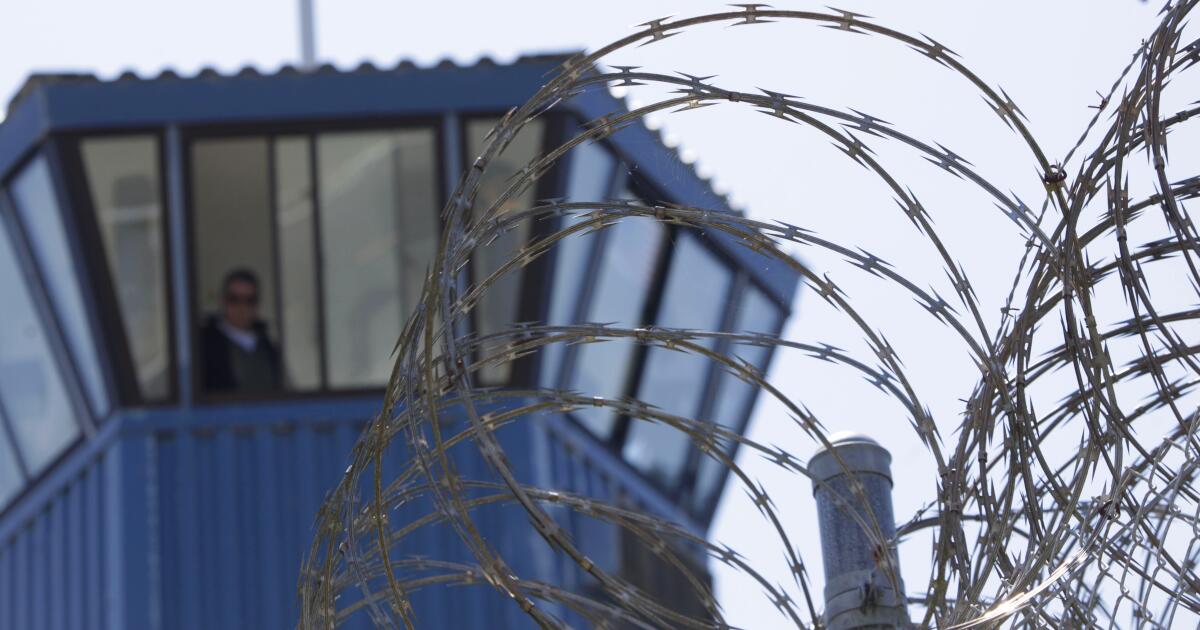
A bill to tighten California’s rules on mental health diversion — a process that allows certain criminal defendants to avoid prison for arrests linked to mental illness — is now on the verge of being signed into law by Gov. Gavin Newsom.
Assembly Bill 46, authored by Stephanie Nguyen (D-Elk Grove), gives judges much wider discretion to decide whether a defendant should be eligible for diversion. Under the current law, judges must presume mental illness was a factor if a defendant with a legitimate diagnosis seeks diversion. In order to defeat a diversion request, the burden is on prosecutors to prove mental health issues were not a factor in the alleged crime.
The new measure — which moved through the state Senate with no opposition last month and is expected to clear the reconciliation process in the Assembly this week — also gives judges more latitude to block diversion if a defendant poses “a risk of danger to public safety,” as opposed to the higher “unreasonable risk” standard that was passed in 2018. Defendants charged with attempted murder will no longer be eligible for diversion under the new bill.
Proponents of more inclusive diversion policies argue that many people with mental health issues are locked up in California prisons and jails, where they are unable to receive the help they need.
The pending bill’s supporters say its changes are designed to address cases like that of Gilberto Guttierrez, a Los Angeles County man who has been accused of attacking his wife four times over the last 12 years.
In 2014, a misdemeanor domestic violence allegation landed Guttierrez on probation. Three years later, Guttierrez was ordered to take anger management classes after prosecutors brought felony domestic violence charges against him. Last February, prosecutors allege, he carried out a “brutal attack” on his wife with a glass bottle, leaving her with “extensive injuries,” according to a motion filed in his current criminal case. That time, the court filings show, Guttierrez threatened to kill her.
Despite objections from prosecutors and L.A. County probation officials, a judge granted a request to give Guttierrez mental health diversion last July.
A month later, prosecutors allege, he beat his wife until she fell into a coma.
When it passed in 2018, the original mental health diversion law was heralded as a needed off-ramp for defendants suffering from serious psychological issues — offering treatment to those who need it rather than a prison cell. But with voters statewide souring on progressive criminal justice reforms, lawmakers have sought to make it harder for defendants to qualify.
“AB 46 preserves diversion as an important pathway to care while ensuring judges have a clearer and more workable standard when serious public safety concerns are present,” Nguyen said in a statement last month.
Under the existing rules, defendants who successfully argue for pretrial mental health diversion spend two years undergoing a court-appointed treatment plan instead of facing a conviction. Prosecutors must prove the defendant is likely to commit a serious violent crime, a so-called “super strike,” again in order to block diversion.
Los Angeles County Dist. Atty. Nathan Hochman, one of many prosecutors statewide who supported Nguyen’s bill, said that has been a nearly impossible standard to overcome.
“Guttierrez being your example: Judge, if you release him, he’s going to probably beat his wife up again, and if he does this time, he could kill her. But for the grace of God, he hasn’t killed her up until now,” Hochman said.
He added that due to the judge’s decision to grant diversion in Guttierrez’s case, “you have three little kids who likely won’t have their mom for the rest of their life.”
A spokesperson for Newsom did not respond to a request for comment about his plans for the legislation.
A 2020 Rand Corporation study found 61% of the nearly 5,500 mentally ill inmates housed in Los Angeles County at that time were “likely appropriate candidates” for diversion.
But a number of troubling incidents have led to pushback against the existing diversion law.
In a letter supporting Nguyen’s bill, the California District Attorneys Assn. rattled off a list of cases in which prosecutors say the law’s shortcomings had deadly consequences. They pointed to a case in Sacramento where a defendant stabbed a 40-year-old man to death after he was granted diversion in a robbery case. In Santa Clara, the letter said, a woman on mental health diversion for carjacking proceeded to steal another car and slam it into an outside table at a restaurant, leaving one person dead and others injured.
Nikhil Ramnaney, a former federal prosecutor who now works as a defense attorney in Southern California, said thousands of people benefit from mental health diversion every year without reoffending and chastised the bill’s supporters for cherry-picking horrible — but rare — cases to muster support for their proposal.
“This is their most effective strategy because it works. Pick up the most visceral, outrageous anecdotes and then repeat them and amplify them as much as possible,” he said. “That’s how we get bad policy.”
Defense attorney Alexandra Kazarian said California politicians are repeating age-old mistakes of trying to arrest their way out of a mental health crisis.
“Without this option, you throw them into prison for a couple of years, they get out, and nothing changes. I’ve seen real change in my clients who have been granted these and who have just been on horrific mental health breaks and who, two years later, fully have their lives together,” she said. “You’re always going to be able to find an outlier. You’re always going to be able to find somebody who ruins what is a great project or program.”
Hochman said the modified mental health diversion law is a “rebalancing” of the scales in California after years of attempts to lower the state’s overcrowded jail populations affected public safety.
“In the end, I’m not looking for pendulum swings,” he said. “I think we did have a pendulum swing when these laws were being passed and people weren’t really discussing, or at least understanding, the public safety impact of laws that seem on their surface to be very — I wouldn’t even use the word ‘progressive,’ but very helpful to people who are suffering.”
Politics
Trump switches support in Oklahoma congressional race as formerly endorsed pastor candidate suspends campaign

NEWYou can now listen to Fox News articles!
President Donald Trump withdrew his endorsement of Oklahoma GOP congressional candidate Jackson Lahmeyer on Wednesday, and threw his support behind Republican rival Mark Tedford, a dramatic reversal that came shortly before Lahmeyer publicly announced he was suspending his campaign.
Lahmeyer told Fox News Digital, however, that he made the decision to end his campaign the night before and informed his wife and campaign team before Trump’s endorsement switch.
“I made my decision to drop out of the race last night,” Lahmeyer told Fox News Digital. “I decided to choose my wife over my ambition. I informed my wife about my decision late last night and then my campaign team early this morning. My decision did not take place because of the decision of POTUS this afternoon.”
AP results showed Tedford finishing first with 32.2% and Lahmeyer second with 25.9%, advancing both Republicans to a runoff election to succeed Rep. Kevin Hern, who is running for the U.S. Senate.
TRUMP DROPS MARJORIE TAYLOR GREENE ENDORSEMENT, CALLS HER A ‘RANTING LUNATIC,’ HINTS AT BACKING PRIMARY RIVAL
Republican pastor Jackson Lahmeyer formally suspended his campaign for House District OK-01 Wednesday via X, mere minutes after President Donald Trump withdrew his endorsement on Truth Social. (Ballotpedia)
Trump had previously endorsed Lahmeyer as a “MAGA Warrior” and longtime ally, making Wednesday’s endorsement switch one of the more notable reversals of the 2026 midterm cycle.
At approximately 2:23 p.m., Trump announced on Truth Social that he was backing Tedford.
“I greatly appreciate Jackson Lahmeyer’s hard work under difficult circumstances — He has always been with me, and I will always be with him,” Trump wrote. “But, when it comes to the current Congressional race for Oklahoma’s 1st Congressional District, I will be supporting America First Patriot, Mark Tedford.”
SNUBBED BY TRUMP, GOP CANDIDATES FIGHTING FOR RE-ELECTION ACT LIKE THEY HAVE HIS BACKING ANYWAY
President Donald Trump attends a bilateral meeting at the Hotel Royal Évian in Évian-les-Bains, France, Monday, during the Group of 7 summit. (Anna Moneymaker/Getty Images)
The president described Tedford as “Pro Trump and MAGA all the way” and said the state lawmaker had his “Complete and Total Endorsement.”
At approximately 2:32 p.m., Lahmeyer announced on X that he was suspending his campaign.
“After prayerful consideration with my wife, Kendra, and my team over the last twenty four hours, I’ve made the difficult decision to suspend my campaign for Congress,” Lahmeyer said.
“I do not want to be a distraction to my family, my church, and the great people of Oklahoma’s 1st Congressional District, who deserve a strong conservative voice representing them in Washington.”
Fox News Digital reached out to Lahmeyer, Tedford and the White House for comment. A White House official referred Fox News Digital to Trump’s Truth Social statement and did not provide additional comment.
INSIDE STEFANIK’S EXIT AND HOW THE TRUMP ENDORSEMENT THAT NEVER CAME WAS ‘BIGGEST PIECE’ OF THE ‘PUZZLE’
Lahmeyer was seeking to represent Oklahoma’s 1st Congressional District in Washington, D.C. (Celal Gunes/Anadolu via Getty Images, File)
Trump’s decision marked a sharp turn from his earlier endorsement of Lahmeyer, whom he praised before Oklahoma’s June 16 primary.
The endorsement reversal came after a turbulent stretch for Lahmeyer’s campaign. The Daily Mail published reports regarding Lahmeyer’s communications with former Miss Oklahoma USA Caitlin Simmons Key.
CLICK HERE TO DOWNLOAD THE FOX NEWS APP
Lahmeyer later acknowledged that he had crossed “a boundary line through text messaging” while disputing what he described as a misleading characterization of the situation.
Neither president Trump nor the White House publicly explained the reason for the endorsement change. Tedford is now positioned as the likely Republican nominee in the strongly GOP district.

WASHINGTON — The terms of a deal to end President Trump’s war with Iran remained a secret on Monday as both sides claimed victory and the months-long conflict reached a nebulous end.
The memorandum of understanding, providing a rough framework to conclude the war, was signed digitally Sunday, with a ceremony scheduled to take place on Friday in Switzerland, U.S. officials said.
Trump hailed the document as a breakthrough after months of negotiations. Yet its broad contours remained unclear more than a day after the deal was announced, as each side offered conflicting public messaging about what had been agreed.
Iran said it would continue regulating traffic through the Strait of Hormuz, a strategic paradigm shift from the prewar status quo that was denied by the White House. The two sides expressed disagreement over whether the status of Iran’s ballistic missile program would be addressed in future negotiations, or whether Israel’s withdrawal from Lebanon was a part of the deal.
And Trump administration officials rejected Iranian claims that the United States would provide immediate sanctions relief as misleading “spin.”
Hours later, another U.S. official suggested that Iran, in fact, might receive some relief at the front end.
“We are prepared to release frozen funds, and we are prepared to release sanctions,” a senior U.S. official told reporters on a call. “And we’ll do some small gestures of that in the beginning, if they make some small gestures to us that show they’re willing to meet their commitments as well.
“We’ll know over the next two to three weeks whether those understandings will turn into actual agreement,” the official added.
Trump started the war in February citing Iran’s nuclear program, which had expanded after he withdrew from a prior nuclear agreement negotiated by President Obama. That deal capped more than two years of intensive diplomacy but ultimately failed under the weight of political criticism from Republicans — led by Trump — over its inclusion of sanctions relief for Tehran.
Trump administration officials said the new agreement would include a commitment from Iran not to develop or purchase nuclear weapons — a vow the Islamic Republic has repeatedly made through the Nuclear Non-Proliferation Treaty, the Obama-era deal and a religious edict from the late supreme leader. Yet the enforcement mechanisms for policing Iran’s nuclear work were left to negotiate another day.
Iran could get sanctions relief
In an interview with CBS News, Vice President JD Vance acknowledged that Iran could get significant sanctions relief — and up to $300 billion in reconstruction funds — if they abide by U.S. terms, such as the full reopening of the Strait of Hormuz, one of the world’s most important commercial waterways.
“Our expectation is that the strait is going to be opened in a toll-free way for the long term, and that’s the sort of thing that we’re going to figure out in these technical negotiations,” Vance said.
In a separate interview, he described the president’s policy as “extending an open hand” to Tehran.
“The hard-liners of the Iranian system will overemphasize the benefits that Iran gets,” he added, “while underemphasizing all the things that they have to concede, and all the things that they have to provide, in order to get these benefits.”
Uncertainty across the region
The news of peace came with a sense of bewilderment and uncertainty in a region that suffered collateral damage through months of war.
Sunni Arab states that once hoped Iran would emerge weakened from the war issued tepid support for an agreement that could ultimately leave the fate of their oil exports at the whims of an emboldened adversary. And Israeli leaders, across the political aisle, expressed deep concerns over the deal in private, warning they would not be bound by an agreement to which they were not a party.
Israel’s decisions moving forward — particularly in Lebanon— may ultimately decide whether the agreement survives over the next 60 days, when Washington and Tehran plan on ironing out its more technical details.
Hours after word of the signing came out, a stream of cars crowded the highway leading to southern Lebanon, full of displaced families desperate to check on homes and villages they hadn’t seen for more than 100 days.
They did so in defiance of Lebanese officials, who called on people to remain where they were until an official end to war in Lebanon — a secondary front in the larger U.S.-Israel war on Iran that has nevertheless seen staggering levels of destruction.
A woman and her children return to their Lebanese village Monday following the ceasefire announcement.
(Mohammed Zaatari / Ap Photo/mohammed Zaatari)
In the more than three months since the Lebanese Shiite group Hezbollah attacked Israel, nearly 3,800 people have been killed, and almost a quarter of the country’s 6 million people are displaced. Israeli troops occupy more than 10% of Lebanese territory, leaving a trail of destruction that has seen swaths of the country’s south all but razed.
‘Everything is gone’
None of that discouraged Hassan Shareef from leaving where he was staying in Beirut at 7 a.m. to head to Nabatieh, one of south Lebanon’s largest cities and a frequent target of Israeli strikes in recent weeks, to check on his tailoring business.
“I wasn’t afraid. I had to come. But what I saw would make you cry,” he said. “Everything is gone. My house, I can’t live in it. And the business is destroyed.”
Aqeel Khalaf, an herbalist, hit the road in the early morning with his brother, son and daughter-in-law. They reached Nabatieh in two hours.
Yet it was less of a homecoming than Khalaf hoped: Israeli troops were still stationed near his village, a few miles down the road from where he stood in Nabatieh’s central market. Their house was tantalizingly close, but for the moment it might as well have been on the moon.
“It’s hard for me, but the Lebanese army told us we can’t go yet. We have no choice,” Khalaf said. “Maybe in 24 hours, when things crystallize with the deal.”
He could at least check on his shop here in the central market, though he already knew there would be damage: The family regularly checked satellite images of the area and saw the building was hit about a week ago.
Standing before it, Khalaf saw how the wall of the adjacent building had toppled onto the ground floor, flooding the shop with rubble and coating everything with a film of fine gray dust. A nearby blast had collapsed the roof.
“Nabatieh was hit very hard this time,” he said. Still, he could salvage something, he said, pointing to his son as he fished out boxes of herbal treatments from under the rubble.
Two ceasefires in the last two months, forged during U.S.-led talks between the Lebanese and Israeli governments but without Hezbollah’s or Iran’s involvement, were broken as soon as they were announced. A previous ceasefire from November 2024 saw Hezbollah stop all attacks while Israel continued military operations in south Lebanon.
This iteration of the truce appeared to have more success: On Monday, Hezbollah launched no missiles but announced an attack on an Israeli force to stop its advance; and the Israeli military mostly stayed its fire as well, barring a number of shelling incidents and a drone strike on a car in the village of Kfar Tebnit that injured a journalist and killed one person, according to Lebanese media.
Obstacles to a durable peace
Lebanese army units, meanwhile, deployed in parts of the south, barring motorists from reaching areas near Israeli troops. Lebanon’s army remained on the sidelines during the war, but 30 soldiers, including a general, having been killed in Israeli attacks since March 2. Hezbollah attacks killed at least 30 Israeli soldiers and one civilian contractor.
Obstacles to a more durable peace remain. Israeli officials insist on freedom of action against Hezbollah, and they will create a so-called security zone in Lebanon indefinitely so to protect Israel’s northern border. For its part, Hezbollah says it will respond to any attack and will continue fighting until Israel withdraws.
Though the truce appeared to be holding for now, Khalaf, who had raced to reopen his Nabatieh shop after the 2024 ceasefire, was waiting this time. For now, he would take what stock he could and open a shop in Sidon or Beirut.
“We have to work and feed our families. But the damage is too much this time. I’ll come back when things are better,” he said. “And my home too. When I get to see it, even if it’s a mound of rubble, I’ll pitch a tent on it and rebuild.”
Wilner reported from Washington and Bulos from Nabatieh.
-

 Texas1 minute ago
Tornadoes ripped through cities, Tropical Storm Arthur floods parts of Texas and Louisiana
-

 Utah6 minutes ago
Utah Jazz Reacts: Who should the Jazz draft?
-

 Vermont13 minutes ago
Vermont law enforcement officers petition for highway dedication in honor of David Chris Maland
-

 Virginia16 minutes ago
Brush fire in Virginia Beach set by children playing with fire
-
 Washington16 minutes ago
Harold Washington fought for voting rights. Here we go again
-

 Wisconsin28 minutes ago
Couple asks Wisconsin Supreme Court to hear Brewers 50-50 raffle prize dispute
-

 West Virginia31 minutes ago
What UNC Head Coach Scott Forbes Said About West Virginia
-

 Wyoming36 minutes ago
The Flybrary Connects Fly Fishers With Shared Resources

