Lifestyle
How Route 66 inspired Disney’s ‘Cars’ and Cars Land — and the ride that never came to be

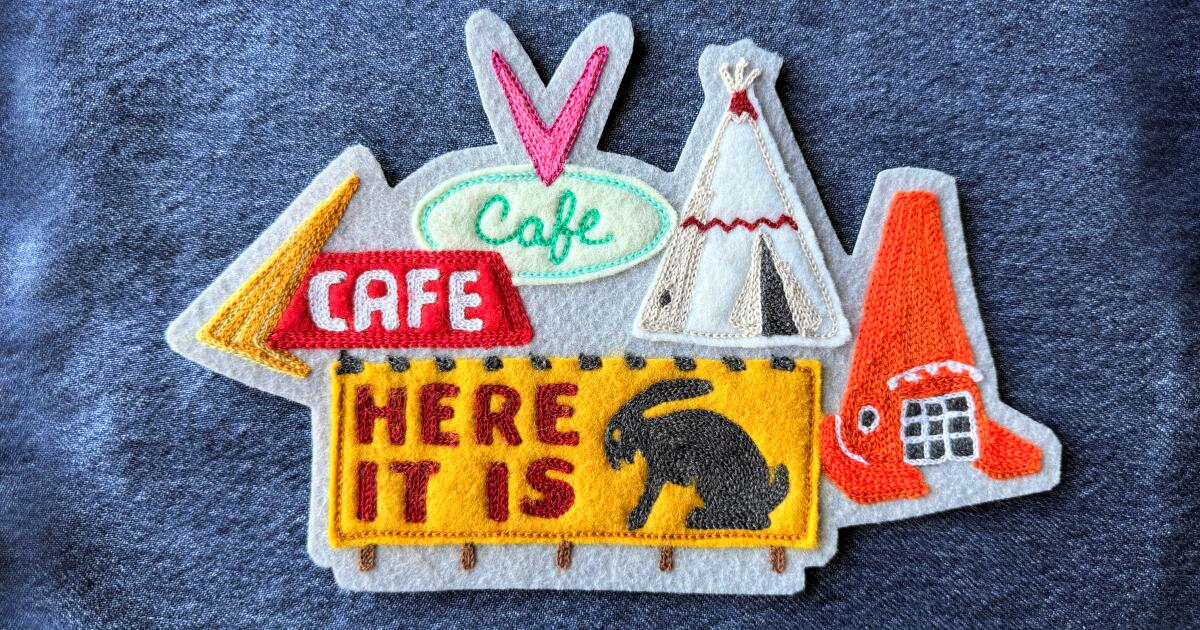
Route 66 has its tendrils throughout SoCal, and especially in the L.A. area, winding through Pasadena, West Hollywood and culminating in Santa Monica. But the most loving ode to Route 66 may in fact be at the Disneyland Resort, specifically at Disney California Adventure.

Stories, photos and travel recommendations from America’s Mother Road
Cars Land opened in 2012 as part of a reworking of the theme park and at long last gave it a striking land that could rival — and in many cases surpass — those of its next-door neighbor, Disneyland. Flanked by sun-scarred, reddish rocks that look lifted from Arizona, Cars Land is a marvel of a theme park land, with its backdrop mountain range ever so slightly nodding to the fins of classic Cadillacs from 1957 to 1962. That design element is a salute to the Cadillac Ranch in Amarillo, Texas, where 10 vintage Cadillacs are buried nose-first in the ground that to many resembles a 20th century Stonehenge.
Yet before the area was attached to the 2006 film, it was envisioned as a theme park destination dedicated to roadside attractions and trips along the so-called Mother Road. Cars Land is a make-believe area based on a fictional town from an animated film, but its roots are decidedly real.
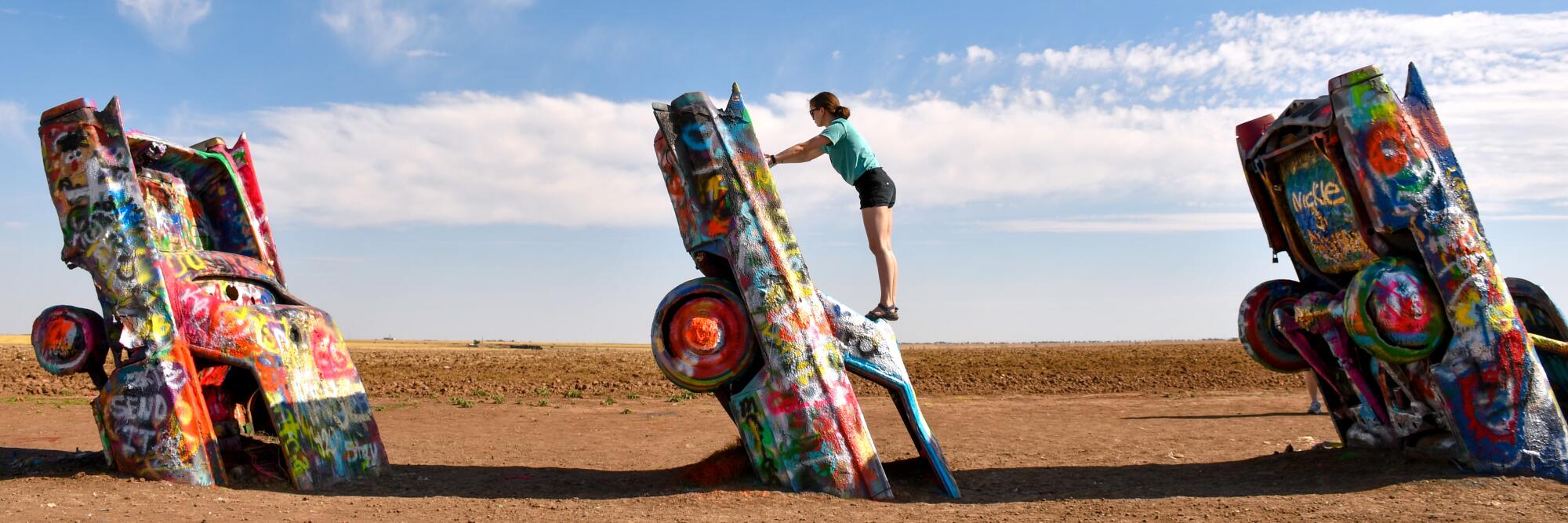
Cadillac Ranch, an artwork made from 10 old cars by the Ant Farm artists’ collective in the 1970s, has become one of Amarillo’s top attractions. Visitors are invited to add their own spray-painted touches.
(Christopher Reynolds / Los Angeles Times)

The backdrop mountain range of Radiator Springs Racers is a nod to Cadillac Ranch. The peaks are designed to look like the tail fins of classic cars.
(Mark Boster / Los Angeles Times)
“We very much acknowledge that up front, that you’re walking down Route 66,” says Kathy Mangum, the retired Walt Disney Imagineer who served as the executive producer of Cars Land.
“But you’re also not walking down a part of Route 66 that exists anywhere,” Mangum continues. “There’s no part of Route 66 where you’re looking up at a Cadillac range surrounded by red rocks. It’s the spirit of Route 66. I wouldn’t even call it a ‘best-of.’ It’s just a little bit of this, a little bit of that, and combined it feels real.”
Before those at Walt Disney Imagineering, the secretive arm of the company devoted to theme park experiences, were even aware that Pixar Animation Studios was working on the “Cars” film, an automotive-focused land was in the planning stages for Disney California Adventure. The park had opened in 2001 and had struggled in its early years to pull in crowds, with audiences zeroing in on a lack of Disneyland-style attractions and an absence of grandly designed vistas.
In an effort to rejuvenate the park, then-Imagineer Kevin Rafferty envisioned an area to be called Car Land — without the “s” — pulling heavily from his family’s road trips and Route 66-like roadside attractions and oddities. Among its standout attractions was to be one initially named Scoot 66, later changed to Road Trip, USA, a slow-moving ride that took guests on a cross-country journey through nature and roadside quirkiness, although its showcase scene would have been a trip trough a miniaturized Carlsbad Caverns, a bit of a detour from Route 66.
“It was kind of tongue-in-cheek,” says Rafferty, now retired, of the never-built ride. “You were going to be seeing all these roadside attractions that would draw you in, like giant bunnies.”

Mater’s Junkyard Jamboree brings the rusty, old tow truck character from the “Cars” movie to life in Cars Land at Disney California Adventure. (Mark Boster / Los Angeles Times)

An artwork in Seligman, Ariz., pays homage to the Disney-Pixar “Cars” movie, which was heavily inspired by the town. (Mark Lipczynski / For The Times)
Rafferty believed a place such as Car Land would be ripe for exploration in a Disney park, as it was to be set from the late 1950s to the early 1960s and tap into a collective nostalgia for a time when a vehicle meant the freedom to explore the open road. Cars Land today still has some of that ageless energy, boasting a vintage rock ’n’ roll soundtrack and a strip of a street filled with colorful neon, its lights, especially at night, beckoning guests to come closer.
“The reason why I thought it would fit into a Disney park, especially Disney California Adventure, is because cars are so much a part of the California story,” Rafferty says. “Cars are designed in California, even though they’re built elsewhere. There’s more custom shops in California. There’s more design studios in California. There’s more car clubs. And all the cars songs. ‘She’s so fine, my 409.’ It was all the Beach Boys and Jan and Dean.”

The neon signs of Radiator Springs. Flo’s V8 Cafe isn’t a direct match for any Route 66 diner, but it was inspired in spirit by the Midpoint Cafe in Adrian, Texas.
(Paul Hiffmeyer / Disneyland Resort)
Development on Rafferty’s Car Land idea would change course when Imagineering and Pixar eventually aligned. But it was also a shift that would more formally ground the area in the culture of Route 66, which heavily influenced the film. Both the filmmakers and, later, those with Imagineering, embarked on 10-day research trips along the road led by historian Michael Wallis, author of “Route 66: The Mother Road.” Those at Pixar, in fact, were so charmed by Wallis’ tours that the author was asked to voice the role of the film’s sheriff.
Wallis says he took the teams out in rented Cadillacs. “I like to stop every 300 yards,” Wallis says. “If I’m doing a road trip, I get into it. So we stopped to move box turtles off the road. I waded them into winter wheat to dance, to pick wild grapes. I introduced them to people that I guaran-damn-tee that they never would have met, the great characters of the road, and I showed them the man-made and natural sites of the road.”

Though the fictional “Cars” and Cars Land community of Radiator Springs has no single inspiration, it echoes the scenery and history of several small towns between Tulsa, Okla., and Kingman, Ariz., including Tucumcari, N.M., Seligman, Ariz., and Oatman, Ariz. And the single, graceful bridge that is centered upon the land’s backdrop mountain range closely resembles Pasadena’s own Colorado Street Bridge, although there’s no roaring waterfall next to the original.

Scenes from Route 66 in Seligman, Ariz. The town was one of the inspirations for the fictional “Cars” and Cars Land town of Radiator Springs.
(Mark Lipczynski / For The Times)

The centerpiece bridge of the Cars Land mountain range was modeled after a local landmark. (Paul Hiffmeyer / Disneyland Resort)

The Colorado Street Bridge in Pasadena, an inspiration for the Cars Land structure. (Adam Markovitz)
Elsewhere, Ramone’s House of Body Art connects with the U-Drop Inn, a 1936 Art Deco gas station in Shamrock, Texas, that now serves as a visitor center and cafe. The Cozy Cone Motel nods to the Wigwam motel chain, which once included seven locations from Kentucky to California. Two remain in business along Route 66: the Wigwam in San Bernardino and another in Holbrook, Ariz.
While Imagineers had visual references from the animated film, Mangum says the research trip was invaluable in lending authenticity to the park.
“We could walk into a building in Shamrock, Texas, that looks so much like what Ramone’s House of Body Art looks like and see that those tiles are made of raised terra-cotta,” Mangum says. “So we could get the actual texture. It’s a movie world, but it’s also a real world.”
Flo’s V8 Cafe isn’t a direct match with any Route 66 eatery, the Imagineers say, but was certainly influenced in spirit by the Midpoint Cafe in Adrian, Texas.

The Midpoint Cafe in Adrian, Texas, celebrates the halfway point on Route 66 between Chicago and Los Angeles.
(Christopher Reynolds / Los Angeles Times)
“We sampled all their pies and food and made copious notes on this stuff,” Rafferty says. “The two women who owned the Midpoint Cafe had what they said was their mother’s recipe for ‘ugly crust pies.’ We fell in love with ugly crust pies. I met with the head chef of Disneyland, who was a Frenchman at the time, and I said we wanted to serve ugly crust pies at Flo’s V8 Cafe. And he said, ‘No, no, no, nothing at Disneyland will be ugly.’”
No, but it may be influenced by abandoned buildings. Mangum says a key locale for the land was the deserted structures of Two Guns, Ariz. Gas station remains led to sketches that would inspire parts of the “Stanley’s Oasis” area of the Radiator Springs Racers queue, which Rafferty and company filled out with an oil service station and then a building composed of empty oil bottles. The story goes that Stanley’s Oasis is a roadside attraction settlement that led to the development of the town of Radiator Springs.

At the Cozy Cone Motel, a string of cone-shaped food stalls sell quick bites such as swirled soft-serve cones. (Stephanie Breijo / Los Angeles Times)

The Cozy Cone is based on the real-life Wigwam Motels. (Christopher Reynolds / Los Angeles Times)
“That kind of Route 66-inspired story was all made up,” Rafferty says. “It wasn’t in the film.” That backstory, however, would inform the 2012 short “Time Travel Mater.”
The enduring strength of the land, however, isn’t just due to the popularity of the animated properties that led to it. While Route 66 wasn’t magic for everyone — the history of the road is dotted with tales of extreme poverty and horrific racism — it’s become romanticized as a slice of Americana and stands as a jumping-off point to further delve into our past.
The land is, in a word, timeless. It’s also representative of the ideal of a working small town, the sort of place we forever long for. “It may not be the America of today,” Mangum says, “but in a way it is.”
Times staff writer Christopher Reynolds contributed to this report.


San Francisco Ballet artistic director Tamara Rojo is known for taking risks. She says that, with the exception of Nutcracker, “every time you bring back the same work, less people will come. You are cannibalizing yourself. So that’s not really a long-term strategy that you can rely on.”
Karolina Kuras
hide caption
toggle caption
Karolina Kuras
One of the first things Tamara Rojo did when she became artistic director of the San Francisco Ballet in 2022 was to commission a major new work on a very hot, very San Francisco topic: AI.
“I wanted to be somewhere where the answer is, ‘Let’s try,’ rather than, ‘We’ve never done it this way,’” Rojo told NPR about her decision to move to a city known globally for innovation. Rojo had spent decades working in the United Kingdom, first as a principal dancer with the Royal Ballet and English National Ballet and then as artistic director and lead principal dancer with the English National Ballet.
The ballet she commissioned for San Francisco, Mere Mortals, was boundary-pushing on a number of fronts.
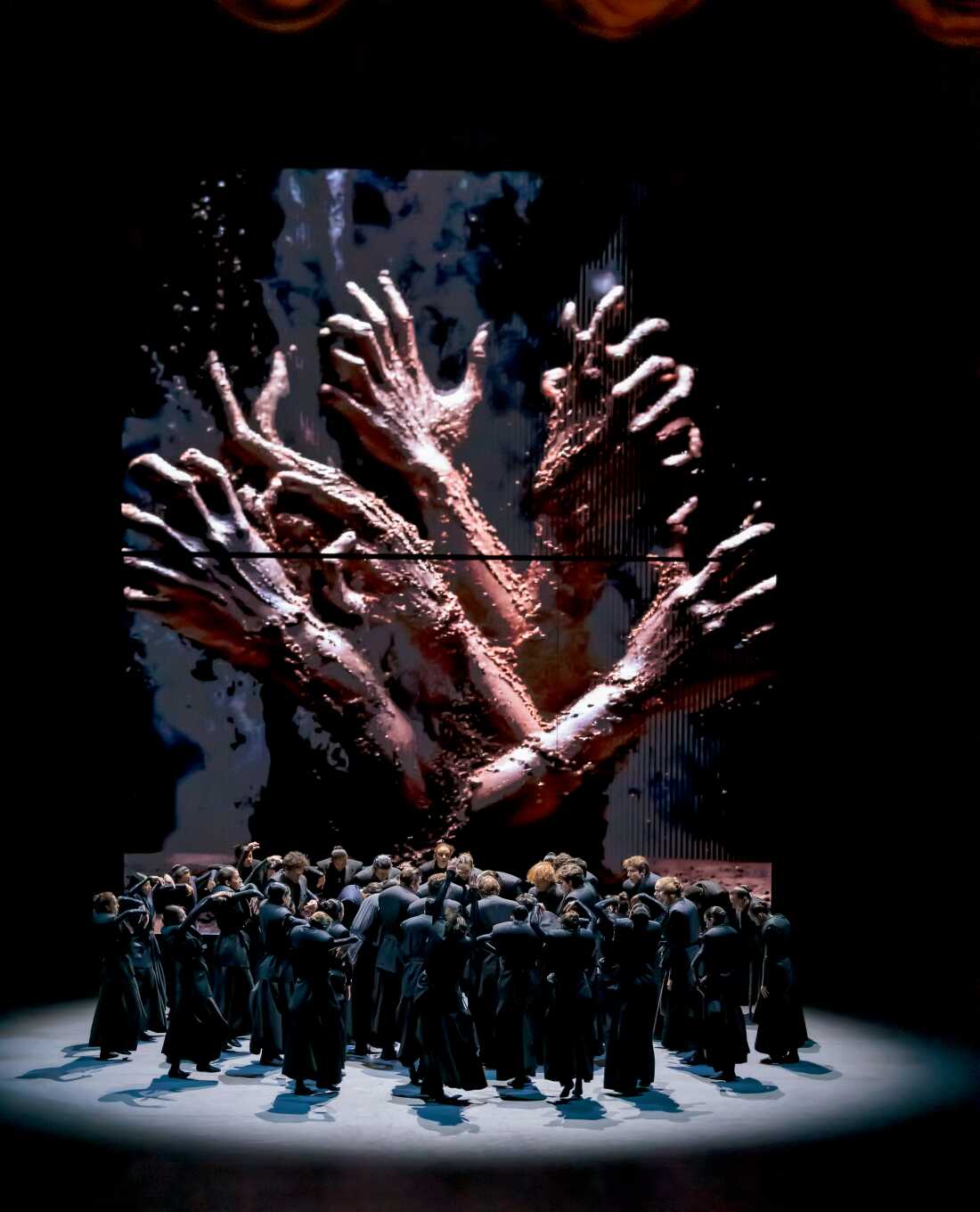
San Francisco Ballet’s new work about AI, Mere Mortals, presents a departure for the nearly 100-year-old dance institution.
Chris Hardy/San Francisco Ballet
hide caption
toggle caption
Chris Hardy/San Francisco Ballet
The jagged, earthbound movement, grainy electronic-driven soundtrack and pulsating AI-generated visuals of the hour-long ballet, presented a departure for the company programmatically. Also, Rojo’s choreographer pick, Aszure Barton, was the first woman ever commissioned to create a full-length work in the San Francisco Ballet’s nearly 100-year history – in an industry where most new dances are still created by men.
“What I love about Tamara is that she is defiant in what she believes in,” Barton said at the San Francisco Ballet’s headquarters during a break from rehearsing Mere Mortals. “This was a huge risk for her. It could have failed.”
Ballet can be a pretty conservative artform, with many companies trundling out Swan Lakes, Nutcrackers, and Cinderellas year after year. Every now and again, though, someone like Rojo comes along and truly shakes things up – even if that has meant ruffling tutus in the process.
Moving beyond limits
Rojo’s desire to move beyond accepted limits is a hallmark of her career. “She has extraordinary ambition,” dance writer Rachel Howard said.
Rojo was only 19 when she volunteered to represent her small, Madrid-based dance school and company at the prestigious Paris International Dance competition in 1994.

During her years as a principal dancer with the Royal Ballet, Tamara Rojo danced many famous roles including Princess Aurora in The Sleeping Beauty. In this 2006 dress rehearsal at The Royal Opera House, the Cuban ballet star Carlos Acosta partnered Rojo as Prince Florimund.
John D. McHugh/AFP/Getty Images
hide caption
toggle caption
John D. McHugh/AFP/Getty Images
“I don’t know what happened, but my hand went up,” Rojo said. “I didn’t think about it. I just went ‘me!’”
She won gold, and soon went on to dance for the Scottish National Ballet, the English National Ballet, and, starting in 2000, the Royal Ballet.
The ballerina became known for her consummate technique as well as her ability to bring emotional depth to roles like Odette/Odile in Swan Lake, Aurora in The Sleeping Beauty, and Giselle.
“Tragically sensual as one could want,” wrote New York Times critic John Rockwell in a review of Rojo’s performance of a duet from Ondine at the Lincoln Center Festival in 2004.
She also somehow found the time to earn a Ph.D. in the psychology of elite dancers from the Universidad Rey Juan Carlos in Madrid.
“She was truly one of the great international ballet stars of the last 40 years, at least,” said Howard.
Daring and success
Rojo has taken that same boundless ambition from the stage to the artistic director’s chair — making moves that match daring with success.
As the English National Ballet’s artistic director and lead principal dancer from 2012 to 2022, she helped transform the company into an international dance powerhouse, in large part through her radical approach to programming. Rojo’s efforts included bringing ballet to the Glastonbury Festival for the first time in the event’s history, and commissioning an Indian Kathak dance-infused reimagining of the beloved classic Giselle from choreographer Akram Kahn.
She also managed to keep the company financially afloat by offering up crowd-pleasing fare like The Nutcracker and a “swashbuckling romp” of a production of Le Corsaire, and oversaw its move from a cramped building in the “old money” South Kensington neighborhood of London to sprawling new studios in hip Canning Town.

Akram Khan and Tamara Rojo, pictured in London in 2013, have become frequent collaborators.
Tim P. Whitby/Getty Images
hide caption
toggle caption
Tim P. Whitby/Getty Images
“Rojo was hugely resourceful and creative about how she revitalized that company,” Howard said.
Sitting in her office at the San Francisco Ballet in dressy white sweatpants and an extravagantly ruffled blue blouse, the Spanish native, who turns 52 on Sunday, said the survival of her artform depends, at least in part, on risk-taking.
“Other than Nutcracker — which is this fabulous thing that keeps us all alive — every time you bring back the same work, less people will come,” Rojo said. “You are cannibalizing yourself. So that’s not really a long-term strategy that you can rely on.”
A risk pays off
The risks Rojo has taken with Mere Mortals seem to be paying off.
The production was recently remounted in San Francisco (it premiered in 2024), and will also be seen by audiences at the Edinburgh International Festival and Sadler’s Wells in London this summer. According to the company, it has brought in millions of dollars in ticket sales and drawn crowds of first-time ticket-buyers to the San Francisco Ballet.

A scene featuring dancer Wei Wang in San Francisco Ballet’s Mere Mortals.
Chris Hardy/San Francisco Ballet
hide caption
toggle caption
Chris Hardy/San Francisco Ballet
Many of them have stuck around for the post-performance DJ parties. These are part of Rojo’s ongoing desire to open things up by turning the company’s lobby into a friendlier space involving collaborations with local cultural groups and artists.
“We have this platform. We don’t have to be a gatekeeper. That’s actually bad for the arts,” Rojo said. “And so who else can we invite to be part of our actions?”
Perhaps most importantly for the company, Mere Mortals inspired a whopping, $60 million gift from an anonymous donor — one of the largest ever given to an American ballet company. This windfall is mainly earmarked to fund new work. Barton, the choreographer, said she remembers when Rojo invited the donor into the rehearsal room.
“She’s very convincing when she believes in something,” Barton said. “If I had the means, I would give it to her too.”
A difference of vision?
But not everyone is on board with the changes she’s made and her leadership style.
In 2018, during her time leading the English National Ballet, the U.K. publication The Times quoted a group of unnamed dancers who it said had accused Rojo of perpetuating a culture of intimidation and downplaying injury. Those dancers also objected to her romantic relationship with one of her company’s lead dancers, Isaac Hernandez, who moved with her to the San Francisco Ballet. They have a son together, but have since separated. NPR has not independently confirmed the allegations.

Tamara Rojo and associate artistic director Antonio Castilla observing rehearsal for the San Francisco Ballet’s recent production of Don Quixote.
Lindsey Rallo/San Francisco Ballet
hide caption
toggle caption
Lindsey Rallo/San Francisco Ballet
In a 2018 statement, English National Ballet said the company had worked with Rojo “from the start to implement improvements across the company,” including better access to medical care, more training for managers and a new building. Arts Council England, which funds and supports the arts across that country, said at the time it was satisfied with the new policies and processes put into place; English National Ballet said it worked with “unions and staff to ensure that feedback was heard and concerns were addressed. Asked about the allegations this week, the ballet told NPR that “No formal grievances were substantiated.”
Looking back, Rojo says that it was challenging to learn how to be a manager while still dancing, and to make changes in an industry where management is so male-dominated. A 2025 report from the Dance Data Project revealed of the 217 artistic directors leading classically based dance companies in the U.S. and internationally, 30% are women, while 70% are men.
“I came in very strong and very fast,” Rojo said. “And that, combined with ‘Women that succeed need to be put in their place,’ was very difficult.”

Tamara Rojo and Isaac Hernandez in London, 2016.
Chris Jackson/Getty Images
hide caption
toggle caption
Chris Jackson/Getty Images
It’s hard to say if similar disagreements over leadership happened when she took over San Francisco Ballet. A handful of high-profile company members have left, including Hernandez. The dancers declined to comment. San Francisco Ballet said the number of roster changes is similar to the number before her tenure.
“Not everybody’s going to agree with my vision,” Rojo said.
Some San Francisco Ballet dancers concur.
“Like any leadership change, sometimes people feel aligned with it and sometimes not,” said principal dancer Sasha De Sola. “The role of an artistic director is to bring their creative vision and continue to build.”
Cultivating dance leaders of the future
Part of Rojo’s creative vision is an unusual, new two-year program aimed at identifying and training the next generation of dance leaders while they continue to perform on stage. De Sola is a participant.
“Many times you’re required to almost wait until the end of your [ballet] career to be able to pursue these things,” De Sola said. “And I feel grateful that I’ve been able to do these in tandem.”
Rojo said she believes ballet dancers are capable of being great leaders if they’re taught how to do it. “You just need to have a vision that is specific and relevant to the institution that you want to direct and that is financially sustainable,” she said. “And you also need to make great art.”
Jennifer Vanasco edited this story for broadcast and web.

Sunday Puzzle
NPR
hide caption
toggle caption
NPR

On-air challenge
The on-air challenge goes here.
Last week’s challenge
Last week’s challenge comes from Joshua Green, of Columbia, Md. Think of a popular film franchise with many sequels. Hidden in consecutive letters inside its name is a place mentioned multiple times in the Bible. Replace that place with a single letter and you’ll name a Major League Baseball team. What franchise and team are these?
Answer: “The Avengers” –> (Detroit) Tigers
Winner
Erin Kealiher of Silver Spring, Maryland.
This week’s challenge
This week’s challenge comes from Joseph Young, of St. Cloud, Minn. Name a famous actor of the past, seven letter first name and seven letter last name. Remove three consecutive letters from him last name and the remaining letters in order will be the well known lead character from a long running series of films. What actor and character are these?
If you know the answer to the challenge, submit it here by Thursday, May 21 at 3 p.m. ET. Listeners whose answers are selected win a chance to play the on-air puzzle. Important: include a phone number where we can reach you.
Lifestyle
For Tory Burch, a 20-year fashion career is a sport driven by endurance, discipline and grit

Clarke wears Tory Burch multi screw heeled sandals and Gemini Link pendant necklaces.
This story is part of Image’s May Momentum issue, which looks at art as a sport and sport as an art.

It’s 2 p.m. on a quintessentially balmy Los Angeles afternoon when I spot fashion designer Tory Burch in the lobby of the iconic Beverly Hills Hotel. She’s wearing oversize sunglasses, a crisp collared shirt, an even crisper pleated navy skirt and leopard-print pumps. I start walking over to introduce myself, but a fan gets there first. This would happen several times during our meeting at the hotel — wherever Burch goes, a small flock of admirers form.
Burch is in town for the Fashion Trust U.S. Awards, where she was recognized with the designer of the year award. Ever since she took back creative control of her brand about six years ago, Tory Burch is back at the center of the American fashion zeitgeist. Compared to the resort-ready tunics and preppy Reva flats that embodied Tory 1.0 in the 2000s, Tory 2.0 has evolved into a “weirder,” more innovative version of itself. Think: a jersey dress with knotted ruching in an unexpected shade of green, or leather mules with an inverted heel that makes you look twice. While the Tory customer of the past felt neatly aligned with the country club aesthetic, the Tory customer today embodies a modern sensibility of polish and dynamism. You could easily imagine these clothes on a marketing exec at the office, a buyer at fashion week or an author on book tour.
There’s no doubt the “Tory-ssance” is in full swing. During New York Fashion Week, my TikTok page was flooded with behind-the-scenes clips of model it-girl Alex Consani getting ready for Tory Burch’s runway show. On the nouveau fashion blogs of Substack, women exchange styling ideas for the brand’s signature pierced mules. And on the streets of L.A. — from Sunset and Rodeo to Melrose and Wilshire — colorful Tory Burch logo sandals abound.

Clarke wears Tory Burch Mellow Mary Jane jellies, Gemini Link pendant necklace, and printed asymmetric viscose dress.
We sat down for tea at the Polo Lounge and talked about her design instincts, what women actually want to wear, freaky footwear and how a long career in fashion is its own kind of sport.
Viv Chen: Hi, Tory, it’s a pleasure to meet. Congratulations on receiving the designer of the year award from Fashion Trust U.S. this week. What does that kind of recognition mean to you at this point in your career?
Tory Burch: It’s a huge honor, and to be recognized by your peers is even more special. Being in that room and meeting some of the up-and-coming new designers, the creative energy was just palpable and super exciting to take in. I love what Tania [Fares] has built to support emerging designers.
VC: I heard you got to dress Pamela Anderson.
TB: Yeah, she presented the award to me. Pamela and I met through our boys, so it was very special because we have a friendship and I admire her so much.
VC: This award feels like another marker of the “Tory-ssance.” There’s been such a compelling story over the last few years about how you’ve reinvented the brand to feel fresh and relevant again. How do you see that evolution?

Clarke wears Tory Burch beaded heel sandals and cotton jacquard shirtdress.
TB: We’re just starting in many ways. When I first started the company 20 years ago, it was very much a creative journey. As time went on, I was also running the company and became the CEO. After a certain point, managing both was not doable. About six years ago — it was probably the one silver lining out of COVID — I had the opportunity to reset and give up my role as CEO. Now, 100% of my time is dedicated to the creative process. It’s something we’re still very much in the process of — not at the peak. I still have a lot I want to do.
VC: You redesigned your Rodeo Drive store last year. What is it about the L.A. market that influenced the design decisions you made?
TB: First of all, it’s really funny because a lot of people think I’m from L.A. I love the casual elegance of L.A. I’m very outdoorsy, I’m very sporty, so there’s a lot of things that I relate to from a design standpoint. And I’ve always been obsessed with interior design. It wasn’t as much about L.A., but it was more about using the light here. We opened up the top of the store with skylights, so it had shapes that the front of the store brought in with the light.
VC: You seem to have unlocked what women actually want to wear. Tell me more about your design perspective.
TB: I like an ease and a realness to what we do, but balanced with creativity and innovation. So it’s taking things that are classic in spirit, but then giving a strangeness to it. Like something where you look closer and see an interesting fabric or different stitching. I like tension.

Melissa wears Tory Burch pierced strappy heel sandals and printed silk dress.

Clarke wears Tory Burch Hank ballet sneakers.
VC: I want to talk about footwear, because you’ve designed some major hits. The Reva flat was such an iconic shoe in the 2000s. And now, your pierced mules are fueling the contemporary rise in “freaky footwear.” What is it about footwear that is such a powerful category for you?
TB: I’ve always loved footwear. When I started with the pierced [mule], I was looking at toe rings. I thought, how do you incorporate the concept of that into a mule? It was like an exercise in architecture. Ever since I’ve taken back the reins of the creative process, I’ve focused on how footwear makes your leg look and how it feels. The Reva is interesting because it was meant to be a foldable shoe to throw in your bag, but also something you could walk in all day.
VC: What shoes are you wearing today?
TB: I’m wearing the pierced pump.
VC: How do movement and women in motion factor into how you design? I’m thinking about Tory Sport, which I think was ahead of the curve of the athleisure boom.
TB: We started in 2015. It was me and a very small team starting with what I felt like was missing in the market — which was great-looking clothing that was not restrictive, but also technical. Something you could move in from morning until evening. I also saw the prevalence of streetwear and the way women were dressing at the time.
VC: Culturally, when we talk about fashion designers, we focus on skills like creativity and artistry. Whereas in the language of sports, we talk about endurance, discipline and grit. Do you view your 20-plus year career in fashion as its own kind of sport?

Melissa wears Tory Burch jelly heel flip-flops.
TB: I do. It is a sport, and there’s a physicality to it as well. I think some people question whether I still go to the office. I don’t think I’ve had lunch in the last 21 years. I can be at the office for 10-hour days, which is like an athlete where it’s about discipline and grit and endurance.
VC: Athletes always get asked about the unglamorous work behind the wins. What’s your equivalent of daily reps?
TB: The mental capacity you need to have. Sometimes I make 4,000 decisions in a day. I touch every product. But I’m also lucky in that my days never really look the same either, because I do so many different parts of the business — whether it’s store design, marketing or the actual design of different categories.
VC: Beyond your brand, what is the impact you are trying to make with the Tory Burch Foundation?
TB: We launched it in 2009 to support women entrepreneurs through mentoring, capital and community. We’ve committed to adding a billion dollars to the economy by 2030 through our fellows and entrepreneurs. We’re having a breakfast in three weeks honoring Anna Wintour. It’s our second fundraiser — last year it was Martha Stewart.
VC: What is the long game for Tory Burch?
TB: I don’t know that I’d sit and think about the long game as much as I think about trying to be present. I’m always interested in the zeitgeist and how we fit into that, but not necessarily to be on trend. I just am someone that has that curiosity to push things forward.
Viv Chen is a Bay Area–based fashion writer, and founder of the Molehill newsletter.

Photography Jennelle Fong
Styling Bin X. Nguyen
Talent Melissa Baltierrez, Clarke Brown
Nails Lila Robles
Videography D.J. Theriot
Lighting Assistant Phillip Acevedo
-
Lifestyle44 minutes ago
How Tamara Rojo is remaking ballet
-

 Technology56 minutes ago
Microsoft is retiring Teams’ Together Mode
-

 World1 hour ago
Canada confirms hantavirus case linked to cruise ship outbreak that has killed three passengers
-

 Politics1 hour ago
Trump reads Bible as thousands pack National Mall for America 250 prayer rally
-

 Health1 hour ago
Frequent museum visits tied to reduced cellular aging, research finds
-

 Sports1 hour ago
Indy 500: Counting Down The 10 Best Finishes In Race History
-

 Technology1 hour ago
Your 401(k) is the new identity theft target
-
 Business2 hours ago
Why this Hollywood director thinks AI can save L.A. film jobs

