Lifestyle
A tour of L.A. architecture as it’s actually experienced

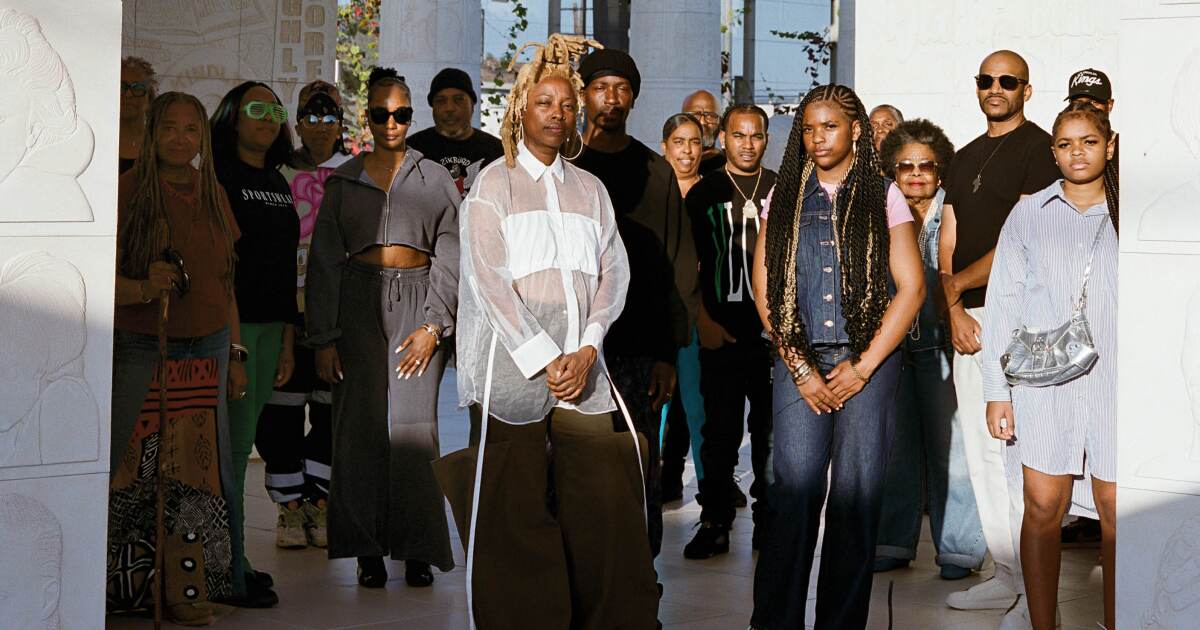
This story is part of Image’s April’s Thresholds issue, a tour of L.A. architecture as it’s actually experienced.

I lived part of my teen years in Brasília, the capital built from scratch whose architecture and urban planning have drawn equal parts fascination and disdain. Over the years I’ve grown accustomed to comments about how “wild” the spaceship-like buildings designed by Oscar Niemeyer must have looked, how “alienating” the car-centric city must have been. But when I first heard these kinds of comments, I was admittedly surprised, because my memories of living in the city were much more mundane — eating hot dogs on the dusty sidewalks, hanging with friends at the base of our apartment building, movie-hopping at the mall. In other words, I was just living my life.
Now that I live in L.A., I sometimes hear echoes of what I used to hear about Brasília. They are both places with a mythic allure that nonetheless draw the same kinds of criticisms. How do you live in such a sprawling city where you have to drive everywhere? Isn’t it isolating? But as with Brasília, I’ve found that the way L.A. is perceived is much different than how it is lived.
Our April issue is about the lived experience of the city and its architecture. A postmodernist house in Baldwin Hills becomes a place for a family to dream. A billboard on the drive home becomes a personal landmark. A therapist’s room becomes a container for everything. A museum is held up as much by its walls as the people who work within them. We are part of our built environments, and nothing encompasses this more than our cover story on Lauren Halsey and her much-anticipated sculpture park, “sister dreamer lauren halsey’s architectural ode to tha surge n splurge of south central los angeles,” which is literally etched with the faces and stories of people from South-Central, where the artist grew up and still lives. On the cover photo, the artist stands in the back, in the shadows, allowing the people who shaped her project to take center stage.
Architects, I’m told, are obsessed with the idea of thresholds — corners, crossings, the in-between. This makes sense to me when I look at this cover, the group standing between four walls that don’t quite meet, the sky above and around them, inside and outside at the same time. It is a moving illustration of how a space can hold and contain — feel safe — while also holding an open sense of possibility.

Elisa Wouk Almino Editor in chief
Jess Aquino de Jesus Design Director
Julissa James, Staff Writer
Claire Salinda Staff Writer
Keyla Marquez Fashion Director at Large
Elizabeth Burr Art Director
Jamie Sholberg Art Director, Web
Samantha Lee Editorial Intern
Jennelle Fong Contributing Photographer
Tyler Matthew Oyer Contributing Photographer
Mere Studios Contributing Producer
Cecilia Alvarez Blackwell Contributing Producer
Dave Schilling Contributing Writer
Harmony Holiday Contributing Writer
Goth Shakira Contributing Writer
Cover
Photography Shaniqwa Jarvis
Featuring Cheryl Ward, Margaret Prescod, Autumn Luckey, Lauren Halsey, Monique Hatter, Andre “Sketch” Hampton, Monique McWilliams, Kenneth Blackmon, Robin Daniels, Michael Towler, Emmanuel Carter, Dyani Luckey, Dominique Moody, Rosie Lee Hooks, Damien Goodmon, Londyn Garrison and Christopher Blunt.


Lifestyle
Day 1,578 of WW3: The UN Security Council will meet on Monday to address Russia's latest strikes on cultural and religious sites, including the attack on Kyiv-Pechersk Lavra. ANGH, of course. This is your Saturday Ukraine discussion
Day 1,578 of WW3: The UN Security Council will meet on Monday to address Russia's latest strikes on cultural and religious sites, including the attack on Kyiv-Pechersk Lavra. ANGH, of course. This is your Saturday Ukraine discussion

NEW YORK, NEW YORK – APRIL 21: Laverne Cox attends the “Animal Farm” New York Premiere at Regal Theater on April 21, 2026 in New York City.
Jamie McCarthy/Getty Images
hide caption
toggle caption
Jamie McCarthy/Getty Images
In 2013, when the Netflix series Orange Is the New Black came out, the world met the character Sophia Burset — a Black trans woman serving as the resident hairstylist in prison.
For much of the audience, it was also the first time they met actress Laverne Cox — who landed the role of Sophia at the age 40, just when she was thinking of quitting acting altogether.
In her new memoir Transcendent, Cox talks about the challenges she faced long before Netflix came knocking: a mother who withheld love, a father who was never around and the brutal denigration she encountered growing up Black and trans in the deep South.
To unlock this and other bonus content — and listen to every episode sponsor-free — sign up for NPR+ at plus.npr.org. Regular episodes haven’t changed and remain available every weekday.
Email us at considerthis@npr.org.

Scott Simon talks with author Judy Blume at the Santa Fe International Literary Festival in May.
Tira Howard Photography./Courtesy Santa Fe International Literary Festival
hide caption
toggle caption
Tira Howard Photography./Courtesy Santa Fe International Literary Festival
Judy Blume is the legendary writer of books for young adults including Are You There God It’s Me Margaret, Deenie, Tiger Eyes, Tales of a Fourth Grade Nothing and Blubber.
Her last book, 2015’s In The Unlikely Event, was published more than a decade ago. Blume now spends her time reading children’s books behind the counter at her bookstore in Key West, Florida. Though she says she is done writing, her books remain beloved; her readers numerous and devoted.
Judy Blume spoke with NPR’s Scott Simon at the Santa Fe International Literary Festival in May. Here are excerpts from that conversation, edited in parts for clarity and length.
Scott Simon: How did you begin to write? What do you think made you a writer?
Judy Blume: I was a reader. And, you know, I meet so many kids and they say, “I want to be a writer when I grow up, but I don’t like to read.” And I say, “You know what? Forget being a writer.” Because I think every writer — that I know anyway — grew up a reader. And certainly that was true for me.
Simon: What was the spark that set it in motion from reading to writing, do you think?
Blume: I was married young. I had two kids young. And I was desperate for a creative outlet. I loved taking care of babies, but I needed something else and it could have been anything.
Simon: I have read that at one point in your life you made felt art pieces?

Scott Simon with Judy Blume in Santa Fe in May.
Tira Howard Photography/Courtesy Santa Fe International Literary Festival
hide caption
toggle caption
Tira Howard Photography/Courtesy Santa Fe International Literary Festival
Blume: Oh God, my first career. You know, I stopped because the Elmer’s glue — I’m an allergic person — started to give me funny things on the tips of my fingers. I made $300 selling those. And I bought myself a small electric typewriter. And the rest is history.
But I always had stories inside my head — when I was 9 years old. I bounced a rubber ball against the side of my house for hours. But really what was going on were stories. Fabulous stories, very melodramatic. I never told anybody. I never asked a friend, “Hey, do you have stories inside your head all the time?” Because I thought they’d think I was weird, which I might have been. So the stories were always there.
Simon: When you were writing, what was the process like for you?
Blume: Well, I kept a notebook for each book and I scribbled everything in it. Everything, everything, everything for a long time. For months.
And then on the day that I feel ready to start, well, that’s either the scariest part of writing or the best. Because, you know, when you have a good day — I mean, I had kids, and I would sit down at the dinner table and I would say, like, “You will never believe what Tony did today.” Because they’re real. They’re real to you. And you’re living with them for months, sometimes years. And you’re locked up in a little room all day with them. That’s why 50 years is enough. I was ready to come out into the world.
But I have found another career that I love dearly. I have a bookstore and I love that.

Tira Howard Photography/Courtesy Santa Fe International Literary Festival
Simon: I get the idea that you, at least for the moment, don’t miss writing right now.
Blume: I don’t miss writing but I’m very glad that I wrote. I mean, writing changed my life. But it was time to let it go. Could I have come up with more ideas and written more books? Yes. But I’m really happy that I found something else that I love to do.
Simon: Do characters ever come calling on you?
Blume: No. They know better. They’re quiet.
You know how many letters I get? “We need Judy to write a book — Margaret In Menopause.”
Margaret is always going to be 12. She’s not knocking, saying, “Let me out. I’m in menopause!”
They are what they are. They stay in the book. They stay in the book. They live for me in the book. And then I have to let them go.
-

 Politics1 minute ago
Obama Center visitors say project symbolic of ‘Black excellence,’ claim scandal-free legacy while Trump ripped
-

 Health6 minutes ago
Poison centers link growing Benadryl abuse among teens to dangerous social media trends
-

 Sports13 minutes ago
Bryce Harper hits for cycle, Kyle Schwarber blasts three homers in Phillies blowout win over Mets
-

 Technology16 minutes ago
Meta offers paid training for AI data center jobs
-
 Business21 minutes ago
‘I got crushed’: AI giants are funding ad wars in races across the country
-
 Entertainment28 minutes ago
A fake mountain and real magic transform Paris’ oldest bridge
-
Lifestyle30 minutes ago
Day 1,578 of WW3: The UN Security Council will meet on Monday to address Russia's latest strikes on cultural and religious sites, including the attack on Kyiv-Pechersk Lavra. ANGH, of course. This is your Saturday Ukraine discussion
-
 Politics36 minutes ago
Can a new commission remedy California’s public defender crisis?

