Crypto
Solana Foundation Launches STRIDE Security Program for DeFi Protocols Following Drift Incident


Key Takeaways:
- The Solana Foundation and Asymmetric Research launched STRIDE on April 6, 2026, a tiered DeFi security program covering all protocols.
- Protocols exceeding $10M TVL qualify for foundation-funded 24/7 monitoring, while those above $100M TVL receive formal verification.
- The new Solana Incident Response Network (SIRN) unites five founding firms, including OtterSec and Neodyme, for real-time crisis coordination.
Solana Foundation Debuts STRIDE to Protect DeFi Protocols With Tiered Security
The program, which stands for Solana Trust, Resilience and Infrastructure for DeFi Enterprises, moves away from the traditional model of one-off audits and replaces it with continuous, foundation-funded protection scaled to each protocol’s size and risk profile.
STRIDE is structured around eight security pillars covering operational security, access controls, multisig configurations, and governance vulnerabilities. Asymmetric Research conducts hands-on assessments of participating protocols and publishes findings in a public repository, giving users and investors direct visibility into each protocol’s security standing.
All Solana DeFi protocols are eligible to apply. Every participating project receives an independent evaluation and a published report regardless of size.
The announcement explains that protocols that pass the STRIDE evaluation and hold more than $10 million in total value locked (TVL) qualify for foundation-funded 24/7 operational security support and real-time threat monitoring. The monitoring is calibrated to risk, meaning higher-value protocols receive more intensive coverage aimed at catching suspicious activity before it escalates.
For the largest protocols, those managing more than $100 million in TVL, the Solana Foundation funds formal verification. This method uses mathematical proofs to check every possible execution path in a smart contract, eliminating entire classes of vulnerabilities that standard audits can miss.
STRIDE version 0.1 is live now and is expected to evolve as real-world assessments provide feedback.
Alongside STRIDE, the foundation launched the Solana Incident Response Network, known as SIRN, a coalition of security firms dedicated to real-time crisis response across the ecosystem. Founding members include Asymmetric Research, OtterSec, Neodyme, Squads, and Zeroshadow. SIRN is open to all Solana protocols, with response prioritized by TVL and potential impact.
The program builds on existing no-cost tools the Solana Foundation has already deployed, including Hypernative for ecosystem-wide threat detection, Range Security for real-time risk alerting, Riverguard by Neodyme for attack simulation, Sec3 X-Ray for static analysis, and Auditware Radar for template-based issue detection.

Drift Protocol Hack 2026: What Happened, Who Lost Money, and What’s Next
A Solana-based perpetual futures exchange lost $286 million in 12 minutes on April 1, 2026, after attackers spent three weeks…
Read Now


Drift Protocol Hack 2026: What Happened, Who Lost Money, and What’s Next
A Solana-based perpetual futures exchange lost $286 million in 12 minutes on April 1, 2026, after attackers spent three weeks…
Read Now
Drift Protocol Hack 2026: What Happened, Who Lost Money, and What’s Next
Read Now
A Solana-based perpetual futures exchange lost $286 million in 12 minutes on April 1, 2026, after attackers spent three weeks…
Projects like Squads Multisig, Kamino, and Jupiter Lend have already set high internal security standards, with ten or more audits across some protocols. STRIDE is designed to extend comparable protections to teams that lack the resources to fund that level of coverage independently.
The Solana Foundation also participates in the Crypto Defenders Alliance for cross-industry fraud prevention, and STRIDE adds a Solana-specific layer on top of those broader efforts. The initiative follows the recent $286 million Drift Protocol hack, which was the largest DeFi breach so far in 2026.
Drift Protocol is the largest perpetuals exchange on Solana and it saw its TVL slide from $550 million to the current $234 million. The project’s token, DRIFT, as of 6:30 p.m. Eastern time on Monday, is down more than 37% over the last seven days. DRIFT is 98.5% below the crypto asset’s all-time high of $2.60 logged in November 2024.



Key Takeaways
A $13 Billion Wipeout in Days
Binance Research reported that April’s decentralized finance ( DeFi) exploits triggered around $13 billion in outflows, draining total value locked (TVL) across lending markets and decentralized exchanges. The flight pushed the onchain leverage ratio to about 38%, a reading the firm said marks a return to 2021 levels all while showcasing a massive decline in investor confidence.
The outflows can largely be traced back to a cluster of attacks, the largest of which struck liquid- staking protocol KelpDAO. Bitcoin.com News reported that KelpDAO had slammed Layerzero after a roughly $300 million exploit, later shifting its rsETH token to Chainlink’s cross-chain protocol, CCIP, in response.
The breach also rattled the wider ecosystem with lending protocol Aave battling a withdrawal crisis as depositors rushed for the exits. Confidence cracked further when Aave suffered a 44% monthly drop in value locked and outflows spread to neighboring protocols.
The attack’s mechanics unearthed a growing cross-chain threat with Layerzero, most recently, disclosing a remote procedure call (RPC) poisoning incident linked to the $292 million KelpDAO hack, in which attackers corrupted the data feeding the bridge’s verification network.
A Record Month for Hacks
April stood out even in a sector accustomed to breaches as industry trackers counted more than 20 separate exploits during the month, making it one of the most-hacked stretches on record. Aave alone saw billions in deposits exit within 48 hours, and several protocols paused certain operations as trust eroded.
Even then, the sector has shown resilience, with several protocols migrating cross-chain messaging to alternative providers and tightening verification. Binance Research and other analysts have argued that DeFi is evolving, citing the speed at which liquidity has historically returned as confidence has stabilized.
The 38% leverage reading is the figure to watch next, given that a return toward 2021 levels could mean the system has deleveraged sharply (potentially reducing the risk of forced liquidations and signaling diminished risk appetite). In any case, whether deposits rebuild from here will determine if April marked a temporary shock or a longer reset for onchain finance.

He said the Financial Crimes Unit is hard at work tracking the fraudsters, shutting down their websites, and hoping to bring them to justice.
There are various types of “pig butchering” scams, according to the federal government. They slowly play on the investor’s emotions and hopes.
“It is a type of confidence and investment fraud in which the victim is gradually lured into making increasing monetary contributions, generally in the form of cryptocurrency,” says the Office of Inspector General’s website, “to a seemingly sound investment before the scammer disappears with the contributed monies.”
If you are a victim of a scam, Becker said, contact your local police department. More information about that is here.
RELATED: Grandma Conned Into Mailing $10K Cash To Teaneck In ‘Grandparent Scam’

Key Takeaways
- Bitcoin surpassed $66,600 Monday morning, up more than 11% from early-June lows near $59,375.
- Trump’s U.S.-Iran peace framework sent WTI crude down 3-5%, lifting equities, gold, and crypto.
- The FOMC decision on June 17 under Chair Kevin Warsh is the next major volatility catalyst.
Bitcoin Spikes to $66,600
Bitcoin traded over $66,600 as of Monday morning at 9 a.m. Eastern time, up approximately 3.5% over recent sessions and more than 11% off early-June lows near $59,375. Ethereum climbed to $1,774, gaining roughly 6.5% in the same stretch. XRP added 8.7% and solana ( SOL) rose 7.4%, while the total crypto market capitalization held above $2.35 trillion.
The rally tracked closely with broad risk-on sentiment fueled by weekend geopolitical developments and the continued afterglow of SpaceX’s blockbuster Nasdaq debut.
U.S.-Iran Framework: What’s Known
President Donald Trump announced Sunday via Truth Social that “The Deal with the Islamic Republic of Iran is now complete,” citing an immediate, toll-free reopening of the Strait of Hormuz and the removal of the U.S. naval blockade on Iranian ports.
U.S. and Iranian officials, along with Pakistani mediators, confirmed they have reached an agreed text for a preliminary memorandum of understanding. The framework extends a ceasefire for 60 days, opens the Strait immediately, and defers nuclear program details to follow-on talks. A formal signing is targeted for Friday, June 19, in Switzerland.
The deal remains tentative. The full text has not been publicly released, Iranian hardliners have expressed opposition, and Israel has indicated it will not be bound by terms involving Lebanon. Former U.S. officials cautioned Monday that the agreement buys time for “long and tedious” nuclear negotiations rather than resolving core disputes.
Oil Drops, Equities Jump
WTI crude fell to the $81 to $85 per barrel range, down 3% to 5% on de-escalation expectations, as the Strait of Hormuz accounts for a significant share of global oil and gas trade. Brent held in the $84 to $87 range.
Nasdaq-100 futures pointed to a gain of more than 2% at the open, with S&P 500 futures up approximately 1.3% and Dow Jones futures adding roughly 1%. The S&P 500 hit an all-time high of 7,620.90 earlier in June 2026 and has shown consistent recovery since February, volatility tied to the initial Middle East conflict.
SpaceX shares gained approximately 6% in pre-market trading on Monday, extending a strong debut after pricing at $135 on June 11 and closing its first Nasdaq session at roughly $161, a 19% gain that pushed its market cap above $2.1 trillion.
Gold Holds Elevated Ground
Gold traded at $4,347 bid and $4,349 ask as of 9 a.m., up 3.05% on the session and touching a daily high of $4,350.40. Silver gained 4.62% to $71.04 bid, while platinum added 4.72% and palladium climbed 5.21%.
Precious metals held elevated levels despite the risk-on shift, supported by ongoing central bank buying and persistent monetary uncertainty even as oil prices retreated.
FOMC Looms Wednesday
The Federal Open Market Committee (FOMC) meets June 16 to 17, with a rate decision expected on Wednesday. Markets are pricing in a hold at the current target range. The meeting will include a Summary of Economic Projections, an updated dot plot, and a press conference with the new Chair, Kevin Warsh, that will set the tone for policy guidance through the summer.
Sticky inflation, with recent CPI readings around 4.2% year-over-year in some estimates, remains the primary constraint on any dovish shift. The tone from new Fed Chair Kevin Warsh will be closely watched.
What Traders Are Watching
The next 48 to 72 hours carry significant weight. Markets will monitor:
- Official signing details from Switzerland on June 19
- Iran Supreme Leader and hardliner responses to the MoU
- Israel’s military and diplomatic posture regarding Lebanon
- Early Hormuz implementation steps and oil price follow-through
- Wednesday’s FOMC statement and dot plot
Crypto remains tied to macro risk appetite. A hawkish Fed surprise on Wednesday could pressure the current rally, while confirmation of the Iran deal’s initial implementation steps would likely extend it.
Strategy Drops $100M on 1,587 Bitcoin as Reserve Climbs to 846,842 BTC
Strategy purchased 1,587 bitcoin for approximately $100 million at an average price of $63,024 per coin, the company disclosed Monday,…


Strategy Drops $100M on 1,587 Bitcoin as Reserve Climbs to 846,842 BTC
Strategy purchased 1,587 bitcoin for approximately $100 million at an average price of $63,024 per coin, the company disclosed Monday,…
Strategy Drops $100M on 1,587 Bitcoin as Reserve Climbs to 846,842 BTC
Strategy purchased 1,587 bitcoin for approximately $100 million at an average price of $63,024 per coin, the company disclosed Monday,…
-

 Augusta, GA3 minutes ago
Augusta University welcomes Brent McMillian as new athletic director
-

 Washington, D.C10 minutes ago
TFB’s AgVentures Challenge finalists visit Washington, D.C.
-
 Cleveland, OH13 minutes ago
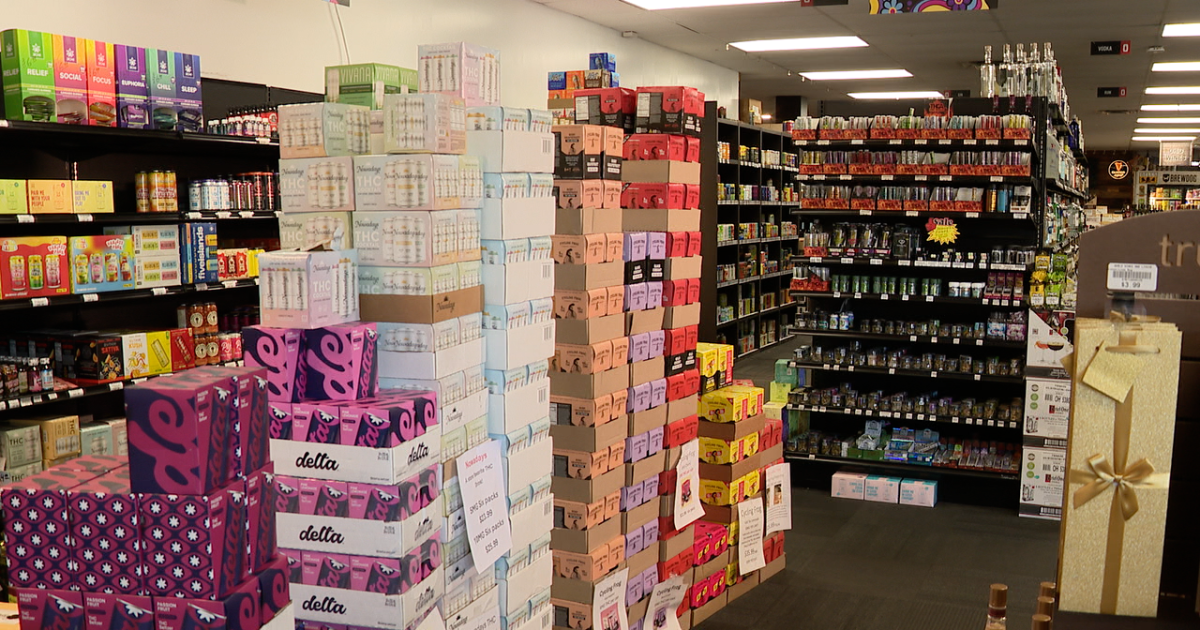
Hemp-derived THC drinks return to Ohio businesses after judge blocks new law
-

 Austin, TX18 minutes ago
Oregon Baseball Loses Key Talent in Surprising Transfer Portal Move
-

 Alaska28 minutes ago
Small ships go where big ships can’t in Alaska’s wilderness
-

 Arizona33 minutes ago
20 famous ASU alumni, including Jimmy Kimmel and other favorites
-

 Arkansas40 minutes ago
Congressman Steve Womack visits Northwest Arkansas
-
 California43 minutes ago
CalMatters journalism honored as ‘impeccable,’ ‘beautifully-written’ and ‘the definition of public service’ in Golden State Journalism Awards

