World
Newsletter: Energy shock has Brussels on edge


Good morning from Brussels. I’m Mared Gwyn with your last Europe Today newsletter before we go on a short break. We’ll be back next Tuesday.
ADVERTISEMENT

ADVERTISEMENT
The EU’s energy chief Dan Jørgensen has warned member states that energy prices could remain high even if a peace deal to end the war in Iran is struck swiftly, urging capitals to prepare for the “potentially prolonged disruption.”
Euronews’ Marta Pacheco reports that EU countries may consider fuel rationing, remote work, and even “car-free Sundays”— a measure from the 1970s energy crisis — to curb oil and gas demand, as prices have surged 70% and 50%, respectively.
The warnings from Brussels suggest an increasing sense of nervousness over the economic repercussions of the conflict, as the reality of the looming crisis sets in. Marta has this handy explainer on the possible ramifications for Europe, and how countries are preparing.
Speaking to Europe Today earlier, Poland’s Secretary of State for Energy Wojciech Wrochna said his country had already reined in prices by introducing a price cap and slashing fuel taxes, and said Brussels should give EU capitals “flexibility” to “drive the measures”. Watch.
On Tuesday, US President Donald Trump said countries which had dismissed earlier US requests for support to re-open the Strait of Hormuz – and which now face potential jet fuel shortages – should “build up some delayed courage, go to the Strait and just take it (the oil)”.
It’s awakening fears that the US could withdraw from the conflict without a settlement that would guarantee the safe re-opening of the Strait to international trade. Trump said overnight from the Oval Office that the war could end in “two or three weeks” and is due to address the nation with an update late on Wednesday.
Trump has also lashed out at France, despite heaping praise on the country for its position on the war in recent weeks, claiming Paris had prevented US planes headed to Israel with military supplies from flying over its territory.
“France has been VERY UNHELPFUL with respect to the “Butcher of Iran,” who has been successfully eliminated! The U.S.A. will REMEMBER!!!” Trump wrote on Truth Social.
French President Emmanuel Macron’s office said in a statement that it was “surprised” by the US President’s remarks, but insisted that the decision was in line with “the French position since the start of this conflict”. Since early March, the French armed forces have said it would only authorise the use of US bases on French territory for defensive purposes.
Speaking from Japan earlier today, Macron hailed Europe’s “predictability” despite its perceived “slowness”, criticising countries which may go faster but could “hurt you without even informing you”, in an apparent jab at the Trump administration.
Secretary of State Marco Rubio told Fox News last night that the US will need to “examine” its relationship with NATO in the aftermath of the war, amid signs that the existing fractures between Washington and other allies have deepened dramatically since the start of the Iran conflict.
Meanwhile, EU foreign ministers held symbolic talks in Ukraine on Tuesday as they scramble to keep attention on the war-torn country amid the conflict in the Middle East, which risks out draining out military stockpiles and fueling Moscow’s warchest as countries look for alternatives amid global oil and gas disruption.
Speaking to Europe Today from Kyiv, Romanian Foreign Minister Oana Țoiu said the relationship between Ukraine and the EU is a “good” and “strong partnership”, despite President Zelenskyy recently drumming a series of deals with Gulf countries amid uncertainty over Western support.
With the EU’s pivotal €90 billion loan for Ukraine still in deadlock due to Hungary’s veto, Țoiu said that the EU needs “better instruments” to enable “faster decisions” on foreign policy.
Kallas insists Russian assets are an option if Orbán doesn’t lift veto on Ukraine loan
Using Russia’s frozen assets to finance Ukraine remains an option if Viktor Orbán refuses to lift his veto on the €90 billion loan after the 12 April elections, EU High Representative Kaja Kallas said on Tuesday, Jorge Liboreiro reports.
Orbán has blocked the financial lifeline over an unrelated dispute with Kyiv regarding the Druzhba oil pipeline, after initially giving his political blessing to the loan in December when he, along with the Czech and Slovakian leaders, negotiated an exemption from any loan payments.
Kallas pointed out that the loan was a compromise deal when leaders failed to agree on leveraging Russian state assets immobilised within the EU due to scepticism led by Belgium, where a vast majority of the assets are held. Crucially, she said the assets should remain an option on the table if the loan continues to be blocked.
“Plan A was the use of frozen assets. So, we should also keep in mind that if plan B does not work, let’s go back to plan A, but we definitely need to deliver Ukraine the financing that they need to resist the Russian aggression,” Kallas said.
Standing alongside Kallas, Ukrainian Foreign Minister Andrii Sybiha echoed the message, saying the immobilised assets are “not off the table” and “cannot be taken off the agenda until and unless Russia pays all the reparations”.
Jorge has more.
Frustration with Hungary mounts after leaked call shows foreign minister discussing EU sanctions removal with Russian counterpart
An explosive investigation released Tuesday by a group of European outlets showing the extent of the Hungarian Foreign Minister’s coordination with Moscow is exacerbating frustration in Brussels with the Orbán-led government.
The investigation includes a recording of a 2024 phone call between Hungarian Foreign Minister Péter Szijjártó and his Russian counterpart, Sergey Lavrov, in which Szijjártó offered to lobby to remove a Russian oligarch’s sister from EU sanctions at Lavrov’s request.
“I am calling at the request of Alisher, and he just asked me to remind you that you were doing something about his sister,” Lavrov told Szijjártó, referring to Russian oligarch Alisher Usmanov and his sister Gulbahor Ismailova.
The Hungarian minister responds by saying that “together with the Slovaks, we are submitting a proposal to the European Union to delist her.”
Asked about the investigation in a press conference in Kyiv on Tuesday, the EU’s foreign policy chief, Kaja Kallas said: “European ministers should work for Europe not for Russia.”
Speaking beside Kallas, Ukraine’s Foreign Minister Andrii Sybiha called for a “proper reaction” from the EU.
Our correspondent Sándor Zsiros writes that the scandal has emerged as Hungary prepares for parliamentary elections on 12 April, with foreign interference and the government’s close ties to Moscow among the key campaign issues.
Szijjártó has defended his actions, arguing that speaking with Russian officials before and after such meetings is part of routine diplomatic practice.
Sándor has more on the allegations.
More from our newsrooms
Should you book holiday flights now considering jet fuel price spikes? Jet fuel prices have more than doubled in recent weeks amid the ongoing Iran war. Airlines have responded with fare increases and temporary surcharges, so should you secure tickets now or wait? Quirino Mealha has the answers.
US wrong to negotiate, Iranian regime ‘not trustworthy,’ Iranian opposition leader says. Speaking to Euronews, the exiled leader of the Kurdish Iranian opposition said that no one in the Iranian regime was “trustworthy”, downplaying claims from the US administration that Iranian officials were “reasonable” negotiators. Maria Tadeo and Estelle Nilsson-Julienhave more.
We’re also keeping an eye on
- US President Donald Trump to address the nation on the Iran war at 21.00 local time. The address will take place in the early hours in Europe (03.00 in Brussels).
That’s it for today. Marta Pacheco, Jorge Liboreiro and Sandor Zsiros contributed to this newsletter.
Europe Today is taking a break until Tuesday, April 7. We’ll see you then. Remember to sign up to receive Europe Today in your inbox every weekday morning at 08.30.



NEWYou can now listen to Fox News articles!
Mexican authorities have uncovered a sophisticated underground tunnel near the U.S.-Mexico border that was equipped with lighting, ventilation and an electronic transport system, which they say may connect Tijuana to a street in San Diego.
Mexico’s Attorney General’s Office, known as the FGR, announced the discovery Saturday following a search warrant executed at a property in the Nueva Tijuana neighborhood of Tijuana, Baja California.
Authorities said the tunnel stretched approximately 265 meters, or about 870 feet, and reached a depth of roughly 6.3 meters, or 21 feet underground.
According to investigators, the tunnel contained operational infrastructure, including lighting and ventilation systems, as well as an electronic sliding mechanism designed to move items in both directions between Mexico and the U.S.
RASHIDA TLAIB BECOMES LONE HOUSE LAWMAKER OPPOSING CRACKING DOWN ON MEXICAN CARTELS’ BORDER TUNNEL SYSTEM
Agents with Mexico’s Criminal Investigation Agency (AIC) examine what authorities say was the entrance to a sophisticated cross-border tunnel discovered in Tijuana, Baja California. Mexican officials said the tunnel was equipped with lighting, ventilation and an electronic transport system. (FGR)
The tunnel was discovered through intelligence work conducted by agents with the FGR’s Criminal Investigation Agency in coordination with Mexico’s Security Cabinet.
Officials said the search warrant was executed as part of an investigation into alleged violations of Mexico’s firearms and explosives laws as well as drug-related offenses.
Authorities said they believe the property may have functioned as a storage, logistics and trafficking center for firearms, explosives and illicit drugs.
Mexican federal agents move through an underground tunnel discovered in Tijuana near the U.S.-Mexico border. Authorities said the passageway was used to support criminal smuggling operations. (FGR)
FEDS LIKELY EYEING ‘COVER-UPS’ TO BUST MEXICAN CARTELS ALONG BORDER: FORMER DEA AGENT
Photos released by the FGR appear to show agents navigating the underground passageway, access points leading into the tunnel and evidence recovered during the operation.
Investigators said they recovered ammunition, suspected methamphetamine, suspected marijuana, cell phones and various documents from the property.
Images released by Mexican authorities also appear to show ventilation infrastructure inside the tunnel, underscoring what officials described as a sophisticated operation.
A ladder and access shaft are seen inside a property where Mexican authorities uncovered a sophisticated tunnel in Tijuana. (FGR)
BORDER AGENTS UNCOVER RPG LAUNCHER, CACHE OF RIFLES HIDDEN IN VEHICLE HEADING TO MEXICO
The FGR said its investigation indicates the tunnel likely connects to a street in San Diego, though authorities have not publicly identified the location or confirmed whether the U.S. side of the tunnel has been located.
The tunnel discovery comes as U.S. authorities announced charges against four individuals accused of trafficking more than a ton of cocaine through a sophisticated cross-border tunnel stretching between Tijuana and San Diego.
According to federal prosecutors in San Diego, the tunnel extended approximately 1,933 feet, reached a depth of about 55 feet and was equipped with reinforced walls, electricity, ventilation systems and rail infrastructure.
Suspected narcotics recovered during the tunnel investigation are displayed by Mexican authorities. Investigators said they also seized ammunition, cell phones and documents during the operation. (FGR)
Federal investigators said the tunnel connected Tijuana to a storefront in Otay Mesa known as “Buy 4 Less,” where agents discovered a concealed exit point hidden beneath the floor of a storage room.
Authorities seized approximately 1,029 kilograms, or more than 2,269 pounds, of suspected cocaine during the investigation, an amount prosecutors estimated was worth roughly $45 million.
Homeland Security Investigations said the seizure dealt a significant blow to the Jalisco New Generation Cartel, one of Mexico’s most powerful criminal organizations.
The investigation resulted in charges against four suspects accused of using the tunnel to move narcotics into the U.S.
Federal officials said the tunnel was discovered after months of surveillance that began in late 2025 and culminated in coordinated enforcement actions on May 29.
Officials described the discovery as a significant blow to criminal organizations that rely on underground smuggling routes to move narcotics and other contraband across the border.
“For these defendants, it wasn’t a light at the end of the tunnel. It was lights and sirens,” U.S. Attorney Adam Gordon for the Southern District of California, said.
CLICK HERE TO DOWNLOAD THE FOX NEWS APP
The evidence and property have been turned over to federal prosecutors in Baja California, who will continue the investigation.

Less than two hours after polling stations closed on Sunday, it was clear that Colombia’s presidential race would be settled in a run-off between two finalists: hard-right political outsider Abelardo de la Espriella and leftist Senator Ivan Cepeda.
Though the overall result surprised few, de la Espriella’s strong showing upended pollsters’ predictions.
list of 3 itemsend of listRecommended Stories
Cepeda, President Gustavo Petro’s chosen successor, had been expected to win the most votes, based on public opinion surveys.
But instead, de la Espriella came in first place, winning 43.74 percent of the vote. Cepeda trailed with 40.90 percent.
Supporters of de la Espriella, a criminal defence lawyer, held rapturous celebrations in the coastal city of Barranquilla, where the candidate has an office.
“Colombia won, and with more than 10 million votes, democracy won,” said Elsa Suarez, a de la Espriella voter living in Bogota.
The far-right candidate has modelled himself after politicians like Donald Trump in the United States and Javier Milei in Argentina, flamboyant media personalities who won the presidency despite having little to no political experience.
Like them, de la Espriella has pledged a return to “law and order”, as well as a pared-back national government and policies to support traditional family values.
Notably, he promises to use an “iron fist” to stamp out crime and build megaprisons to jail criminals, mimicking the policies of Salvadoran strongman Nayib Bukele.
Analysts say de la Espriella’s populist messaging resonated with voters in Colombia’s interior, where urban crime is a growing concern.
Electoral maps show de la Espriella besting Cepeda in 16 of the country’s 32 departments, primarily in the heart of Colombia and along the border with Venezuela.
“In more central areas and closer to the capitals, people prioritise security,” explained Laura Bonilla, the deputy director at the Peace and Reconciliation Foundation (PARES), a Bogota-based research nonprofit.
By contrast, de la Espriella’s security messaging failed to sway voters along the coast and in border areas afflicted by rebel violence.
Bonilla argues that people in these regions instead place greater value on the socioeconomic issues that Cepeda represents, as the continuity candidate for Petro’s Historic Pact party.
“Over the past four years, they have received constant attention from the government,” said Bonilla, citing state development projects under the Petro administration.
A blow to the conservative establishment
De la Espriella’s success also highlights growing anti-establishment sentiment in Colombia, according to experts.
The lawyer, who has never run for public office before, comfortably beat his main rival on the right, Senator Paloma Valencia, who was backed by former President Alvaro Uribe, the figurehead of Colombian conservatism.
Initially, Sunday’s election was predicted to be a close race between Valencia and de la Espriella, both of whom lagged behind Cepeda in the polls.
But as Sunday’s ballots were tallied, Valencia flopped with less than 7 percent of the vote.
Miguel Silva, a Colombian political consultant, credited some of de la Espriella’s success to his campaign messaging.
De la Espriella, he explained, used his campaign to draw a distinction between the haves and the have-nots, those who have benefitted from the government and those who feel ignored.
“He [succeeded] by portraying himself and the people he represents as ‘Los Nunca’ and by portraying Paloma and her followers as ‘Los Siempre’,” Silva said, using the Spanish words for “The Nevers” and “The Always”.
Pollsters predicted the right would be divided in the first round, paving the way for Cepeda to win the most votes, but de la Espriella captured millions of votes from traditional conservatives, marking a shift in Colombia’s political landscape.
In Bogota, the only province in the country’s interior to vote for Cepeda, the left-wing candidate’s supporters were shocked by Sunday’s results.
“Everyone is a little surprised,” said Juan Camilo Rodriguez, who voted for Cepeda. “These results don’t match the polls.”
Petro himself had hammered his base to flood the polls, warning that the left’s chances of success could be hampered by electoral fraud.
The outgoing president rejected last night’s results, which were based on the “pre-conteo”, or preliminary count, a non-legally binding process.
Instead, Petro called on the public to wait for the official, scrutinised count, which will be released in the coming days.
Cepeda echoed the president’s scepticism in a speech on Sunday night. “Only once the vote-counting committees have fully, clearly, and thoroughly clarified this matter, will we comment on tonight’s results,” he told supporters.
But the candidate appeared to mellow his stance this morning, acknowledging that there was no evidence of irregularities in the vote. He trailed de la Espriella by more than 670,000 votes.
Experts warn that Cepeda is losing precious time by focusing on fraud allegations and should instead concentrate on swaying moderate voters.
“By crying fraud so early, it’s hard to bring more voters to the table,” said Silva.
A second round of voting, between Cepeda and de la Espriella, is scheduled for June 21.
Up for grabs are more than a million votes for centrist candidate Sergio Fajardo and 1.6 million for Paloma Valencia. While Valencia endorsed de la Espriella, her running mate, moderate politician Juan Daniel Oviedo, did not.
Miguel Jaramillo Lujan, a Colombian political strategist, said the final two candidates must tread carefully in the next three weeks to prevail.
“As the saying goes, whoever makes fewer mistakes will be the winner.”

new video loaded: Dozens Killed by Explosion in Rebel-Held Myanmar Territory
By McKinnon de Kuyper
June 1, 2026
-

 Hawaii45 seconds ago
Fight against Rapid Ohia Death advances – West Hawaii Today
-

 Idaho4 minutes ago
Idaho Remains Red, White, and Blue for America 250
-

 Illinois9 minutes ago
Fireball sightings reported in at least 8 states including Illinois
-

 Kansas14 minutes ago
Kansas City Mayor promises new conversion therapy ban amid ongoing fallout | Jefferson City News-Tribune
-

 Indiana16 minutes ago
Indiana man charged with rape after allegedly assaulting 18-year-old woman in barn
-

 Iowa19 minutes ago
Iowa joins wave of states forcing porn sites to verify users’ ages
-

 Kentucky31 minutes ago
Way-Too-Early Louisville 2026 Opponent Preview: Kentucky
-
 Louisiana34 minutes ago
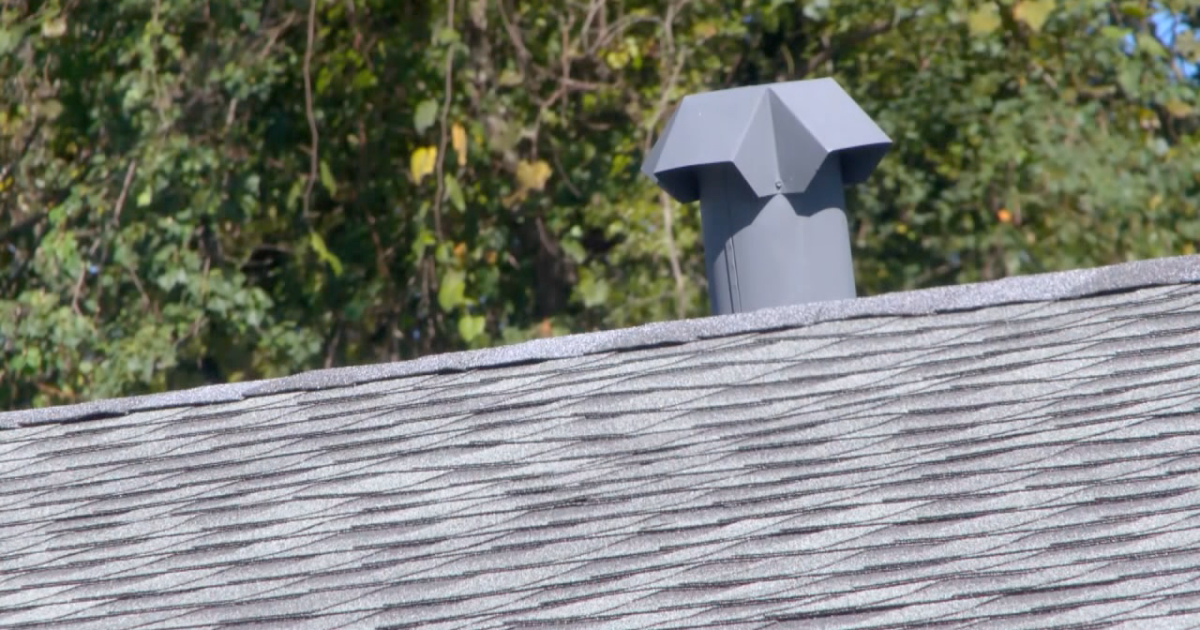
Louisiana Fortify Homes Program opens registration for $80 million roof grant initiative

