West
Trump Cabinet alum Ryan Zinke joins mass exodus of lawmakers leaving Congress
NEWYou can now listen to Fox News articles!
Another House Republican has announced he is retiring from Congress at the end of this year, adding to the mass exodus of lawmakers heading for the exit halfway through President Donald Trump’s second term.
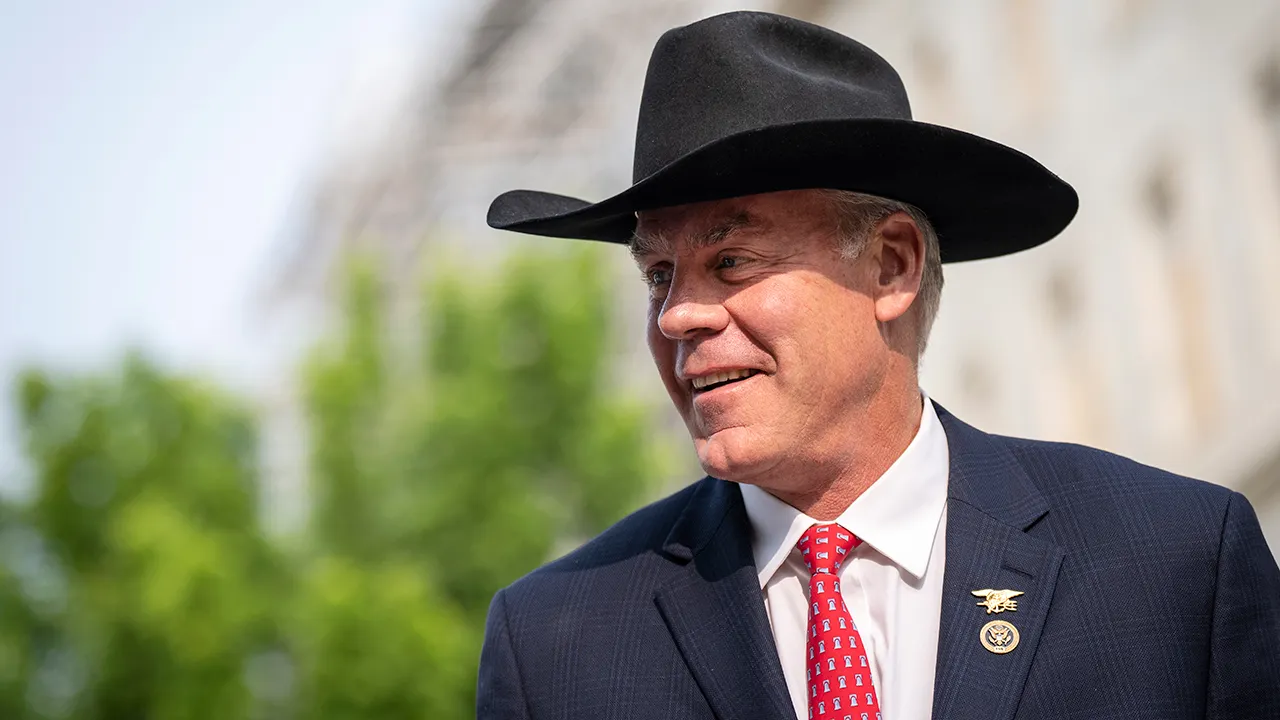
Rep. Ryan Zinke, R-Mont., who won his seat in Montana’s 1st congressional district in November 2022, served as Secretary of the Interior during Trump’s first White House stint.
He served as Montana’s only member of the House from 2015 to 2017 before redistricting added a second seat to its delegation.
Zinke is the 35th House Republican elected in 2024 not running for another term in the 2026 midterms. Another House GOP lawmaker re-elected in 2024, the late Rep. Doug LaMalfa, R-Calif., died in office earlier this year.
Rep. Ryan Zinke, R-Mont., arrives to a caucus meeting with House Republicans on Capitol Hill, May 10, 2023. (Drew Angerer/Getty Images)
On the Democratic side, 23 House lawmakers are not running for re-election.
Many of those members are running for another office. But some, including those who left before the end of their terms, like former Reps. Marjorie Taylor Greene, R-Ga., and Mark Green, R-Tenn., have not made any further public plans in politics.
Zinke had a decades-long career in the U.S. Navy before coming to Congress, achieving the rank of commander before retiring in 2008.
FLORIDA REPUBLICAN REP NEAL DUNN ANNOUNCES RETIREMENT FROM CONGRESS AFTER FIVE TERMS
He cited medical reasons for his decision not to run again in November, according to a letter shared on X.
Zinke cited medical reasons for his decision to retire. (Tom Williams/CQ Roll Call, Inc. via Getty Images)
“While my belief in term limits for elected office is a consideration, I have quietly undergone multiple surgeries since I returned to Congress and unfortunately face several more immediately after leaving office,” Zinke said in his statement.
“The injuries sustained from a career in Special Operations are not immediately life-threatening, but the repair cannot be deferred any longer and recovery will require considerable time with my wife Lola and my family. My judgment and experience tell me it is better for Montana and America to have full-time representation in Congress than run the risk of uncertain absence and missed votes.”
He said serving Montana in his various military and political roles has been the “highest honor.”
JOHNSON WARNS HOUSE REPUBLICANS TO ‘STAY HEALTHY’ AS GOP MAJORITY SHRINKS TO THE EDGE
President Donald Trump and first lady Melania Trump walk out of the White House to travel to the U.S. Capitol where he delivered the State of the Union address to a joint session of Congress in the House chamber in Washington, Feb. 24, 2026. (Manuel Balce Ceneta/AP Photo)
Rep. Troy Downing, R-Mont., also confirmed Zinke’s retirement in his own statement shared with media.
CLICK HERE TO DOWNLOAD THE FOX NEWS APP
“For over 30 years, Commander Zinke has served his country with integrity, responsibility, and honor,” Downing said. “It has been the privilege of a lifetime to serve alongside Ryan while fighting for Montanans in Washington—from protecting our public lands to supporting our farmers and ranchers.”
The nonpartisan Cook Political Report rates Zinke’s seat R+5, meaning it’s likely to stay in Republican hands but within striking distance for Democrats hoping to flip the district this year.
Read the full article from Here
New Mexico
Record heat, drought prompts early statewide fire restrictions – New Mexico Political Report
Hot dry summer calls for fire caution:
Those whose outdoor plans include fires will need to review updated rules to stay in compliance with state law. The New Mexico Forestry Division is enacting statewide fire restrictions in an effort to reduce the risk of wildfire starts.
The new restrictions taking effect today, April 6, apply to all “non-federal, non-Tribal and non-municipal lands in New Mexico”:
Prohibited:
- Flaring of gas related to oil and gas production
- Smoking
- Fireworks
- Campfires
- Prescribed, open, agricultural and/or debris burning
The agency cited unseasonably hot weather and dry fuel conditions in its announcement Monday morning. Erin Taylor, acting secretary of the New Mexico Energy, Minerals, and Natural Resources Department, said nine of 10 wildfires in the state are caused by humans, and therefore can be prevented.
“Fire restrictions are about individual actions that protect our communities as a whole,” Taylor said in a news release. “We’re asking that every resident and every visitor take extra precautions during a particularly risky wildfire season.”
The National Weather Service’s seasonal outlook shows persistent drought for most of New Mexico through June. The release states that the annual monsoon season is expected to arrive on time in July, potentially bringing above-average precipitation.
These restrictions will remain in place until rescinded. Exceptions are allowed for certain prohibited actions in specific cases or when specific conditions are met, the release states, and the state forester may allow additional exceptions upon receiving a written request.
“If monsoon rains are productive, the state could see these restrictions lifted,” the release states. “However, high temperatures are predicted to persist, and high fuel loads will continue to pose a risk across the state.”
Related
Oregon
Oregon DOJ probe into sanctuary law compliance at Salem courthouse faces legal hurdles – Salem Reporter
A high-profile late March arrest by federal immigration agents at a courthouse in Marion County appears to have violated the state’s sanctuary law, but it’s unclear whether an inquiry into the incident from the Oregon Department of Justice will result in any significant action.
The review from state attorneys came in response to federal immigration agents at Salem’s Marion County Circuit Court receiving some assistance from local authorities during two arrests on March 26. Video depicting those arrests shows one instance of a member of the sheriff’s office walking around federal agents pushing a man to the ground inside the courthouse.
“The Oregon Department of Justice’s Civil Rights Unit received a report about federal immigration officials entering the Marion County Courthouse,” Jenny Hansson, a spokesperson for the Oregon Department of Justice, said in a statement Monday. “The CRU contacted the sheriff’s office regarding the incident and were advised that ICE agents presented a judicial warrant for a specific individual.”
But although one of the arrests in Salem involved a man for whom federal agents obtained a judicial warrant, federal immigration authorities relied on an administrative warrant to arrest one man shown in the video. The difference between judicial warrants, signed by judges, and administrative warrants, signed by immigration officers, is key in Oregon’s longstanding sanctuary law. Guidelines from Oregon Chief Justice Meagan Flynn in summer 2025 also echo the state’s 2021 sanctuary law and prohibit “civil arrests in or around court facilities without a judicial warrant or judicial order.”
The sanctuary law, first passed in the 1980s and expanded in 2021, prohibits using state and local law enforcement resources to assist with immigration enforcement without a judicial warrant.
Oregon law doesn’t permit local or state law enforcement to assist with immigration arrests through administrative warrants. A federal judge in February dismissed a lawsuit from Marion County officials claiming that the law forced local governments to decide between conflicting state and federal laws.
Hansson said she wasn’t able to respond to follow-up questions about the administrative arrest by Monday.
“This is all we can really say at this time,” she wrote.
There have been few publicly reported instances of immigration enforcement at Oregon courthouses, such as a July arrest by federal immigration agents outside Washington County Circuit Court. While the Trump administration argues that such arrests are necessary to allow agents to conduct safe operations, critics say the approach discourages witnesses, crime victims and survivors from participating in the legal system.
While the Marion County Sheriff’s Office directly assisted in apprehending the individual with the judicial warrant, they took a more hands-off approach for the administrative warrant.
A statement from the local law enforcement agency said that its officers escorted federal agents “through publicly accessible areas as they removed the disorderly arrestee from the courthouse to ensure there were no further disruptions to court operations.” A witness who spoke to the Salem Reporter, however, said they did not see the man “visibly resisting.”
Oregon lawmakers didn’t take up legislation during this year’s legislative session to further restrict civil arrests under immigration law at courthouses, deferring to existing state law that allows people to file civil suits against public agencies in the state which violate the sanctuary provisions.
California passed a law during the first iteration of the Trump administration to empower arrested individuals to seek a writ of habeas corpus. That would allow a detainee to appear in person in front of a judge to determine whether their detention was justified.
A federal judge in November dismissed a lawsuit from the Trump administration challenging a New York law largely banning immigration-related courthouse arrests, though the case has since been appealed.
State lawmaker supports thorough investigation
The Marion County Sheriff’s Office has maintained that its operations were conducted in accordance with state and federal law. An agency spokesperson did not immediately respond to questions from the Capital Chronicle on Monday.
But following the March 26 arrest with the administrative warrant, the state’s Department of Justice told The Oregonian/OregonLive that it was reviewing the incident “to determine whether legal action is warranted.”
It’s unclear what exactly could come from that inquiry. Although the case could be investigated for concerns of excessive force, the justice department’s own guidance suggests that enforcement of the sanctuary law rests upon individual Oregonians.
“Oregon DOJ can intervene in a non-punitive way with agencies subject to the law to improve compliance with sanctuary laws,” the civil rights unit’s sanctuary promise community toolkit reads. “The Oregon DOJ report can be subpoenaed for use if a community member or any person files for injunctive relief or otherwise pursues civil legal action/remedies against a violating agency.”
The only successful legal challenge brought under Oregon’s sanctuary laws since 2021 involved a lawsuit backed by the nonprofit Cottage Grove-based Rural Organizing Project. The organization helped win a court order in 2024 barring the city and its police from collaborating with federal immigration authorities to enforce immigration law.
But even if a report found that the Marion County Sheriff’s Office violated the state’s sanctuary law, it’s not guaranteed that the agency could be required to face sanctions from state court. The office hasn’t named the man whom federal immigration agents arrested, though they’ve said that he was facing charges of unlawful possession of cocaine and driving under the influence of intoxicants.
Tung Yin, a professor of law at Portland’s Lewis & Clark Law School, questioned how enforcement of the sanctuary law would work for a person who was arrested and eventually deported. He said that they “probably would not have a claim under state law.”
“I highly doubt any public interest organizations would be able to sue on behalf of a removed person, even if there were a claim against federal officials,” Yin wrote in an email. “Standing in Oregon courts isn’t as stringent as in federal courts, but a generalized interest on behalf of the community probably won’t work.”
Rep. Willy Chotzen, a Portland Democrat who serves as vice chair of the House Judiciary Committee, helped oversee the passage of immigrant rights bills attempting to restrict the conduct of federal agents in Oregon during this year’s short legislative session. He said he supports having a full investigation into the incident, adding that the video “shows something that is very alarming, and something that certainly looks like it would be a violation of our sanctuary laws.”
“We either need, as a state, to enforce the sanctuary laws or the individuals who are impacted and harmed, they need to have access to a lawyer,” he told the Capital Chronicle. “They need to have access to the court system in ways that I think we’re seeing the Trump administration actively trying to prevent people from having such access.”
An unnamed spokesperson for the Homeland Security Department didn’t answer questions about the administrative arrest and instead responded to an inquiry with information about the criminal charges facing the man they had arrested with a judicial warrant. The spokesperson criticized elected officials who decline to cooperate with federal immigration authorities, saying they “are wasting law enforcement time, energy, and resources, while putting their own constituents in danger.”
Oregon Capital Chronicle is part of States Newsroom, a network of news bureaus supported by grants and a coalition of donors as a 501c(3) public charity. Oregon Capital Chronicle maintains editorial independence. Contact Editor Julia Shumway for questions: [email protected]. Follow Oregon Capital Chronicle on Facebook and Twitter.
STORY TIP OR IDEA? Send an email to Salem Reporter’s news team: [email protected].
Shaanth Kodialam Nanguneri is a reporter based in Salem, Oregon covering Gov. Tina Kotek and the Oregon Legislature. He grew up in the Bay Area, California and went on to study at UCLA, reporting for the Daily Bruin until graduating in March 2025. Previously, he was a reporting intern covering criminal justice and health for CalMatters in Sacramento, California. He is always eager to tell stories that illuminate how complex and intricate policies from state government can help shape the lives of everyday Oregonians.
Utah
Drought relief offered as Utah farmers brace for one of the worst years on record
GUNNISON, Utah — As drought conditions across the state worsen, with many in central Utah already feeling the impact, state leaders are preparing to offer relief to farmers. The Utah Department of Agriculture claims help is on the way for what’s expected to be one of the toughest growing seasons in years.
Longtime central Utah farmer Allen Dyreng says this year stands out.
“I’ve seen years close to this, but not this bad. This is the worst year,” Dyreng said.
Dyreng pointed to dramatically low reservoir levels in Gunnison, where water supplies are far below normal.
“Right now, our reservoirs are at 7% of capacity. We have 1,800 acre-feet of water in storage, and we usually have 23,000,” he said. “They’ll likely be emptied by the first of June.”
The situation marks a sharp contrast from just a few years ago.
In 2021, the Gunnison Reservoir ran completely dry. By 2023, improved runoff briefly brought some relief, with water levels partially recovering. But now, conditions have reversed again.
Cox won’t rule out drought declaration if Utah’s water woes intensify:
Drought declaration not ruled out if Utah’s water woes intensify, Cox says
Dyreng is now retired but was president of Gunnison Irrigation Company for about 20 years and farmed land for nearly five decades that had been in his family for generations. He said the lack of water will significantly reduce how much land farmers can use this season.
“We normally are able to grow crops on 14,000 acres,” Dyrent explained. “We would be lucky this year to have crops on 5,000 acres.”
The state is working to prevent long-term damage to Utah’s agricultural industry.
“Water is their lifeblood,” said Kelly Pehrson, commissioner of the Utah Department of Agriculture. “We don’t want to lose farms in Utah.”
Utah is expecting an emergency disaster declaration that would open the door to low-interest loans and additional support programs, including grazing improvement and water optimization grants.
“We’ve got to figure out a way to bring hope back to them,” Pehrson said. “This is going to be a tough year. No doubt about it.”
Drought conditions continue to intensify across the region. According to the U.S. Drought Monitor, much of Utah is now experiencing extreme to exceptional drought, with conditions worsening in just the past week.
For farmers, the impact goes far beyond inconvenience.
“I think this year we will deliver the least amount of water on record,” Dyreng said. “It cuts pretty deep into every aspect of the economy down here.”
State leaders say they plan to meet directly with farmers in communities across Utah later this month to better understand the needs and connect them with available resources.
More information can be found at ag.utah.gov.
-
Atlanta, GA2 days ago1 teenage girl killed, another injured in shooting at Piedmont Park, police say
-
South-Carolina1 week agoSouth Carolina vs TCU predictions for Elite Eight game in March Madness
-
Vermont1 week ago
Skier dies after fall at Sugarbush Resort
-
Movie Reviews5 days agoVaazha 2 first half review: Hashir anchors a lively, chaos-filled teen tale
-
Politics1 week agoTrump’s Ballroom Design Has Barely Been Scrutinized
-
Atlanta, GA1 week agoFetishist ‘No Kings’ protester in mask drags ‘Trump’ and ‘JD Vance’ behind her wheelchair
-
Entertainment5 days agoInside Ye’s first comeback show at SoFi Stadium
-
Politics1 week agoJD Vance says he was ‘obsessed’ with UFOs, believes aliens are actually ‘demons’