Connecticut
Pedestrian killed after being struck by Amtrak train
An investigation is ongoing in Stonington after a person was fatally struck by an Amtrak train Saturday morning, according to Stonington police.
Police were notified around 11:25 a.m. by Amtrak police that a pedestrian was struck by a train between the Route 1 overpass and the Prospect Street and Palmer Street railroad crossing.
When crews arrived, they pronounced the victim dead at the scene.
The train involved is stopped while Amtrak police conduct their investigation and ask the public to avoid the area at this time.
Authorities say there is no threat to the public.
No further details were released.

Connecticut
27 Wrestlers Named State Open Wrestling Champions In Connecticut Over Weekend; Xavier Dominates Tournament
Over the weekend, the two-day CIAC State Open wrestling championships took place at the Floyd Little Athletic Center in New Haven, Connecticut.
Twenty-seven wrestlers (14 boys, 13 girls) were named champions in their respective weight classes, displaying intense wrestling featuring the best wrestlers across the state.
Championship bouts started around 4:15 p.m. on Saturday and lasted about two hours.
Below are the results from both the boys’ and girls’ state open championships.
106 lbs.: Xavier’s Josh Perez def. Stafford’s John Bean 17-2 (technical fall)
113 lbs.: Ridgefield’s Cole Desiano def. Suffield/Windsor Locks’ Peter Annis 8-0 (decision)
120 lbs.: Xavier’s Zack Dixon def. Somers’ Will Acorsi 12-0 (majority decision)
126 lbs.: Windham’s Delmazio Despard def. Xavier’s Alexander Depratti 4-3 (decision)
132 lbs.: Fairfield Warde’s Jude Grammatico def. Xavier’s Zaphyr Musshorn 2-1 (decision)
138 lbs.: Ledyard’s Lukas Boxley def. Terryville’s Ethan Bochman Rodriguez (pin)
144 lbs.: Xavier’s Braylon Gonzalez def. Ridgefield’s John Carrozza 3-1 (decision)
150 lbs.: Bristol Central’s Alex Lamarre def. Middletown’s Isaiah McDaniel 1-0 (decision)
157 lbs.: Newtown’s Antonio Arguello def. Notre Dame-West Haven’s Riley Storozuk 8-4 (decision)
165 lbs.: Gilbert/Torrington/Wolcott def. Trumbull’s Hubert Szymko 2-0 (decision)
175 lbs.: Xavier’s Vincent Rivera def. Fairfield Prep’s Jack Lilly 14-10 (decision)
190 lbs.: Xavier’s Chase Catalano def. Fairfield Warde’s Dylan O’Brien 2-1 (decision)
215 lbs.: Lyme-Old Lyme’s Taiyo Gemme def. Staples’ Julian Rousseau (pin)
285 lbs.: Shelton’s Chase Galke def. Ellington’s Jacob Palermo 3-0 (decision)
100 lbs.: South Windsor’s Sophia Gordon def. West Haven’s Isha Khanna (pin)
107 lbs.: RHAM’s Brooke Heffernan def. New Milford’s Clara Reynolds 9-2 (decision)
114 lbs.: Branford’s Ava Gambardella def. Jonathan Law’s Selena Batres 6-0 (decision)
120 lbs.: Trumbull’s Jillian Blake def. Fairfield Warde’s Monica Flores Romero 17-1 (technical fall)
126 lbs.: Ellis Tech’s Adelina Tate def. Fairfield Ludlowe’s Ashlynn Cummings (pin)
132 lbs: Amity’s Eliana Selaris def. Daniel Hand’s Evely Lavigne (pin)
138 lbs.: Stratford’s Winner Tshibombi def. Greenwich’s Gaby Aliaga 22-8 (majority decision)
145 lbs.: Stratford’s Gabriella Kiely def. New Milford’s Josephina Piel (pin)
152 lbs: Bunnell’s Matilda Tote def. Shelton’s Ella Piccirillo (pin)
165 lbs: Trumbull ‘s Marangelie Teixeira def. New Britain’s Kaydence Atkinson (pin)
185 lbs.: Platt’s Kayli Morris def. Bristol Central’s Shyann Bryan (pin)
235 lbs.: Norwalk’s Jeily Euceda def. Maloney’s Arianna Bellamy (pin)
Xavier High School (Middletown, CT) has been the most dominant wrestling program in the state in recent memory. Once again, they stole the show in the state opens, winning its fifth-straight state open title.
The Falcons had seven wrestlers compete out of the 14 state open titles in the boys’ division and had five winners with two runner-ups. As a team, they totaled 218.5 points, which was 72 more points than any other team.
Connecticut
Man shot, critically injured by police in Hartford; mayor says there will be a ‘full review’
Skip to content
Contact Us
Connecticut
Connecticut moves to crack down on bottle redemption fraud
It’s a scheme made famous by a nearly 30-year-old episode of the sitcom Seinfeld.
Hoping to earn a quick buck, two characters load a mail truck full of soda bottles and beer cans purchased with a redeemable 5-cent deposit in New York, before traveling to Michigan, where they can be recycled for 10 cents apiece. With few thousand cans, they calculate, the trip will earn a decent profit. In the end, the plan fell apart.
But after Connecticut raised the value of its own bottle deposits to 10 cents in 2024, officials say, they were caught off guard by a flood of such fraudulent returns coming in from out of state. Redemption rates have reached 97%, and some beverage distributors have reported millions of dollars in losses as a result of having to pay out for excess returns of their products.
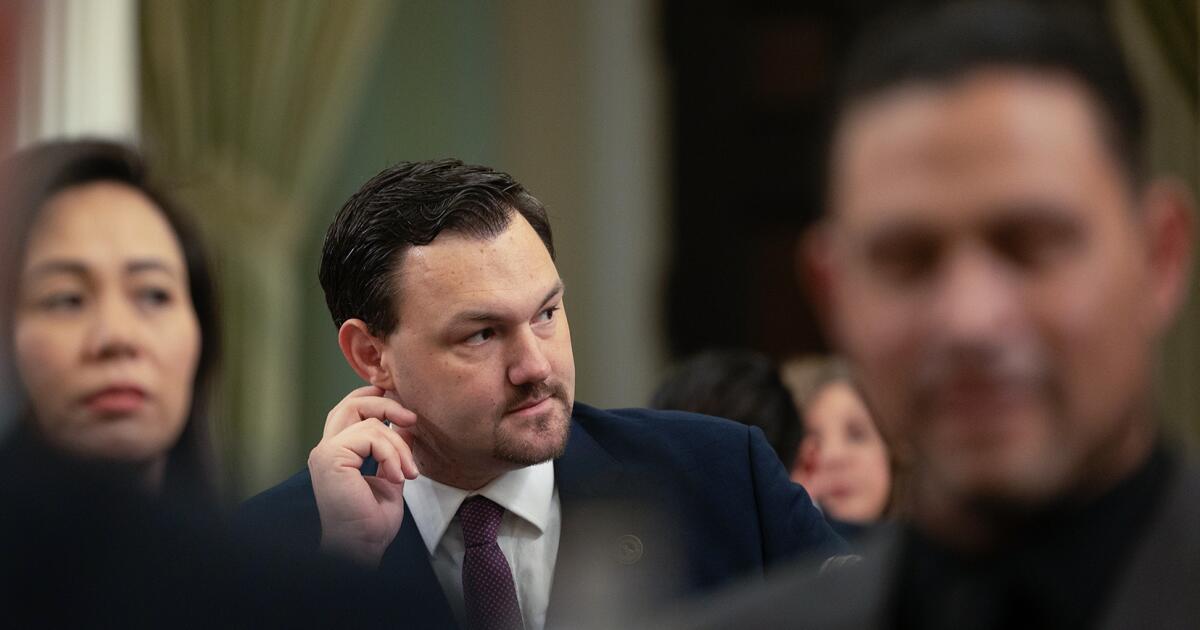
On Thursday, state lawmakers passed an emergency bill to crack down on illegal returns by increasing fines, requiring redemption centers to keep track of bulk drop-offs and allowing local police to go after out-of-state violators.
“I’m heartbroken,” said House Speaker Matt Ritter, D-Hartford, who supported the effort to increase deposits to 10 cents and expand the number of items eligible for redemption. “I spent a lot of political capital to get the bottle bill passed in 2021, and never in a million years did I think that New York, New Jersey and Rhode Island residents would return so many bottles.”
The legislation, Senate Bill 299, would increase fines for violating the bottle bill law from $50 to $500 on a first offense. For third and subsequent offenses, the penalty would increase from $250 to $2,000 and misdemeanor punishable by up to one year in prison.
In addition, it requires redemption centers to be licensed by the state’s Department of Energy and Environmental Protection (previously, those businesses were only required to register with DEEP). As a condition of their license, redemption centers must keep records of anyone seeking to redeem more than 1,000 bottles and cans in a single day.
Anyone not affiliated with a qualified nonprofit would be prohibited from redeeming more than 4,000 bottles a day, down from the previous limit of 5,000.
The bill also seeks to pressure some larger redemption centers into adopting automated scanning technologies, such as reverse vending machines, by temporarily lowering the handling fee that is paid on each beverage container processed by those centers.
The bill easily passed the Senate on Wednesday and the House on Thursday on its way to Gov. Ned Lamont.
While the bill drew bipartisan support, Republicans described it as a temporary fix to a growing problem.
House Minority Leader Vincent Candelora, R-North Branford, called the switch to 10-cent deposits an “unmitigated disaster” and said he believed out-of-state redemption centers were offloading much of their inventory within Connecticut.
“The sheer quantity that is being redeemed in the state of Connecticut, this isn’t two people putting cans into a post office truck,” Candelora said. “This is far more organized than that.”
The impact of those excess returns is felt mostly by the state’s wholesale beverage distributors, who initiate the redemption process by collecting an additional 10 cents on every eligible bottle and can they sell to supermarkets, liquor stores and other retailers within Connecticut. The distributors are required to pay that money back — plus a handling fee — once the containers are returned to the store or a redemption center.
According to the state’s Department of Revenue Services, nearly 12% of wholesalers reported having to pay out more redemptions than they collected in deposits in 2025. Those losses totaled $11.3 million.
Peter Gallo, the vice president of Star Distributors in West Haven, said his company’s losses alone have totaled more than $2 million since the increase on deposits went into effect two years ago. As time goes on, he said, the deficit has only grown.
“We’re hoping we can get something fixed here, because it’s a tough pill to be holding on to debt that we should get paid for,” Gallo said.
Still, officials say they have no way of tracking precisely how many of the roughly 2 billion containers that were redeemed in the state last year were illegally brought in from other states. That’s because most products lack any kind of identifiable marking indicating where they were sold.
“There’s no way to tell right now. That’s one of the core issues here,” said state Rep. John-Michael Parker, D-Madison, who co-chairs the legislature’s Environment Committee.
Parker said the issue could be solved if product labels were printed with a specific barcode or other feature that would be unique to Connecticut. Such a solution, for now, has faced technological challenges and pushback from the beverage industry, he said.
Not everyone involved in the handling, sorting and redemption of bottles is happy about the upcoming changes — or the process by which they were approved.
Francis Bartolomeo, the owner of a Fran’s Cans and Bart’s Bottles in Watertown, said he was only made aware of the legislation on Monday from a fellow redemption center owner. Since then, he said, he’s been contacting his legislators to oppose the bill and was frustrated by the lack of a public hearing.
“I know other people are as flabbergasted as I am because they don’t know where it comes out of,” Bartolomeo said “It’s a one sided affair, really.”
Bartolomeo said one of his biggest concerns with the bill is the $2,500 annual licensing fee that it would place on redemption centers. While he agreed that out-of-state redemptions are a problem, he said it should be up to the state to improve enforcement.
“We’re cleaning up the mess, and we’re going to end up being penalized,” Bartolomeo said. “Get rid of it and go back to 5 cents if it’s that big of a hindrance, but don’t penalize the redemption centers for what you imposed.”
Lynn Little of New Milford Redemption Center supports the increased penalties but believes the solution ultimately lies with better labeling by the distributors. She is also frustrated by the volume caps after the state initially gave grants to residents looking to open their own bottle redemption businesses.
“They’re taking a volume business, because any business where you make 3 cents per unit (the average handling fee) is a volume business, and limiting the volume we can take in, you’re crushing small businesses,” Little said.
Ritter said that he opposed a move back to the 5-cent deposit, which he noted was increased to encourage recycling. However, he said the current situation has become politically untenable and puts the state at risk of a lawsuit from distributors.
“We’re getting to a point where we’re going to lose the bottle bill,” Ritter said. “If we got sued in court, I think we’d lose.”
-
World4 days agoExclusive: DeepSeek withholds latest AI model from US chipmakers including Nvidia, sources say
-
Massachusetts4 days agoMother and daughter injured in Taunton house explosion
-
Montana1 week ago2026 MHSA Montana Wrestling State Championship Brackets And Results – FloWrestling
-
Denver, CO4 days ago10 acres charred, 5 injured in Thornton grass fire, evacuation orders lifted
-
Louisiana6 days agoWildfire near Gum Swamp Road in Livingston Parish now under control; more than 200 acres burned
-
Technology1 week agoYouTube TV billing scam emails are hitting inboxes
-
Technology1 week agoStellantis is in a crisis of its own making
-
Politics1 week agoOpenAI didn’t contact police despite employees flagging mass shooter’s concerning chatbot interactions: REPORT