


Silo is such a complicated show that even its showrunner gets confused sometimes. While filming the final seasons of the Apple TV sci-fi thriller, Graham Yost remembers two instances where he messed up details: once it was an actor who realized that a conversation they were about to shoot should’ve already taken place, the other involved the Japanese localization team pointing out that a subtitle didn’t match what was going on onscreen. In both instances, the problem was ultimately fixed, but Yost’s reaction was the same: “Oh shit, you’re right.”
Technology
Trump’s science and tech man lays out White House’s global AI strategy


NEWYou can now listen to Fox News articles!
U.S. policy is often reported through announcements, personalities and regulatory skirmishes. Far less attention is paid to the economic mechanisms that actually move structures and determine outcomes.
To understand how the White House is organizing a multipronged strategy for AI adoption and export, and how its pieces are meant to work together in practice, I had an exclusive sit down with Michael Kratsios, assistant to the president and director of the White House Office of Science and Technology Policy.
Tanvi Ratna: The fundamental issue you speak about at the summit is the widening AI adoption gap between the developed and developing world. What makes that a concern for the White House right now?
Michael Kratsios: The divergence in AI adoption between developed and developing countries is growing every day. We see the world in two broad categories, and different tools are needed for each.
Developing countries are at risk of falling behind at a fundamental inflection point. That is why we urge them to prioritize AI adoption in sectors that deliver concrete benefits: healthcare, education, energy infrastructure, agriculture, and citizen-facing government services.
Michael Kratsios testifies before the Senate Commerce, Science, and Transportation Committee’s Subcommittee on Science, Manufacturing, and Competitiveness on Capitol Hill on Sept. 10, 2025. (Chip Somodevilla/Getty)
For too long, countries seeking development support faced a false choice. We believe the American AI Exports Program offers a different path: trusted best-in-class technology, financing to overcome adoption barriers, and deployment support, so governments can learn how and where to use these tools.
America remains the undisputed leader in AI, from GPUs to data centers to frontier models and applications. That leadership brings with it a responsibility to share the foundations of a new era of innovation. We stand ready to work with partners around the world so creativity, freedom and prosperity shape today’s technological revolution.
STATE-LEVEL AI RULES SURVIVE — FOR NOW — AS SENATE SINKS MORATORIUM DESPITE WHITE HOUSE PRESSURE
Tanvi Ratna: A lot of governments say they want AI leadership. Your delegation came in talking about real AI sovereignty, rejecting global governance, and launching an export program with multiple prongs. What is fundamentally different about this approach, and how should countries understand the system you’re building?
Michael Kratsios: The hope of the United States is that the pursuit of real AI sovereignty, the adoption and deployment of sovereign infrastructure, sovereign data, sovereign models and sovereign policies within national borders and under national control, will become an occasion for bilateral diplomacy, international development, and global economic dynamism. The American AI Exports Program exists to make that happen.
Real AI sovereignty means owning and using best-in-class technology for the benefit of your people, and charting your national destiny in the midst of global transformations. We urge nations to focus on strategic autonomy alongside rapid AI adoption rather than aiming for full self-sufficiency. AI adoption cannot lead to a brighter future if it is subject to bureaucracies and centralized control.
PALANTIR’S SHYAM SANKAR: US MUST USE AI AS ‘SLINGSHOT’ AGAINST CHINA OR FACE ECONOMIC DEFEAT
We deeply believe that the best pathway for the developing world to fully realize the untold benefits of AI is through the adoption of the American AI stack. The American AI stack has the best chips, the best models and the best applications in the world, and that is what countries ultimately need to deploy AI effectively.
Tanvi Ratna: When you say the American AI stack, are you talking about selling products, or shaping the foundation on which countries build while keeping sensitive data under national control?
Michael Kratsios: Working with the American AI stack allows nations to build on the best technologies in the world while keeping sensitive data within their borders. Independent partners are critical to unlocking the prosperity AI adoption can deliver. That is why the president launched the American AI Exports Program.
TRUMP ADMINISTRATION’S TOP ‘SCIENTIFIC PRIORITY IS AI,’ ENERGY SECRETARY SAYS
American companies can build large, independent AI infrastructure with secure and robust supply chains that minimize backdoor risk. They build it, and it belongs to the country deploying it.
Michael Kratsios, assistant to the president and director of the White House Office of Science and Technology Policy, speaks at the India AI Impact Summit in New Delhi on Feb. 21, 2026.
Tanvi Ratna: If this is an adoption strategy, then cost and complexity become the bottlenecks. Your public remarks emphasize financing and deployment sophistication as the two biggest hurdles for developing countries. How are you actually removing those barriers?
Michael Kratsios: Developing countries face two major obstacles to AI adoption. One is financing. The AI stack is expensive. Through the energy and material demands of its infrastructure, it brings the digital transformation of our world back into physical reality. Data centers, semiconductors, power production all require real labor and real resources.
CHINA RACES AHEAD ON AI —TRUMP WARNS AMERICA CAN’T REGULATE ITSELF INTO DEFEAT
The second barrier is a deficit in the technical sophistication needed to deploy AI tools effectively. To address this, we announced a U.S. government-wide suite of support initiatives to facilitate global adoption of trusted AI systems, create a competitive and interoperable AI ecosystem, and advance the American AI Exports Program in both developed and developing partner nations.
Tanvi Ratna: Spell out that suite. What are the prongs, capital, integration, standards, execution, and which agencies are being activated?
Michael Kratsios: We unveiled a new set of initiatives across the federal government supporting the American AI Exports Program, which was launched by executive order last July.
TRUMP CALLS FOR FEDERAL AI STANDARDS, END TO STATE ‘PATCHWORK’ REGULATIONS ‘THREATENING’ ECONOMIC GROWTH
The first new initiative within it is the National Champions Initiative. It is designed to include the leading technology companies of partner countries directly into the American AI stack. We want the best technologies from all our partners and allies to be part of that ecosystem wherever the American AI stack goes.
The second is a full suite of financing and funding opportunities. We are mobilizing support through the U.S. International Development Finance Corporation, the Export Import Bank, the Millennium Challenge Corporation, the U.S. Trade and Development Agency, and a new World Bank fund, with additional programs launched by Treasury and other parts of the U.S. government. The message is simple: this is serious. Every possible financing avenue is being brought to bear.
The third is the creation of the U.S. Tech Corps. It is a reimagining of how the Peace Corps can make an impact in the modern era. We are seeking Americans with technical backgrounds who can help deploy American technology abroad, because there is no better tool to drive economic development, health improvements, and quality of life gains than AI.
WAR DEPARTMENT REFOCUSES ON AI, HYPERSONICS AND DIRECTED ENERGY IN MAJOR STRATEGY OVERHAUL
And finally, we believe one of the fastest ways to drive global adoption is through standards, particularly as the next wave of innovation centers on AI agents. How those agents communicate and coordinate their actions will benefit from unified standards, which is why NIST has launched a dedicated initiative.
Tanvi Ratna: The National Champions Initiative is easy to misunderstand. Critics hear American stack and assume dependency. Your framing suggests the opposite, integrating partner champions so countries do not have to choose between importing the stack and building domestic capability. Is that the point?
Michael Kratsios: Exactly. To integrate partner nation companies with the American AI stack and ensure that no country has to choose between completing the stack and developing domestic AI, we established the National Champions Initiative. Partners need the opportunity to build native technology industries, and facilitating that is a core part of the exports program.
TRUMP ADMIN WILL RECRUIT 1,000 TECHNOLOGISTS FOR ELITE ‘TECH FORCE’ TO MODERNIZE GOVERNMENT
Tanvi Ratna: You have also criticized previous U.S. approaches to AI diffusion for restricting partners. What did that get wrong strategically?
Michael Kratsios: The previous approach treated partners as second-tier actors with significant restrictions on access to advanced technology. That was a lose-lose AI diplomacy strategy. It cut off partners from the best technology and limited American companies from competing globally.
Under President Trump, the United States is rethinking how it advances international development and how technology can deliver lasting impact. We believe both developed and developing countries can build sovereign AI capability if given the chance.
FOX NEWS AI NEWSLETTER: TRUMP ACTIVATES ‘TECH FORCE’
Tanvi Ratna: Let’s talk about the Tech Corps, because it would be easy to dismiss it as a feel-good addition. In your model, it sounds like an execution layer. What would these teams actually do on the ground?
Michael Kratsios: These will be like Peace Corps volunteers, except the focus is on technology. We are looking for people with technical backgrounds who want to help implement AI solutions.
If a country wants to improve agriculture through precision farming, apply AI to healthcare systems to improve hospital efficiency, or modernize digital public services, American technologists through the Tech Corps and the Peace Corps will be able to support those efforts.
WE’RE ON OPPOSITE SIDES OF THE AISLE. BUT WE KNOW AMERICA MUST WIN THE AI RACE, OR ELSE
A lot of young people today care deeply about real-world impact. What is special about this moment is that the United States has incredible technology, the best chips, models, and applications, and we are being more deliberate about sharing it.
Tanvi Ratna: You put unusual emphasis on AI agents and interoperability. Why does the White House see standards as a strategic lever now?
Michael Kratsios: The next wave of AI innovation over the next year or two will center on agents. How those agents communicate and orchestrate their actions would benefit greatly from unified standards. NIST has launched an initiative to develop standards for agents, so these systems can interoperate securely and effectively.
IN 2026, ENERGY WAR’S NEW FRONT IS AI, AND US MUST WIN THAT BATTLE, API CHIEF SAYS
Tanvi Ratna: You also linked this export architecture to supply chains, from chips to data centers to power and minerals. Where does Pax Silica fit? Is it the hard backbone complement to the adoption layer?
Michael Kratsios: Pax Silica is a broader alliance focused on supply chain challenges that the United States and many partner nations have faced. It is a small, select group of countries working together to alleviate these challenges. India is a tremendous addition.
AI adoption depends on secure physical inputs. The AI stack is tangible: data centers, semiconductors, power generation. Pax Silica helps address those vulnerabilities while the exports program accelerates adoption. They are complementary.
TRUMP NATIONAL SECURITY BLUEPRINT DECLARES ‘ERA OF MASS MIGRATION IS OVER,’ TARGETS CHINA’S RISE
Tanvi Ratna: Since India hosted the summit and joined Pax Silica, what role do you see for India within this strategy?
Michael Kratsios: India is a technology powerhouse. It graduates an incredible number of engineers, has deep domestic talent, and is building strong products and applications. We look forward to working with them.
India has long been a strong partner in how the United States shares technology abroad. Our major hyperscalers have data centers and research operations here and employ large numbers of Indian engineers. We believe many Indian companies can ultimately become part of the American AI stack.
Tanvi Ratna: When critics frame this as being about China, you resist that characterization. How does the administration view competition?
CLICK HERE TO DOWNLOAD THE FOX NEWS APP
Michael Kratsios: We do not see this as being about any one competitor. This is about the fact that the United States has the best AI technology in the world, and many countries want it in their ecosystems. We are excited to share it and build mutually beneficial partnerships globally.
Related Article


Technology
Tesla driver faces manslaughter charges over Texas crash that killed a woman inside her home

On the video, I saw BUTLER’s Tesla continue to increase in speed, and saw the amount of pressure being applied to the accelerator pedal also increase in speed. In about six (6) seconds, the accelerator pedal was pressed all the way down to 100%, “pedal to the metal,” and the vehicle reached a speed of 73 miles per hour, more than double the speed limit on that residential street. The Tesla continued straight towards the middle of the cul-de-sac, struck the curb of the complainant’s driveway, and went airborne towards the front of the home… I noted that the brake pedal was never pressed in the final minute before the crash.”
Technology
Fox News AI Newsletter: American manufacturer says AI is creating jobs, not replacing them

NEWYou can now listen to Fox News articles!
Welcome to Fox News’ Artificial Intelligence newsletter with the latest AI technology advancements.
IN TODAY’S NEWSLETTER:
– One of America’s oldest manufacturers says AI is creating jobs — not replacing them
– A missing kitten rode under a car hood. AI brought her home
– Trump says Taiwan is doubling the size of chipmaking plant in Arizona
DOMESTIC OUTPUT: Before Henry Ford rolled out the Model T, before the Wright brothers took to the skies and before the Statue of Liberty welcomed millions to America’s shores, Corning was already charting a course of innovation that continues today.
A Corning employee handles optical fiber as part of the manufacturing process that supports broadband and telecommunications infrastructure. (Courtesy of Corning)
DIGITAL RESCUE: Ame thought Lucy might be hiding upstairs. The family’s kitten had missed dinner, which felt odd. Still, cats hide. They nap in strange places. Sometimes, they ignore everyone.
MANUFACTURING PUSH: President Donald Trump on Wednesday said that Taiwan is doubling the size of the chipmaking plants under construction in Arizona, adding that it could help the U.S. share of the chip market rise to 50% by the end of his term.
LICENSED TO AI: The Trump administration has lifted export restrictions on two of Anthropic’s latest artificial intelligence models after the company worked with the Commerce Department on a national security review, according to statements released Tuesday.
SHIFTING GEARS: Ford has rehired experienced human engineers to help address the shortcomings of artificial intelligence (AI) tools meant to tackle quality issues in the automaker’s production processes.
PULSE CHECK: A routine heart test may be hiding a warning sign that doctors have missed for years. That is the big takeaway from new UC Berkeley research published in Nature. Researchers trained an artificial intelligence model to study ECGs, also called EKGs, and look for patterns tied to sudden cardiac death.
For participants under 65, an increase in the pulse pressure-heart rate index was associated with a 76% higher risk of developing dementia. (iStock)
NEW ERA: A new report is pushing back on artificial intelligence “doomsday” fears, arguing the technology could unleash one of the biggest productivity booms in American history — unless Washington slows it down with premature regulation.
REIN IN GLOOM: A Nobel Prize-winning economist has warned that persistent predictions of artificial intelligence destroying the job market could become a self-fulfilling prophecy. Robert Shiller, who shared the 2013 Nobel Prize in economics for his work on asset prices, wrote a guest essay on Monday in The New York Times that argued the panic over AI is not a new sociological phenomenon.
RAMAGEDDON ARRIVES: Apple has started charging more for some of its products, and AI is one of the big reasons why. The increases apply to select iPads and MacBooks, along with HomePod speakers and Apple TV devices. Apple’s own store pages now show higher prices on several models than earlier launch materials listed. The iPhone was not included in this round, but analysts warn that may not last.
A customer holds a new iPhone during the first day of in-store sales of Apple’s latest products at Apple’s Fifth Avenue store in New York, on Friday, Sept. 19, 2025. (Kena Betancur/Bloomberg via Getty Images)
Subscribe now to get the Fox News Artificial Intelligence Newsletter in your inbox.
FOLLOW FOX NEWS ON SOCIAL MEDIA
YouTube
X
SIGN UP FOR OUR OTHER NEWSLETTERS
Fox News First
Fox News Opinion
Fox News Lifestyle
Fox News Health
DOWNLOAD OUR APPS
Fox News
FOX Business
Fox Weather
Fox Sports
Tubi
WATCH FOX NEWS ONLINE
Fox News Go
STREAM FOX NATION
Fox Nation
Stay up to date on the latest AI technology advancements and learn about the challenges and opportunities AI presents now and for the future with Fox News here.

Keeping everything straight is one of the big challenges of working on such a complex series, and as Silo enters into its final two seasons, the challenge has only increased. So it’s a good thing Yost has a team working alongside him looking for those mistakes. “It’s a lot to keep track of, but everyone is pitching in,” he says, “and I love this sense of collaboration.”
Season 3 of Silo starts streaming on July 3rd, and it expands the story’s scope quite a bit. The series follows the lives of the residents of a huge underground bunker hundreds of years in the future. The silo is home to 10,000 people who essentially live in a vertical city, one divided into layers that each have their own jobs and cultures, from the mines at the bottom to the government up top. The only way to navigate the silo is through a massive spiral staircase that goes from top to bottom, creating a very physical form of class division.
Initially it seemed the residents were the last remnants of humanity living in a postapocalyptic wasteland. But over the course of the first two seasons, it became clear that they lived in but one silo of many, each housing their own communities while isolated from the rest. Season 3 adds a new wrinkle: showing how the world came to be this way in the first place, a process that starts in a world that looks much like our own.
The season 3 premiere constantly jumps back and forth between the bleak future where we’ve spent the last two seasons and our present day, when the decisions were made that led to everyone being trapped inside of underground bunkers. Things are already complicated as the show picks up from last season — protagonist / silo mayor / reluctant revolutionary Juliette (Rebecca Ferguson) has just become the first person to venture between silos and is now suffering from memory loss — and the multiple timelines only ratchets that up.
“It’s a lot of pieces you’re trying to put together.”
The cast of Silo all have different techniques for dealing with this challenge, which becomes even harder given that scenes are rarely shot in chronological order. For some, daily team meetings with directors can be an invaluable tool. “A lot of days, we’d start the day with story time, and the director would go through where we’re at, where we just came from, what happens next,” explains Alexandria Riley, who plays newly promoted authority figure Camille Sims in the show. “It’s already a complicated story anyway, but then when shooting out of order, you do get a bit foggy.” Ferguson notes that the hair-and-makeup team can be particularly helpful in tracking the story, as they need to be on top of things like scars and burns to maintain consistency. Every detail counts. “The little changes that you do have enormous ripple effects going forward,” she says.
“It’s a lot of pieces you’re trying to put together,” adds Common, who plays Camille’s husband Robert on the show. “It is our job to know where we are, but thank god we had support, too. There are times when I’d have to talk to Alex about something just to be reminded.” The two actors even had separate rehearsals together to make sure they had everything down.
Others took a different approach. Jessica Henwick, for instance, joined the main cast as the present-day investigative reporter Helen in season 3, and says that “I didn’t read any scenes except my own. Because I’m a fan of the show, I wanted to preserve that experience. I will watch season 3 as a fan and see what happens. I don’t know what happens except in our storyline.” (Henwick is such a fan that, soon after she was cast, she had a single goal in mind: “I went to the set and explored the stairs.”)
Image: Apple
One thing that doesn’t help much, however, is delving into the source material. Silo is based on a trilogy of books by author Hugh Howey; the first two seasons explored the first book, while the final two will wrap up the rest of the story. But much has changed in the adaptation as the TV show attempts to both make Juliette a more visible figure in the central part of the story and update some of the plotlines to reflect present day concerns like AI.
“I started reading the books and realized very quickly that that wasn’t going to help, because the books are so different,” explains Ashley Zukerman, who plays a congressman in the present day storyline. He says that keeping both the novels and the TV show in his mind at the same time wouldn’t be helpful and instead found “that reading the whole scripts and then finding a way to forget [what his character wouldn’t know] was useful.”
With two seasons to go, Silo is racing toward a conclusion as it attempts to wrap everything up. Yost says that four seasons was always the plan, so the process has been figuring out how to fit everything into a set number of episodes. But since the final two seasons were filmed back to back, it also means that the Silo team are done having to worry about keeping all of those complicated plotlines straight. And as much as she says she’ll miss the experience of working on the show, there is one thing Ferguson is excited to be done with beyond memorizing storylines.
“I fucking hated running up and down those stairs,” she says.
Follow topics and authors from this story to see more like this in your personalized homepage feed and to receive email updates.
-

 Movie Reviews10 minutes ago
Film Review: “looky loo: PART II” – MediaMikes
-

 World13 minutes ago
US Resumes Dollar Transfers to Iraq, NYT Reports
-

 Health43 minutes ago
She Ate High-Protein Ice Cream Daily and Lost 193 Lbs—Her Keys to Success
-
 Lifestyle58 minutes ago
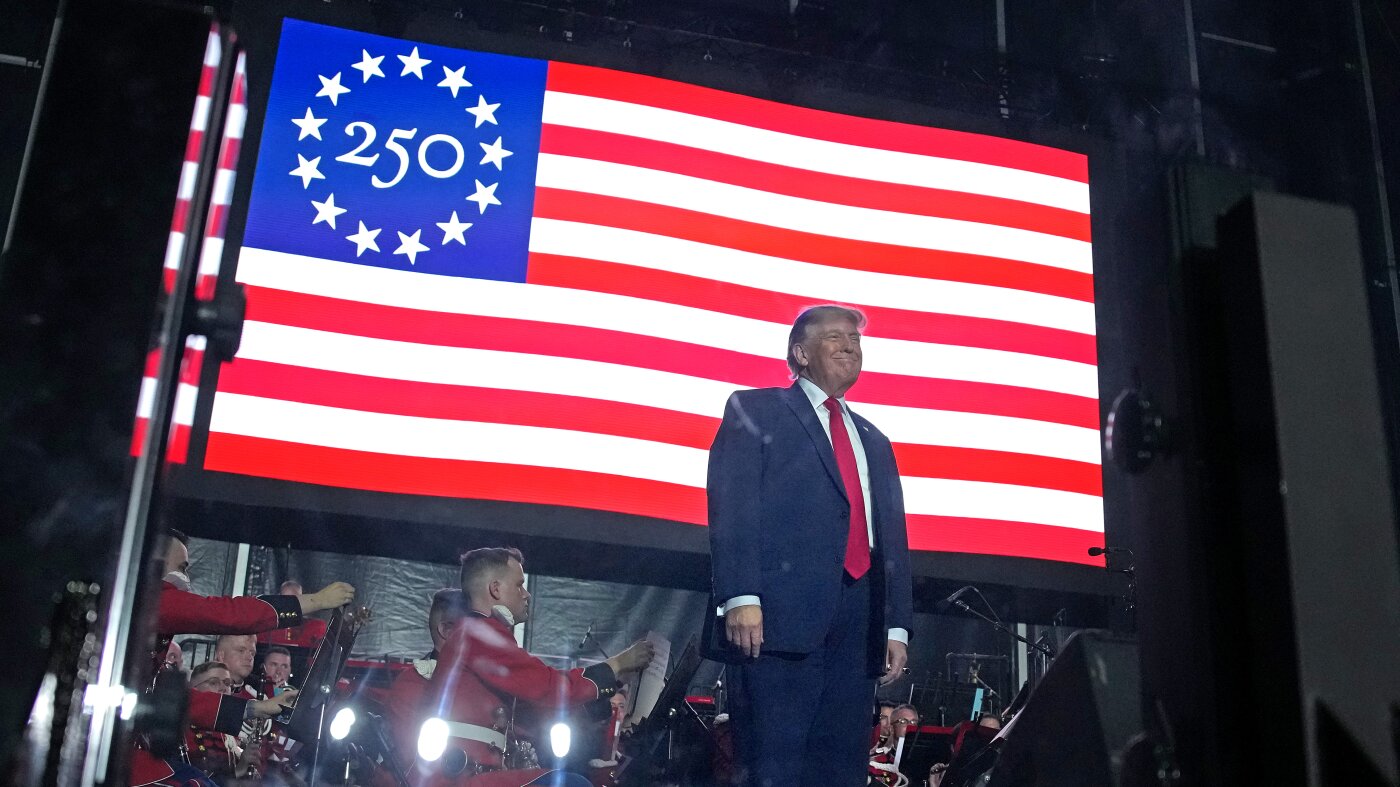
House Democrats accuse Trump of ‘hijacking’ America’s 250th birthday for his own gain
-

 Technology1 hour ago
Tesla driver faces manslaughter charges over Texas crash that killed a woman inside her home
-

 World1 hour ago
Six Kurdish fighters killed in IRGC ambush as clashes spread across western Iran
-

 Politics1 hour ago
Sanctuary county refused 615 ICE transfer requests, turned over just 11 illegal immigrants, records show
-

 Health1 hour ago
Mystery parasite leaves Americans battling ‘explosive’ illness as CDC investigates

