West
Labor Department deploys ‘strike team’ to California over $21B unemployment debt, fraud concerns

NEWYou can now listen to Fox News articles!
The Labor Department deployed a “strike team” to California to address federal findings of improper payments and alleged fraud within the state’s unemployment insurance (UI) program.
California has been found to have a depleted UI trust fund, along with $21 billion in borrowed federal funds to keep the system running, which federal officials say has led state employers to pay higher UI taxes to repay the debt.
In a statement, the department cited an 83-page California State Auditor report that determined the state’s UI system is high-risk in part due to “inadequate fraud prevention and claimant service [in its employment development department (EDD)], as well as a high rate of overturned eligibility decisions in its Unemployment Insurance Program.”
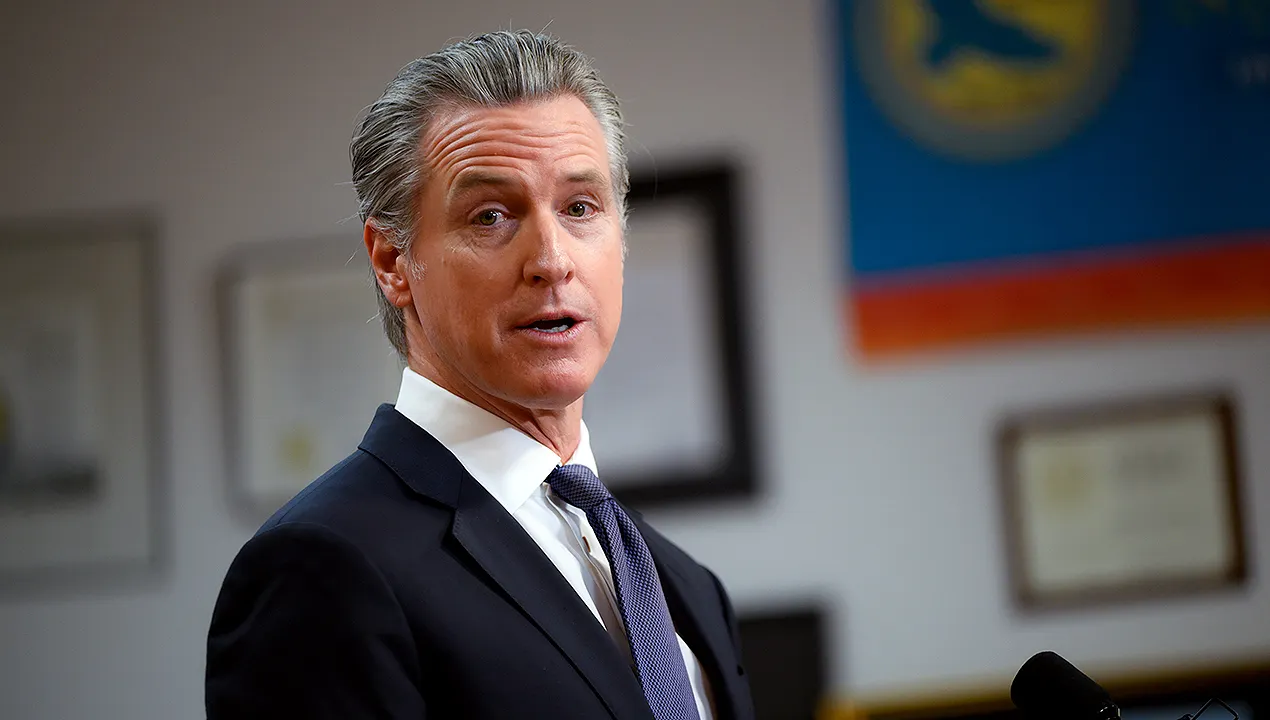
California Gov. Gavin Newsom (Tayfun Coskun/Getty Images)
“Financial issues and potential fraud in California’s unemployment insurance program will be fully examined. The previous administration turned a blind eye toward failing Labor programs. This ends now,” Labor Secretary Lori Chavez-DeRemer said.
“Immediately, we are engaging a specialized strike team to uncover any potential fraud or abuse and quickly moving to protect the American worker and taxpayers. I look forward to restoring the California UI program’s integrity and financial health.”
Chavez-DeRemer added that the “strike team” will include Labor Department specialists from both its national and regional offices.
The secretary also wrote a letter to the EDD, citing increasing improper payment rates, insufficient timeliness, data accuracy and quality concerns and questions about participants’ eligibility and the use of taxpayer funds.
California received about $290 billion in COVID relief, part of which helped what the California Post described as “rapidly implementing expanded unemployment benefits.”
FEDERAL PROSECUTOR CALLS NEWSOM ‘KING OF FRAUD’ AS TRUMP LAUNCHES CALIFORNIA CORRUPTION PROBE
Department of Labor Secretary Lori Chavez-DeRemer is cracking down on reported H-1B abuse. (Chip Somodevilla/Getty Images)
At least one California UI steward was convicted of using her position to file nearly $860,000 in fraudulent UI claims, while some civilians were convicted of creating nonexistent businesses to claim UI.
Before the strike team’s deployment, DOL Inspector General Anthony D’Esposito said he found nearly $1 billion in taxpayer funds “at risk” nationwide due to COVID-related UI fraud.
D’Esposito, a former NYPD officer and ex-congressman from Long Island, said in a statement that an analysis of 6.5 million prepaid debit cards used for COVID UI benefits still had $720 million loaded on them.
WALZ’S MINNESOTA MESS COULD SPARK THE TOUGHEST FRAUD REFORMS IN DECADES
“My office has warned that, absent swift action, U.S. taxpayers risk losing nearly a billion dollars in fraudulently obtained benefits,” D’Esposito said in a statement.
“This is taxpayer money, and it demands immediate attention.”
D’Esposito said fraud is not a victimless crime and that every misspent dollar is one that an actual needy family could use.
CLICK HERE TO DOWNLOAD THE FOX NEWS APP
Quality Learning Center in Minnesota was found to be at the center of an alleged childcare fraud scandal in the state. (Madelin Fuerste/Fox News)
“When we root out fraud, we protect taxpayers and lower the real cost of living,” he said.
Fox News Digital reached out to Newsom and the state Senate’s top Republican for comment.
Related Article

Read the full article from Here



MISSOULA — Four out of five members of Montana’s Public Service Commission were in a federal courtroom in Missoula Thursday morning, as the PSC’s former president challenges the disciplinary action taken against him earlier this year. Now, newly released documents are shedding more light on to what led up to this point.
(Watch the video for a closer look at the case.)
New documents shed light Montana PSC dispute
Commissioner Brad Molnar has sued President Jeff Welborn, Vice President Jennifer Fielder and Commissioner Annie Bukacek – the three PSC members who voted in May to require him to work remotely, after an investigation into complaints about his workplace conduct. Molnar has claimed he is being unfairly punished for constitutionally protected speech, and he asked Senior U.S District Judge Donald Molloy to allow him to return to the PSC offices.
Matthew Monforton, Molnar’s attorney, told the judge that barring Molnar from the building was limiting his ability to do his job.
“He has not been officially kicked out of office, but his voice has clearly been diminished,” said Monforton.
But Natasha Jones, an attorney representing the other three commissioners, said the findings were about behavior, not just speech, and that the PSC’s action was a reasonable response.
“These are serious concerns about a pattern of conduct that has made employees quit,” she said.
Jonathon Ambarian
On Tuesday, Molloy ordered the release of redacted versions of two full investigative reports into Molnar’s conduct – more than 100 pages of documents. Monforton had moved for the full reports to be made public, and Molloy ruled attorneys for the other PSC members hadn’t shown a compelling reason to keep the documents under seal as long as the names of people involved in the investigation were obscured.
While the names remained redacted in the investigation reports, the attorneys for Welborn, Fielder and Bukacek also filed additional documents – including a public declaration from Bukacek and from former PSC executive director Alana Lake, providing information about their allegations against Molnar.
The two reports, from an outside investigator, cover Molnar’s alleged actions over two periods: the first from February to August 2025, and the second from August to October 2025. The investigation began after the first formal complaint, filed by Bukacek in May 2025 – though the reports say employees had been bringing up concerns about Molnar’s behavior informally for several months prior.
Bukacek’s complaint claimed Molnar had repeatedly made what she called “sexualized and demeaning comments.” The examples she cited included saying the PSC should replace “Taco Tuesdays” with “Topless Tuesdays,” reminiscing about watching girls in bikinis as a teenager, and commenting about the beauty of women in areas of China who didn’t get “old and wrinkly.”
In her declaration, Bukacek also claimed Molnar had “maliciously disseminated false information” about her and “engaged in behavior that was dismissive, derisive and otherwise abusive.”
“My primary concern now is not for my safety nor my feelings, but for the rest of the staff who may not have the temperament to speak up or may feel too intimidated to speak up given concerns over job security,” Bukacek said in her declaration.
MTN News

The investigators determined Molnar had violated the PSC’s code of conduct by making comments of a sexual nature, and that it appeared his behavior had continued for some time after he was warned about it. They also found he had behaved unprofessionally and in a belittling manner toward Bukacek, though they said Bukacek herself had at times used “language that could be considered inappropriate” in emails to staff or other commissioners. Bukacek told MTN she “readily self corrected” any behaviors that were brought to her attention.
The investigation also found a violation in connection with a complaint from a PSC staff member, who said he “felt bullied” by Molnar when the commissioner sent an email complaining about his team not being “people with competence.”
However, much of the first report and the entire second report was focused on conduct after the initial complaints, when Molnar was accused of retaliating against people who participated in the investigation. Lake said in her declaration that she saw “an immediate and significant change in his behavior toward staff involved in the process.” She claimed he said he would use an attorney and private investigator to go after people who filed complaints, and she accused him of publicly criticizing her in interviews and removing her job responsibilities because of her handling of the investigation.
Lake said Molnar’s actions led to “declining morale within the agency,” undermined staff members’ ability to do their jobs and damaged her reputation. She said that led her to resign as executive director.
“I believe no employee should be forced to choose between reporting misconduct and protecting their career, reputation, or personal well-being,” she said in her declaration.
Lake has since become Helena city manager.

Jonathon Ambarian
The report said there was evidence to show Molnar had retaliated, including by “making disparaging statements about investigation participants” including Lake, by sending an email warning he could file complaints of his own against people involved, and by taking other actions investigators said could dissuade employees from reporting behavior in the future.
Monforton said during Thursday’s hearing that the initial comments Bukacek complained about were jokes Molnar had admitted were inappropriate, that he regretted saying them, and that he hasn’t made any similar comments in about a year. But he argued the vast majority of the findings against Molnar were about retaliation – and that those were primarily based on speech that the other commissioners don’t have the right to interfere with.
Monforton said it’s unreasonable to punish Molnar for what he said in the July news conference where he announced he was under investigation, in interviews with the media or in commission meetings. He said Molnar’s conduct doesn’t rise to the level of actual retaliation.
“This is an elected official, engaging in speech in his forum,” Monforton said.
He said Molnar may have made harsh comments toward staff, but that he had the right to raise objections about the way the agency does business.
Jonathon Ambarian

Monforton also argued the retaliation claims no longer justify keeping Molnar out of the office, since Welborn, Fielder and Bukacek voted to remove him as president in October and he no longer has the authority he’s accused of misusing. He said there haven’t been further complaints about his behavior since that time.
“We’re not asking for the moon and stars, we’re asking for the status quo as it existed for the last seven months,” he said.
Jones said there is enough evidence to show Molnar would have been punished regardless of whether any protected speech was excluded.
“This is not about a couple of jokes,” she said.
Jones said Molnar made maliciously false statements about people like Lake, and that type of statement isn’t covered by free speech protections.
She also said Molnar’s exclusion from the PSC offices is temporary, and that the PSC will reconsider whether to let him return if he apologizes for his actions, accepts the agency’s code of conduct and undergoes training.
Molloy indicated he saw indications that there was “acrimony” on both sides of the situation, and said he was skeptical it would be resolved easily.
“It would be nice if instead of juvenile behavior, there was professional behavior,” he said.
However, the judge said there was an avenue for Molnar to pursue if he wanted to reach a resolution.
Molloy took no immediate action Thursday. He told the parties he would rule as quickly as he could.

LAS VEGAS (KSNV) — In the desert climate of Southern Nevada, WOW Carwash says it is working year-round to conserve water and reduce its environmental impact, using a combination of water-reclamation technology, biodegradable soaps and energy-efficient equipment.
The Las Vegas-born company says washing a car at home uses roughly 100 gallons of water. By comparison, WOW says it uses about 30 gallons per vehicle and reclaims up to 80% of the water.
WOW says its water-reclamation system exceeds typical local requirements. While local car washes are only required to have one sand and oil separator, WOW says it has four, along with a mud tank and UV filters designed to recycle water, reduce daily water use and ensure no solids are sent to the sewer system.
The company says all water from a WOW Carwash enters a 1,500-gallon mud tank underground at each location to begin separating soils from the water. From there, WOW says the water passes through a series of four sand and oil separators, where oils float to the surface, and soils sink to the bottom. WOW says the cleaned water is then pumped through UV and micron filters to remove remaining contaminants so it can be recycled and reused in the car wash.
WOW also says it repurposes the dirt washed off vehicles. The company says its water-reclamation tanks are pumped regularly by licensed vacuum trucks to maintain efficiency, and what is pumped out is then utilized as fertilizer.
WOW says all cleaning agents used in its tunnel wash process are environmentally safe and biodegradable, and that the soaps are safe to the human touch and for a vehicle’s paint while still being tough on dirt. The company says the cleaning agents break down naturally, reducing harmful runoff that could otherwise flow into storm drains and local waterways.
To reduce its carbon footprint, WOW says it uses energy-efficient equipment, including Variable Frequency Drives that allow electric motors to “ramp down” when demand is low to reduce electricity use during operations.

New Mexico leaders are backing a bipartisan bill after 12 confirmed U.S. screwworm cases, including one case in a Lea County dog.
SANTA FE, N.M. – New Mexico leaders are backing a bipartisan bill after 12 confirmed U.S. screwworm cases, including one case in a Lea County dog.
New Mexico State Veterinarian Dr. Samantha Holeck said the parasite has spread to New Mexico, though officials say they have not found any human cases.
“This is also not a political issue this is a nationwide issue that we all need to address because it affects all warm blooded animals including humans,” Holeck said.
U.S. Reps. Gabe Vasquez and Teresa Leger Fernandez support the Protect America’s Herds Act.
The bill would create a grant program to train people to identify, treat, prevent and report screwworm. It would also support more livestock inspections and education for ranchers.
Rep. Teresa Leger Fernandez said she heard concerns from tribal leaders about the cost of protecting cattle herds.
“I spoke with one of our tribal leaders today and they have cattle operation and they’re worried, and they’re talking about how much more money they’re having to pay to go make sure they check on their herds and there are extra costs,” Leger Fernandez said.
Funding would prioritize states and tribal communities most at risk for screwworm outbreaks.
State health officials said screwworm is not a food safety issue. They also said ranchers should stay alert but not alarmed.
-

 Mississippi6 minutes ago
Mississippi veterans urged to seek PTSD help during Awareness Month
-

 Missouri9 minutes ago
Missouri judge strikes down nearly all state abortion regulations
-
Montana14 minutes ago
Newly released documents shed light on Montana PSC dispute
-

 Nebraska21 minutes ago
Nebraska Dept. of Agriculture proposes ban on food and beverages containing any amount of THC
-

 Nevada24 minutes ago
WOW Carwash touts year-round water conservation with recycling tech in Southern Nevada
-

 New Hampshire29 minutes ago
Concord celebrates 237 years of Constitution ratification with festivities – Concord Monitor
-

 New Jersey36 minutes ago
Is ICE giving up on Roxbury detention center? NJ leaders laud report
-

 New Mexico39 minutes ago
New Mexico leaders push funding to fight screwworm after 1 local case

