Lifestyle
‘E-bike for your feet’: How bionic sneakers could change human mobility


Chloe Veltman evaluates Nike’s Project Amplify system on a steep incline at the LeBron James Innovation Center in Beaverton, Ore., on Jan. 14. She says that after “getting over the surprise” of initially wearing the Project Amplify shoes, “it kind of feels like my feet are being pushed more aggressively forward.”
Gritchelle Fallesgon for NPR
hide caption
toggle caption
Gritchelle Fallesgon for NPR
The buildings at Nike’s world headquarters — the Philip H. Knight Campus in Beaverton, Ore. — are named after the likes of Serena Williams, Jerry Rice and Mia Hamm. But the company doesn’t recognize only sports superstars as athletes.
“If you have a body, you’re an athlete,” said Mike Yonker, who heads up the team developing Project Amplify — Nike’s new bionic sneaker.
Accordingly, the Project Amplify footwear system is aimed at a broad audience. “Amplify is designed for that everyday athlete to give them the energy they need to go further, to go faster, with greater levels of confidence,” said Yonker. “It’s like an e-bike for your feet.”
Even as some elite athletes are strapping skis and skates to their feet in an effort to move ever faster at this year’s Winter Olympics in Italy, Nike and other companies in the footwear and mobility sectors are on a quest to help humans move farther and faster in everyday life — using digital technology.
Nike said it plans to launch Project Amplify commercially in 2028. The system, tested in prototype form by NPR at the company’s headquarters, consists of fairly standard-looking sneakers with a carbon fiber plate running through the soles. These sneakers are attached at the back to close-fitting, 3D-printed titanium leg shells that cinch to the calves. The battery-powered contraptions, containing complex motors, sensors and circuitry, weigh a couple of pounds and look like something out of Terminator or RoboCop.

Nike’s Project Amplify prototypes are displayed from earliest to latest at the Nike Sport Research Lab in Beaverton, Ore., on Jan. 13.
Gritchelle Fallesgon for NPR
hide caption
toggle caption
Gritchelle Fallesgon for NPR

The latest iteration of Nike’s Project Amplify at the Nike Sport Research Lab.
Gritchelle Fallesgon for NPR
hide caption
toggle caption
Gritchelle Fallesgon for NPR
“What it’s doing is learning how your ankles are moving, how long your steps are, taking the algorithms and customizing them for you,” said Alison Sheets-Singer, Project Amplify’s lead scientist. “So that when it turns on, it feels natural and smooth.”
A phone app powers the footwear system on and off and can be used to toggle between various speed settings in “walk” and “run” mode. When activated, the leg shells pick up the heels and propel the feet purposefully forward.
A long quest for speed
Human beings have an innate desire to move faster on foot, whether for practical reasons or thrills and pleasure, said Elizabeth Semmelhack, director and senior curator of the Bata Shoe Museum in Toronto.
“The Nike Amplify comes from this long legacy of trying to increase speed and use science to help us get there,” Semmelhack said.
Semmelhack points to ice skates made of bone from the 1600s, 19th-century in-line roller skates and an iconoclastic pair of crescent-shaped, metal rocking-shoes patented in the early 20th century.

A 1600s bone skate, 19th-century in-line roller skates and a drawing of a patent for metal rocking-shoes from the early 20th century.
Bata Shoe Museum
hide caption
toggle caption
Bata Shoe Museum
Athletic-shoe manufacturers initially worked to increase the wearer’s speed in the 1970s by using lighter materials — switching out rubber and leather for nylon and foam. Electronics started appearing in sneakers in the 1980s. The Adidas Micropacer and Puma RS-Computer shoe used sensors to track a runner’s distance. Nike even came out with self-lacing high-tops a decade ago — the Nike Air Mag. The limited-edition product brought to life the futuristic sneakers featured in the 1989 movie Back to the Future Part II.
YouTube
But none of these innovations used digital technology to increase velocity, because of power constraints. “The energy needed to propel a human being forward is so significant that we do not have an energy source yet that is small enough that can be placed within a shoe,” Semmelhack said.
That’s why Nike and others working on electronic-assisted running and walking systems today, such as the Massachusetts-based startup Dephy — which collaborated with Nike on Project Amplify and also recently launched its own similar product, Sidekick — include ergonomic leg shells to power their products. Some of these systems avoid shoes entirely; for instance, the Ascentiz H+K takes the form of a motorized knee and hip exoskeleton. (According to Nike, Project Amplify is designed to have enough battery life, roughly, to enable the wearer to complete a 10-kilometer run. The batteries are rechargeable and can be switched out for a fresh set if the wearer wants to go for longer.)
Expanding mobility horizons
Despite the power challenges, the electronic-powered, motorized footwear space is a busy one. More than a dozen startups were exhibiting their innovations in the “bionic, footwear, exoskeleton” category at this year’s Consumer Electronics Show (CES) in Las Vegas, one of the world’s most prominent annual showcases for tech innovation. Many of these products are focused on helping people solve mobility issues, rather than necessarily aiding those who already walk and run with ease to do so faster.
“We’ve described a phenomenon called ‘personal range anxiety,’ where people are now making decisions about which activities they opt in and out of based on asking themselves, ‘Will I be comfortable? Will I be in pain? Will I be able to keep up with my friends and family?’” said Dephy co-founder and CEO Luke Mooney. “And so we’re helping them restore that confidence.”

Chloe Veltman walks outside wearing the Nike Amplify system at the Nike campus in Beaverton, Oregon.
Gritchelle Fallesgon for NPR
hide caption
toggle caption
Gritchelle Fallesgon for NPR
Some experts see a future where these footwear systems make a similar impact on walking and running as electronic bikes have made in recent years on mountain biking.
“E-bikes have changed the landscape of mountain biking for people that maybe didn’t have the ability or were getting older and still wanted to participate,” said Mark Oleson, a former Adidas executive who has worked on many innovation projects in the athletic shoe sector and who currently heads up the women’s volleyball footwear and apparel company Avoli. “There’s a huge opportunity where companies are asking, ‘How do we get someone into a sport or into a recreational activity that they normally wouldn’t have the ability to do?’”


Lifestyle
Vintage-obsessed millennial parents are driving L.A.’s booming kids’ clothing resale market

Kids’ vintage clothing sales are experiencing a remarkable boom at in-person markets and online, where prices for clothes for little ones have shot up on websites including Depop and Poshmark. Millennial parents are looking to outfit their kids in the clothes and TV and film characters they loved (or coveted) when they were kids.
The result? There’s a new generation of kiddos hitting the playground looking incredibly cool. Take Amari Case, a SoCal toddler who spent a Sunday afternoon this spring ambling around a vintage market in a West Hollywood warehouse clad in baggy jeans and a ’90s-era tee emblazoned with the “Dragon Ball Z” character Son Goku.
When she wasn’t scribbling on a Lorax coloring sheet, she’d been cruising around the market with her dad, Aaron Munoz Case, snapping up new pieces destined to make her the flyest kid at the preschool playground.
Neil Wright, from left, Kristine Nite Scalzo and Brandon Rosenblatt, co-founders of Elemeno Kids Vintage Market.
Showing off Amari’s new vintage satin L.A. Raiders jacket and tiny teal Grant Hill Detroit Pistons jersey, Munoz Case, who was also impeccably dressed, noted that while Amari went through a phase at about 18 months where she wanted to dress herself, eventually she gave up and went back to letting her dripped-out dad dictate her wardrobe.
Munoz Case found Amari’s first vintage piece at the Rose Bowl Flea Market and got the bug, going back every month to pick up something to add to his little’s wardrobe.
Trendspotters and researchers say Munoz Case isn’t alone in his quest. The market for kids’ vintage clothing has heated up precipitously over the last few years, perhaps hitting a boiling point in January when an Eeyore romper from the ’90s sold for over $3,000 on EBay. (It was new with tags, but one without tags still went for almost a grand about a month later.)
The thirst for tiny throwbacks is so popular that first-ever, all-kids market Elemeno — named after the “L-M-N-O” bit of “The Alphabet Song” and where Amari was toddling and shopping — drew 17 vendors and over 2,000 attendees over a single weekend in March. (There are plans for another Elemeno Kids Vintage Market pop-up later this year in New York, as well as plans to bring the event back to L.A. sometime next year.)

2

1. Cameron Scalzo, wearing a vintage McDonald’s T-shirt from the ‘90s, and mom Kristine Nite Scalzo. 2. Cameron Scalzo rocks an Avirex jacket from the ‘90s.
Eye Speak Vintage’s Kristine Nite Scalzo, who co-organized the event and is opening an all-kids vintage store in Pasadena this month, says she fell under the kids vintage spell in 2020 when she was pregnant with her son. She’d always been a vintage shopper for herself, so she knew she wanted to pass the passion down to the next generation. She started filling up her son’s closet, and soon enough, she found herself selling her other finds out of a bodega in her garage.
She has a by-appointment space in Pasadena now, where she draws everyone from Rihanna’s stylist to out-of-town moms who make a point to stop by on their way to Disneyland. “The community around kids vintage has really skyrocketed on Instagram over the past six years,” Scalzo says. “We want to know who we’re buying from. We want to know that we’re doing good with buying secondhand. And it’s a hobby for people that can turn into a possible business on the side. Because knowing there’s a big group that’s interested in vintage kids clothes, you can always pass an item [your kid outgrows] to someone else or resell it.”
Scalzo says some parents are out digging through bins at the Goodwill Outlet looking for the perfect piece, while others are content to pay up for, say, a ’90s Simpsons T-shirt or a mini-size Harley-Davidson jacket. Scouring the racks at the Elemeno market, most pieces cost $15 to $40, though there were special pieces pulled to the side in some booths with price tags that could make a parent’s eyes pop. (Think $275 for a set of well-worn Spider-Man overalls from the ’00s or $150 for a pair of Cross Colours denim shorts from the ’90s.)
In kids and adult vintage alike, mint condition is highly valued. No matter the era in which they were raised, kids tend to be messy. They get strawberry juice on their shirts or scuff up the knees on their Bugle Boy jeans. Vintage kids clothes that look pristine are more expensive, and while plain kids clothes do sell, items with characters on them or cool prints tend to draw more attention and dollars.
Brandon Rosenblatt, another of the Elemeno organizers, says he’s had his eye on a specific kids “Back to the Future” shirt for some time, but notes that it typically sells for about $1,000. He’s partial to McKids clothes for his daughter, from McDonald’s short-lived kids clothing brand, noting that he’s even snagged her a vintage official McDonald’s-themed aloha shirt from Hawaii, something he says he’s never seen anywhere else.
1

2

1. Siblings Amora and Milo Castilo wear vintage cowboy hats, jackets and chaps. 2. Thalia Castilo and her kids Amora and Milo.
Other collectors, he says, might be a little less obscure, leaning into mainstream characters such as Strawberry Shortcake or from ’80s and ’90s properties including “The Land Before Time” and “Rugrats.”
“A lot of millennials are having kids — like everyone who’s in their 30s and 40s — and they all want to put their kids in the same IP they grew up in,” Rosenblatt says.
“It’s the thrill of the hunt that gets everyone so excited,” Scalzo says. “Once you find that perfect nostalgic piece, you’re like ‘Holy s—,’ and you just want to chase that feeling again and again.”
Mia De La Rosa, a reseller who was at the Elemeno market, says that like Scalzo, she started buying kids vintage clothes when she was pregnant with her daughter, Liv, who’s 6 now, very into everything on PBS Kids and has a closet full of thrifted vintage garb covered in characters such as D.W., the annoying little sister from the ’90s show “Arthur.”
Everything Liv wears is “completely her style,” De La Rosa says. “She dresses herself every day and she gets compliments on what she’s wearing at school all the time.”
Other vintage-wearing kids — and in particular younger ones — might simply be sporting what their parents like or might just like the look of the shirt even if they don’t know what it’s advertising. (An 8-year-old boy at the Elemeno market, for instance, chose to wear a pristine T-shirt highlighting the ’90s Jim Carrey movie “The Mask” because it featured his favorite color: green.)
Derrick Broaster, a vintage enthusiast turned full-time reseller, says that while he chooses to put himself in clothes from the ’60s and ’70s, he outfits his two sons in clothes from the 2000s. (“How Bow Wow used to dress when he was a kid,” he says.)
Although his younger son tends to rebel against Broaster’s vintage picks, opting for whatever Spider-Man shoes happen to be in his eyeline, his older son has leaned in, letting his dad advise him on what vintage pieces could work and what would be the most stylish.
1

2

1. Julian, left, and Javier Gutierrez show off their vintage clothing. Javier says his mom always tells him to keep his vintage outfits clean. 2. Mom Priscilla Guzman, clockwise, Dad Javier Gutierrez and sons Julian and Javier Gutierrez enjoy the vibe of vintage clothing. Guzman says she’s been buying and selling kids’ vintage since her oldest son was born eight years ago.
Rosenblatt says a good portion of what vintage finds he sees in the market now has returned to the U.S. from places in Central America and South America or Asia where those pieces were likely sent decades ago after they were donated or given away.
“There’s a real underbelly of this vintage game with rag houses getting access to bulk product overseas and letting people sort through it,” he says. “There are companies now that rip through 20, 30 or 40,000 pieces of vintage clothing a week. It’s a really interesting ecosystem.”
For many kids vintage sellers, finding their stock is just as fun and interesting as getting it back into consumers’ hands. “Anywhere we can find clothes, we’re there,” says Matthew Carlos, owner of Long Gone Youth. He started selling vintage clothes 11 years ago, when he was 15, switched to kids vintage at 20 and has spent the last six years scouring flea markets, websites and swap meets.
“The kids market is definitely growing,” he says, “but I still feel like we haven’t even gotten close to where we can go. It’s just getting popular now, but the more events [like Elemeno] we can do, the more it’ll go mainstream.” Even now, some major brands like Gap and OshKosh B’gosh have recognized the interest in some of their styles from the ’80s and ’90s, moving to re-release the looks in limited runs.

Jackie and Frank Oropeza with daughter Rumi Mae shop at Elemeno Kids Vintage Market.
Kids resale is also leaning into streetwear culture. Rosenblatt, who worked in the streetwear industry, says that he’s noticed that a good portion of those interested in kids vintage — particularly, male shoppers — tend to be fans of streetwear brands like Supreme, Fear of God Essentials and Bape. At Elemeno, for instance, a good portion of the parents we saw pushing strollers were well-dressed dads seemingly on solo missions, something you don’t always see at kid-centric events.
“I just want my son to feel like I did as a kid,” said Justin Nguyen, while watching his toddler, Jayden, play with bubbles. “I want him to be happy, carefree and joyful, and I want to be able to spend time with him. My mom and dad were always working, even on the weekends. Now that I’m a dad, taking my son out on weekends to do stuff like this just seems like a blessing.”

Author Julia Elliott won for her short story collection Hellions.
Forrest Clonts/Tin House
hide caption
toggle caption
Forrest Clonts/Tin House
Writer Julia Elliott has won this year’s Carol Shields Prize for Fiction for her short story collection Hellions. The award honors work by women and nonbinary authors in the U.S. and Canada.
Elliott, who also authored the novel The New and Improved Romie Futch and the short story collection The Wilds, is known for blending elements of Southern gothic horror, surrealism and fairy tale. Hellions, published in 2025, includes stories set against backdrops like a plague-stricken medieval convent, a feminist art colony, and small Southern towns.
“This eerie, eclectic, genre-leaping collection takes no half-measures; every sentence of Hellions crackles or crawls,” wrote the prize jury in a statement. “Here, human folly moves against a backdrop of horror and magic … But for all its wildness, there is tremendous control.”
The prize, named after a Pulitzer Prize-winning novelist, awards $150,000 to one winner each year. Novels, short story collections, and graphic novels by women and nonbinary authors are eligible.
This year’s finalists included Quiara Alegría Hudes (The White Hot), Lee Lai (Cannon), Megha Majumdar (A Guardian and a Thief), and Sonya Walger (Lion). They will each receive $12,500.
The Carol Shields Prize went to writer Canisia Lubrin in 2025.
You can listen to actor Donna Lynne Champlin read Elliott’s story “Hellion” on the Death, Sex & Money podcast here.
-

 World6 minutes ago
Trump expands Cuba sanctions beyond US companies in major crackdown on foreign enablers
-

 Politics9 minutes ago
Bessent flips script on Dem senator with reminder about his son’s past ties to Epstein
-

 Health21 minutes ago
New ways to prevent flu revealed in ‘accidental’ lab breakthrough, study finds
-

 Sports24 minutes ago
Russell Wilson announces retirement from NFL after 14 seasons
-

 Technology29 minutes ago
Dark web monitoring: does it put your data at risk?
-
 Business36 minutes ago
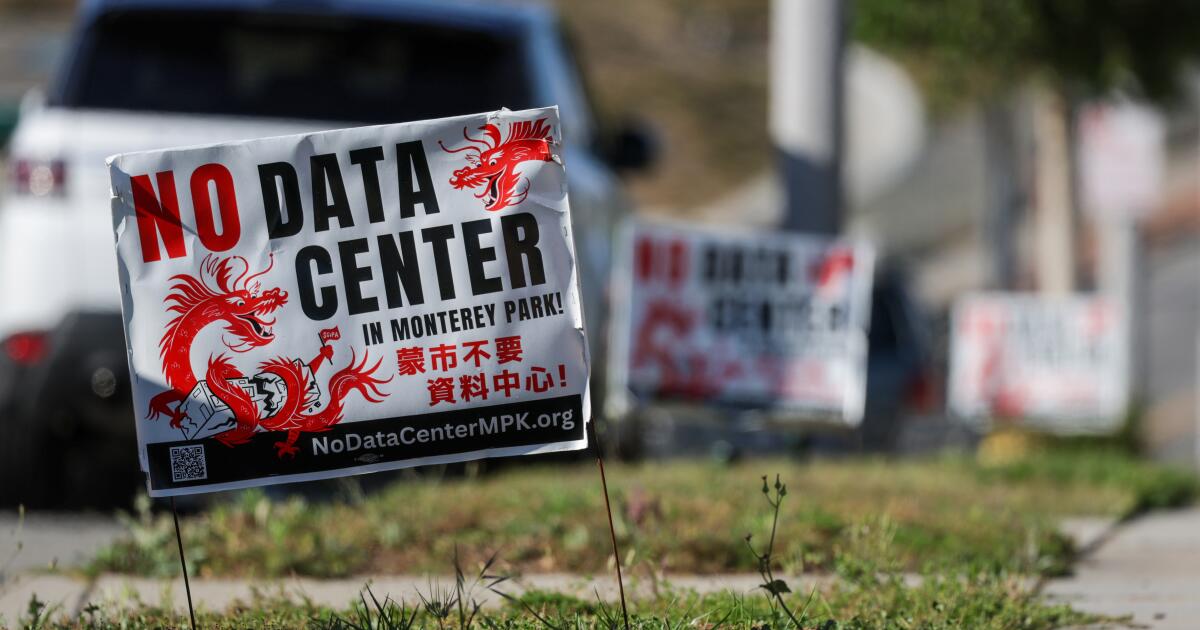
In a first for the country, voters in Monterey Park ban data centers
-
 Entertainment39 minutes ago
Review: Muscling past a flat script, a big-screen ‘Masters of the Universe’ embraces its own silliness
-
 Politics51 minutes ago
Hilton and Becerra lead California’s unsettled governor’s race; Steyer faces elimination

