Were you ready for some non-football consumerism? Ready or not, the Super Bowl’s annual blitz of commercials landed before and during the Seattle Seahawks and New England Patriots defense-first matchup, with some ads served up in advance while others were unveiled for the first time during the game. As in previous years, there were serious clunkers (looking at you Bud Light rolling keg ad), but also a few that transcended their buy-more mission (may you live forever, Melissa McCarthy). Other trends we noticed: celebrities double dipping to appear in more than one Super Bowl commercial (three if you’re Sofía Vergara), lots of borderline-gross humor (exploding heads, singing clumps of shaved body hair, singing toilets and plenty of ads trying to convince America that artificial intelligence tools aren’t a waste of time and energy).
While many of this year’s ads promoted AI and the usual rah-rah-America nods to patriotism, one trend we noticed was that the longer versions for some of the best Super Bowl ads, found online, were even better than the condensed cuts that made it to broadcast. What if next year, we make the Super Bowl three quarters and the commercial breaks 15 minutes long? Any takers?
While we wait for that brilliant idea to make it to the NFL’s offices, here are the big game ads we loved the most and a few that fumbled the ball — big time.
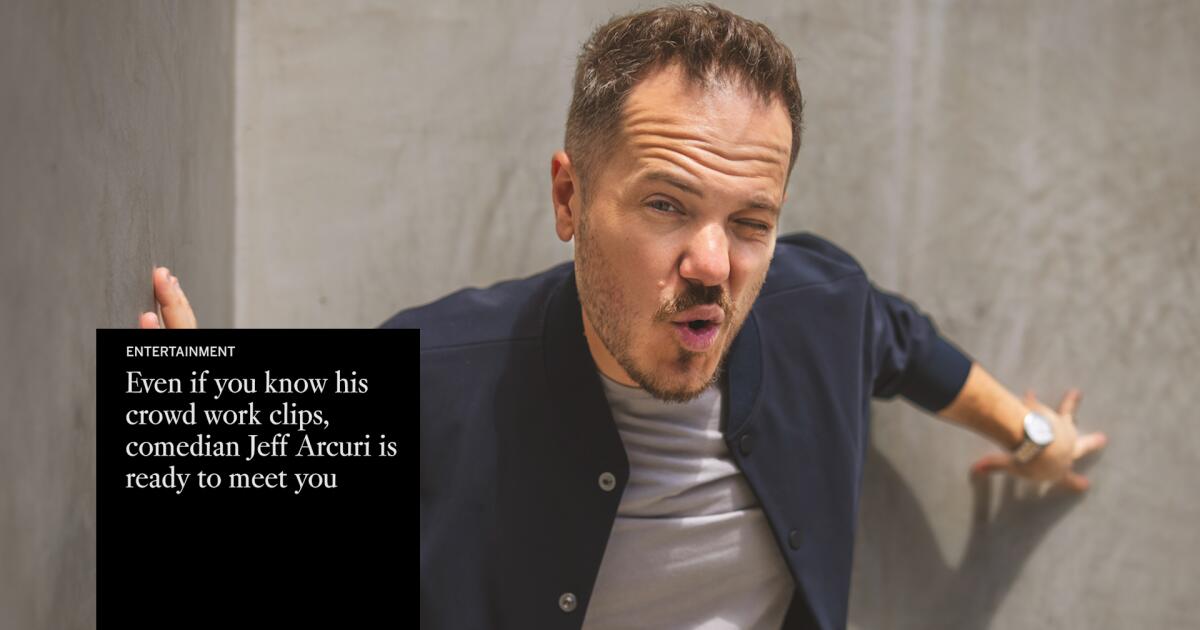
Life is a bit surreal for Jeff Arcuri these days. Though he’s been a stand-up comedian for over 14 years, most people in the world never knew it until clips of him joking around with audiences at spots like the Comedy Cellar in New York started going viral a few years ago. But while there’s no shortage of comics who’ve cracked the code to instant follows and likes (and plenty of scorn) by posting crowd work, Arcuri’s path in comedy has always been a coping mechanism for ADHD and razor-sharp situational awareness mixed with an overall lack of filter. At heart he’s always been a people person, even if he believes them less and less when they now say they’re fans of his.
“Is this ‘The Truman Show?’ I have that thought all the time where everyone’s just being nice and following me because they feel bad for me,” he tells The Times. “It’s crazy, all of it is crazy and I appreciate it every day.”
What he’s referring to, other than the millions upon millions of views online, is how recent internet fame combined with long-term anonymity in the comedy scene has fueled the rocket that’s sending him into a new level of notoriety on Netflix when his debut special “Nice to Meet You” drops on Tuesday. The new hour, performed in the round, tests Arcuri’s ability to remember minute facts and callbacks from random people in the crowd as well as his written material about his personal observations on life, family and his wife Katie Thurston — star of “The Bachelor” and “The Bachelorette” — who is currently battling Stage 4 breast cancer. Despite the low moments they’ve gone through this year, getting a debut special was his chance to share how he and his reality star spouse have found ways to laugh through their everyday struggles.
This interview has been edited for length and clarity.
Let’s talk about the weird level of fame that you’ve attained right now. You are the guy everyone sees on their Instagram reels but at the same time they’re like, “Who is that guy?”
Advertisement
Oh, 100%! My Uber driver, on a 45-minute ride here, we talked the entire time. As soon as I got in, he goes, “You do comedy?” I go, “Yeah, man,” We start talking, he’s asking me questions, we’re talking about comedy, and then we pull up, and he goes, “What’s your name, by the way?” He was quoting videos of mine the whole time, and then I wrote it down for him, I was like, “My special comes out July 7, give it a watch,” and he’s like, “All right, man, I only have YouTube, though.” I was like, all right, just lie, you don’t need to say that… In the airport I get a lot of people squinting and then I’ll see them look at their phone and try to figure out “how do I know this person.”
How have your crowd work clips on social media changed your career?
Immensely. I think it was the only way for me to put out as much content as I could and still perform live. It’s a beautiful thing, in my opinion. I get to show my improvisation, and yet still work on the written part personally, and like I get to repeat that joke for a year touring, as opposed to a crowd work moment, it happens, it’s done, I’m not gonna ever repeat that moment ever. So I think it’s just kind of a blessing that social media and everything took off at the same time the improvised crowd work took off, something that I had been honing for years prior to that, just because that’s what I did in my comedy, I just never had social media.
There’s so many opinions out there about crowd work, which, as I’m sure you know, aren’t always positive. Why do you think people are so triggered by crowd work?
There’s a lot of bad crowd work out there, just like there is bad anything else — fledgling or whatever rookie stuff. I think it’s died down, if I’m being honest. I think the main reason for the hate is because a lot of people started to try it that weren’t doing it, or whatever. And so there’s a lot of people that tried it because they saw the success. I was fortunate enough that I was already doing it, and so then I just applied it to social media. At no point in my career did I say, “I’m going to start talking to the audience.” I always did that. I’ve done that for over 14 years at that point when I started doing crowd work stuff, where it’s just a fun way to extrapolate on an idea. The fourth wall is broken in stand-up comedy the second you walk on stage. Any comedian that tells you otherwise is a liar. [If a comedian is saying] you don’t get to talk, just watch this, it creates this elitism that I don’t like in comedy. I want it to feel like it’s a conversation, so why would I shut off the other half of that conversation?
Advertisement
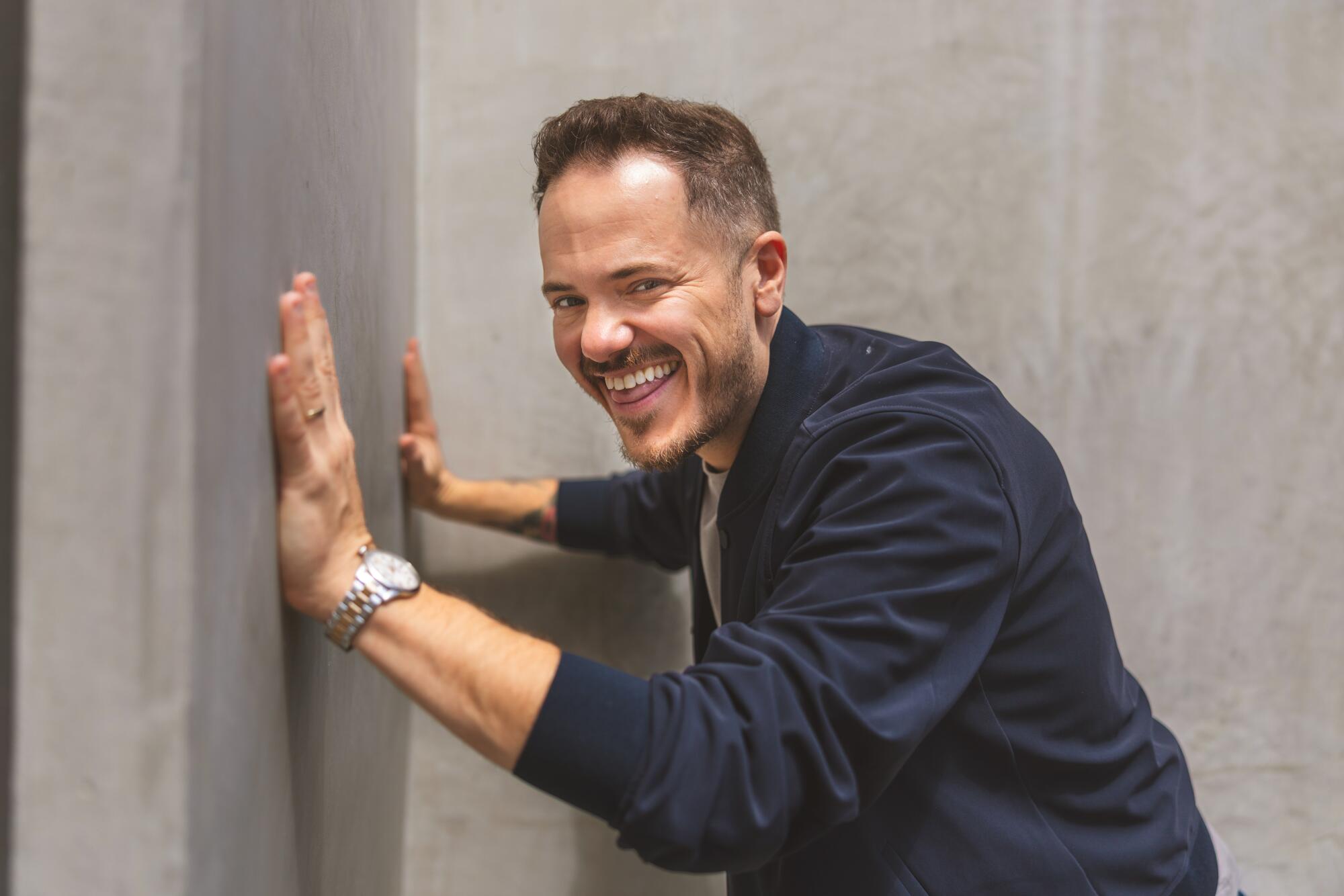
Jeff Arcuri considers his stand-up comedy to be a conversation.
(Jason Armond / Los Angeles Times)
What about comedians who complain about it?
It makes me cringe when I see comedians complaining about crowd work. Why are you worried about what you’re not doing? Do your thing, and then succeed. Don’t try and latch on to whatever the success is, and then complain that it didn’t work for you when that wasn’t your forte to begin with. I’m not gonna say I’m the best at certain things. There are comedians that have way better written jokes than I do, of course, that’s great, and I think that they should follow that.
Advertisement
I would say your skill falls somewhere between like situational awareness and ADHD.
Dude, I’m ADHD mid-sentence. I’ll forget why I was even talking about what I started talking about. It happens all the time. It’s a superpower.
Share via
Advertisement
Advertisement
After Netflix called you, what was the first thing you did to prepare for the special?
So that’s kind of hard, because last year was a big year for, like, health-wise for my wife. She was diagnosed with cancer and everything, so it was a lot of adjusting on the fly. [We found out about the special] within a day or so of finding out that she was misdiagnosed and her cancer was actually in a better place than where we thought it was … so it was a great week for us. So, it was very surreal, but it was then a switch to [prepping for a special] because I’m not going to record a special talking about [my life] prior to my life. It felt weird being able to talk about dating, talking about sex life, things like that when I just got married, so a lot of the special, I would say at least half, was written within a year of the taping, on the road that year, going through what I was going through with my wife. A lot of comics, especially for a special, [are] cooking for 10-15 years, and then you get to put out the body of work.
Your wife Katie Thurston has been the star of hit reality TV shows “The Bachelor,” “The Bachelorette.”After getting married,did comedy prepare you in any sort of way to kind of take that level of scrutiny?
Yes, I would say so. I had to, you know, take it on the chin, or whatever. Every comic knows when you scroll your video for comments to see what people said, you’re not scrolling to read all the appreciation. You’re scrolling, looking for one person that’s like, “this guy stinks” and then you go, “that’s my day. This is what everyone thinks of me right now.” So, I guess I was used to that in a certain way, a little bit, but her type of fame, I guess you could say, is way different than mine, and that hers is based on her personality and person completely, and mine is my presence on stage. So I always had that separation of privacy versus public. Hers was always intertwined, so that’s something that I didn’t really get used to.
Jeff Arcuri’s written work for “Nice to Meet You” is recent because his and his wife’s lives changed in the last year.
(Jason Armond / Los Angeles Times)
Advertisement
You guys find a way in the special of battling through it with jokes about Stage 4 cancer.
There’s jokes that she’s made throughout the year that I would do on stage even after clearing it and saying, “my wife said this and she has cancer, and here’s the joke,” I still get people like, “Oh, come on, don’t make that joke, dude.” I’m like, “I didn’t. She did. I’m just telling you what happened.”
So it was kind of like dancing around that. We’re like, “We want to let people know that we make dark jokes about her life, about her cancer, about our situation, and not every joke, just like every couple, not every joke is meant for to be for everybody,” but I really wanted to let everyone know she is so funny, and she handles handles with such a smile. We just deal with it with with humor, and I wanted to express that. I think I did. I think I was able to do that without putting too many people off.
You’ve been a New York guy for a long time. What are some of the main differences between the N.Y. scene and L.A. scene?
Advertisement
I would say I’ve met more comedians that just want to do comedy in New York, met more comedians that love stand-up for stand-up. I’ve met a lot of comedians in L.A. that have five projects going on, and so when I wanted to pursue stand-up further, that’s where I decided to harness and go in there and do that, because I’m like, I don’t care about anything else right now, I want this to work for me. In terms of the comedy, like I do feel L.A. is the more there’s a lot more performance in the comedy, which is great in itself too, but I feel like sometimes L.A. leans more on performance and New York leans more on structure and word economy. There’s a lot more dry comedians coming out of New York. I’m a mix of both. I’m not the best writer, not the best performer. I’m right in the middle there, baby. I can do a little bit of both.
Jeff Arcuri is a New York-based comedian but loves performing in the Midwest.
(Jason Armond / Los Angeles Times)
What’s the best city you’ve ever experienced for crowd work?
I love the middle of the country. I love the Midwest and the “flyover states.” Because you go there, people will tell you stories that are normal to them and you’re like, what the f—? And it’s their ex, they’re expressing it there, you know. You go to New York and you do a set in Brooklyn or in Manhattan, wherever, that’s the ninth show they’ve seen that week. It’s more of a big deal to people in the Midwest, and you’re getting more real answers, you’re getting people that are going back to work the next day.
Olivia Wilde’s new comedy drama is “the kind of smart, well-crafted film for adults we are constantly complaining we don’t get enough of,” said Benjamin Lee in The Guardian. Wilde, in her third directorial offering, co-stars as a stay-at-home-mom who, to the consternation of her failed musician husband, Joe, has invited the freewheeling couple upstairs to dinner. With Seth Rogen, Edward Norton, and Penelope Cruz filling out the cast, the charged get-together soon turns into “a night that Edward Albee would approve of,” except that this evening hits peak tension when the guests extend a surprise invitation to join them for a night of group sex.
The Week
Escape your echo chamber. Get the facts behind the news, plus analysis from multiple perspectives.
SUBSCRIBE & SAVE
Advertisement
Sign up for The Week’s Free Newsletters
From our morning news briefing to a weekly Good News Newsletter, get the best of The Week delivered directly to your inbox.
From our morning news briefing to a weekly Good News Newsletter, get the best of The Week delivered directly to your inbox.
Latest Videos From
Perhaps because it’s an adaptation of a 2016 Spanish play that has spawned overseas film versions, The Invite is “an American film that feels vaguely international,” said Matt Zoller Seitz in RogerEbert.com. Though the first half is overdirected to the point of being “irritating,” the showy camerawork fades away as the actors take over, creating a second half that’s “the best work Wilde has yet done as a director.” While all four actors excel, “it’s Rogen who’s the revelation,” said Alissa Wilkinson in The New York Times. “His line readings fill out Joe’s backstory brilliantly, a guy who was always used to being rejected, somehow landed a girl way out of his league 20 years ago, and now is miserable that she doesn’t really want him anymore.” In this movie, relationships change because people change. “To me, that feels true.”
‘Minions & Monsters’
Directed by Pierre Coffin (PG)
★★★
Advertisement
Though they’re “one of the more enduring creations of 21st-century cinema,” the Minions “still get no respect,” said Scott Roxborough in The Hollywood Reporter. Maybe, though, this seventh film in the Despicable Me franchise will finally end a 16-year awards shutout, because it’s a love letter to cinema that argues, between its mile-a-minute gags, that the highest-grossing animated franchise of all time deserves a place in Hollywood’s canon. Minions & Monsters is “very much a film of two halves,” said Drew Taylor in The Wrap. In the first, a quick history tour revisits how bad Minions have been in their quest to find villains to serve, until one group lands in 1920s Hollywood and stumbles into stardom. A flurry of homages to Buster Keaton and other legends follows, until talkies arrive and put the gibberish-spouting Minions out of work.
Join 350,000+ subscribers and keep yourself informed with a selection of
The Week’s most interesting, enlightening and entertaining stories – plus daily puzzles.
The second half offers more-conventional Minion action, yet it “builds to an open-hearted tribute to the power of the communal moviegoing experience.” When two of the Minions start work on creating a monster movie using real monsters, this outing “does rather lose momentum,” said Guy Lodge in Variety. But as the film speeds toward a standard save-the-world climax, the latest Minions serves up the usual mayhem “with gusto and a delirious cartoon grin.” It’s “a clear peak for the series: a Minions movie with an actual idea at its core beyond general cheerful chaos.”
Tom Sandoval’s former girlfriend Victoria Lee Robinson has filed a dueling restraining order against the reality TV star.
Reality TV star Tom Sandoval’s former girlfriend Victoria Lee Robinson has filed a dueling restraining order after she was arrested in June following an altercation that involved her father being pushed into a lit fire pit.
In the petition, filed Thursday in a Los Angeles court, Robinson claims that over the course of the former couple’s 2.5-year relationship, the former “Vanderpump Rules” star “routinely physically and verbally abused” her.
According to court documents reviewed by The Times, the model alleges that Sandoval shoved her down a flight of stairs in his home, pushed her to the ground at a hotel in Nashville, and attacked her and her father on June 3.
On Monday, a Los Angeles Superior Court judge denied Victoria Robinson’s request for the temporary domestic violence restraining order because Sandoval’s existing temporary restraining order requires a hearing (which was set for July 16) before Robinson’s could be granted.
Advertisement
Representatives for Sandoval told The Times in a statement, “It’s no surprise that Victoria’s request for a restraining order was immediately denied.”
Sandoval, known for the Scandoval cheating scandal that erupted on the hit Bravo series “Vanderpump Rules” in 2023, filed a temporary restraining order against Robinson and her father J. Will Robinson on June 25. In Sandoval’s petition, he claimed that since the two became a couple in February 2024, Victoria Robinson has been violent and attacked him physically.
Sandoval was granted a temporary restraining order which required Robinson and her father to vacate the Los Angeles rental the three had shared. According to Sandoval, he’d left the house and stayed in hotels and with friends following the June 3 incident.
“This is my home. We are both on the lease, but I paid the first month’s rent and deposit, surprised him with the keys and virtually every item in it is mine,” Victoria Robinson said in a statement shared with The Times. “I have filed my own legal action because I have my own account of what happened and it’s very different from what has been said publicly.”
Robinson said that while her father has been under media scrutiny, he was trying to protect her.
Advertisement
“My relationship with Tom has already controlled the past two years of my life,” she said. “I cannot allow a false narrative to control my future.”
The altercation involving Sandoval, Robinson and her father happened in the early morning hours after the couple returned home from a night out at a bar, according to both accounts.
In a video of the June 3 incident, obtained by TMZ, Robinson and her father are seen sitting next to a lit fire pit on the patio when Sandoval and the elder Robinson begin arguing. Sandoval is heard yelling at Will Robinson before he asks his girlfriend if she is recording and approaches her. Will Robinson stands up and wraps his arms around Sandoval, seemingly to get him to back away from Victoria Robinson. Sandoval turns and pushes Will Robinson, who falls backward into the lit fire pit.
After Will Robinson gets back up, he rushes after Sandoval into the home while Victoria Robinson screams for the men to stop.
According to Victoria Robinson’s petition, when Sandoval noticed she was recording his exchange with her father, he twisted her arm while trying to gain control of her phone.
Advertisement
Will Robinson allegedly suffered a thumb fracture and elbow and back injuries.
Victoria Robinson was arrested after police responded on June 3 and released on bond the same day. On June 4, Sandoval returned to their L.A. house to collect his things and Victoria Robinson called police, who escorted Sandoval from the home, according to the filing.
The Los Angeles Police Department declined to comment on the reason for Robinson’s arrest.
Will Robinson told TMZ last month, “The DA did not file the case for a reason. I lifted Tom off of my daughter because he was overpowering and twisting her arm and trying to take her phone aggressively after yelling at us in a very aggressive and threatening manner.”
“This is my daughter’s home and we just want Tom as far away from us as possible and to keep his lies and drunken abuse away,” Robinson said.
Advertisement
This isn’t the first time their fights have turned physical, according to both accounts. Victoria Robinson‘s petition claims that in August 2025, Sandoval shoved her down their hardwood stairs and she suffered knee injuries. She said she reported the incident to police but ultimately recanted her statements to protect Sandoval from being arrested. “In hindsight, I deeply regret this decision,” reads the suit.
Weeks before the fire pit incident, Robinson alleges that during a trip to Nashville to visit her grandfather who was in hospice care and has since died, Sandoval pushed her to the floor of their hotel and locked her out of their shared room.
“During their 2½-year relationship, Tom has made it clear he never physically harmed Victoria,” representatives for Sandoval said. “Instead, he lived in fear of her repeated physical attacks and unpredictable behavior. He will show he was the victim of ongoing physical and emotional abuse, and has substantial evidence documenting what he endured, which will be presented through the legal process.”