New Mexico
Timothy Busfield dropped by talent agency as he makes first court appearance in New Mexico child sex abuse case


Embattled actor Timothy Busfield was dropped by his talent agency on the same day that he appeared inside a New Mexico courtroom for the first time in his child sex abuse case.
Innovative Artists, which is based in Los Angeles and New York, released the 68-year-old actor and director as a client as of Wednesday, Deadline reported.
The agency offered a “fair-sized” team to represent the “West Wing” actor during his several years with the group, according to the outlet.
Busfield’s career hit came after he entered no plea in his first court appearance on disturbing allegations he sexually abused two young boys on the set of a FOX show he directed.
The alleged abuse began in 2022, when the boys were 7 years old on the set of “The Cleaning Lady” in New Mexico.
The ‘Field of Dreams’ actor is accused of inappropriately touching one of the boys three or four times, and the other five or six times, according to the arrest warrant filed Friday.
A criminal investigation began in 2024 when a physician notified police about suspected sexual abuse after examining one of the children at the University of New Mexico Hospital, according to the complaint.
Attorneys for Warner Bros., which produced “The Cleaning Lady,” told cops that a prior independent investigation into the allegations found no evidence to support the claims, the complaint alleged.
Busfield, who is married to former child star Melissa Gilbert, turned himself in to the Albuquerque Police Department on Tuesday.
Busfield was charged with two counts of criminal sexual contact of a minor and one count of child abuse. He has denied those allegations.
“Tim Busfield denies the allegations in the criminal complaint and maintains they are completely false,” the 68-year-old’s lawyer, Larry Stein, said in a statement to The Post Wednesday.
Follow The Post’s coverage on Timothy Busfield
A third alleged victim, a 16-year-old girl in Sacramento, California, accused Busfield of sexual abuse “several years ago,” according to a motion filed by prosecutors in Bernalillo County, New Mexico, on Jan. 14.
Colin Swift, the alleged victim’s father, reported the incident to investigators on Jan. 13, according to the motion, which was filed to request pretrial detention and was obtained by The Post. Busfield has not been charged in connection with the 16-year-old’s claim.
The father claims Busfield kissed his daughter during an audition with the director before he put his hands down the teen girl’s pants and “touched her privates,” at the B Street Theatre, the motion alleges.
Busfield founded the B Street Theatre, which opened as the Theatre for Children in Sacramento in 1986.
The director allegedly begged for the family to not report the incident to police “if he received therapy,” according to the motion.
Swift, a therapist, agreed “that was the best thing to do” at the time.
The third abuse claim was made the same day Busfield was arrested.
The actor was ordered held without bail and is currently at the Metropolitan Detention Center in Albuquerque.



The branding of the WAC, New Mexico State’s longtime home from 2005-23, has officially ceased to exist

What can NMSU athletes do in the Adidas NIL Network?
The Adidas NIL Network will allow New Mexico State athletes to receive NIL money from the three-striped brand. Here’s how it works.
The Western Athletic Conference is officially no more. Well, at least the name isn’t.
The WAC rebranded as the United Athletic Conference on Wednesday, July 1, which was originally the name of a football-only alliance between the WAC and the Atlantic Sun Conference. Membership losses over the 2020s led the WAC to adopt UAC branding and join its three remaining members with the ASUN’s five football-playing members and Little Rock to form an all-sports conference that keeps the WAC’s historical continuity.
The WAC hits home for New Mexico State. The Aggies were members of the conference from 2005-23 and were one of the WAC’s longest-tenured schools.
With the WAC name officially in the ashes of history, here are some of the Aggies’ best moments while in the conference.
Basketball dominance
NM State dominated the WAC with seven regular-season WAC titles, 10 WAC Tournaments and 14 double-digit win seasons in WAC play.
Perhaps NM State’s best season in the WAC was in 2018-19. The Aggies dropped their first conference game, but won the next 15 before going 3-0 in the WAC Tournament, including a blowout 89-57 win over Grand Canyon for a program-record 30th win. NM State went 16-0 in WAC play the next season before it ended thanks to the COVID-19 pandemic.
The Aggies produced five WAC Players of the Year, including four across 2014-18 in Daniel Mullings, Pascal Siakam, Ian Baker and Jemarrio Jones. Teddy Allen won it in 2022.
Women’s basketball also had a dominant stretch. The Aggies won four out of five WAC regular-season and tournament championships from 2015-19, including three in a row from 2015-17 that all included double-digit victories in the WAC Tournament final. Brooke Salas’ 29 points in the 2019 final secured a 76-73 double-overtime win over UTRGV.
Baseball rallies in 2022
The 2018 baseball team won 40 games and the WAC Tournament, but the 2022 team’s story was a Cinderella run.
The Aggies had the worst record in the WAC Tournament at 20-32. NM State finished sixth in the West Division, but gained entry thanks to second-place California Baptist and fourth-place Dixie State (now Utah Tech) being ineligible due to their Division I transitions.
The Aggies caught fire and went 4-0. NM State defeated Southwest Division winner Sam Houston 3-1, clobbered UTRGV 10-0 in seven innings, took down Sacramento State 7-3 and vanquished fellow No. 4 seed Abilene Christian 7-3 in the championship game.
Winning WAC titles at home
Softball won six regular-season WAC titles and four WAC Tournaments from 2011-21.
Three of those tournament titles came when NM State hosted it in 2015, 2017 and 2018. The Aggies earned three run-rule wins to win in 2015 and faced Seattle three times in 2017. The Aggies fell 6-4 in the second round before bouncing back into the winners bracket to beat the Redhawks 15-14 and 10-0 for another title.
NM State defeated Grand Canyon and UMKC in run-rule fashion in 2018 and faced GCU again in the final. Kelsey Horton’s three RBIs fueled a 9-7 win. She secured back-to-back WAC Player of the Year honors in 2017 and 2018.
A great 2015
The Aggies had one of their best years in 2015. NM State won five regular-season WAC titles and eight WAC tournaments in that calendar year.
Men’s basketball and women’s basketball each won WAC regular-season and tournament titles, and Brianna Freeman was named the WAC Player of the Year in women’s basketball. Volleyball swept the WAC regular-season and tournament titles and never lost a conference game. Gwen Murphy won WAC Player of the Year, and Mike Jordan earned WAC Coach of the Year.
Softball went 47-16 and swept the WAC regular-season and tournament championships in one of the program’s best seasons. Staci Rodriguez won WAC Player of the Year, and the Aggies broke 12 school records on offense.
Men’s and women’s golf both won WAC championships, and men’s tennis swept the WAC regular-season and tournament titles. Women’s tennis also won the WAC Tournament for the program’s first-ever conference title.
Other notable moments
- Soccer won its first WAC Tournament title in 2022 after taking down top-seeded Seattle 1-0 in the final.
- NM State won the 2023 WAC outdoor track and field title. Jhana Downie won conference titles in the 200 and 400 meters, Joseph Rath won WAC Coach of the Year and Terice Steen set a school record in the 400m hurdles (58.36).
- Volleyball won three more WAC regular-season titles in 2016, 2019 and 2021. Megan Hart was named 2019 WAC Player of the Year.
- Women’s golf won seven WAC championships from 2014-22. Pun Chanachai was a standout, winning WAC Player of the Year and WAC Freshman of the Year honors in 2017.
- Swimming and diving stayed in the WAC for two more years after 2023 and were a competitive program, finishing second at the WAC Championships seven times between 2010-25.

NEW MEXICO (KRQE) – License plate readers remain a controversial law enforcement tool. During this past legislative session, New Mexico lawmakers passed a bill that puts limits on how police use a controversial piece of technology.
The Driver Privacy and Safety Act implements safeguards on how the data collected by license plate readers is shared. It comes after instances where the technology was found to be used for non-law enforcement reasons, like people seeking abortions and immigration enforcement.
The lawmakers behind the bill said they want to ensure private information remains private. Santa Fe Police Interim Chief Ben Valdez says they are already restricted from sharing data collected from license plate readers, but he says it’s still important to have the law on the books.
“As a state, I think it puts us on the same page, which I think is very helpful. The data is the property of the City of Santa Fe. So if there’s going to be any sharing of that data. It has to be given with the express permission of the City of Santa Fe. It can’t just be used for any purpose, including being sold to a third party,” said Interim Chief Ben Valdez, Santa Fe Police Department.
Chief Valdez also emphasized that the plate readers can only be used in public spaces. “So it’s on a street that is a public road. It may be in a shopping area where that’s again within the public purview. We’re not doing plate reads in private areas that people have an expectation of privacy,” said Chief Valdez.
There are some cases where the license plate reader data would be shared, including homicide investigations that cross state lines or kidnapping. “They’ve been able to find children that were taken either by a custodial parent or another person, or even missing persons where their plate read came back as a missing person,” said Chief Valdez.
Under the new law, agencies are also required to submit annual reports to the Department of Public Safety on how the tech is being used.
In all, 15 new laws went into effect on Wednesday, including shifting “aggravated battery on a peace officer inflicting great bodily harm” from a third-degree felony to second degree and creating an Office of Special Education in the Public Education Department.

As I sit in an Albuquerque auditorium at the 3rd Annual New Mexico Draggy Awards, surrounded by drag queens, kings, and everyone in between, I find myself wiping away tears for the second time that evening.
New Mexico transgender advocate Bunnie Cruse is standing on the stage giving out an award for activism, and she calls Democratic U.S. Congresswoman Melanie Stansbury to the stage.
“Your existence is an act of resistance; an act of resilience and fuck Trump!” shouts Stansbury from the stage while wearing a black and white dress and a beat-up pair of red Converse. Fans clack, and the crowd erupts in cheers.
Related: Dispatches from Route 66: How queer communities are rebuilding safety along the Mother Road
Albuquerque: Where hope took the stage
Stansbury then quotes an invocation she heard earlier that week at the opening of the Obama Presidential Center: “Hope is a call to action. Resilience is a call to action. Change is a call to action, and continuing to fight for our democracy is a call to action.”
Hope radiates from the stage. I’m just passing through New Mexico, yet I find myself feeling seen by an elected official in a way I rarely do back home in Ohio.
Less than 24 hours earlier, I had been in Amarillo listening to transgender people describe contingency plans for their families if one of them were detained. Now, in Albuquerque, a member of Congress stood onstage at a drag awards ceremony celebrating the very community that had been living in fear just one state away.
My third week on Route 66 searching for the Mother Road’s LGBTQ+ story, past, present, and future became a study in what hope looks like when communities feel safe enough to be visible. To better understand why Albuquerque felt so different, I sat down with leaders from Bold Futures, a statewide advocacy organization for women and people of color.
A museaum display in Albuquerque, New Mexico.Alysse Dalessandro for The Advocate
“I think that’s one of the most beautiful things about organizing with folks is that they don’t even know about their brilliance until they’re given a safe place to sort of feel some softness and have some space,” shares Bold Futures Executive Director Charlene Bencomo.
That emphasis on safety is intentional. Bold Futures has been organizing for these marginalized voices since its founding in 1999, and its community-driven approach reflects New Mexico as a whole.
“New Mexico is a really unique place, and I think it is because of the culture and the heritage that we have,” says Bencomo. “We are more community-driven than individualistic a lot of times. We move in community. So when we’re taking a story to a decision-maker, we’re not just saying, ‘Here are the statistics, this is the bottom line.’ We’re saying, ‘Here are the statistics, here’s the bottom line, and here are the people who are going to tell you about what it looks like in their neighborhood.’”
Charlene Bencomo’s words that New Mexicans “move in community” stuck with me during my four days in Albuquerque. By the end of my time there, I understood exactly what she meant.
Related: Dispatches from Route 66: Discover the queer stories hidden along the iconic road trip
Pride written into the road
The more time I spent in Albuquerque, the more I realized that resistance was woven into the fabric of New Mexico. During a Route 66 History Tour in the city, I learned that long before Route 66 reached the city, New Mexico had already fought to preserve its identity by resisting pressure to rename the territory during its path to statehood.
Just 14 years after becoming a state, Route 66 cut through the heart of town. Today, that same stretch of Central Avenue continues to tell Albuquerque’s story. Unlike many places I’d visited along Route 66, here you don’t have to dig through museums or archives to find its LGBTQ+ history. It’s painted directly onto Historic Route 66 in the form of rainbow crosswalks.
Writer Alysse Dalessandro standing at the Route 66 sign in Albuquerque, New Mexico.Alysse Dalessandro for The Advocate
I learned that these crosswalks commemorate the city’s first Pride March, when 25 University of New Mexico students marched from Morningside Park to the intersection of Morningside Drive and Central Avenue in 1976.
To this day, Albuquerque’s Pride march still traverses Route 66 down Central Ave. Each year, Bold Futures hosts a Family Pride in Morningside Park. For the organization’s 15th Family Pride, they themed it around a Quinceañera Fiesta, intentionally weaving Pride into this Mexican cultural tradition.
“We have all the cultural staples but then make them part of Pride,” shares Bold Futures Deputy Director Heather Smith. “So now you’re also exposing people who are there, who are not familiar with those cultural traditions; they’re learning them, and it’s a cultural exchange.”
Rather than asking LGBTQ+ people to choose between their cultural and queer identities, Family Pride celebrates both at once and invites the broader community to learn alongside them.
Route 66 hasn’t just been a gathering place; it has also long been a place where LGBTQ+ travelers searched for safety, sex, and community. A 1977 edition of Bob Damron’s Address Book, a national gay travel guide, listed the stretch of Central Avenue from the University of New Mexico to the area near The Loon as a cruising spot.
Old Downtown Albuquerque.Alysse Dalessandro for The Advocate
The queer-tolerant hotels such as the Alvarado Hotel and the Franciscan that once lined Central Ave are gone, but new hotels are still filling that need. Although the Bob Damron Address Book is no longer the go-to resource for LGBTQ+-friendly places to stay, the intention behind this book’s existence is still something I use on my own travels.
While looking for safe places to stay along Route 66 as a queer traveler, I used the Booking.com Travel Proud filter to find accommodations in Albuquerque. This allowed me to see only results for hotels that have completed Booking.com’s LGBTQ+ hospitality training. It led me to Hotel ZAZZ, a woman-owned boutique hotel along Route 66. Here was another place where I felt safe and seen.
The “other” Route 66
This visibility continued when I visited the Albuquerque Museum exhibit: The Other Route 66: 100 Years of People, Identity, and Place in Albuquerque. While other museums mostly idealized Route 66, this exhibit intentionally sought out the narratives most often ignored, presumably for their discomfort: the migrant experience, the exoticism of Indigenous communities, and the dangers for Black travelers, to name a few.
Once I reached a sign that read “The ‘Other’ Route 66,” I finally found my own visibility. Museum after museum, I felt erased and othered, but here was finally a visible inclusion of the LGBTQ+ experience on display in a Route 66 exhibit. The small display included 3 reproductions of ads for Central Ave’s gay clubs, a Pride route map, and a recent photograph from a local Pride. It was not much, but it was something.
Preservation as Resistance
At the Arizona Route 66 Museum in Kingman, I learned about Angel Delgadillo, the Seligman barber whose efforts are widely credited with launching the preservation movement that saved Route 66 from fading into history. After Interstate 40 bypassed Seligman and Route 66 was officially decommissioned in 1985, Delgadillo noticed visitors still going out of their way to stop at his barbershop to reminisce about the Mother Road. He decided to do something about it.
As I listened to the story of Route 66’s preservation, I realized it wasn’t really about saving a highway. There was a faster way to cross the country. Preserving Route 66 was about preserving the stories that gave it meaning. It was about refusing to let a community disappear. It’s Andie Smith showing up to the Edwardsville Town Square every Friday. It’s Steve Blundell buying the District Hotel. It’s Chief Egunwale Amusan creating the Real Black Wall Street Tour. It’s me driving more than 3,000 miles to document the LGBTQ+ history of Route 66 before more of it disappears. Different communities. Different histories. The same determination to refuse erasure.
Klingman, Arizone Route 66 sign.Alysse Dalessandro or The Advocate
Delgadillo rallied fellow business owners to secure historic recognition for Route 66, founding the Historic Route 66 Association of Arizona and creating a preservation model that communities along the Mother Road continue to follow today.
“If Angel Delgadillo and these other rallying people had not fought for their communities and for Route 66, it would just have remained forgotten about, “ Katie Barthlow, a communications specialist for the Historic Route 66 Association of Arizona, told me.
One of the Historic Route 66 Association of Arizona’s former officers is an out gay man. I didn’t have the opportunity to interview him during this trip, but learning he had helped preserve Route 66 left me wondering how many other LGBTQ+ people had quietly shaped the Mother Road without becoming part of its public history.
The Arizona Route 66 Museum doesn’t yet answer that question. But museum leadership readily acknowledged that LGBTQ+ history belongs in the story of Route 66 and that uncovering it will require the kind of archival research and community connections that have shaped my own journey. Alongside exhibits on the Green Book, the class struggles of the Dust Bowl migration, and the contributions of Asian Americans like restaurateur Charlie Lim, the museum paints a broader picture of who shaped the Mother Road, even if that work isn’t finished yet.
Making space to be seen
Kingman’s Route 66 history is thoroughly documented. Its LGBTQ+ history is far less visible. Unlike Flagstaff, where Pride flags lined storefronts, I had to search much harder for signs of queer community in Kingman.
I found Gideon Freeman, owner of The Bearded Baker, sitting beneath a Progress Pride flag hanging outside his garage-turned-home bakery. He tells me about how he helped to bring the first Mohave Pride to Kingman in 2019. Their first Pride event saw more than 3000 attendees. For him, Kingman’s lack of LGBTQ+ visibility isn’t about lack of support but a lack of space.
“We just need more space here to connect,” says Freeman. “There’s a lot of us here, we just don’t see each other very often. So we’ve been trying to build that community.”
Freeman directed me to Feral Tattoo, where I expected their regular Wednesday art night but instead found a group gathered around a table discussing voter education and sharing stories about life as LGBTQ+ people in town.
Just as Angel Delgadillo realized preserving Route 66 would depend on ordinary people taking action, I’ve found the same is true of the LGBTQ+ community along the Mother Road. In places with fewer dedicated resources, that work often falls to individuals like Feral Tattoo’s owner, Willow Kroenke, who are willing to make themselves visible.
Kroenke told me that being visibly queer has made them fear for their family’s safety, but they also don’t know how to build community without that visibility.
“I think if there was any lesson in Route 66, it would be to look at the people that have been fighting for equal rights for the last hundred years,” says Kroenke. “I look at what the Black Panthers did with the Rainbow Coalition. When I don’t know what to do, I make kids breakfast because that’s what they did. When I don’t know what to do, I bring my friends flowers because that’s what Marsha did.”
Listening to Willow, I found myself crying in a tattoo shop in Kingman. Three weeks earlier, I had set out looking for the hidden LGBTQ+ history of Route 66. By the time I reached Arizona, I realized that history doesn’t preserve itself. It survives because ordinary people choose to carry it forward: for their neighbors, for their communities, and for those who come after them by refusing to let the stories of those who came before disappear. That, more than anything, has been the story of Route 66.
-

 Lifestyle4 minutes ago
Why Chanel Is Acquiring Charvet
-
 Politics7 minutes ago
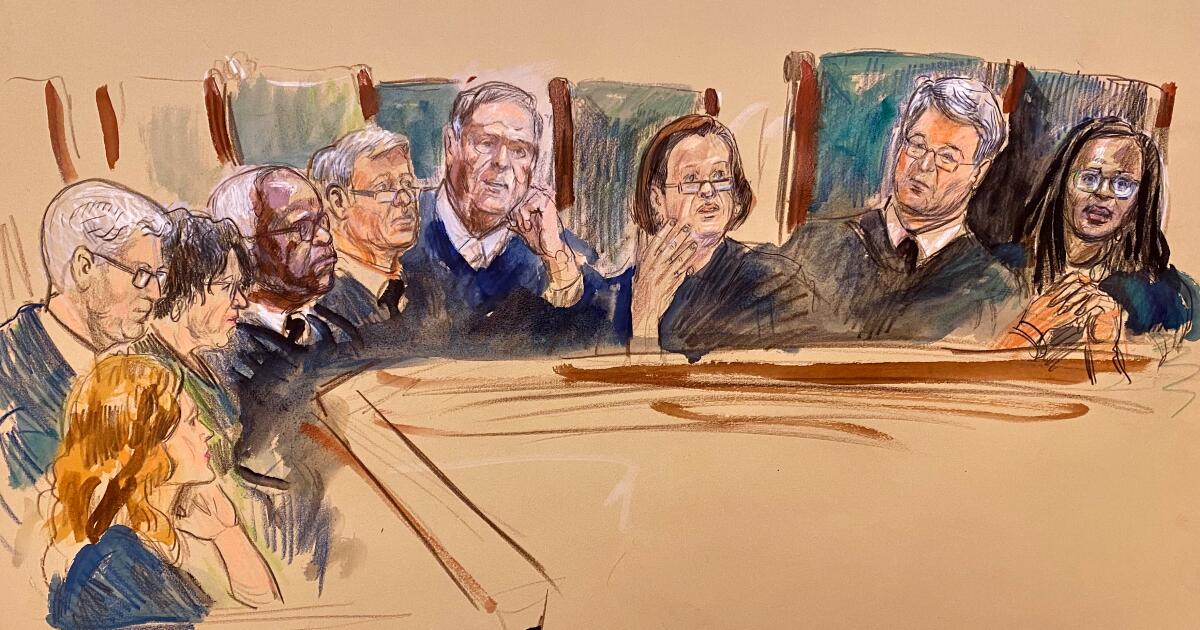
How Roberts led a fractured Supreme Court to wins for the right and defeats for Trump
-
 Science12 minutes ago
Contributor: Alcohol should be stigmatized like smoking
-
 Sports19 minutes ago
Thousand Oaks native Claire Liu finally reaches Wimbledon’s third round, will face Coco Gauff
-

 World27 minutes ago
Could water become a flashpoint between Islamabad and New Delhi?
-
 News52 minutes ago
Ukraine latest / Limits of military might / Can major powers regain dominance? : Sources & Methods
-

 Los Angeles, Ca2 hours ago
Juvenile charged with murder after 4-month-old Claremont infant thrown to her death
-

 Detroit, MI3 hours ago
Silence from Jalen Duren’s camp is what the Pistons want to hear

