Wyoming
Wyoming Man Donates Llama Ranch As Sanctuary For Veterans, First Responders


Llama expert, Navy veteran, and former commercial abalone diver Al Ellis imagined his 207-acre Sublette County ranch would one day become a sanctuary for veterans.
That vision is now taking shape after Ellis passed the deed for his property to the Boulder Crest Foundation just before Christmas.
“We want other people to enjoy this space — people who deserve it, people who we owe something to,” Ellis told Cowboy State Daily from the living room of his two-story log home.
“Llamas are the reason this house is here,” the 84-year-old said. “We visualized being old here and wheeling over to the big windows to watch the llamas.”
That’s what his wife, Sondra, enjoyed. She died in August after a lengthy health battle.
Butterfly Moments
Ellis talks about his life as a series of “butterfly moments” — events that happened at the perfect time to chart a remarkable path that led him to the underwater reefs off the California coast to the snowy peaks of the Rocky Mountains.
His story begins in San Francisco, where he spent much of his childhood in and around the bodega and produce stand his parents ran on the corner of Mission Street.
“By the time you’re 8, you can take your orange crate down the street,” he said about scrounging for stuff to put in their discarded wooden crates.
“Even in ’Frisco we got to be pretty feral,” he said.
Ellis learned to fish when he was 6. His aunt taught him.
That was a butterfly moment.
Ellis enlisted in the Navy when he was 17, a role he downplays today because he served during peace time between the Korean and Vietnam wars.
He worked on a salvage ship. Once, the ship ran up on a reef 1,500 miles from Brisbane, Australia.
Divers on the ship worked for days to blast the reef to free the ship.
When Ellis wasn’t standing watch, he paddled around on the reef and watched the divers work.
Another butterfly moment.
Watching the Navy divers blast the reef to free the ship, he developed an intense curiosity about diving.
Ellis found his way into competitive spearfishing, even then “an old, obscure sport,” he said.

Abalone And Urchins
A serendipitous meeting of a competitor who nearly speared the prizewinning fish that Ellis claimed at a meet off the coast of Santa Barbara led Ellis into the niche industry of abalone hunting.
Abalone — large marine snails with ear-shaped shells — were once prized along the California coast, and their meat is considered a delicacy.
Ellis and his business partner later opened their own abalone operation, finding ways for divers and processors to earn more for their work — but he missed diving.
By the time Ellis got back into diving, the sea urchin industry was booming.
“The timing was perfect to get into urchins,” he said. “I got good at it right at the time the price went up.”
Another butterfly moment.
He bought a fishery with an old freezer that had, during World War II, stored shark livers for their vitamin A.
He converted the fishery into a seafood restaurant named Andrea’s.
When the California freeway claimed part of that property, he and his wife opened a bigger seafood joint closer to the water.
His wife continued to work there for nine years after Ellis retired from the diving industry and moved to Wyoming.

Wyoming And Llamas
By 1982 when he was just 40, Ellis was ready to retire from diving.
He and Sondra bought property on the Snake River near Jackson Hole. They had fallen in love with the country after visiting a friend in Alpine.
They bought some horses, then Ellis got a backpack and started exploring the Rocky Mountains.
That’s when an article about mountain pack llamas by outdoors writer Doyle Markham caught his attention. Markham operated Snake River Llamas in Idaho Falls.
“As soon as I read the article, I called him,” Ellis said.
He drove to Markham’s property and saw his llamas up close.
“Within five minutes of being on his property I told him I wanted one,” Ellis said. “He wrote the article, but it was his stud, Snake River Bandit, that lit the fire.”
Markham told Ellis he could get on a six-year waiting list for a weanling.
“I was so hooked, I couldn’t wait six years,” Ellis told Cowboy State Daily.
What followed was a long and arduous process of learning where to find weanlings and how to separate those that would make good pack animals from those that would not.
Ellis acquired six pack llamas, bred them, and spent the next decade in the mountains with his beloved pack animals, guiding trips in the Wind River, Gros Ventre, Teton, and Wyoming mountain ranges.
“It was unbelievable how many people on my trips had never seen a night sky,” Ellis said.

Yup, They Spit
People would gather around the llamas at the trailheads, in awe and full of questions.
“The first question is always, ‘Do they spit?’” Ellis said. “Of course. Their spit is their first line of defense. But a well-raised llama won’t spit at a person.”
He learned after a chance meeting with Rod Eastman, the son of well-known wildlife photographer Gordon Eastman, that his llamas were perfect for wildlife filming.
Ellis’ backcountry photography led to extended wilderness expeditions supported by his llamas.
By the time his herd had grown to more than 30 animals, Ellis was facing a tough choice.
The 12 acres he owned on the Snake River was not enough to sustain his operation. He knew he had to sell the herd, stop breeding the animals, or move.
He also knew he had an extremely valuable operation going. Llamas were in high demand, both as working pack animals and as show animals.
“They’d hit the ground at a minimum of $5,000,” Ellis said, referring to a newborn llama’s worth at the time.
Ellis said he also believed the type of llamas he bred were in danger.
“It was really a mission for me,” he said. “I had to carry it on.”
Boulder Move
The Ellises bought a run-down cattle ranch in Boulder 12 miles south of Pinedale and sold their beloved property on the Snake River.
The ranch in Boulder was an eyesore at the time, Ellis said. The ground looked like a moonscape, and it was a tough sell for Sondra.
“I was enticing my wife from a 5,200-square-foot log home on the Snake River to come to a hell hole,” he said.
He promised her that they would build a nice log home on the property eventually. First, though, they had to set up adequate facilities for the llamas.
The Ellises moved to Boulder in 1998, and by 2012 were caring for 200 llamas on the Boulder property. Fewer than half — 60 — were pack llamas.
That summer, he was 70 and working on a broken foot. It was, he said, a wake-up call that it was time to be done.
By then he had introduced thousands of people to his beloved llamas.

Boulder Crest In Boulder
Fast-forward to summer 2025, a few months before Sondra died: another butterfly moment came.
Ellis was watching TV when he came across Johnny “Joey” Jones, a co-host on the FOX News Channel’s “The Big Weekend Show.”
Jones, a military veteran who had lost both his legs to a roadside bomb in Iraq, was talking about his New York Times bestseller “Behind the Badge: Answering the Call to Serve on America’s Homefront.”
“I really liked him,” Ellis said, adding that he decided to reach out to Jones.
Gifting his 207-acre property to serve veterans and first responders was fresh on his mind. Perhaps Jones could give him some direction.
It was a long shot, Ellis knew. He tracked down Jones’ email online and fired off a note, doubtful anything would come of it.
“But I’ll be damned, he saw it,” Ellis said.
Not only had Jones read Ellis’ email, he knew who could make that happen.
Jones reached out to Ken Falke, a retired Navy bomb disposal specialist and co-founder and chairman of the Boulder Crest Foundation.
Falke had met Jones at Bethesda Hospital in Washington, D.C., where he would often go to visit wounded soldiers.
Jones completed Boulder Crest’s Warrior PATHH program, which focuses on transforming struggles into strength and thriving in the aftermath of trauma. PATHH stands for Progressive and Alternative Training for Helping Heroes.
“As soon as I met him, it was like ‘wow,’” Falke told Cowboy State Daily. “I was a diver. He was a diver. I was in the Navy. He was in the navy. There was this really interesting connection.”
Another butterfly moment.
Llamas And Vets
Boulder marks the fourth Boulder Crest facility in the country, with others located outside Washington, D.C., and in Arizona and Texas.
“I think in Wyoming, we’re going to take a little different approach,” Falke said.
Falke told Cowboy State Daily he has learned there’s a big push to help female veterans and rural veterans who struggle to get care.
Falke is also well aware that Wyoming has the largest veteran suicide rate per capita in the country.
“Our hope is to regionalize our services around Wyoming and Montana, Idaho and Utah,” he said.
In Boulder, llamas will be a significant part of the nonprofit’s operation.
Ellis said he believes the llamas will especially benefit families of veterans and first responders, noting the animal’s innate ability to spread joy.
“Watching baby llamas play when they’re in a group is 100% contagious,” Ellis said.

Planning And Zoning Hurdles
The Boulder Crest Foundation will build a bunkhouse of sorts on the property for its Warrior PATHH program.
For the property to function as Boulder Crest envisions, a special conditional use permit was required, allowing the property to operate as a guest ranch.
That use permit was narrowly approved by the Sublette County Planning and Zoning Commission in December.
The approval faced pushback and initially failed on a previous reading.
At a September Sublette County Commission meeting, six area residents voiced opposition to the property being zoned to operate as a guest ranch.
According to the permit request staff report prepared by Sublette County Planning and Zoning Administrator Hayley Ruland, “Neighbors worried that once Boulder Crest assumes control, the operation could grow well beyond what is currently proposed.
“They fear future buildings and programs could shift the use toward a resort-like facility rather than a small guest ranch,” Ruland wrote.
The report also states that some residents “expressed concern about bringing trauma-affected individuals into a residential area without guaranteed on-site mental health professionals.
“They worry this could increase demands on local law enforcement and emergency services.”
Others voiced high praise for Boulder Crest’s reputation and the potential for Ellis’ property to benefit veterans, first responders and their families for years to come.
“I’m not religious,” Ellis told Cowboy State Daily, “but all these points come together. Boulder Crest could accept it and I could give it. It’s unbelievable.”
Kate Meadows can be reached at kate@cowboystatedaily.com.


GILLETTE, Wyo. — As the Aug. 18 primary election approaches, County 17 is introducing candidate questionnaires to help voters make informed decisions at the ballot box.
Every candidate in the primary field was sent the same three questions and given a limit of 500 words, which could be distributed among their answers as they saw fit. To ensure a fair and direct line to the community, all responses are published exactly as submitted, without edits or alterations.
Candidates were asked:
- What are the most crucial challenges your constituents are facing?
- If elected, how will you address these challenges?
- What qualities or qualifications do you possess that have prepared you to meet these challenges?
Questionnaires are being published on a rolling basis online through Aug. 11. They will be accessible via the County 17 Election Tracker.
Scott Smith (R), Wyoming state treasurer
What are the most crucial challenges your constituents are facing?
Everywhere I go many Wyoming citizens are concerned that our government is selling out our state lands to the highest bidder for crony capitalism. Some are concerned about Data Centers, Commercial Wind Generators, or nuclear waste storage. The biggest concern is the resources these outfits are taking, secondly, they are concerned about health issues related to living nearby, and lastly they are concerned with cost associated with these projects being passed onto the taxpayer.
If elected, how will you address these challenges?
One of the things that many people don’t know is that the State Treasurer sits on the State Land and Investment Board. (SLIB) The same issues that concern our citizens are the same reasons that I have decided to run for this office. The SLIB has voted to lease state lands to a hydrogen plant in Converse County that would take eight gallons of our valuable water to produce one gallon of hydrogen jet fuel using wind and solar generation to power the plant. These same elected officials have sold off $100 million of our state lands to the federal government. I believe that some things are not for sale. As Treasurer you can count on me to count the cost and listen to the people in the public testimony. If we are going to accept some of these projects the citizens need to have the benefit, like lower utility costs.
What qualities/qualifications do you possess that have prepared you to meet these challenges?
My bachelor’s degree is in Business Administration with an emphasis in management and marketing. I will be a leader in the state treasurer’s office that creates a positive work environment that will allow our investment team to create higher returns on the people’s money that the state invests. I would like to work with the legislature to use these interest earnings to buy down the people’s property taxes to alleviate part of the burden inflation has caused on the average citizen. My day job, I work as a bookkeeper and work with numbers day in and day out and have corrected some inefficiencies to help small businesses become more profitable. I plan to do that within the state office and make those profits available to the legislature to reduce the tax burden for the people. I have also served in the Wyoming House of Representatives for Goshen County and I have served on the Appropriations Committee and I am familiar with the massive state budget.
Related

Scroll down for a list of fireworks restrictions across Wyoming.
I usually don’t buy fireworks for the 4th of July. I go places to watch them. But since this year is the 250th anniversary of our nation, I was going to purchase a small arsenal and have a blast, pardon the pun.
But this has been a very dry year, as happens now and then in the cycles of weather. So I figured I’d wait until things were wet again and just hold my personal celebration a little late.
Many towns across Wyoming have canceled their July 4th fireworks due to the drought. They don’t want you firing off any either.
Based on 2026 reports, several Wyoming towns and counties have canceled or significantly restricted Fourth of July fireworks displays due to high wildfire risks, drought conditions, and Stage 1 fire restrictions.
Canceled/Restricted Public Displays (2026)
- Gillette/Campbell County: The CAM-PLEX fireworks show was postponed, and the county is maintaining a Stage 1 fire restriction due to extreme drought.
- Douglas: The Volunteer Fire Department canceled the 4th of July fireworks show due to fire concerns.
- Newcastle: Fireworks show canceled due to high fire danger, according to a June 27 report.
- Pine Haven: Canceled its Fourth of July fireworks display, according to a June 27 report.
- Riverton: Passed a resolution banning personal fireworks within city limits on July 4, with only a limited, designated area for public displays at the Honeycutt Softball and Saban Baseball Complex.
- Teton County: Fireworks have been historically canceled, and fire officials are urging residents to only attend official, professional displays due to extreme fire danger (confirmed for 2026).
City-Wide Personal Fireworks Bans (2026)
- Cheyenne: Consumer fireworks are prohibited within city limits, despite the county lifting restrictions, with only small novelties allowed.
- Casper: Fireworks are prohibited within city limits and in unincorporated Natrona County.
Key Locations Under Restrictions (2026)
- BLM Land: Fireworks are prohibited on public lands managed by the Bureau of Land Management in Wyoming.
- Weston County: A county-wide ban covers Newcastle and Upton due to high drought conditions.
Even little Chugwater, Wyoming, population 175, has banned fireworks inside its little town limits.
At the State Capital in Cheyenne, however, they will go right ahead with a fireworks display, right over the capital building itself. Dry weather be dammed.
Weird Fireworks Names You’ll Find In Wyoming
Just some of the odd names we found while shopping.
Gallery Credit: Glenn Woods

Media outlets gasped last week at the socialist movement’s success in the New York congressional Democratic primary elections.
That success headed west Tuesday, to Wyoming’s southern neighbor of Colorado.
Democratic socialist Melat Kiros, 29, defeated 15-term incumbent U.S. House Rep. Diana DeGette in Tuesday evening’s primary election.
Colorado Public Radio called the ouster “a stunning blow to the Democratic establishment in Denver and continuing a run of leftist victories in major cities.”
Former Wyoming Gov. Mike Sullivan, a Dvemocrat, told Cowboy State Daily on Tuesday that he wasn’t surprised at the move by Denver voters, but he doubted the proximity of a House socialist – if Kiros wins the general election – will affect Wyoming much.
“We have our own issues, and we’re certainly more sensitive to certain issues than others,” Sullivan said. “And it doesn’t necessarily divide us or make us closer to anybody else.”
Could Deepen ‘Don’t Colorado My Wyoming’ Sentiment
Liz Brimmer, longtime Wyoming politico, agreed in general, but said having a socialist congressional neighbor could galvanize Wyoming even harder into a tendency it already has: spurning anything that looks like Colorado governance.
“I think Wyoming uniformly and strongly feels, you know, ‘Don’t Colorado my Wyoming’,” Brimmer said. “And I think if anything, it deepens that sentiment.”
Brimmer said the ouster speaks of “these times, where there’s no doubt an anti-incumbent strain.” But no one will know all the reasons, nor should presume too much, until the voter data return, she said.
The Republicans saw the anti-incumbent strain surface differently, with newcomers ousting President Donald Trump’s foes in GOP primary elections.
State Rep. Landon Brown, R-Cheyenne, who is finishing off his final legislative term, voiced fascination with the election outcome.
Brown, a self-described political junkie, lives about 14 miles from the Colorado border.
He said the ouster shows Denver is increasingly dictating the rest of Colorado’s fate, and that the state is growing more polarized.
On the Republican gubernatorial primary side, The Associated Press was showing a half-point lead for Victor Marx as of Wednesday.
“He’s just as crazy as a democratic socialist on the left,” said Brown.
As for DeGette’s defeat, it’s not as symptomatic as one would think, he added.
“She was running a ‘Hey, I’m the incumbent and I’ve been here 30 years’ (campaign),” he said.
That hurt her. As did a growing divide on the left over Israel’s approach to its many foes — and Congress’ funding of Israeli war and defense efforts, said Brown.
Israel was also a fulcrum in the May primary loss of libertarian-leaning incumbent Rep. Thomas Massie, of Kentucky. But the Republican voters took the inverse approach on that one, nominating the candidate who supports funding Israeli war efforts.
Jack Speight, the GOP strategist who helped Wyoming Gov. Stan Hathaway to victory in 1966, told Cowboy State Daily Kiros’ win is alarming.
Speight was a Democrat when he graduated from the University of Wyoming law school. But the allure of capitalism and the prevailing logic of his good friends pulled him to the Republican side, he said in another interview last month.
The socialist victories of 2026 are “sad for this country. It may well affect the results of this fall, and nationwide,” he said. He called it a shift of California transplants into the Rockies, and a symptom of a growing entitlement.
Look North
Colorado isn’t the only Wyoming neighbor with socialist momentum.
Sam Forstag, a smoke jumper endorsed by Sen. Bernie Sanders, I-Vermont, and Rep. Alexandria Ocasio Cortez, D-New York, won his primary bid for Montana’s U.S. House District 1 on June 2.
Forstag may be less favored than Kiros going into the general election: No Democrat has won that Montana House district this century.
The New York Times called Forstag’s candidacy a “test for left-leaning politicians” who have been arguing for a populist surge in the blue party.
Clair McFarland can be reached at clair@cowboystatedaily.com.
-
 Lifestyle16 minutes ago
To be or not to be a parent : It’s Been a Minute
-

 Technology28 minutes ago
Sony’s PlayStation disc factory is already being repurposed
-

 World31 minutes ago
Couple publicly caned after alleged TikTok kiss sparks outrage in Indonesia
-

 Politics36 minutes ago
WATCH: Controversial SCOTUS decision strikes a divide among lawmakers
-

 Health43 minutes ago
Big Medicare change slashes weight-loss drug costs for eligible seniors
-

 Sports46 minutes ago
VAR denies Croatia’s game-tying goal as Cristiano Ronaldo leads Portugal to Round of 16
-

 Technology51 minutes ago
New sodium-ion battery could reshape grid storage
-
 Business58 minutes ago
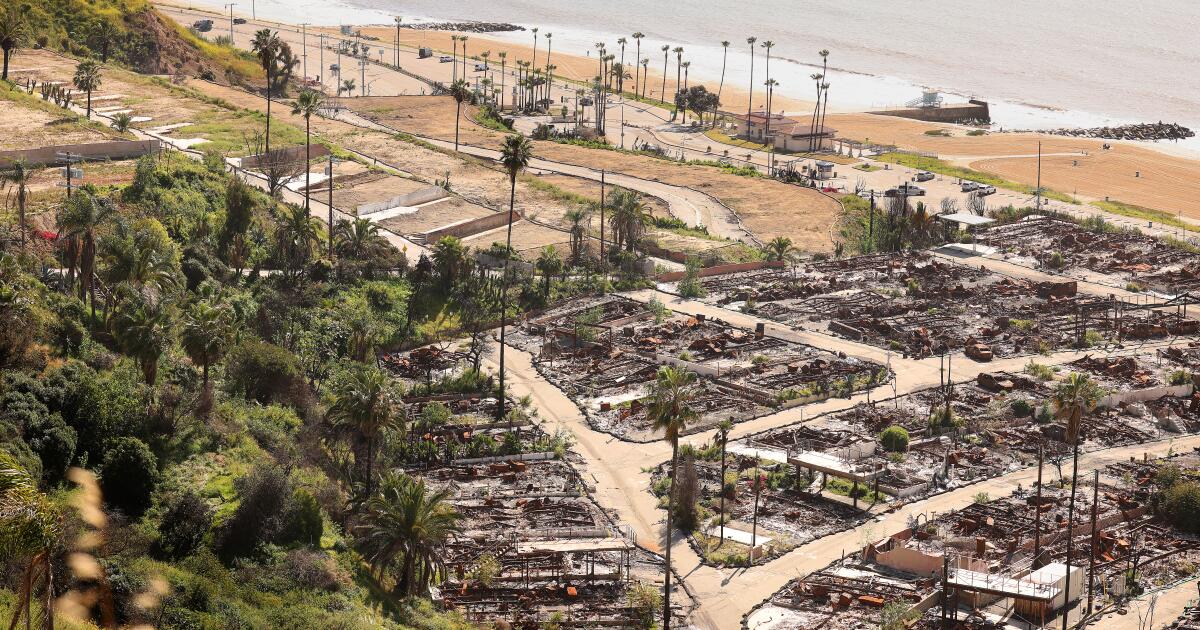
Home insurer surcharges for wildfires is legal, judge rules

