North Dakota
Scientists discover ancient river-dwelling mosasaur in North Dakota


Some 66 million years ago, a city bus-sized terrifying predator prowled a prehistoric river in what is now North Dakota.
This finding is based on the analysis of a single mosasaur tooth conducted by an international team of researchers from the United States, Sweden, and the Netherlands.
The tooth came from a prognathodontine mosasaur — a reptile reaching up to 11 meters long. This makes it an apex predator on par with the largest killer whales.
It shows that massive mosasaurs successfully adapted to life in rivers right up until their extinction.
Isotope analysis
Dating from 98 to 66 million years ago, abundant mosasaur fossils have been uncovered in marine deposits across North America, Europe, and Africa.
However, these marine reptile fossils have been rarely found in North Dakota before.
In this new study, the large mosasaur tooth was unearthed in a fluvial deposit (river sediment) in North Dakota.
Its neighbors in the dirt were just as compelling: a tooth from a Tyrannosaurus rex and a crocodylian jawbone. Interestingly, all these fossilized remains came from a similar age, around 66 million years old.
This unusual gathering — sea monster, land dinosaur, and river croc — raised an intriguing question: If the mosasaur was a sea creature, how did its remains end up in an inland river?
The answer lay in the chemistry of the tooth enamel. Using advanced isotope analysis at the Vrije Universiteit in Amsterdam, the team compared the chemical composition of the mosasaur tooth with its neighbors.
The key was the ratio of oxygen isotopes.
The mosasaur teeth contained a higher proportion of the lighter oxygen isotope than is typical for mosasaurs living in saltwater. This specific isotopic signature, along with the strontium isotope ratio, strongly suggests that the mosasaur lived in a freshwater habitat.
Analysis also revealed that the mosasaur did not dive as deep as many of its marine relatives and may have fed on unusual prey, such as drowned dinosaurs.
The isotope signatures indicated that this mosasaur had inhabited this freshwater riverine environment. When we looked at two additional mosasaur teeth found nearby, slightly older sites in North Dakota, we saw similar freshwater signatures. These analyses show that mosasaurs lived in riverine environments in the final million years before going extinct,” explained Melanie During, the study author.
Transformation of the Seaway
The adaptation occurred during the final million years of the Cretaceous period.
It is hypothesized that the mosasaurs were adapting to an enormous environmental shift in the Western Interior Seaway, the vast inland sea that once divided North America.
Increased freshwater influx gradually transformed the ancient sea from saltwater to brackish water, and finally to mostly freshwater, similar to the modern Gulf of Bothnia.
The researchers hypothesize that this change led to the formation of a halocline: a structure where a lighter layer of freshwater rested atop heavier saltwater. The findings of the isotope analyses directly support this theory.
The analyzed mosasaur teeth belong to individuals who successfully adapted to the shifting environments.
This transition from marine to freshwater habitats (reverse adaptation) is considered less complex than the opposite shift and is not unique among large predators.
Modern parallels include river dolphins, which evolved from marine ancestors but now thrive in freshwater, and the estuarine crocodile, which moves freely between freshwater rivers and the open sea for hunting.
Findings were published in the journal BMC Zoology on December 11.



North Dakota
Challengers declare victory after ND Supreme Court rules against Legislature’s attempt to alter term limits

BISMARCK — A constitutional ballot measure to amend the state’s term limits law as proposed by the Legislature will not appear on November’s ballot, the North Dakota Supreme Court ruled Thursday, siding with petitioners who argued the Legislature exceeded its authority and violated the state constitution in proposing the changes.
“The people’s voice was heard,” Grand Forks County Commissioner Terry Bjerke said in reaction to the news.
Bjerke was a member of the sponsoring committee behind the successful 2022 effort to pass a term limits initiative, which amended the state constitution by capping legislative term limits to eight years in the House and eight years in the Senate. The amendment, which became article XV of the state constitution, also included a clause barring the Legislature from making constitutional changes to term limits.
During the 2025 session, however, lawmakers narrowly approved Senate Concurrent Resolution 4008, in which the legislature proposed Constitutional Measure 1, a ballot measure to amend the term limits language to allow legislators to decide in which chamber they want to serve their 16 years, and to repeal the clause limiting the legislative assembly’s authority to propose an amendment to alter or repeal term limits.
Bjerke and former Minot legislator Oley Larsen brought the lawsuit challenging the validity of the Legislature’s action in January, and the state Supreme Court
heard oral arguments in the case
this spring.
“Those term limits may only be altered by a measure proposed by the people rather than the Legislative Assembly. And yet a few years later, the Legislative Assembly is doing what they are prohibited from doing,” attorney Zachary Wallen argued on Bjerke and Larsen’s behalf.
Tanner Ecker / The Bismarck Tribune
The Legislature’s attorneys argued the clause prohibiting legislative proposals to alter the constitutional term limits language “infringes on our republican form of government” by “limiting the people’s ability to vote on amendments proposed by their elected officials.”
Justice Jon Jensen seemed skeptical of that argument during the April 2 hearing, questioning whether a second vote was appropriate.
“The public did speak on this. The public spoke on it when it passed the original constitutional amendment and they said, ‘Legislature, you don’t even get to propose a change.’ They have already spoken on it,” Jensen said. “You want a second shot, or a second bite at the apple, not a first one, a second.”
In Thursday’s ruling, all five justices sided with Bjerke and Larsen.
“We … conclude the Legislative Assembly’s adoption of S.C.R. 4008 violated N.D. Const. art. XV … and declare S.C.R. 4008 and Constitutional Measure 1 void … We enjoin the Secretary of State from placing Constitutional Measure 1 on the November 2026 general election ballot,” the ruling said.
Bjerke thanked the legal team that worked on behalf of their lawsuit, and said he was grateful the court reached the conclusion it did.
“I’m thrilled that what the people voted on and approved has been validated,” Bjerke said.
He added that the Legislature had “multiple opportunities” to address term limits prior to 2022’s initiated measure and chose not to, and gave a nod to the country’s coming milestone and the process by which voters expressed their support for term limits.
“We’ve lasted 250 years,” Bjerke said. “I have two words for those elected leaders who think they aren’t: everyone’s replaceable.”
North Dakota
Fargo woman convicted in North Dakota fraud case now faces charges in Minnesota: A deeper dive

FARGO, N.D. (Valley News Live) – A North Dakota woman who was sentenced to 180 days in jail in Cass County for defrauding healthcare providers and Medicaid programs is now facing additional fraud charges in Minnesota.
Christine Marie Pryor, 55, pleaded guilty in November 2024 to theft by deception involving more than $50,000. She was sentenced to first serve 180 days with a 3-year sentence suspended. She received credit for 44 days already served.
Pryor was ordered to pay $82,584.78 in restitution to Southeast Human Services in Fargo, where she worked between 2018 and 2019.
How the scheme unfolded
According to court documents, Pryor worked at multiple healthcare facilities in North Dakota and Minnesota between 2018 and 2023, using the identities and credentials of three licensed professionals without their knowledge. She submitted fraudulent Capella University diplomas and transcripts to gain employment.
Investigators say Pryor admitted she searched state licensing websites for therapists who shared her first name, then used those therapists’ last names and license numbers when applying for jobs.
At Southeast Human Services, where she worked as a Licensed Addiction Counselor, Pryor earned $55,584.82 while providing therapy services to approximately 150 patients. She also opened her own counseling center, NIAM Brain Injury Center, in Fargo between 2020 and 2021, and worked at The Lotus Center in Moorhead, Minnesota, from 2021 to 2023.
Court documents say the three licensed professionals whose identities were used told investigators they had no knowledge of Pryor’s actions and did not give her permission to use their information.
Two additional charges against Pryor in North Dakota, unauthorized use of personal identifying information, were dismissed on motion of the state.
Additional charges in Minnesota
Pryor is also facing charges in Minnesota. Minnesota Attorney General Keith Ellison announced on Tuesday charges against Pryor in Clay County District Court for six theft offenses and six identity theft offenses related to defrauding Minnesota’s Medicaid program of more than $150,000.
According to the Minnesota complaint, Pryor claimed to provide psychotherapy and alcohol and drug counseling services to Medicaid recipients despite having no license or credentials to do so. Prosecutors allege she used the credentials and identities of three licensed professionals while claiming to provide Medicaid-funded services to 169 clients.
The Minnesota charges were filed as part of National Health Care Fraud Takedown Day, a joint effort involving the Department of Justice and more than 40 state Medicaid Fraud Control Units.
Copyright 2026 KVLY. All rights reserved.
North Dakota
NCAA Set to Change Unpopular Football Rule Just in Time for North Dakota State’s FBS Jump

North Dakota State playing in the FCS playoffs and College Football Playoff in back-to-back years? It’s likelier than you think.
That’s because on Wednesday, according to a report from Ross Dellenger of Yahoo! Sports, the NCAA Division I cabinet voted to repeal a rule that effectively barred teams transitioning from FCS to FBS from playing in postseason games in their first FBS seasons. The Bison are making that move along with Sacramento State in 2026.
The reported change has been a long time coming; the rule has hampered teams from immediate bowl eligibility for decades. Its good intentions of dissuading teams from rashly making the FCS-to-FBS leap have been rendered obsolete in recent years by the fact that programs generally arrive in FBS more prepared than ever before.
Consider the number of new FBS teams that have had to work within the provision in the past decade alone
That list includes: Liberty (home for the holidays at 6–6 in 2018), James Madison (8–3 in 2022 under coach Curt Cignetti, and barely able to play in a bowl at 11–1 in ’23 due to a lack of bowl-eligible teams), Jacksonville State (8–4 in ’23 before backing in like the Dukes), Missouri State (7–5 in 2025, also backed in) and Delaware (6–6 in ’25, ditto).
James Madison in particular became a cause célèbre in ’23 because it started the season 10-0, climbing as high as No. 18 in the AP Poll in mid-November. Then-Virginia attorney general Jason Miyares bandied about suing the NCAA before the Dukes lost 26–23 to Appalachian State, an event that caused the program to back off and accept a bid to play Air Force in the Armed Forces Bowl. James Madison lost that game 31–21, by which time Cignetti had left for Indiana.
There was a time when the FCS-to-FBS jump was an imposing one, and the NCAA did not want to incentivize making it lightly—not even a proud Florida A&M program could make a mid-2000s attempt at a jump stick. However, the Flames, Dukes and other teams have shown it’s not so great a climb for programs with the right resources and management.
Now the Bison and the Hornets stand to benefit.
How far can North Dakota State and Sacramento State go in the near term?
The Bison opened 12–0 last year before a shock loss to Illinois State in the FCS playoffs’ second round, so that question may answer itself. North Dakota State does not play a single Power 4 team—a potential strength-of-schedule albatross if it has designs on really surging. A potential roadblock: the fact that the Bison have to visit the Mountain West’s two favorites, UNLV (Oct. 10) and New Mexico (Oct. 24).
It’s a different story for the Hornets, a 7–5 squad a year ago whose move to the FBS is widely seen as a gamble on their growth potential. Sacramento State also does not play a major-conference team, but has a breakneck travel schedule ahead of it—the Hornets will visit Ypsilanti, Mich.; Bowling Green, Ohio; Muncie, Ind.; Mount Pleasant, Mich. and Honolulu. Combine that with a first-year coach—Oakland native and ex-MC Hammer choreographer Alonzo Carter—and it could be a long FBS debut in California’s capital.
More College Football From Sports Illustrated
Listen to SI’s college sports podcast, Others Receiving Votes, below or on Apple and Spotify. Watch the show on SI’s College YouTube channel.
 Add us as a preferred source on Google
Follow
-
 Politics2 minutes ago
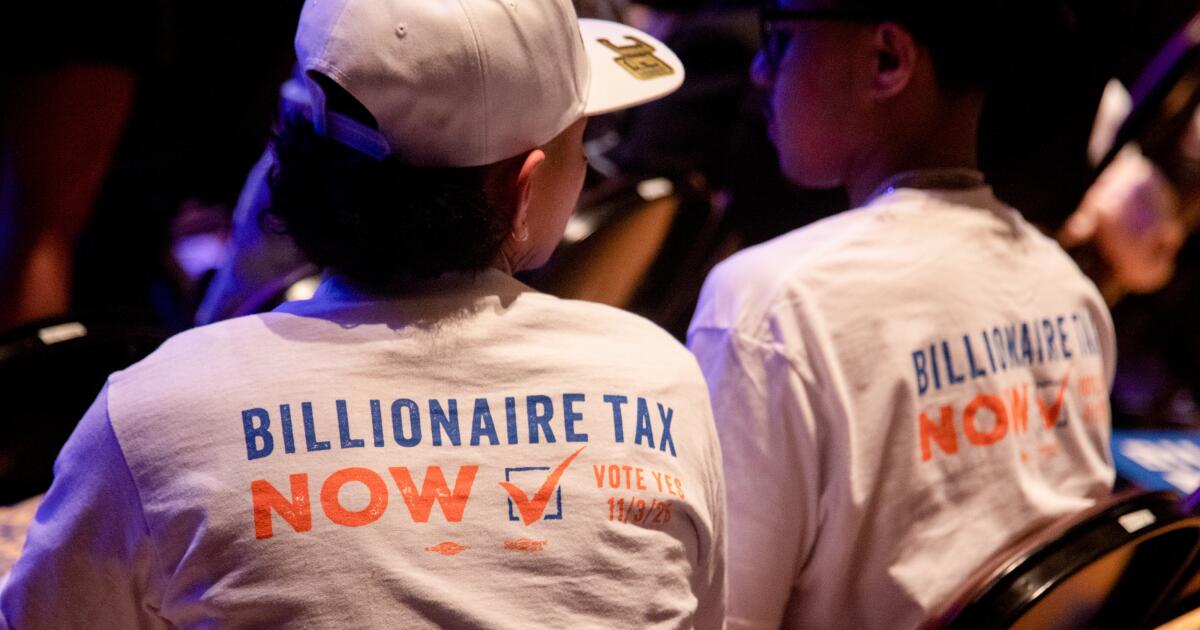
Controversial billionaire tax proposal will appear on November ballot
-
 Sports10 minutes ago
Shohei Ohtani is the first Dodger to be named 2026 All-Star
-

 World20 minutes ago
Who will control Africa’s AI infrastructure and at what cost
-
 News47 minutes ago
The Supreme Court says the U.S. can turn away asylum seekers at the border
-

 Los Angeles, Ca2 hours ago
Jury says it is deadlocked in trial of man accused in Palisades Fire
-

 Detroit, MI2 hours ago
Scene active as police shoot, kill man on Detroit’s west side
-

 San Francisco, CA3 hours ago
Civil grand jury report warns of wildfire risk at SF’s Glen Canyon Park
-

 Dallas, TX3 hours ago
Ivory Coast advances at World Cup, how to buy Ivory Coast tickets

