Virginia
Feds want graduate nursing programs to reduce costs. This Virginia nurse worries changes will increase debt.


RICHMOND, Va. — University of Virginia graduate nursing student Nelly Sekyere worries that proposed federal loan cuts could prevent future students like herself from pursuing advanced nursing degrees that are helpful in filling shortages in underserved communities.
Sekyere’s parents moved to the United States from Ghana to pursue the American Dream. They worked hourly wage jobs to support their two kids and ultimately became licensed practical nurses, but they never had much money.
Nelly Sekyere
“My dad’s credit score was to the point where it was just awful. He had to file for bankruptcy. He was in so much debt,” Sekyere said.
Still, their children had big dreams and understood the value of hard work. Sekyere, who currently works as a nurse for a local health department, is now a student at UVA pursuing her doctorate to become a family nurse practitioner and to teach others who want to be nurses.
“I do plan to work in underserved communities and rural regions because that is something I am used to, and I feel that is where my expertise are needed the most,” Sekyere said.
She is able to pursue the doctorate because she qualifies for $200,000 in federal graduate degree loans. She said that without the loans, she couldn’t afford the degree.
“I would not. I physically could not afford it,” Sekyere said.
But future nursing graduate students like her may not be able to access as much federal loan money under graduate loan program changes within the One Big Beautiful Bill. Those changes would mean students enrolling in post-baccalaureate nursing programs would be eligible for half the amount of money in federal graduate loans they are currently allowed to take out.
Currently, they can take out $200,000 in federal graduate loans. That number would drop to $100,000 if the changes take effect.
“This impacts those that are pursuing a master’s in nursing, a doctorate of nursing practice or a PhD in nursing,” said Cindy Rubenstein, Director of Nursing and a professor at Randolph Macon College. “Those graduate programs actually prepare nurses to be advanced practice nurses whether that is a Nurse Practioner in primary care, midwives specialists, and also as educators and nurse scientists.”
On its website, the U.S. Department of Education states “95% of nursing students borrow below the annual loan limit and are therefore not affected by the new caps. Further, placing a cap on loans will push the remaining graduate nursing programs to reduce costs, ensuring that nurses will not be saddled with unmanageable student loan debt.”
Rubenstein said she understands the administration’s desire to control tuition costs and limit borrowing amounts. But she says the reality is that the proposal does not take into account the cost of key professional programs that we have shortages in.
“Health care training at the graduate level is more expensive than other training programs and other graduate degrees and that is because of the requirements for clinical practice,” Rubenstein said.
Both Rubenstein and Sekyere worry that reducing the amount of federal loan money a person can take out to pursue those higher nursing degrees will stop people from entering the programs because they either don’t qualify for a private loan or the interest rate is too high.
“I likely foresee in the future that graduate students are going to get themselves into private loan debt and with these programs there is no student loan forgiveness, there is no leniency, there is no income driven plans for you to be able to pay that back,” Sekyere said.
The federal loan changes are slated to take effect July 1 of next year. The Education Department is still working to define exactly which professional programs will no longer be eligible for the higher loan amounts and may make changes based on public comments.
CBS 6 asked Congressman Rob Wittman (R-1st District), who voted for the One Big Beautiful Bill, about the changes to the graduate nursing loans, and he sent us the following statement:
“Our healthcare professionals, especially our nurses, work tirelessly to serve our communities and ensuring pathways to training and education is essential. This proposed rule from the Department of Education has not yet been finalized, and there will be another opportunity for public comment. I will continue to monitor this situation as it develops and I remain committed to addressing the affordability of higher education.”
CBS 6 is committed to sharing community voices on this important topic. Email your thoughts to the CBS 6 Newsroom.
📲: CONNECT WITH US
Blue Sky | Facebook | Instagram | X | Threads | TikTok | YouTube

This story was initially reported by a journalist and has been converted to this platform with the assistance of AI. Our editorial team verifies all reporting on all platforms for fairness and accuracy. To learn more about how we use AI in our newsroom, click here.



RICHMOND, Va. — Jerrod Buford first picked up a paintbrush as a kid, never imagining that same creative outlet would carry him through his darkest days in prison.
Buford, who grew up in Williamsburg, was convicted and arrested as a young man and spent almost a decade behind bars. During that time, he struggled deeply.
“Turning to drugs and alcohol to kind of shadow over emotions,” Buford said. “Looking for acceptance, approval. Not just from my parents, but from friends, from, you name it. I mean, I tried to commit suicide, I don’t even know how many times,” Buford said.
WTVR
It was inside prison walls that art became more than a hobby.
“Throughout my prison time, I learned, the freedom that I desired, I’ve always had it. I got, I found it, in a box,” Buford said.
More than three years after his release, Buford continues to advocate for art as a tool for healing. He describes his work as a gift he feels called to share.
“I received a blessing from God that just allowed me to display what he’s given me,” Buford said.
For Buford, creating art is also a way of processing his past.
“That’s what art has done for me. It’s given me the ability to look at parts of my life, all parts of my life, and find the good and the negative, learn from the negative,” Buford said.
He shares his story and artwork with a wide audience through social media, including live sessions on TikTok, and holds art classes with new communities.
The Story Cafe
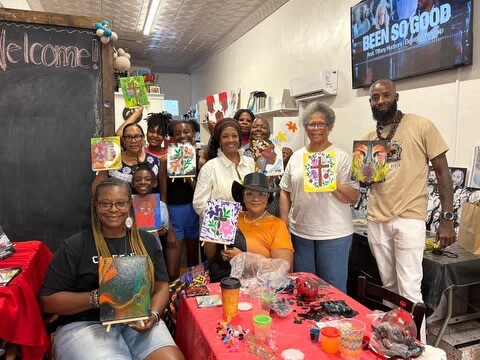
Buford said his mission is to help others find their own path toward healing — whatever form that takes.
“What I strive to do is guide this person to just create, man. Don’t care what people think about your creation, you just need to get it out,” Buford said. “Whether it’s with art, addressing your mental health, getting your life right — just do it.”
CBS 6 is committed to sharing community voices on this important topic. Email your thoughts to the CBS 6 Newsroom.
📲: CONNECT WITH US
Blue Sky | Facebook | Instagram | X | Threads | TikTok | YouTube
This story was initially reported by a journalist and has been converted to this platform with the assistance of AI. Our editorial team verifies all reporting on all platforms for fairness and accuracy. To learn more about how we use AI in our newsroom, click here.

Lovingston, VA (7News) — Good Morning Washington interviews Amanda Beckwith of Virginia Distillery Company- one of the contributing distilleries to the Virginia Spirits Board’s 250th Celebration Trio Pack, a special, exclusive release created to commemorate America’s upcoming 250th anniversary. This limited-edition package features a curated collection of a rum, a gin, and a whiskey, all crafted from scratch by distillers in Virginia to celebrate the rich history and current state of distilling within the Commonwealth.
Beckwith elaborates on VA Distillery Company’s role in the project, noting her focus on Virginia-grown grain to make the bottle of unique whiskey that is included in the Trio Pack. It is also worth noting that the Trio Packs themselves were bottled and produced right here at Virginia Distilling Company!
American single malts are the newest official category of American whiskey, distilled from one grain and from a single distillery. Virginia Distillery Co specializes in this new category of whiskey and crafted their contribution to the Trio Pack with this very specialty. Given the limited remaining availability of the Trio Pack, its historical value and collectible nature, the message it loud and clear encouraging viewers to grab a pack before they are all gone!
BE THE FIRST TO COMMENT
21+ Please drink responsibly, this content is sponsored by Virginia Distillery Company.


Powerball, Mega Millions jackpots: What to know in case you win
Here’s what to know in case you win the Powerball or Mega Millions jackpot.
Just the FAQs, USA TODAY
The Virginia Lottery offers multiple draw games for those aiming to win big.
Here’s a look at June 24, 2026, results for each game:
Powerball
Powerball drawings are held Monday, Wednesday and Saturday at 11 p.m.
13-14-16-21-38, Powerball: 14, Power Play: 2
Check Powerball payouts and previous drawings here.
Saturday, June 27, 2026
Pick 3
DAY drawing at 1:59 p.m. NIGHT drawing at 11 p.m. each day.
Night: 3-1-5, FB: 8
Day: 7-8-8, FB: 4
Check Pick 3 payouts and previous drawings here.
Pick 4
DAY drawing at 1:59 p.m. NIGHT drawing at 11 p.m. each day.
Night: 4-7-2-1, FB: 7
Day: 7-3-4-6, FB: 3
Check Pick 4 payouts and previous drawings here.
Pick 5
DAY drawing at 1:59 p.m. NIGHT drawing at 11 p.m. each day.
Night: 7-5-2-6-9, FB: 0
Day: 6-9-4-0-7, FB: 0
Check Pick 5 payouts and previous drawings here.
Cash Pop
Drawing times: Coffee Break 9 a.m.; Lunch Break 12 p.m.; Rush Hour 5 p.m.; Prime Time 9 p.m.; After Hours 11:59 p.m.
Coffee Break: 12
After Hours: 08
Prime Time: 13
Rush Hour: 01
Lunch Break: 14
Check Cash Pop payouts and previous drawings here.
Cash 5
Drawing every day at 11 p.m.
09-12-15-24-43
Check Cash 5 payouts and previous drawings here.
Bank a Million
Bank a Million draws are held every Wednesday and Saturday at 11 p.m.
18-21-25-33-36-39, Bonus: 13
Check Bank a Million payouts and previous drawings here.
Millionaire for Life
Drawing everyday at 11:15 p.m.
03-04-10-36-37, Bonus: 05
Check Millionaire for Life payouts and previous drawings here.
Feeling lucky? Explore the latest lottery news & results
This results page was generated automatically using information from TinBu and a template written and reviewed by a Center for Community Journalism (CCJ) editor. You can send feedback using this form.
-

 Technology7 minutes ago
World Cup ticket scams target desperate fans
-
Business9 minutes ago
Snap sued by parents of girl who was raped by man she met on Snapchat
-
 Entertainment15 minutes ago
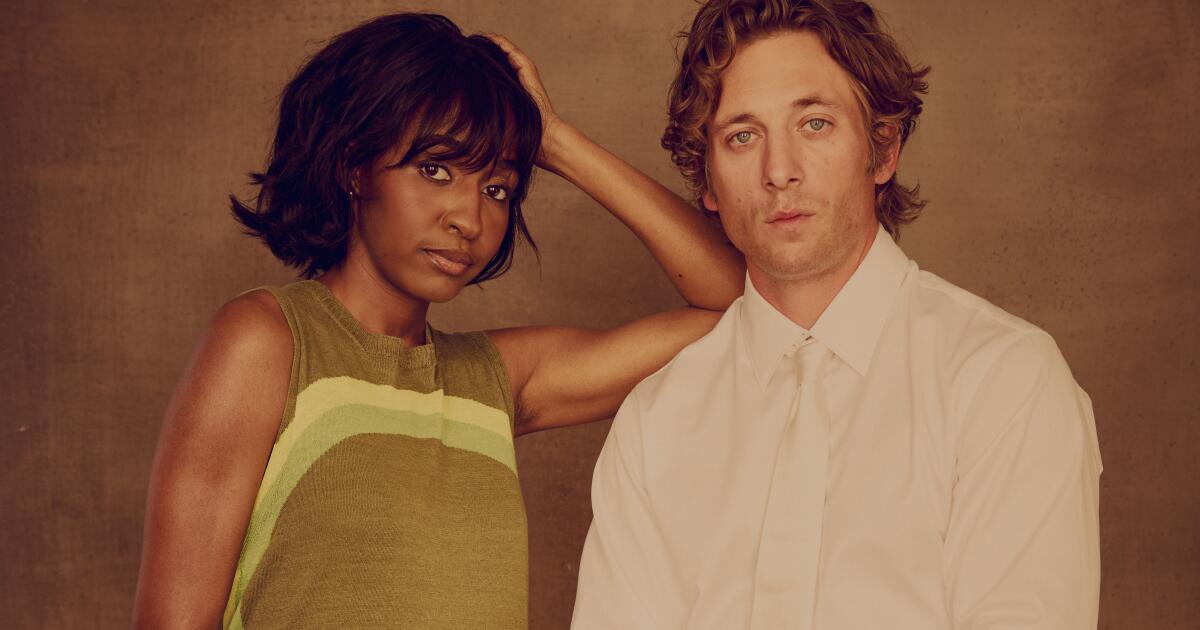
‘The Bear’ at closing time: Ayo Edebiri and Jeremy Allen White reflect on five seasons
-
 Lifestyle22 minutes ago
L.A. Affairs: After decades of near-misses, I finally told him: ‘I’m not leaving here without you’
-
 Politics25 minutes ago
Trump budget request omits funds for L.A. fire relief, prompting criticism from senators
-
 Science30 minutes ago
EPA touts crackdown on smuggled pesticides in L.A. visit
-
 Sports37 minutes ago
Commentary: Did Padres curse themselves by messing with that anti-Dodgers FTD burger?
-

 World45 minutes ago
Copernicus lead warns extreme heat measures needed or deaths to ensue


