Hawaii
Ways you can protect your family and home during and after hurricane season


HONOLULU (HawaiiNewsNow) – Hawaii’s hurricane season technically ends this weekend, advocates say now is the time to ramp up emergency preparedness efforts for next season.
Honolulu Neighborhood commission chair Larry Veray joined us with what community leaders are doing.
The commission made a it a priority for Year 2026 to educate all neighborhood residents and provide them advice on how to fortify their homes and high rises to minimize the loss of life and property in a severe disaster like extreme hurricanes and wildfires.
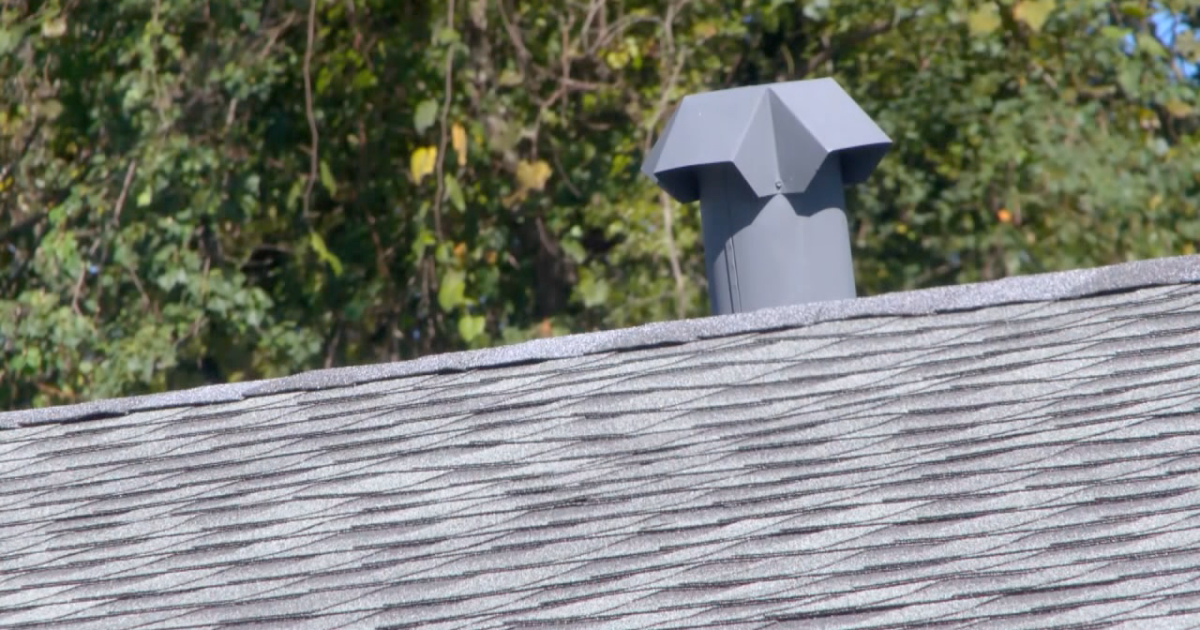
“There are over 80,000 wooden homes on Oahu,” said Veray. “With a Category 3-5 hurricane, many houses will lose their roofs and begin to disintegrate with windows and walls followinging.”
Veray also facilitates guest presenters for the Pearl City Neighborhood Board next year and ask Hawaii legislators to facilitate a town hall meeting next year.
Click here for more information on the neighborhood board.
Copyright 2025 Hawaii News Now. All rights reserved.





Someone with a seven-figure portfolio wants to retire early in Hawaii and insists on living off yield rather than drawing down the balance. It sounds elegant on paper. The math is harder than a calculator will admit, especially in a state where the cost of living index sits at 109.951, second highest in the country, and where the tax code treats different retirement dollars very differently. Here is what it actually takes.
The Real Cost of a Modest Hawaii Year
Assume a single retiree on Oahu who owns a mid-tier condo outright. Even mortgage-free, carrying costs shock. Honolulu condo HOA fees run roughly $800 a month, or $9,600 a year. Property tax on an owner-occupied $800,000 unit lands near $2,400. Insurance with a hurricane rider, harder to get and pricier since the Lahaina fire, is now $2,500 or more. Electricity through the island utility is roughly triple mainland rates, easily $3,600 a year. Housing alone, with no mortgage, clears $18,000.
Groceries in Hawaii run well above the USDA moderate plan because almost everything arrives by ship. Budget $9,000 for one. A pre-Medicare ACA silver plan for a 62-year-old, depending on MAGI relative to the subsidy cliff, runs anywhere from $9,600 with subsidies to over $18,000 unsubsidized. Transportation, a used car, fuel, and the state’s registration fees add another $5,000. Personal spending (one mainland trip a year, gifts, hobbies, small repairs, and a reserve for the next roof or appliance) puts another $10,000 in the budget.
Before taxes, that is roughly $55,000 to $60,000 of hard spending. National context: average annual U.S. household expenditures were $78,535 in 2024, and Hawaii pushes almost every category above that baseline.
What $1.5 Million Actually Yields
Living on yield means the portfolio itself has to produce your paycheck. Current market conditions help: the 10 year Treasury yields 4.58%, and the 10 year TIPS real yield is 2.32%. A blended portfolio of a Treasury ladder, investment-grade corporate bonds, and dividend ETFs can realistically throw off around 4% cash yield today without eating capital. On $1.5 million, that is roughly $60,000 gross a year.
Subtract federal tax on the taxable share (interest and non-qualified dividends taxed as ordinary income, qualified dividends at 15%), and Hawaii state tax on top, and the net drops to about $50,000 to $53,000. Compare that to $55,000 to $60,000 of Hawaii spending and the gap is visible. There is no cushion.
Social Security is the pressure release, but only if you wait. Claiming at 62 permanently cuts your benefit by roughly 30%; delaying to 70 grows the check by about 8% for each year you defer. A worker with a solid earnings history who waits until 70 can add $40,000+ a year of inflation-adjusted income that never touches the $1.5 million. That is the difference between white-knuckling the budget and living comfortably. The 2026 COLA of 2.8% compounds on that base for the rest of your life.
The Hawaii Tax Wrinkle Most People Miss
Hawaii does not tax Social Security. Hawaii also fully exempts distributions from employer-funded pension plans, including the employer contribution portion of a 401(k). What Hawaii does tax, at rates that rank 46th nationally on individual income tax competitiveness, are distributions from IRAs, Roth conversions of pre-tax money, and self-directed 401(k) elective deferrals. Top bracket runs to 11%.
Two retirees with identical $1.5 million balances can face very different Hawaii tax bills depending on how those dollars were originally contributed. If most of your portfolio is in a taxable brokerage account or a Roth, you sail through Hawaii’s tax code. If it is a rollover IRA built primarily from your own 401(k) deferrals, you owe state tax on every dollar you pull, and the yield-only strategy suddenly nets closer to $48,000. Hawaii’s adjusted state and local tax burden of $10,006 per capita ranks second highest in the country, and retirees pulling from IRAs feel it.
The Roth conversion window before Social Security starts, and before Medicare’s IRMAA thresholds care about your income, is the tool that fixes this.
What It Actually Takes
To retire in Hawaii at 62 on $1.5 million without touching principal, you need three things to line up. First, a portfolio yielding around 4% today (roughly a mix of a Treasury ladder, investment-grade credit, and dividend equity) generating about $60,000 in gross cash income. Second, either an owned home or a locked-in low-rent situation, because Hawaii housing eats any budget that assumes mainland pricing. Third, Social Security deferred to at least full retirement age and ideally 70, which closes the gap between yield income and real Hawaii spending once you factor in CPI drift, currently at 332.6 and climbing.
The math works, but only barely, and only for a single retiree with paid-off housing and mostly Roth or taxable assets. Add a spouse, a mortgage, or an IRA-heavy tax profile, and $1.5 million is not enough to hold principal steady in Hawaii. The number you actually need in that harder case is closer to $2 million, or a willingness to draw down the balance at a disciplined 3.5% rate. The version of this retirement that leaves the $1.5 million untouched is real, but it is a narrow doorway, and the tax character of the money is what decides whether you fit through it.
Contact [email protected] for any questions or corrections.


HONOLULU (HawaiiNewsNow) – A ballet studio is celebrating 50 years of bringing dance to the islands and nurturing the next generation of performers with a special concert happening next month.
Ballet Hawaii executive director Richard Vida, choreographer David Weaver, and alumna performer Charli Ahlgren-Folkert joined HNN’s Sunrise Weekends to talk about their summer concert, “Forces of Nature,” at Leeward Community College Theatre on Saturday, Aug. 1, at 4 p.m.
The show is made up of students enrolled in Ballet Hawaii’s summer intensive session along with guest artists from Pacific Northwest Ballet, Carolina Ballet, and Sacramento Ballet.
“Every summer we do this incredible summer intensive or ballet boot camp. Students come from Japan, the continent and all over Hawaii and they study from 8 in the morning until 6:30 at night,” Vida said.
Weaver said he is choreographing a piece called “Volcanic Etudes,” centered on how the power and beauty of the islands were created by forces of nature.
Ballet Hawaii is a ballet training school that teaches, produces, presents and promotes dance in Hawaii, with more than 300 students of all ages. The organization has two studios, in Honolulu and Waipahu.
This fall, Ballet Hawaii is offering classes for all ages and levels, including musical theater and Sunday contemporary classes at their Honolulu studio.
Upcoming performances of The Nutcracker run in December.
For tickets to “Force of Nature,” use promo code FORCES20 for a 20% discount.
To learn more about classes or upcoming show click here.
Copyright 2026 Hawaii News Now. All rights reserved.
-

 Nevada3 minutes ago
REG – Sunrise Resources – New Copper-Silver-Gold Project, Nevada
-

 New Hampshire9 minutes ago
PFAS found in loon eggs across New Hampshire raise new concerns about lakes and fish
-

 New Jersey15 minutes ago
Online coffee brand plants roots with café in Hackensack
-

 New Mexico21 minutes ago
Monsoon storms continue for parts of New Mexico to start the week
-

 North Carolina27 minutes ago
North Carolina sets first elk hunt for 2027
-

 North Dakota33 minutes ago
“We felt if we didn’t, it may not be that again”: New Restaurant preserves rural North Dakota history
-
Ohio39 minutes ago
Ohio Lottery Pick 3 Midday, Pick 3 Evening winning numbers for July 19, 2026
-

 Oklahoma45 minutes ago
By the numbers: Oklahoma jail deaths under new scrutiny

