
⚽ Get the latest World Cup news
Receive updates on the 2026 FIFA World Cup


Yet, the full 10-person panel has not gathered in a meeting since, nor has the commission held a series of legally mandated hearings to gather public input ahead of a Dec. 15 deadline to produce its recommendations.
It appears unlikely the panel actually will do so. A commission spokesperson told the Globe that the panel intends to seek a second extension, and is “aiming” to have its next full commission meeting at some point in December.
“The Seal, Flag and Motto Advisory Commission has been hard at work engaging experts and the public about what they want to see in our state’s symbols,” Alana Davidson, the commission spokesperson, said in a statement. “We believe that more time is needed to ensure robust community engagement.”
Davidson did not respond to a question about how much more time the commission would seek from the Legislature, which wrapped up formal sessions for the year earlier this month.
The panel, similar to the one before it, has been trying to navigate a fraught debate about representation and potential erasure in the iconography the state assigns itself.
The effort to replace the flag dates back decades, but it gained traction in 2020, when the murder of George Floyd sparked a nationwide reexamination of race and historical emblems, including the Massachusetts seal.
Members of the state’s Indigenous community are themselves split on how to replace the state’s current 19th-century emblem, which sits on the state flag and depicts a colonist’s arm holding a sword above the image of a Native American. The image is draped by a Latin motto that roughly translates to: “By the sword we seek peace, but peace only under liberty.”
The design draws on the original seal of the Massachusetts Bay Colony, which featured a Native American man, naked but for some shrubbery around his groin, saying, “Come over and help us.” And the sword depicted once belonged to Myles Standish, a 17th-century military commander for the Plymouth Colony known for his brutality toward the Indigenous population.
When the panel released a set of new designs in August it had culled from public submissions, commission members cautioned that the proposals — which rated the highest during a round of internal scoring — were not the finalists from which a final recommendation would emerge.
In the months since, a group of commissioners have met in subcommittee meetings, during which members lamented moving too quickly to ask for ideas without better educating the public — and commission appointees themselves — about the problematic history of the state’s official emblem.
The commission’s work is also unfolding during a different time than in 2020. Over the last five years, the racial reckoning that helped spur the first commission has largely receded from the public view.
The debate over changing the flag has also since migrated onto the campaign trail, where some of Governor Maura Healey’s Republican opponents — both past appointees of former governor Charlie Baker, who signed the initial measure in January 2021— have cast the state’s effort as an attempt to erase the state’s own history.
“There’s a public misunderstanding about why the current flag is not appropriate,” Kate Fox, the executive director of the state’s Office of Travel and Tourism and the commission’s co-chair, said during a Sept. 9 meeting.
Critics have long said that the placement of a broadsword above the Native American figure is racist imagery and symbolizes the violence inflicted on Native American populations. Still others, both on and off the commission, have warned against eliminating Massachusetts’ Indigenous communities from the seal entirely.
The first iteration of the commission voted unanimously in 2022 for replacing the state’s motto and seal, but it disbanded the next year without offering specific substitutes for either.
Summer Confuorto, a current commission member, said in a late September subcommittee meeting that she’s heard pushback casting the panel’s effort to rethink the flag as a “liberal state that wants to make this change” and that Native Americans themselves aren’t driving it. In fact, she said, Indigenous leaders have been talking for decades about why the imagery needs to change.
“It’s not to waste people’s time and . . . there’s a purpose and intent” behind the commission’s work, said Confuorto, who has Gros Ventre, Cree, Mi’kmaq heritage, according to her employer, the Mass Cultural Council.
In a late October meeting, Rhonda Anderson, an Iñupiaq – Athabascan commission member who also is the Western Massachusetts Commissioner on Indian Affairs, said the advisory panel needs to both educate and reframe its work, including to other Native Americans, that “we’re actually providing something better” with a new emblem.
“When people believe that we’re taking something away, they just really clutch tighter,” Anderson said. “I don’t want to take anything away from anyone, but I do want to do better.”
Efforts to reach Confuorto, Anderson, and other members of the advisory commission for this story were not successful.
John “Jim” Peters, the executive director of the Commission on Indian Affairs and a state seal advisory commission member, said in a phone interview that the panel is tackling a “difficult question” and he himself is at odds with others on a path forward.
He said he’s made his preference clear: The “most effective” option, he said, is to simply remove the disembodied arm and sword from the state, and change the state motto.
Actually changing the seal and flag, however, is “something that the citizens of the state need to be on the same page [for],” he said.
Whenever the panel does submit its recommendations, the governor is required to submit legislation “to codify the new state motto and designs for the seal and flag,” though the law does not dictate when it must be submitted. The Legislature ultimately would then have to approve any changes.
Peters is not among the commission members who’ve sat in on subcommittee meetings in recent months, the last of which fell shortly before Halloween. But told the Globe he was aware that the advisory panel planned to seek an extension.
“Another holdup,” he said.
Matt Stout can be reached at matt.stout@globe.com. Follow him @mattpstout.


BOSTON, MA — An international restaurant group with locations across the globe is preparing to open its first Massachusetts restaurant this year.
LPM Restaurant & Bar, a French Riviera-inspired restaurant founded in London, is set to open on the second floor of the Four Seasons Hotel One Dalton Street in Back Bay, according to Four Seasons. The hotel lists the restaurant as “Opening Summer 2026,” while the Boston Business Journal reported the restaurant plans to open in September.
The Boston restaurant will mark LPM’s debut in the Northeast and its third U.S. outpost, following locations in Miami and Las Vegas, according to a Four Seasons announcement.
LPM, also known as La Petite Maison, was founded in London in 2007 and is known for French-Mediterranean food, Mediterranean ingredients and dining rooms influenced by Belle Époque design.
The business operates locations in London, Dubai, Miami, Abu Dhabi, Hong Kong, Riyadh, Limassol, Doha, Mykonos, Kuwait, Boston, Maldives and Bangkok.
Four Seasons said LPM will take over the space that formerly housed One Dalton’s breakfast concept, One + One. The restaurant will join other dining options at the hotel, including Zuma and Trifecta.
See Also:

A Massachusetts high school is under investigation after “several” teachers have been diagnosed with breast cancer or precancerous conditions.
The state Department of Public Health is set to visit Uxbridge High School on Thursday to “conduct a series of air quality tests,” to determine whether the multiple cases are potentially connected.
Superintendent David Ljungberg and Principal Michael Rubin alerted families and district staff on Monday of the “sombering news,” after Uxbridge High School’s graduation over the weekend.
“We are writing to inform you about a concern we are investigating at Uxbridge High School,” Ljungberg and Rubin stated in the letter. “Several female teachers have been diagnosed with breast cancer or precancerous conditions over the past few years.”
“It is, of course, possible that these multiple cases are not connected to one another,” the leaders added, “but out of abundance of caution, we are looking into any environmental factors at the school that may be a factor in their diagnoses.”
The 123,000-square-foot school, with an enrollment of roughly 600, was constructed in 2012 at a cost of $45 million, including a $22-million state reimbursement.
Uxbridge school leaders say they notified the state Department of Health and local health board as soon as they became aware of the cases, seeking “counsel about how best to proceed.”
“Massachusetts DPH officials have indicated that there is no evidence of immediate danger in the building and no reason to limit access to or use of the facility at this time,” they wrote in their letter. “In fact, the public health officials have commended our decision to approach them with these concerns, our readiness to partner with them in support of the evaluation process.”
Health officials are assessing the school’s interior and exterior to “ensure there are no issues with the infrastructure that would present risks (including electrical, plumbing, mechanical, HVAC, and other systems)” and the indoor and outdoor air quality on campus.
The superintendent and principal said that state officials have ruled out water supply as a “risk factor” after “thorough testing.”
“The team has reached out to the women who have been diagnosed, requesting data to evaluate whether there may be a connection among their cases,” Ljungberg and Rubin wrote. “We are grateful for their cooperation.”
They added that the state has said discovering an environmental “smoking gun” is “rare” in workplace investigations.
“However, even if a direct causal link is not established,” the leaders wrote, “the administration is utilizing this process to rigorously test the building and guarantee that it meets all safety standards moving forward.”

Local News
Massachusetts lawmakers are considering a measure that would allow cities and towns to temporarily extend bar and restaurant hours during the summer, as the state prepares to host FIFA World Cup matches and celebrations marking the nation’s 250th anniversary.
The legislation (H.5465) filed by state Rep. Carole Fiola, would allow licensed establishments to sell alcohol one hour later than their normal closing time, up to 3 a.m., between June 1 and Aug. 31, 2026. The bill would also allow communities to establish designated public consumption districts where alcohol could be consumed in approved public spaces.
In a press release announcing the bill, Fiola said the summer’s threefold events lineup — the World Cup, Tall Ships, and July 4th — is an economically significant moment that the state should take advantage of.
“We should capitalize on these events that will generate economic benefits for small businesses and the state as a whole. It’s a local opt-in idea worth exploring that’s being done in other states,” Fiola said.
The proposal has received support from Boston Mayor Michelle Wu and most recently Gov. Maura Healey, who submitted written testimony Monday to the Joint Committee on Economic Development and Emerging Technologies urging lawmakers to advance the measure.
“Massachusetts is planning for a once-in-a-generation summer,” Healey wrote, according to the Boston Globe. “In 2026, we will celebrate the 250th anniversary of our nation’s founding, welcome tall ships from around the world to Boston Harbor for Sail Boston, and host seven FIFA World Cup matches in Foxborough, along with watch parties across the Commonwealth.”
The governor argued that the added flexibility could help local economies benefit from an influx of visitors.
“That flexibility can help communities capture more visitor spending, support jobs, keep downtowns active, and strengthen Massachusetts’ image as a dynamic destination ready to host the world and a place our residents, including our young professionals, are proud to call home,” Healey wrote.
She also urged lawmakers to move the legislation forward, saying it will “help Massachusetts meet the full economic and cultural opportunities for the summer ahead.”
In Rhode Island, a similar bill to allow bars and restaurants to remain open until 4 a.m. during the World Cup was signed into law on Friday.
Fiola’s bill remains before the Joint Committee on Economic Development and Emerging Technologies. Any final version would require approval from both the House and Senate before reaching Healey’s desk.

Receive updates on the 2026 FIFA World Cup


New ways to prevent flu revealed in ‘accidental’ lab breakthrough, study finds


Russell Wilson announces retirement from NFL after 14 seasons


Dark web monitoring: does it put your data at risk?
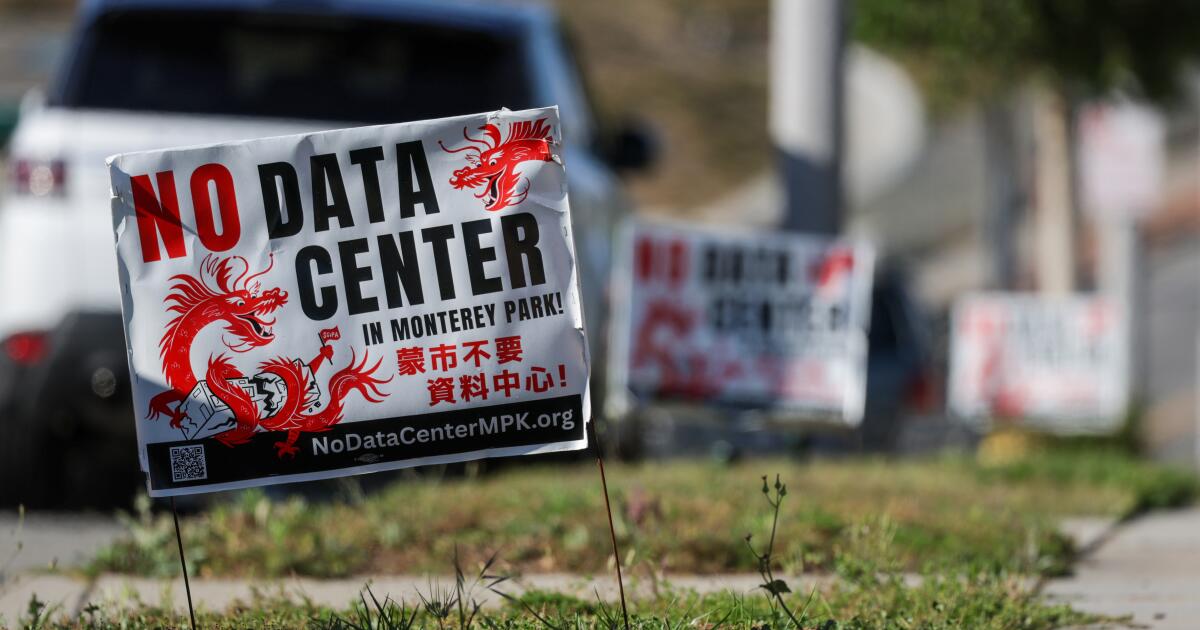
In a first for the country, voters in Monterey Park ban data centers

Review: Muscling past a flat script, a big-screen ‘Masters of the Universe’ embraces its own silliness

Hilton and Becerra lead California’s unsettled governor’s race; Steyer faces elimination

‘SNL’ star Marcello Hernández to host 2026 ESPYs as show leaves L.A. for New York


US House passes Iran war powers resolution in rare moment of Trump backlash

