San Francisco, CA
San Francisco icon Dr. Amos Brown says he's 'repositioning,' not retiring, from Third Baptist Church


SAN FRANCISCO (KGO) — San Francisco is celebrating a true civil rights original this weekend: Dr. Amos Brown, pastor at the city’s Third Baptist Church for nearly 50 years is stepping aside. On Saturday, there were tributes and a street renaming ceremony.
The street in front of San Francisco’s Third Baptist Church, Pierce Street, has a new name. It was re-dedicated by the city as “Dr. Amos C. Brown Way,” honoring the man who led this church for nearly half a century.
“Reverend Brown, your name belongs on the street because your life has shaped it step by step for nearly half a century,” said San Francisco Mayor Daniel Lurie.
At 84, Brown is stepping aside at his church, one of the oldest predominately African American Baptist congregations in the West — but don’t call it retirement.
MORE: Bill Clinton gives high praise to SF Reverend Amos Brown
“I’m not actually retiring. I’m repositioning,” Brown said.
“Reverend Brown, some of you know his history. He’s a walking, living historian, but he’s been through the trenches and has stood up to injustices, put his life on the line for others,” said former San Francisco Mayor London Breed.
Amos Brown was never shy to speak his mind. Born in Jackson, Mississippi in 1941, Brown has been a man of many titles; scholar, activist and civil rights leader. As a college student at Morehouse College in Atlanta, Brown was one of only eight students in the only class Dr. Martin Luther King, Jr. ever taught there. He and King were once arrested together, along with 50 others.
“Dr. King, my teacher, was right when he said, ‘If we don’t learn to live together as brothers and sisters, we’re all going to parish as fools,” Brown said.
MORE: Bay Area Black history museum gets a permanent home: How it’s taking a closer look at rich past
Brown served as San Francisco supervisor beginning in the 1990s. He was an early supporter of LGBTQ+ rights and helped activate the faith-based community around important causes.
“Amos Brown has been in and out of each of those in one way or another and inspired them to participate on an organized basis where there was ever injustice,” said former San Francisco Mayor Willie Brown.
Brown transitions to his new role as pastor emeritus after giving his final sermon Sunday on the street which bears his name.
“Thank you Third Baptist for letting me serve here a little while,” Brown said.
Copyright © 2025 KGO-TV. All Rights Reserved.

San Francisco, CA
Retired San Francisco firefighter dies from lung cancer after Blue Shield denies treatment claims

SAN FRANCISCO (KGO) — The retired San Francisco firefighter at the center of a bitter insurance fight has lost his battle against cancer.
Ken Jones passed away Saturday, 14 months after being diagnosed with stage four lung cancer.
PREVIOUS REPORT: City asked to intervene after SF firefighter’s stage 4 lung cancer treatment denied by Blue Shield
We first told you about Jones in January — when the 17-year veteran and supporters asked the City Commission for help.
The Fire Department’s insurance carrier, Blue Shield, denied coverage for some of his recommended treatments.
Ken Jones was 70 years old.
SF firefighters rally for retiree denied cancer treatment by Blue Shield as more come forward
“After we got some publicity, thank you, a Blue Shield physician reached out to Ken’s physician, and they worked out a different plan that Blue Shield would cover. It’s still an incomplete plan,” said Helen Horvath, Jones’ wife when ABC7 Eyewitness News spoke to her in January, 2026.
Since then, Jones’ story has led to an investigation into other cases, with the city’s mayor vowing to support firefighters.
According to San Francisco’s Health Service Board, about 5,000 city employees and retirees are insured by Blue Shield. Now, city leaders are asking anyone who has been denied cancer treatment to speak up.
Tony Stefani with the Cancer Prevention Foundation said firefighters with a cancer diagnosis have a 14% higher chance of dying than other cancer patients in the general population.
“Current statistics tell us that 65% of the men and women in our profession are going to contract some form of cancer in their lifetime. Some of them will be fatal,” Stefani said.
In a Statement Blue Shield said, in part: “For Medicare members, health plans must follow medical policy established by the Centers for Medicare and Medicaid Services (CMS).”
Copyright © 2026 KGO-TV. All Rights Reserved.

Few things are more valuable in the Bay Area than real estate. In San Francisco, the median house price is now over $2 million. Last month, at least seven houses in the city sold for $1 million over the asking price, and buyers regularly offer to pay in cash or waive contingencies to stay competitive. Yet there is one thing that remains even more valuable than a house, and possibly more valuable than money itself: stock in Anthropic or OpenAI.
Last week, 160 Noe Street, an Edwardian home in San Francisco’s desirable Duboce Triangle neighborhood, was listed for sale at $2.9 million—or the equivalent amount in Anthropic or OpenAI shares, as based on those companies’ current valuations. Rachel Swann, the listing agent, says she was inspired to set these unusual terms after meeting several Anthropic employees at an open house for a different property. “These people have a lot of paper wealth, but they don’t always have the liquidity to do things they want,” Swann says. Some of these employees were expecting to come into as much as $50 million from their Anthropic shares, and wondered if they could use that as leverage to buy a house, according to Swann. “This kept coming up over and over again.”
Swann’s listing is unconventional, but not singular. In April, an investment banker named Storm Duncan offered to exchange his Mill Valley home and an adjacent parcel of land for Anthropic shares. And in May, Vijay Chattha, who owns an agency that does PR for tech companies, listed his Healdsburg home for $2.5 million, or $2 million in Anthropic stock. “I want to sell my house, and I want to invest in Anthropic,” Chattha says. “Why not combine the two?
Chattha’s house—a three bed, three bath with a pool and a bocce court in a part of Sonoma County that abuts some of the region’s most famous wineries—also comes with coveted short-term rental status, allowing the owner to list it on platforms like Airbnb. Only a handful of properties in Healdsburg come with that status, and only about a dozen come up for sale in a given year.
Chattha is offering a $500,000 discount to Anthropic employees because he believes the value of Anthropic shares will grow faster than any other investment, and his vacation home in wine country is the best bargaining chip he has to try to access them. “If you look at Anthropic’s growth last year, it’s insane,” he says, noting the $380 billion valuation the company claimed in February. “Now they’re raising at $965 billion. That’s three X in like three months.” He added that he was open to exchanging the house for shares in Anthropic, but not OpenAI, because he prefers using Anthropic’s products.
The real estate listings come at a time when investors are salivating at the record-high valuations of Anthropic and OpenAI, and even those considered wealthy by Bay Area standards are feeling FOMO about the affluence that could come from these companies’ debuts on the stock market. (On Monday, Anthropic submitted paperwork for its initial public offering; OpenAI is also reportedly preparing to file in the coming months.) Despite the unprecedented valuations of these companies, many people believe their stock prices will only go up, and that anyone who gets a piece now could win the jackpot.
People are clamoring to buy equity in OpenAI and Anthropic on the secondary market, leading to a frenzy of transactions that may or may not be legitimate. As a result, Anthropic updated its policy around “unauthorized Anthropic stock sales” this spring, which notes that “if someone purports to sell Anthropic shares without proper board approval, that transaction is invalid.” A spokesperson for Anthropic pointed back to this policy when asked about the possibility of exchanging company shares for real estate.

Welcome to our running tally of Election Night results. Or, as this is California, well beyond tonight, as results continue to trickle in.
The first batch of results should arrive at 8:45 p.m., with three more to follow tonight. The Department of Elections has the breakdown.
San Francisco is voting in three special elections, for District 2 and District 4 supervisors and for a Board of Education member. Both supervisor races are referendums on housing, especially District 2, while the main backdrop of the D4 race is all the hot feelings around the fate of the Sunset Dunes Park (nee Great Highway).
The winners of all three special races will have to compete again in November for their seats.
Keeping it local, SF is also voting on four ballot measures. Prop A is for a bond to pay for an emergency water-system. B is for term limits. C and D are dueling measures related to the “overpaid CEO” tax. (Links go to our reporting on each race or issue; or click here for our Election 2026 page.)
Vote local, think national: Which two candidates will advance to the November election to replace Nancy Pelosi?
Statewide races include the primaries for governor, education superintendent, lieutenant governor, and much more.
Polls close soon. If you haven’t voted yet, find your polling station here.
Tuesday, June 2, 5:40 p.m.
Two and a half hours until our polls close. Before we go down the local rabbit hole, a reminder that other states have primary action today: New Jersey, Iowa, New Mexico, South Dakota, and Montana.
Why does it take so long to get results in California? CalMatters has you covered on that story. We shouldn’t expect a call tonight on the governor’s race.
The last big election was November 5, 2024. (Remember?) Ten days later, there were still races to call in San Francisco.
So if you’re waiting for the pundits (and maybe even us) to tell you What It All Means, you might have to wait a while.
More from The Frisc…
-

 World5 minutes ago
Trump expands Cuba sanctions beyond US companies in major crackdown on foreign enablers
-

 Politics8 minutes ago
Bessent flips script on Dem senator with reminder about his son’s past ties to Epstein
-

 Health20 minutes ago
New ways to prevent flu revealed in ‘accidental’ lab breakthrough, study finds
-

 Sports23 minutes ago
Russell Wilson announces retirement from NFL after 14 seasons
-

 Technology28 minutes ago
Dark web monitoring: does it put your data at risk?
-
 Business35 minutes ago
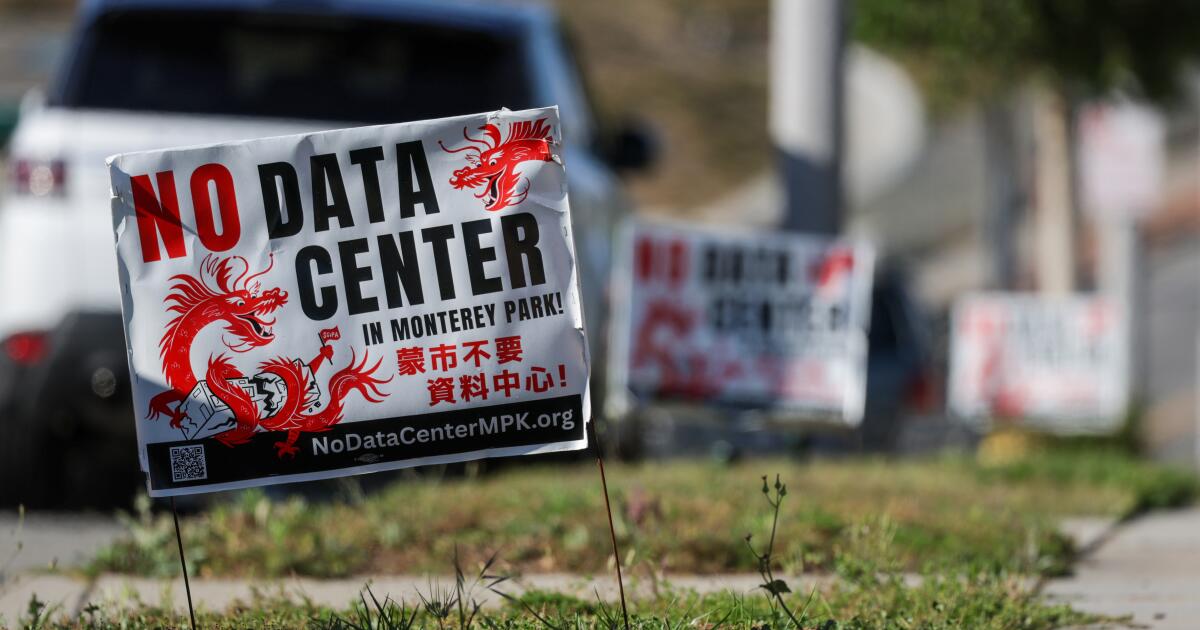
In a first for the country, voters in Monterey Park ban data centers
-
 Entertainment38 minutes ago
Review: Muscling past a flat script, a big-screen ‘Masters of the Universe’ embraces its own silliness
-
 Politics50 minutes ago
Hilton and Becerra lead California’s unsettled governor’s race; Steyer faces elimination

