Washington, D.C
3 takeaways from the military parade and No Kings protests on Trump's birthday


Members of the U.S. Army Band “Pershing’s Own” watch fireworks at the end of a military parade commemorating the Army’s 250th anniversary on Saturday in Washington, D.C.
Julia Demaree Nikhinson/AP
hide caption
toggle caption
Julia Demaree Nikhinson/AP
The U.S. Army celebrated its 250th anniversary on Saturday with a massive military parade in Washington, D.C., against a backdrop of political division and protests savaging President Trump rippling across the country.
Trump, whose 79th birthday corresponded with the Army anniversary, had long dreamed of holding such a display of America’s military might.
The parade stirred up controversy for what opponents view as a politicization of the nation’s armed forces and a break from U.S. democratic norms, and sparked an organized No Kings protest movement across the country on Saturday.

Here’s how the day unfolded.
1. Stormy clouds didn’t rain on the parade
Despite threats of lightning and storms rolling into D.C., the parade went ahead as advertised.
It featured dozens of armored tanks and artillery vehicles, such as HIMARS, army aircraft, including Black Hawk helicopters and Apaches, and more than 6,000 uniformed troops. The idea was to walk viewers through the history of American military conflict, with some historical uniforms and vehicles being used.

Armored vehicles drive during the Army 250th Anniversary Parade in Washington, DC on June 14, 2025.
Alex Wroblewski/AFP via Getty Images
hide caption
toggle caption
Alex Wroblewski/AFP via Getty Images

Members of the U.S Army parade down Constitution Avenue, representing the Revolutionary War era.
Andrew Harnik/Getty Images
hide caption
toggle caption
Andrew Harnik/Getty Images
Additionally, 34 horses, two mules and one dog — a Blue Heeler named Doc Holliday — joined the march.
Mike Davis, a 30-year Army serviceman who was at the parade as a spectator, said he welcomed the flashy affair — that the military had been overdue for a big bash.

“The last time we’ve had a military parade of any sorts, I recall, is the Gulf War,” Davis said. “So, it’s been a long time and what better way to celebrate it than the 250th?”
Davis said that protests against the event cast a pall on what he thought should be a celebratory occasion, but that he also backed people’s First Amendment rights to speak out.
“We go to war and defend the nation’s rights for the citizens to do things like that, so more power to it,” he said.
The weekend festivities came with an expected price tag of between $25 million and $45 million, according to Army spokesperson Heather J. Hagan. That includes planned road repairs due to possible damage from tanks rolling on city streets.
2. Trump got the thing he has wanted for years
Trump wanted to hold the parade during his first term, but it was scrapped because it was deemed too expensive. He was inspired after attending the annual Bastille Day parade in France in 2017. That parade celebrates French mobs taking over the Bastille state prison in 1789.
In closing remarks following Saturday’s procession, he hailed the Army as the “greatest, fiercest and bravest fighting force” the world had ever seen.

President rump stands and salutes, flanked by Secretary of Defense Pete Hegseth and First Lady Melania Trump.
Mandel Ngan/AFP via Getty Images
hide caption
toggle caption
Mandel Ngan/AFP via Getty Images
“The Army keeps us free, you make us strong, and tonight you’ve made all Americans very proud,” he said. “Every other country celebrates their victories. It’s about time America did too. That’s what we’re doing tonight.”
After his speech, Trump was presented with a traditionally folded American flag — a gift usually reserved for the family members of fallen soldiers.
Since the parade was announced, there has been sharp criticism, particularly from Democratic lawmakers who called the showcase self-indulgent and a misuse of public funds.
“To use the military in this manner when Donald Trump is slashing veterans’ benefits to aggrandize himself, to communicate to the country his control over the military, is just another shameful act of this administration,” said Democratic Sen. Adam Schiff of California.
Other critics have said it’s a display of military force typically associated with autocratic governments in places like Russia or North Korea.
“It’s a vulgar display,” Democratic Gov. Gavin Newsom of California said during a news conference on Friday. “It’s the kind of thing you see Kim Jong Un, you see Putin, you see with dictators around the world that are weak.”
3. Protests spring up across the country
No Kings protests rippled peacefully across dozens of cities in the U.S.
Organizers estimated that more than 5 million people participated in more 2,000 planned protests, according to spokesperson Eunic Ortiz. While protests were peaceful, police in Culpeper, Va., arrested a man who “intentionally accelerated his vehicle into the dispersing crowd,” at the end of a protest. One person was hit, but no one was hurt, police said.
Tens of thousands marched peacefully in Philadelphia, where organizers were holding their main event, police said. Philadelphia was chosen as the hub, because “there’s an indelible link between Philadelphia and between the freedoms and the ideals that the country was founded upon,” said Joel Payne, spokesperson for MoveOn, one of the dozens of groups behind the No Kings protests.

Demonstrators hold signs as they march down Dolores street protesting the Trump administration during the No Kings rally in San Franscisco, Californina on June 14.
Nic Coury/AFP via Getty Images
hide caption
toggle caption
Nic Coury/AFP via Getty Images

A protestor holds a placard during a march down the Benjamin Franklin Parkway to the Philadelphia Museum of Art during a nationwide No Kings rally in Philadelphia on Saturday.
Erin Blewett/AFP via Getty Images
hide caption
toggle caption
Erin Blewett/AFP via Getty Images
Ezra Levin, co-founder and co-executive director of the nonprofit Indivisible, another No Kings coordinator, said the atmosphere at the event was joyful.
“Today what I saw was a boisterous, peaceful display of First Amendment rights,” he told NPR.
Thousands were at a Dallas protest, one of more than 60 planned in Texas, KERA reported. In Alaska, the theme was, “The only king I want is king salmon,” Alaska Public Media reported.

Shahera Hyatt of Sacramento made signs for her local event that read, “From Palestine to Mexico, border walls have got to go,” and “ICE, you’re fired.”
“I decided to go because I feel like with unchecked authority, Trump has led America into clear fascism,” she told NPR.
There were some feelings of unease amid the protesters, some of whom turned off their phones and avoided posting to social media.
“It does feel like there’s a vendetta against people who are exercising their rights to speak up against this administration,” said protester Ali Schoenberger of Sacramento. “So I feel like it’s important to protect my fellow protestors today and not expose them or even have it on my phone.”

Protesters rally in front of City Hall in Los Angeles on Saturday.
Mario Tama/Getty Images
hide caption
toggle caption
Mario Tama/Getty Images
“I am completely terrified of what’s going on in our country,” said protester Margo Ross of Watsonville, Calif. “I believe from the beginning it’s been a coup and a fascist overthrow, and I keep thinking, ‘Well, it can’t get worse.’ And then it gets worse and worse.”
Separately, U.S. Capitol Police said they arrested 60 protesters Friday evening after some pushed down barriers and ran toward the steps of the Rotunda. They say all 60 will be charged with unlawful demonstration and crossing a police line. Additional charges include assault on a police officer and resisting arrest. The groups behind the protests didn’t immediately respond to requests for comment.
The No Kings demonstrations were put together by a coalition of more than 200 organizations, including MoveOn, the American Civil Liberties Union, American Federation of Teachers and the Communications Workers of America. Protests were not planned in Washington, D.C., where the military parade was held.

Washington, D.C
Nurses at Washington D.C.’s largest hospital call on leadership to reverse planned cuts to maternal health

RNs at MedStar Washington Hospital Center say closure of postpartum unit will disproportionately harm marginalized and underserved communities
Union nurses at MedStar Washington Hospital Center (MWHC) in Washington, D.C. are demanding that management stop the planned closure of an entire postpartum unit, announced National Nurses Organizing Committee/National Nurses United (NNOC/NNU). The hospital notified the union on May 26, 2026 of its intention to eliminate 11 maternal health beds and displace eight nurses by July 26, 2026, leaving MWHC with one postpartum unit.
In a follow-up town hall with staff nurses, Chief Nursing Officer Ariam Yitbarek confirmed the closure. Other leaders have additionally informed staff that the hospital will strictly limit scheduled C-sections and inductions for patients from numerous D.C. maternal health organizations. The list of organizations includes many that primarily serve low-income patients, immigrants, and patients of color, all communities with significantly higher risks of maternal mortality. Additionally, staff were informed that Kaiser Permanente, which notably insures a large number of DC city employees and even many of MWHC’s own workers, will see a strict limit on scheduling inductions and C-sections for their patients as well.
“Closing postpartum unit 5F will gravely impact those most affected by health disparities,” said Stephanie Sims-Coates, RN in the neonatal intensive care unit. “Our low-income families and families of color will be most affected by this closure. Families trust the medical staff at MWHC and plan to come to us for their care. In a city where Black women make up 90 percent of pregnancy-related deaths despite being only half the population, the hospital’s decision to close this unit is a significant mistake.”
Community leaders and healthcare workers are joining the call for MedStar to put patients before profits and keep the unit open. This past weekend, nurses met with D.C. mayoral candidate and Ward 4 councilwoman Janeese Lewis George about the planned closure and the impact it would have on DC’s most vulnerable residents.
“Maternal mortality is a crisis for Washington, DC, and our healthcare system needs to address the crisis immediately, rather than exacerbate the challenges that birthing parents face,” said Councilwoman Janeese Lewis George. “Now is the time to invest in health care, rather than make cuts. I want to work with the hospital to identify solutions that work for patients and the provider.”
“In my time at Washington Hospital Center, I’ve seen the hospital tout its Safe Moms, Safe Babies program and host a community baby shower specifically designed to call attention to the maternal mortality crisis,” said Marcqueata “Tiya” Butler, RN in the Mother/Baby unit. “Their current plan to shut down 11 postpartum beds betrays the hospital’s stated commitments. They are aware of persistent inequities in access to care. We are calling on the hospital to consider the impacts on the community, safeguard the mothers and infants of DC and commit to addressing the maternal mortality rate.”
In 2024, MedStar Health, a registered non-profit, reported $9 billion in operating revenue.
NNOC/NNU represents more than 2,200 registered nurses at Washington Hospital Center.
National Nurses United is the largest and fastest-growing union and professional association of registered nurses in the United States with more than 225,000 members nationwide. NNU affiliates include California Nurses Association/National Nurses Organizing Committee, DC Nurses Association, Michigan Nurses Association, Minnesota Nurses Association, and New York State Nurses Association.


WASHINGTON (7News) — Tuesday was the last day the D.C. Council could vote to enact an expanded curfew in time for summer.
7News learned it never even made it on the agenda for a discussion and went to council members to find out why.
For the next two months, it’ll be up to the mayor to declare a curfew until the permanent version kicks in. There is already a city curfew. The curfew that has been up for debate for more than a year is the expanded version of the curfew. The expanded version allows the Metropolitan Police Department to create zones where teens 17 and under cannot gather in groups of nine or more.
RELATED | DC curfews pushed large groups into local neighborhoods, some residents say
Mayor Muriel Bowser currently has her own curfew order in place, which ends Saturday. The mayor can continue issuing an order. Councilmembers against the expanded curfew said that’s why it doesn’t need to come from the council.
In a video posted two weeks ago, D.C Council public safety chair Brooke Pinto said she wanted her councilmembers to vote to fill the gap today. 7News asked her why she never presented it to the council.
“Unfortunately, in working with my colleagues over the last several weeks, we did not have the votes,” said Pinto. “We have to have enough votes to pass the law and make sure that we didn’t have a gap.”
Bowser, in a letter to council Tuesday, said councilmembers Trayon White, Robert White, Zachary Parker, Brianne Nadeau and Janese Lewis-George are “blocking the will of the public and majority of council.”
7News spoke to three of the members she called out about the mayor’s pushback.
“I reject the rhetoric and the political games that are being played, and I’m wanting for us to get to the bottom of how do we stop the teen takeovers and the delinquent behavior we’ve been seeing,” Parker said.
“I stand by my belief that a curfew policy is a failed policy, kind of smoke and mirrors, and what we really needed is investments in our young people, so I’m pretty firm on that,” Nadeau said.
“We have to choose our tools and the time we use those tools. I’ve supported the curfew in the past, but I think with the current surge of more federal troops that have been impending, we’re putting our youth in even more danger by extending that work. I know the executive has put in an emergency executive order that will fill the gap. I hope that comes alongside extended hours, I’ve funded at DPR, extended weekends, and opening more safe spaces for youth here in the city. And that’s the solution that we do agree on,” Lewis-George said.
The mayor has not confirmed if she’ll issue another order, but it is on the table.
-
 Sports5 minutes ago
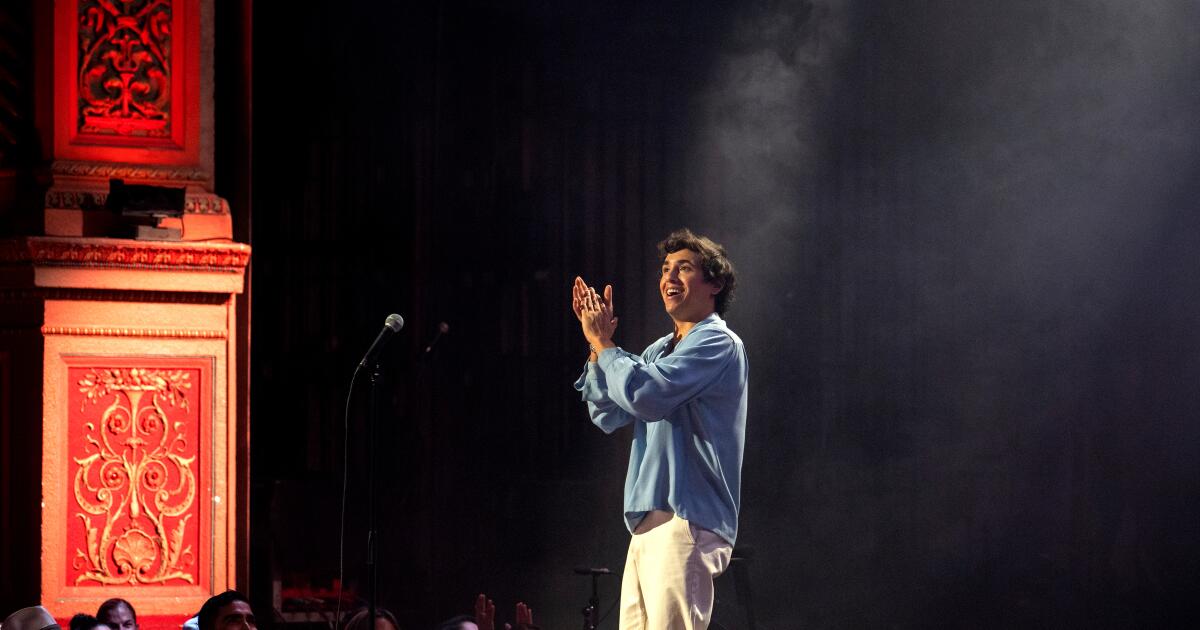
‘SNL’ star Marcello Hernández to host 2026 ESPYs as show leaves L.A. for New York
-

 World15 minutes ago
US House passes Iran war powers resolution in rare moment of Trump backlash
-

 News42 minutes ago
House votes to rein in Trump on Iran as war loses GOP support
-

 Los Angeles, Ca2 hours ago
Police investigate deadly stabbing in Tarzana; suspect in custody
-

 Detroit, MI2 hours ago
Detroit Tigers sweep Tampa Bay Rays in win as Dillon Dingler stays hot
-

 San Francisco, CA2 hours ago
Retired San Francisco firefighter dies from lung cancer after Blue Shield denies treatment claims
-

 Dallas, TX3 hours ago
Trackdown: Dallas 7-Eleven robbery suspect wanted
-

 Miami, FL3 hours ago
This new Italian restaurant in Brickell only has 10 items on the menu

