West
Boise State Public Radio chief fears service cuts if Trump funding ban succeeds


NEWYou can now listen to Fox News articles!
Boise State Public Radio, which has been serving Idaho for nearly five decades, is an NPR-member station that could be severely affected if the Trump administration successfully halts federal funding of public media.
President Donald Trump signed an executive order earlier this month instructing the Corporation for Public Broadcasting and other federal agencies “to cease Federal funding for NPR” and other public media outlets. NPR has vowed to challenge the order “by all means available,” but local station leaders are preparing for the federal spigot to be shut off.
Boise State Public Radio receives about 15-20% of its $4.8 million budget from CPB funding. The station receives about 12% of its budget from a Community Service Grant, with additional government resources coming from programming grants designed to help regional journalism.
“To lose that funding would also likely mean loss of services locally,” Boise State Public Radio general manager Tom Michael told Fox News Digital.
THIS LOCAL NPR CEO IS SPEAKING OUT AS TRUMP ORDER THREATENS FUNDING FOR PUBLIC STATIONS
Boise State Public Radio could be severely impacted if the Trump administration successfully halt federal funding of public media.
“Idaho is a very rural state,” he continued. “We have transmitters in locations with a couple thousand people, and the reason we’re able to do that is because of funding from the Corporation for Public Broadcasting.”
Trump contends NPR is a far-left outlet that doesn’t merit public funding, while NPR has fired back that the president’s order is an affront to the First Amendment that jeopardizes stations like Michael’s.
Michael believes “anything in the public realm is up for debate,” and is eager to explain to critics why Boise State Public Radio can’t simply make up the lost cash through additional advertising or other ways a for-profit station would attempt to generate additional revenue.
“We have a non-profit mission; we’re on the non-commercial band and the Federal Communications Commission classifies us as a Noncommercial Educational. We have a mission of service,” Michael said.
“We can’t do political ads, for example. That’s just not allowed on FCC broadcast rules,” he said. “We have restrictions on us that we can’t do commercial messaging.”
Boise State Public Radio serves a variety of small Idaho towns such as Salmon, Stanley and Challis, with tiny populations, some with fewer than 1,000 residents.
“A commercial broadcast probably wouldn’t find a return on investment in some of those places, but we do it because of the public-private partnership we have, and because it’s our duty based on the 1967 Broadcasting Act to serve as many Americans as we can,” he said.
“When people ask, ‘Why should taxpayers fund this?’ Well, part of this is because of our mission of universal service,” Michael continued. “Trying to serve as many people as we can, no matter where they’re from. It’s not just a bottom-line business interest; we need to be in those areas.”
PBS CHIEF WARNS CUTTING FEDERAL MONEY WILL ‘DEVASTATE’ LOCAL STATIONS AS WHITE HOUSE SEEKS TO PULL FUNDING
NPR host Ashley Ahearn conducts an interview on horseback in rural Idaho.
Michael said that the emergency alert system is another reason why public radio stations are vital in rural areas. Boise State Public Radio is essentially the primary service for a “huge part” of Idaho, feeding smaller stations with emergency messaging.
“No matter if they’re commercial stations or religious broadcasters or whomever, we help originate that signal. And so that’s really important,” Michael said.
“In the heart of New York City, you’re always going to get a signal. That’s not the case in Idaho. You know, broadband connectivity isn’t strong in a lot of places. And, you know, we have wildfires,” he continued.
Michael also recalled the 2022 Four Corners Fire, which forced about 600 people to flee their homes. Afternoon host Troy Oppie provided residents with evacuation orders.
“Radio, which is an old technology, is still very relevant for people who might not have great cell service, might have lost electricity… there is no paywall. They can access it [for] free, and we feel it’s our duty to share that information,” he said.
PBS, NPR BLAST ‘BLATANTLY UNLAWFUL’ TRUMP EXECUTIVE ORDER HALTING PUBLIC FUNDING, VOW CHALLENGES
Boise State Public Radio News program “Idaho Matters” focuses on local issues. (Boise State Public Radio)
Boise State Public Radio has a staff of roughly 30 people with half of them on the content side of the business. The station is funded through September, when the fiscal year ends, and Michael has been telling concerned staffers it’s “full steam ahead” at the moment, but employees are anxious.
Michael explained that the CPB typically provides about $600,000 in grants to Boise State Public Radio, and he believes it would have an “outpouring of local support” if Trump succeeds in withholding that cash. But it might not be enough.
“I don’t necessarily believe in our low-population state that we’d have, you know, 600 new major donors suddenly appear,” he said, noting that a “major donor” gives $1,000 or more.
“It’s not just one year of funding, it’s year after year, and it allows us to do all of these things,” he said.
Michael said Boise State Public Radio also helps fill a “hole” in local news coverage, as regional newspapers such as the Idaho Press and Idaho Statesman have seen their staff dwindle in recent years.
TRUMP SIGNS EXECUTIVE ORDER TO SLASH TAXPAYER FUNDS TO PBS, NPR: ‘RADICAL, WOKE PROPAGANDA’
President Donald Trump signed an executive order earlier this month instructing the Corporation for Public Broadcasting and other federal agencies “to cease Federal funding for NPR.” (NPR logo by SAUL LOEB/AFP via Getty Images. Trump photo by Alex Wong/Getty Images)
The debate over NPR’s funding comes amid the taxpayer-backed outlet grappling with accusations of liberal bias that critics say betrays the public trust. Former editor Uri Berliner resigned last year after calling out how NPR covered such major topics as Russiagate, the COVID lab leak theory, and Hunter Biden’s scandalous laptop.
Michael, who previously worked in public radio in Texas and has interviewed figures like Sen. Ted Cruz, R-Texas, and former First Lady Laura Bush, said it’s important for public media to touch a wide range of topics.
“I don’t agree with everything I hear on the radio, but I appreciate the public radio service because it’s pluralistic, right? It covers a lot of issues,” Michael said.
“I think every public radio station should reflect the issues of the community,” he added. “We lean into that here.”
The White House didn’t immediately respond to a request for comment from Fox News Digital.
Fox News Digital’s David Rutz contributed to this report.
Read the full article from Here


ELK PARK — A father and his four sons reported missing near Elk Park were found safe after their vehicle became disabled, according to Butte-Silver Bow County Sheriff Ed Lester.
They were found walking along a roadway around 5 p.m. north of Maney Lake, according to Lester.
Rescuers from 15-90 Search and Rescue, the United States Marshals Service, the United States Forest Service, and the Bureau of Land Management (BLM) were able to reach the group and transport them to safety.
“We are very happy that everyone is safe. We appreciate the hard work of the rescuers and the coordination among Jefferson, Anaconda-Deer Lodge, Powell, and Silver Bow counties,” Lester said in a statement.
(original report) Law enforcement and search and rescue teams are searching for a missing father and his four sons near Elk Park, just off Interstate 15, after the group failed to return from a fishing trip north of Butte.
The group has been missing for nearly 24 hours. Three of the four boys are Type 1 diabetics in need of insulin.
WATCH: Law enforcement and search and rescue teams near Butte, Montana are searching for a missing father and four sons. Three of the boys are Type 1 diabetics in urgent need of insulin
Search expands for missing Butte family as friend reveals 3 of 4 boys are Type 1 diabetics
Courtney Mosier, a family friend who drove from Helena to assist in the search, said the urgency of the situation is critical.
“There (are) four little boys that range from ages 14 to 10. Three of the little boys are Type 1 diabetics. They need their insulin. They need their sugar. They need to be found immediately,” Mosier said.
Mosier has known the father, Paul Klimpel, her whole life and said his outdoor experience is a reassuring factor.
“Paul is an avid outdoorsman. Like I said, I’ve known him my whole life. If the truck broke down, Paul would be able to fix it. So, luckily they’re with a really, really, really good adult. We just need to find these children,” Mosier said.
Meagan Thompson
According to a press release from Butte Sheriff Ed Lester, police are searching for the group in the Brown’s Gulch, American Gulch, Flume Gulch, and Bernice area north of Butte. Officials are also searching the Homestake and Delome Lake areas.
The last known location of the group came from a cell phone ping near Maney Lake.
“The last ping from one of the little boys’ cell phone was up near Maney Lake so that’s where the family is at currently right now,” Mosier said.
Butte-Silver Bow County Sheriff’s Office Butte-Silver Bow Sheriff’s Office

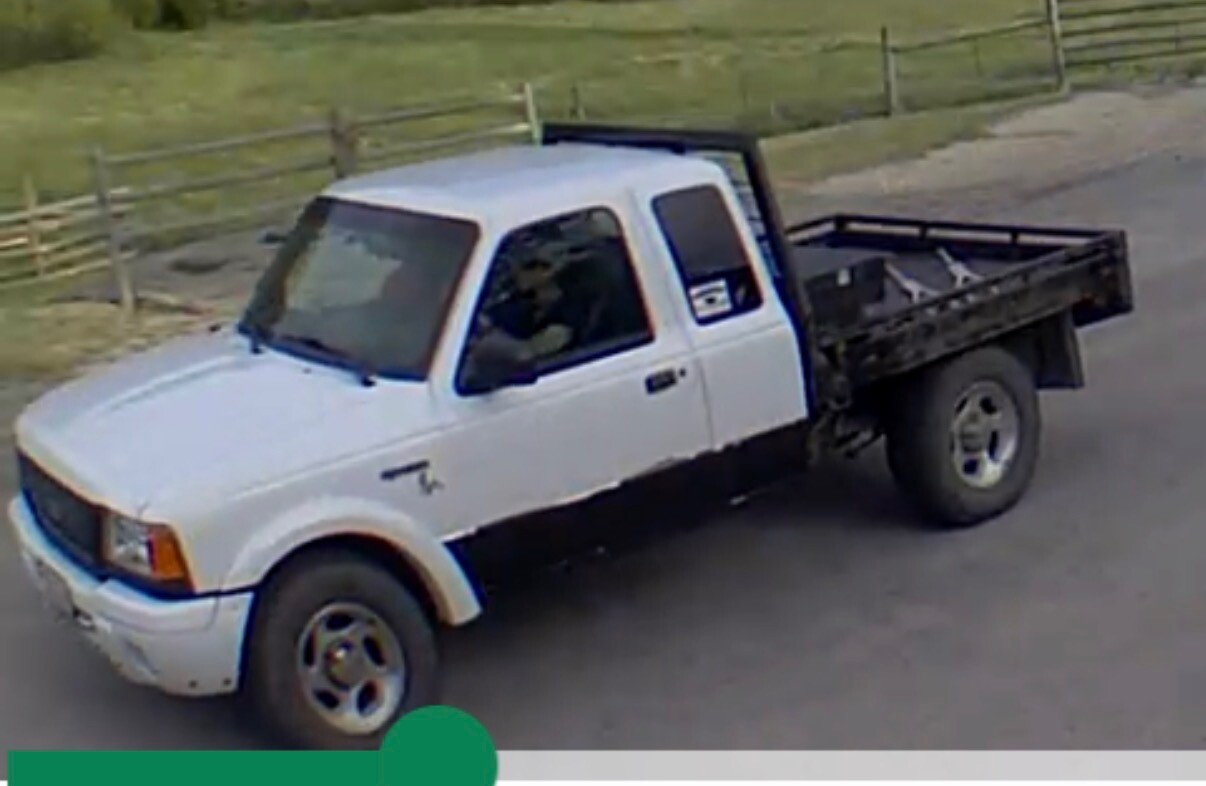
Anyone who spots a white Ford Ranger flatbed pickup is encouraged to call law enforcement at 406-497-1120.
This story was reported on-air by a journalist and has been converted to this platform with the assistance of AI. Our editorial team verifies all reporting on all platforms for fairness and accuracy.

NV Energy has issued a Public Safety Outage Management (PSOM) watch for multiple regions in northern and eastern Nevada, warning customers of potential proactive power shutoffs this weekend due to elevated fire weather conditions.
In the Carson City and Genoa areas, a temporary power outage is possible on Saturday, June 27, from approximately 8 a.m. to 8 p.m. The impacted zones include South Carson City/Jacks Valley and South Carson City/Clear Creek.
Meanwhile, a separate 24-hour PSOM watch has been issued further east for parts of Elko County. Residents in East Elko and Spring Creek could experience proactive outages beginning Saturday, June 27, at 10 a.m. through Sunday, June 28, at 10 a.m.
NV Energy officials stated they are actively monitoring local fire weather and will provide regular status updates to affected customers. The utility provider noted that any customers currently experiencing a power outage outside of these designated PSOM zones should report it directly via NV Energy’s online Outage Center.

The Canyon Venado Fire has grown to 852 acres east of Clines Corners and crews say wind farms in the area are threatened.
CLINES CORNERS, N.M. – The Canyon Venado Fire has grown to 852 acres east of Clines Corners and crews say wind farms in the area are threatened.
The fire is burning just east of Clines Corners, south of Interstate 40.
It forced the closure of eastbound Interstate 40 at Clines Corners on Tuesday night. I-40 reopened Tuesday night. I-40 is back open but smoke still affects visibility.
“We’re on the side of I-40 so drivers have to be pretty cautious. As far as our establishment itself we’re pretty isolated by the freeway itself as a nice fire break,” said Lincoln Tarantino, Clines Corner general manager.
The fire has burned around 852 acres, up from just 20 at this time Monday.
Crews say the fire is not contained and wind farms in the area are threatened.
-

 Iowa1 minute ago
Iowa one of nine states that won’t have to match portion of federal SNAP benefits
-

 Kansas4 minutes ago
Body believed to be Kansas City highway shooting suspect found in burned home’s basement by family: police
-

 Kentucky9 minutes ago
Kentucky’s Otega Oweh headed to Thunder in 2026 NBA Draft trade
-

 Louisiana16 minutes ago
GOP candidates trade attacks, differ on carbon capture in Louisiana Senate race
-

 Maine19 minutes ago
Hearts of Pine halt 4-game skid with emphatic win
-

 Maryland24 minutes ago
Republican candidates ask judge to block Maryland primary certification
-

 Michigan31 minutes ago
Michigan heatwave on way. See day likely to set a record high
-

 Massachusetts34 minutes ago
Massachusetts man accused of wanting sex with girl busted in World Cup trafficking operation

