Science
How Foreign Aid Cuts Are Setting the Stage for Disease Outbreaks


Dangerous pathogens left unsecured at labs across Africa. Halted inspections for mpox, Ebola and other infections at airports and other checkpoints. Millions of unscreened animals shipped across borders.
The Trump administration’s pause on foreign aid has hobbled programs that prevent and snuff out outbreaks around the world, scientists say, leaving people everywhere more vulnerable to dangerous pathogens.
That includes Americans. Outbreaks that begin overseas can travel quickly: The coronavirus may have first appeared in China, for example, but it soon appeared everywhere, including the United States. When polio or dengue appears in this country, cases are usually linked to international travel.
“It’s actually in the interest of American people to keep diseases down,” said Dr. Githinji Gitahi, who heads Amref Health Africa, a large nonprofit that relies on the United States for about 25 percent of its funding.
“Diseases make their way to the U.S. even when we have our best people on it, and now we are not putting our best people on it,” he added.
In interviews, more than 30 current and former officials of the United States Agency for International Development, members of health organizations and experts in infectious diseases described a world made more perilous than it was just a few weeks ago.
Many spoke on condition of anonymity for fear of retaliation by the federal government.
The timing is dire: The Democratic Republic of Congo is experiencing the deadliest mpox outbreak in history, with cases exploding in a dozen other African countries.
The United States is home to a worsening bird flu crisis. Multiple hemorrhagic fever viruses are smoldering: Ebola in Uganda, Marburg in Tanzania, and Lassa in Nigeria and Sierra Leone.
In 2023, U.S.A.I.D. invested about $900 million to fund labs and emergency-response preparedness in more than 30 countries. The pause on foreign aid froze those programs. Even payments to grantees for work already completed are being sorted out in the courts.
Waivers issued by the State Department were intended to allow some work to continue on containing Ebola, Marburg and mpox, as well as preparedness for bird flu.
But Trump administration appointees choked payment systems and created obstacles to implementing the waivers, according to a U.S.A.I.D. memo by Nicholas Enrich, who was the agency’s acting assistant administrator for global health until Sunday.
Then last month, the Trump administration canceled about 5,800 contracts, effectively shuttering most U.S.A.I.D.-funded initiatives, including many that had received permission to continue.
“It was finally clear that we were not going to be implementing” even programs that had waivers, Mr. Enrich recalled in an interview.
The decision is likely to result in more than 28,000 new cases of infectious diseases like Ebola and Marburg, and 200,000 cases of paralytic polio each year, according to one estimate.
Secretary of State Marco Rubio “has been working diligently since being sworn in to review every dollar spent,” the State Department said in an emailed statement.
“We’ll be able to say that every program that we are out there operating serves the national interest, because it makes us safer or stronger or more prosperous,’” the statement quoted Mr. Rubio as saying.
Most U.S.A.I.D. staff members were terminated or placed on administrative leave without warning. The agency had more than 50 people dedicated to outbreak responses, the result of a Congressional push to beef up pandemic preparedness.
Now it has six. Those who were fired included the organization’s leading expert in lab diagnostics and the manager of the Ebola response. “I have no idea how six people are going to run four outbreak responses,” said one official who was let go.
Also sent home were hundreds of thousands of community health workers in Africa who were sentinels for diseases.
In early January, the Tanzanian government denied there were new cases of Marburg, a hemorrhagic fever. It was a community health worker trained through a U.S.-funded Ebola program who reported the disease a week later.
The outbreak eventually grew to include 10 cases; it is now under control, the government has said.
Even in quieter times, foreign aid helps to prevent, detect and treat diseases that can endanger Americans, including drug-resistant H.I.V., tuberculosis and malaria, and bacteria that don’t respond to available antibiotics.
Much of that work has stopped, and other organizations or countries cannot fill the gap. Compounding the loss is America’s withdrawal from the World Health Organization, which has instituted cost-cutting measures of its own.
“This is a lose-lose scenario,” said Dr. Keiji Fukuda, who has led pandemic prevention efforts at the W.H.O. and the C.D.C.
The slashing of foreign aid deprives the world of American leadership and expertise, but it also locks the United States out of global discussions, Dr. Fukuda said: “For the life of me, I cannot see the justification or the reason for this very calculated, systematic approach to pull down public health.”
Trying to Adapt
U.S.A.I.D.’s intense focus on global health security is barely a decade old, but it has mostly received bipartisan support. The first Trump administration expanded the program to 50 countries.
Much of the aid was intended to help them eventually tackle problems on their own. And to some extent, that was happening.
But confronted with a new virus or outbreak, “there’s so many things that one has to do and learn, and many countries can’t do that on their own,” said Dr. Lucille Blumberg, an infectious diseases physician and expert on emerging diseases.
U.S.A.I.D. and its partners helped countries identify the expertise, training and machinery they needed, brought together officials in various ministries and engaged farmers, businesses and families.
“It actually doesn’t cost the U.S. government that much,” said an official with a large development organization. “But that sort of trust-building, communication, sharing evidence is a real strength that the U.S. brings to health security — and that’s gone.”
In Africa, some countries have reacted to the disappearance of aid with alarm, others with resignation. “We’re doing our best to adapt to this development,” said Dr. Muhammad Ali Pate, Nigeria’s health minister.
“The U.S. government is not responsible, ultimately, for the health and the security of Nigerian people,” he said. “At the end of the day, the responsibility is ours.”
A successful outbreak response requires coordination of myriad elements: investigators to confirm the initial report; workers trained to do testing; access to test kits; transport of samples; a lab with enough workers, running water, electricity and chemical supplies for diagnoses; and experts to interpret and act on the results.
In broad strokes, the C.D.C. provided expertise on diseases, U.S.A.I.D. funded logistics and the W.H.O. convened stakeholders, including ministries of health.
Before the aid freeze, employees from each organization often talked every day, sharing information and debating strategy. Together, they lowered response time to an outbreak from two weeks in 2014 to five days in 2022 to just 48 hours most recently.
But now, C.D.C. experts who have honed their expertise over decades are not even allowed to speak to colleagues at the W.H.O.
U.S.A.I.D. funding for sample transport, lab supplies, fuel for generators and phone plans for contact tracers has ended. Much of its investment in simple solutions to seemingly intractable problems has also stopped.
In West Africa, for example, rodents that spread Lassa fever invade homes in search of food. One program in U.S.A.I.D.’s Stop Spillover project introduced rodent-proof food containers to limit the problem, but has now shut down.
In Congo, where corruption, conflict and endless outbreaks mean that surveillance “looks like Swiss cheese even at the best of times,” the mpox response slowed because there were no health workers to transport samples, said a U.S.A.I.D. official familiar with the response.
More than 400 mpox patients were left stranded after fleeing overwhelmed clinics. Before a waiver restarted some work, the United States identified two new cases of mpox, both in people who had traveled to East Africa.
In Kenya, U.S.A.I.D. supported eight labs and community-based surveillance in 12 high-risk counties. Labs in the Marsabit, Mandera and Garissa counties — which border Ethiopia and Somalia — have run out of test kits and reagents for diseases including Rift Valley fever, yellow fever and polio, and have lost nearly half their staff.
Kenya also borders Uganda and Tanzania and is close to Congo — all battling dangerous outbreaks — and has lost more than 35,000 workers.
“These stop-work orders would mean that it increases the risk of an index case passing through unnoticed,” Dr. Gitahi said, referring to the first known case in an outbreak. His organization has terminated nearly 400 of its staff of 2,400.
Many labs in Africa store samples of pathogens that naturally occur in the environment, including several that can be weaponized. With surveillance programs shut off, the pathogens could be stolen, and a bioterrorism attack might go undetected until it was too late to counter.
Some experts worried about bad actors who may release a threat like cholera into the water, or weaponize anthrax or brucellosis, common in African animals. Others said they were concerned that even unskilled handling of these disease threats might be enough to set off a disaster.
Funding from the U.S. government helped hire and train lab workers to maintain and dispose of dangerous viruses and bacteria safely.
But now, pathogens can be moved in and out of labs with no one the wiser. “We have lost our ability to understand where pathogens are being held,” said Kaitlin Sandhaus, founder and chief executive of Global Implementation Solutions.
Her company helped 17 African labs become accredited in biosafety procedures and supported five countries in drafting laws to ensure compliance. Now the firm is shutting down.
In the future, other countries, including China, will know more about where risky pathogens are housed, Ms. Sandhaus said: “It feels very dangerous to me.”
China has already invested in building labs in Africa, where it is cheaper and easier to “work on whatever you would like without anyone else paying attention,” said one U.S.A.I.D. official.
Russia, too, is providing mobile labs to Ugandans in Mbale, on the border with Kenya, another official said.
Some African countries like Somalia have fragile health systems and persistent security threats, yet minimal capacity for tracking infections that sicken animals and people, said Abdinasir Yusuf Osman, a veterinary epidemiologist and chair of a working group in Somalia’s health ministry.
Each year Somalia exports millions of camels, cattle and other livestock, primarily to the Middle East. The nation has relied heavily on foreign aid to screen the animals for diseases, he said.
“The consequences of this funding shortfall, in my view, will be catastrophic and increase the likelihood of uncontrolled outbreaks,” Dr. Osman said.
In countries with larger economies, foreign aid has helped build relationships. Thailand is a pioneer in infectious diseases, and U.S.A.I.D. was funding a modest project on malaria elimination that boosts its surveillance capabilities.
The abrupt end to that commitment risks losing good will, said Jui Shah, who helped run the program.
“In Asia, relationships are crucial for any type of work, but especially for roles that work with surveillance and patient data,” she said. “Americans will suffer if other countries hesitate to engage with us about outbreaks.”



Facing higher premiums and the loss of federal subsidies, 374,000 people with health insurance from the state marketplace known as Covered California canceled their coverage in the first three months of the year, according to government statistics.
The cancellations amount to 19% of those who had renewed their policies on the state marketplace during open enrollment, state officials said. Those cancellations are higher than in the past three years when they ranged from 13% to 15% of those who renewed.
Jessica Altman, executive director of Covered California, attributed the jump in cancellations to the expiration of enhanced federal subsidies that caused the cost of a plan to leap for most middle-class Californians.
“We expect coverage losses to increase through the year,” she said.
Overall, Covered California had 1.8 million enrollees in February, down from 1.94 million the year before — a decline of 7%.
Altman said monthly enrollment numbers are delayed because consumers have a three-month grace period to resume their premium payments before the insurance carriers end their coverage for nonpayment.
This year, many middle-class Californians who depend on the state-run insurance marketplace created under the Affordable Care Act faced annual costs that were hundreds of dollars higher than last year because of the end of enhanced federal subsidies that began during the COVID-19 pandemic.
In 2021, Congress voted to temporarily boost the amount of subsidies Americans could receive for an ACA plan.
The law also expanded the program to families who had more money. Before that 2021 vote, only Americans with incomes below 400% of the federal poverty level — currently $62,600 a year for a single person or $128,600 for a family of four — were eligible for ACA subsidies. The 2021 vote eliminated the income cap and limited the cost of premiums for those higher-earning families to no more than 8.5% of their income.
On top of the loss of the enhanced federal subsidies, the average premium charged by insurers this year for a Covered California plan rose by more than 10% because of fast-rising medical costs.
The decline in ACA plan enrollees, however, has been greater in some other states. California has tried to keep people insured by using state tax money to fill in the gap for lower-income families.
This year, the state budgeted $190 million for premium subsidies for people with incomes of up to 165% of the federal poverty level.
In his budget plan, Gov. Gavin Newsom proposed spending $300 million on those state subsidies in 2027. That would expand the subsidies to enrollees with incomes up to 200% of the federal poverty level, or $31,920 for an individual or $66,000 for a family of four.
“We may actually see a number of Covered California enrollees paying less in 2027” because of the additional state subsidies, Altman said.
In May, Newsom also proposed in his budget that an additional $27 million in state money be used to help enrollees pay for the cost of gender-affirming care. That amount is an increase to the $30 million that he earlier proposed be spent this year and next to defray those costs for Covered California enrollees, according to state officials.
Last year, federal health officials enacted a rule that said the federally subsidized ACA plans could no longer cover gender-affirming care because it was no longer considered an “essential health benefit.”
Newsom’s proposed budget still faces debate in Sacramento and approval by the state Legislature.
The state marketplaces, created by the Affordable Care Act, also known as Obamacare, were meant to help those who don’t have access to an employer’s health insurance plan and have incomes too high to qualify for Medi-Cal, the government-paid insurance for the poor and disabled.
Because of the higher cost this year, more people are choosing the lower-priced Bronze plans. Those plans have higher co-pays and deductibles than the more expensive plans.
“We’re very concerned with the large shift to Bronze,” Altman said. “When you have higher cost-sharing, you’re more likely to defer care.”
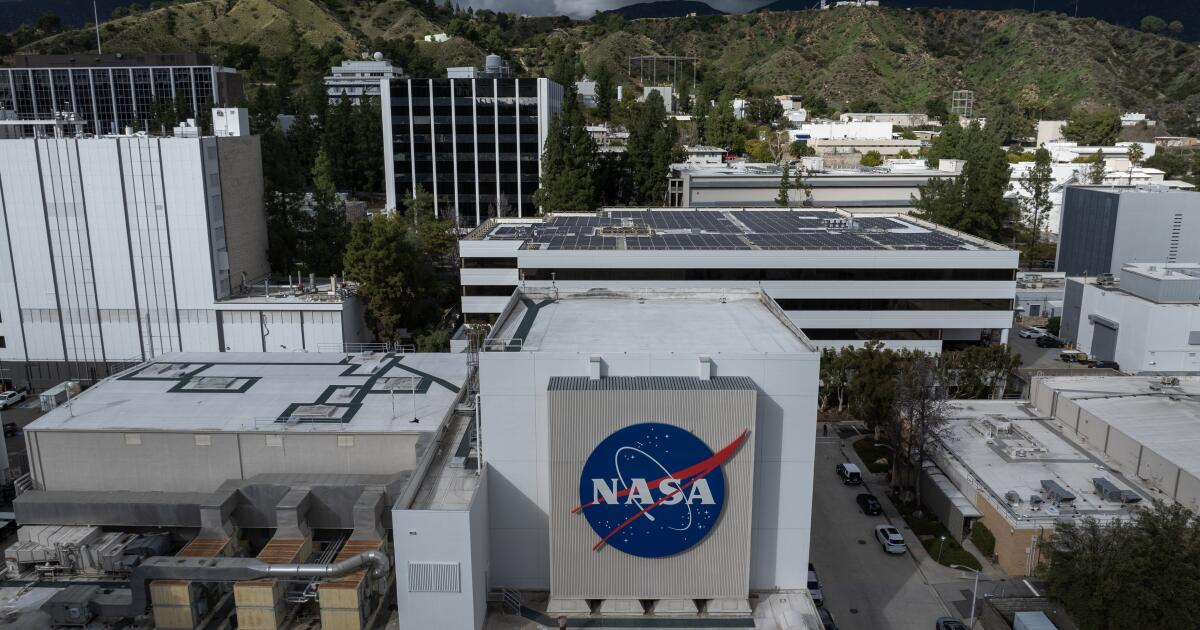
Weeks after Trump administration officials announced that management of NASA’s Jet Propulsion Laboratory would open to competitive bidding for the first time, questions remain as to why Caltech could lose control of the lab its researchers founded in 1936.
On one hand, observers note, high-profile delays and cost overruns on significant recent JPL projects earned sharp criticism from NASA even before the 2024 presidential election.
On the other, the second Trump administration’s record of squeezing scientific funding and attacking institutions in Democrat-led states make it difficult to consider any action separate from the charged political atmosphere, analysts say.
“My first instinct is that this [competition] isn’t necessarily a bad thing. It’s not written in stone that Caltech must run JPL, and it wouldn’t be the worst thing to have some competition for running the place,” said Casey Dreier, chief of space policy at the non-profit Planetary Society.
“That said, that requires this contract evaluation to be fair and unbiased, and this administration has no credibility in such things,” he added. “The responsibility is on NASA to earn the trust and ensure such an evaluation is open and free from political meddling. That’s almost impossible.”
JPL became part of NASA when the space agency was formed in 1958, and Caltech has been awarded the contract to run the institution outright ever since.
Its current 10-year contract with NASA, which is valued at up to $30 billion, runs through Sept. 30, 2028.
NASA Administrator Jared Isaacman announced the competition on May 22 as part of a slate of sweeping organizational changes at the space agency.
“When you step back, it is worth considering how many additional missions we could have undertaken with the resources lost to program cancellations and cost overruns over the years,” Isaacman wrote in a memo to staff. “That is the problem we must fix, so the American taxpayer and space-loving community can receive the highest scientific return on every dollar we spend at NASA.”
Competing the contract for JPL, the lone Federally Funded Research and Development Center (FFRDC) in NASA’s portfolio, was an effort to address cost-efficiency concerns, Isaacman wrote.
“This process will take several years, and I do not anticipate it having any impact on the projects underway or the location of the facilities,” he wrote. “It does, however, provide an opportunity to evaluate management costs, overhead burdens, and ideally find ways to get after the science faster and more affordably.”
In a joint statement, Caltech President Thomas F. Rosenbaum and JPL Director Dave Gallagher said the competition was “no surprise” and that a team was already in place “to ensure we are positioned for success.”
In July, NASA’s Office of Procurement held an informational event for companies and institutions interested in the upcoming FFRDC contract.
The dozens of registered attendees included universities like USC, Texas A&M University and Georgia Tech, aerospace companies such as Boeing and Lockheed Martin and nonprofit corporations like MITRE, which manages several FFRDCs, and Universities Space Research Association, a university consortium founded by the National Academy of Sciences in 1969. (SpaceX, which has been awarded more than $13 billion in NASA contracts in the last decade, was not on the list.)
“Lockheed Martin has more than 50 years of deep space exploration success with JPL, supporting landmark missions to Jupiter, Venus, Saturn, Pluto, including nearly a dozen missions to Mars,” said Bob Behnken, VP of Exploration and Technology Strategy. “We look forward to building on that unmatched partnership in the years ahead. We are closely following NASA’s review and will continue to assess how we can best contribute to the agency’s mission.”
Other attendees contacted by The Times declined to discuss their involvement.
Isaacman indicated that JPL could come under scrutiny even before he took over NASA. The billionaire entrepreneur referenced high costs at the La Cañada Flintridge institution in a memo prepared in advance of his confirmation hearings on his priorities for the space agency.
“Contract structure: Very expensive,” Isaacman wrote of JPL in a table outlining organizational issues at each of NASA’s centers. “Must increase the output and ‘time-to-science’ KPI.”
The institution has recently suffered a number of high-profile management stumbles.
After the JPL-managed Psyche mission to a metal-rich asteroid failed to meet its 2022 launch date, NASA commissioned an independent review that said internal reorganizations and personnel changes created distracted and uninformed managers and burned-out, stretched-thin staffers.
After a 2023 independent review found there was “near zero probability” of the JPL-managed Mars Sample Return mission making its proposed 2028 launch date, and “no credible” way to bring rocks back from the Red Planet within the stated budget, Isaacman’s predecessor Bill Nelson put out a call for proposals to industry and all other NASA centers, forcing JPL to compete for its own project.
After Trump’s election, Nelson announced that the final decision would be in the next administration’s hands.
The White House pushed for massive cuts to NASA’s 2026 budget that Congress overturned, and has lobbied for similarly steep cuts again this year. JPL has instituted painful cost-cutting measures of its own, reducing staffing from roughly 6,500 employees in 2023 to 4,500 last year through layoffs and attrition.
Its struggles come at a point when NASA is enthusiastically embracing private industry. Last month the agency awarded several key contracts for its upcoming lunar missions to Jeff Bezos’s Blue Origin and other private companies.
Trump has also made no secret of his willingness to punish states that haven’t voted for him through job losses. In announcing his decision to move U.S. Space Command from Colorado to Alabama, Trump acknowledged that his loss in Colorado in three presidential elections played a part in the move.
It’s impossible to consider any decision on JPL’s future separate from the administration’s track record of politically-motivated decisions, Dreier said.
“At the heart of this is why? Why now? If this is not just some rank political attack on California, what do they hope to gain from this?” Dreier said. “That deserves explanation, because the administration otherwise has no credibility here.”

The Gulf of Mexico, which the Trump administration calls the Gulf of America, is one of the noisiest bodies of water in the United States. Air gun blasts are the loudest element there, according to research by scientists who monitor underwater acoustics. Shipping traffic is another major contributor.
The noise could affect the ability of Rice’s whales to find food and mates, scientists say. The chronic stress of living in a loud environment could be detrimental to their health.
-

 Massachusetts5 minutes ago
Mass. House votes to set new rules for DiZoglio’s audit
-

 Minnesota8 minutes ago
Minneapolis considers closing dog park sitting on Indigenous land
-

 Mississippi13 minutes ago
Mississippi Court of Appeals Brings ‘Court on the Road’ Prog…
-

 Missouri20 minutes ago
Two airlifted after serious crash in Cole County
-

 Montana23 minutes ago
Clark Fork River remains central to Missoula’s identity, conservation groups say
-

 Nebraska28 minutes ago
Miss Nebraska festivities kick off with opening ceremonies
-

 Nevada35 minutes ago
Hillel of Northern Nevada Builds Community at the University
-

 New Hampshire38 minutes ago
New Hampshire Pummels Altoona with 14 Runs on 18 Hits

