Lifestyle
Control issues? These two simple words could help


“The single best thing” Mel Robbins has ever done began with a stressful moment on her son’s prom night.
The bestselling author, former attorney and host of one of the world’s most popular podcasts is talking about her latest book, “The Let Them Theory: A Life-Changing Tool That Millions of People Can’t Stop Talking About ” (Hay House).
The book — which demystifies ancient concepts from Stoicism, Buddhism and Greek philosophy for modern, plugged-in, multitasking audiences — arose that evening, when Robbins says she was “being a complete control freak” and “micromanaging every detail.”

Shelf Help is a wellness column where we interview researchers, thinkers and writers about their latest books — all with the aim of learning how to live a more complete life.
She was agonizing over the teens’ lack of dinner plans and the fact that it was raining and they might show up to the dance soaked. She was on her phone and shouting to other parents and trying to take control of the situation when her daughter repeatedly insisted that she let the kids do it their way.
Let them grab tacos instead of going to a restaurant. Let them ruin their shoes in the rain. “It’s their prom, not yours,” she said to Robbins.
After “like the 11th time,” it finally sunk in, Robbins said, and she felt herself relax.
After sharing the experience with her 8.3 million Instagram followers, and then to her legions of loyal podcast subscribers, the enthusiastic response made it clear: She needed to write a book. In December 2024, so came “The Let Them Theory.” In an interview with Robbins, Oprah Winfrey called it “one of the best self-help books I’ve ever read.”
The Times spoke with Robbins about how the simple phrases “let them” and “let me” can help us feel less stressed and more empowered, and help us better navigate the challenges of dating, family relationships and social media.
This interview has been condensed and edited for clarity.

(Mel Robbins author of “The Let Them Theory” (Jenny Sherman))
How did you realize that “let them” could work beyond the prom?
I’m the kind of person that’s always wanted to know how to be more stoic and let go, yet I’ve never really been able to apply philosophy when I’m already emotionally triggered. The way it hit me was at the prom.
From that point forward, any time either life was frustrating me or my husband did something that was annoying, or my mother — I just started saying, “Let them,” and I noticed that it was immediate peace in a way that I had never experienced in my life.
All that I’m doing is reminding people of what they know to be true. The issue of trying to control things that aren’t yours to control, and how it just creates stress for you, this is the fundamental law of human beings that has been around since the beginning of time.
There are two parts to the theory: let them and let me. Why is it important to use both?
The second part is the more important part, because the second part is where you actually cue yourself and remind yourself that your life is your responsibility. When you say, “Let me,” you remind yourself that in any situation — and this is literally the teaching in “Man’s Search for Meaning,” [Holocaust survivor] Viktor Frankl’s work — the only thing that’s in your control is your response to what’s happening. You can control what you think about what’s happening. You get to choose what you do or don’t do in response. And you get to choose how you process your emotions. That’s what you get to control and that’s where your power is.

You say the hardest part of “let them” is learning to feel raw emotions without immediately reacting. A lot of times, we’re already reacting before even thinking “let them.” How do we do this?
I’m still working on it. I think you deserve a gold medal if you have the presence of mind to even say, “I would like to be less reactive moving forward.” Just being aware that it’s a skill and it would benefit you and bring more peace to your life, that is the first step. Part of the reason we’re so reactive is because we feel this sense that we’re trapped because we’ve given so much power to other people. Every time you say, “Let them,” even if it’s after the outburst, you’re still diffusing the emotion. What I have found in my own life, because [I’m] a very emotional person, is that the more I said it, the more you close the distance between the impulse to flip somebody off and actually saying, “Let them.” And you’ll get to a point where every time you say it, you’re literally using it as a tool to catch that nervous system or emotional response.
How can we use “The Let Them Theory” to prevent that compare-and-despair feeling we often get from social media?
It took me a long time to flip from this really insecure, scarcity mind-set, where I truly believed that if somebody else got something that I wanted, it meant they were winning and I lost. I didn’t understand the beauty of the world we live in, which is the things that you want in life — whether it’s success or it’s money or it’s happiness or it’s friendship — these things are in limitless supply.
It took me too long to understand that I’m not actually competing against somebody else in the game of life. I’m playing with them. If my friend is able to do [something], then it is evidence that I — with work and with time and with patience — can do that for myself too.
You start to realize that other people are not standing in your way; you’re doing that to yourself. You’re the one using comparison to stop yourself. You’re the one telling yourself it’s never going to happen. You’re the one telling yourself that you’re not good enough or that you can’t figure it out. When you stand in your own way, you miss out on the fact that literally every single person that has something that you’re interested in or that you want in life, they can actually show you how to get it. They show you what’s possible.
Let’s talk about “let them” as it relates to dating. You say let them show us who they are, how responsive they are. But given today’s digital landscape, how do we use “let them” and still be present enough to allow for flirtation and mystery in relationships?
It’s understanding what part of the dating cycle you’re personally in instead of constantly trying to guess what part of the cycle the other person is in. If you’re in that phase where you’re just meeting a ton of people, really staying focused on, “I’m cool with playing the field right now.” But there’s going to come a point in time where you’re no longer interested in that, or where you say to yourself, “I actually like this person and I don’t want them to see other people.”
When you recognize that you’re no longer in that space of wanting to be casual, the mistake that everybody makes is we now give power to the other person we’re interested in. We now become detectives trying to figure out when they feel the same way we do. That’s when you start chasing the potential. That’s when you start overanalyzing everything you do. That’s when you start to cling, and you start to get weird, and you start to pretend that things are still casual, but you’re secretly looking to see if their Hinge profile is still up.
That’s where you lose power. Because the better thing to do when you no longer just want to be in the casual space is to have a conversation. They could say no, but this is how you respect yourself.
It seems like saying “let them” and “let me” requires self-confidence and self-compassion. How do we get there?
You don’t get there by hoping it comes. You have to use the tools. One of the reasons why we don’t have these conversations — or even something more subtle, like you have a roommate or sister or a parent who’s just negative or passive-aggressive and you’ve put up with it for years — is it takes courage to say to yourself, “I don’t want to have to deal with this, so I’m going say, ‘Let them,’ because I’m going to stop trying to manage their mood.”
It takes a lot of compassion and grace for yourself. And then you do the “let me” part, which is: Let me remind myself that I get to choose how much time and energy I spend with this person.
You say this is especially hard with loved ones. Why is that?
These people have known you since you were born, and they have expectations about who you are and who you should be and what should happen in this family.
Think about family like a spiderweb. Any tap on the web reverberates through everybody. Anytime you start to let your family have their opinions, or let them have their fears, or let them have their expectations and let them have their concerns — which they have, because they’ve always had them about you — when you start saying “let them” and create space, you’re widening out the space between the webs. People don’t like that.
Then you say: Let me live my life in a way that makes me happy; let me pursue a career I really want to pursue; let me love the person that I love. Those decisions actually force other people to have to deal with their own expectations and opinions. But that doesn’t mean you have to change what you’re doing in order to appease them or meet their opinions.
How do we apply the theory without becoming passive or aloof or waiting for a big blowup?
One of the things I see from people is like, “I’m supposed to let people abuse me? I’m supposed to let them disrespect me?” I’m like, no, that’s probably happening right now. Because we, especially in families and with loved ones, explain away bad, disrespectful and abusive behavior.

(Maggie Chiang / For The Times)
If we are in a family system or a relationship where there has been a cycle of emotional abuse or a cycle of narcissism, the psychology of it is very, very challenging, because you keep holding on to the hope that someone’s going to change. We keep a fantasy alive in our heads versus learning how to live with the reality in front of us. You start to realize, every time you say, “Let them” and “Let me,” that the power isn’t in what other people are doing. The power is in your values and how you respond.
TAKEAWAYS
from “The Let Them Theory”

Lifestyle
Terry Tempest Williams on why women with big ideas get labeled ‘crazy’ : Wild Card with Rachel Martin
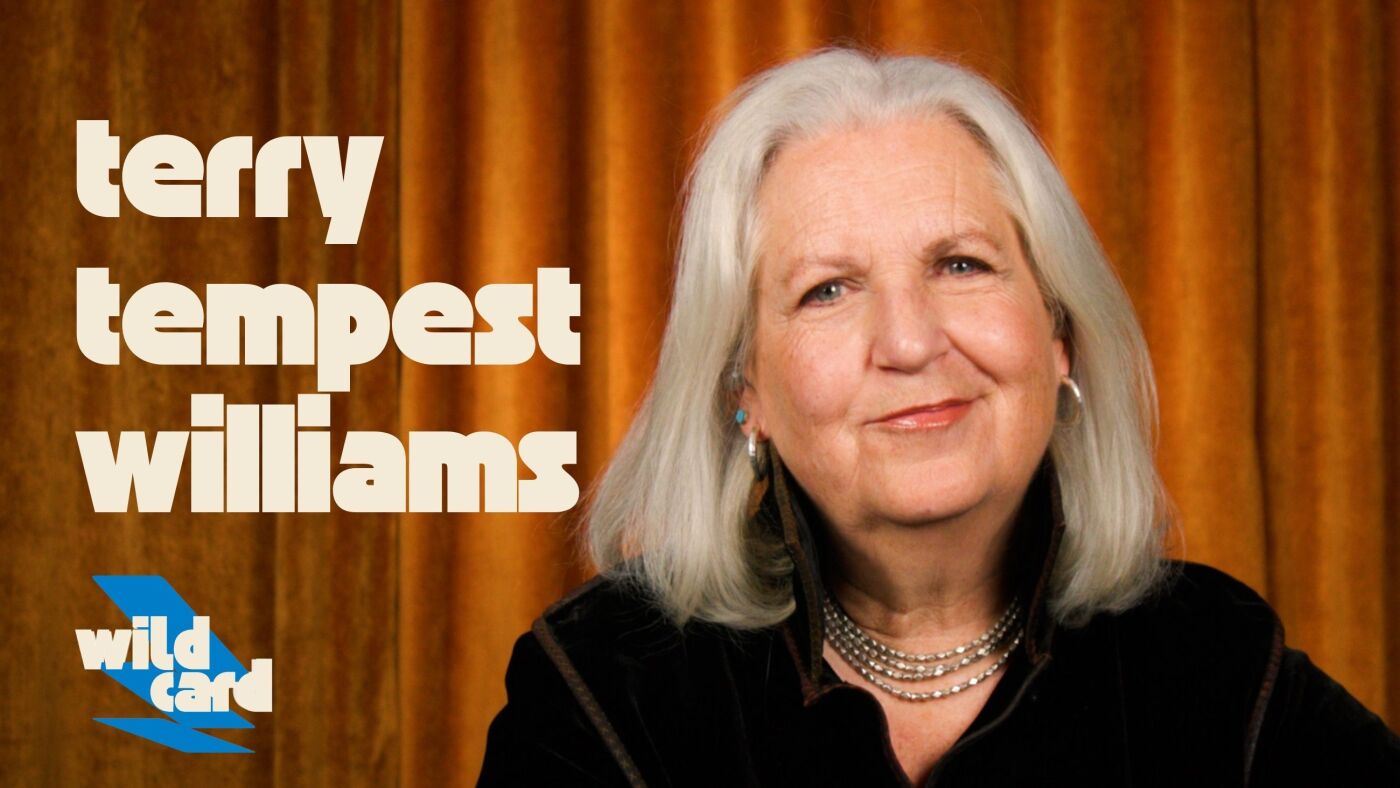
A note from Wild Card host Rachel Martin: I met Terry Tempest Williams about 25 years ago at a writer’s conference in Yosemite Valley. I was a young reporter who was there to do a story about how literature was addressing climate change and she made such a huge impression on me. I had never heard someone talk about the natural world the way Terry did and she had a spiritual depth I hadn’t encountered in my life at that point.
To this day, Terry’s writing always reorients me towards what is good, what is beautiful, and what is true. Her newest book is called “The Glorians.”

For its upcoming Los Angeles venue, experiential art firm Meow Wolf will focus on the art of storytelling, with a specific eye toward skewering our city’s moviemaking magic. To help bring that vision to life, Meow Wolf has entered into a creative partnership with Titmouse, one of L.A.’s most renowned independent animation houses.
The Hollywood-based studio behind popular series such as “Big Mouth” and “Star Trek: Lower Decks” will create animation that will be shown throughout the West L.A. venue, which is on target for a late 2026 opening at the Howard Hughes entertainment complex.
It’s a move that represents a shift for Santa Fe, N.M.-based Meow Wolf. Over the last decade-plus, the art collective has grown beyond its anything-goes, punk-meets-psychedelic roots into an organization with full-scale, maximalist installations in its hometown, Denver, Las Vegas, Houston and the Dallas suburbs. In the past, Meow Wolf kept most of its media in-house.
As part of its larger-than-life participatory art installations, Meow Wolf L.A. will feature a mix of live action and animation, the former filmed by Meow Wolf in its Santa Fe studio. Meow Wolf’s James Stephenson, a senior VP with the company and its creative director of emerging media, said the degree to which the L.A. exhibition will lean into various animation styles necessitated an outside partner. Titmouse’s work, in development by a number of directors with contrasting tones, will be shown on a variety of formats, ranging from cinema screens to full-room projections.
“I really believe in animation as an art form, and I know the Titmouse folks do too,” Stephenson says. “Animation is made by artists. It’s made by artists with their own hands. It’s something that is still very rooted in craft.”
Meow Wolf’s L.A. space is set in a former cinema complex, and will champion its location, taking guests on a journey through a converted movie house and beyond, into a sci-fi-inspired fantasyland with sentient spaceships and a 30-foot-tall mushroom tower. Meow Wolf creatives have spoken of the fantastical movie theater as one that will feature animated, self-aware candy before attendees enter the main exhibition space, making Titmouse’s work some of the first art guests will encounter. Titmouse co-founder Chris Prynoski has said the studio has lined up at least six directors for the exhibit.
An in-progress art installation destined for Meow Wolf L.A. at the art collective’s Santa Fe, N.M., headquarters. The L.A. exhibition will feature animation from Titmouse.
(Gabriela Campos / For The Times)
Titmouse, says Stephenson, is the right partner because “they’re known less for a house style, and more for a house vibe.” Over the years, Titmouse has been behind such diverse shows as “Scavengers Reign,” owning a Jean Giraud influence rooted in French and Spanish surrealism, the lively “Jentry Chau vs. the Underworld,” with an unique color palette that took inspiration from anime and Chinese mythology, the exaggerated comic book feel of Adult Swim’s “Metalocalypse,” and the approachable yet expressive tone of “Star Trek: Lower Decks.”
“Meow Wolf’s vibe is similar to Titmouse’s vibe,” Stephenson says. “It’s artist-first, artist-driven, independent and kinda edgy. They are always trying to find the edge of what’s possible. They try to see how far they can go, and it’s done for fun and in the spirit of taking risks.”
Prynoski says working with Meow Wolf will give Titmouse a sense of artistic freedom it doesn’t always have when delivering content for more traditional Hollywood partners. He says the multi-director approach is a callback to the early days of Warner Bros. Animation, when individual creators put their own stamp on Looney Tunes material.
“I use Bugs Bunny as an example,” Prynoski says. “You’ve got a Friz Freleng Bugs Bunny short. You’ve got a Chuck Jones Bugs Bunny short. You’ve got a Tex Avery Bugs Bunny short. They’re all different versions of Bugs Bunny, and people who are really paying attention can tell which director directed each one. Even though to the layman, these are all Bugs Bunny, but if you lined them up, they are drawing in different styles, sensibilities and techniques.”
Prynoski says that was a centerpiece of his pitch to Meow Wolf, noting that characters will reappear in multiple installations, each handled by a different artist. Meow Wolf L.A., in fact, will be the firm’s most character-driven exhibition, as guests will follow the storylines of three main protagonists throughout the space.
In announcing the partnership, Meow Wolf and Titmouse released an image from an animated work directed by Luca Vitale. It features a key character having a moment with a hummingbird and it’s done in an elegant, slightly anime-influenced style. It’s an image full of movement, reflecting a character in transition with inviting pastels and bold dashes.
“I like that image because I think it captures some of the sense of wonder that we want people to feel,” Stephenson says. “The character is having an encounter with the elusive nature of creativity and reality in a way that makes them have a different perspective of what’s possible.”
Other contributing animation directors to Meow Wolf L.A. include Space Dawg, Felix Colgrave, Alexander Vanderplank and Phimémon Martin, and Jun Ioneda.
Titmouse’s partnership with Meow Wolf will extend beyond the L.A. exhibition. The two will be working on the development of Meow Wolf New York, which is slated to open some time after Los Angeles, and are collaborating on a planned animated series, which Prynoski is spearheading.
Meow Wolf exhibits are the result of sometimes hundreds of disparate artists coming together in a shared space. Distilling that into a signature, singular style for a series could be a challenge. Stephenson pinpoints some guiding principles.
“You really need to feel the hand of the artist,” he says. “You need to feel a DIY aesthetic. You need to feel the materiality. Those are very specific to what we are.”

The Kennedy Center on June 28, with its facade signage still covered by a tarp and scaffolding.
Alex Wroblewski/AFP via Getty Images
hide caption
toggle caption
Alex Wroblewski/AFP via Getty Images
On Wednesday, a federal appeals court denied President Trump’s request to stop the removal of his name from Washington, D.C.’s Kennedy Center. The signage on the building has been covered with tarp and scaffolding since June 13, but in a court filing last month, the center’s current executive director said that Trump’s name has been removed.
In their decision, three judges from the U.S. District Court of Appeals for the District of Columbia Circuit said that the president had failed to prove that the arts center would be “irreparably injured” without Trump’s name attached to it.

NPR requested comment from the Kennedy Center, but did not receive an immediate reply.
This latest round of court decisions is part of the ongoing litigation filed by Rep. Joyce Beatty, D-Ohio, against President Trump and the board of the Kennedy Center. In a statement emailed Wednesday to NPR, Beatty said: “Today’s ruling again affirms that this administration’s efforts to rename the Kennedy Center were unlawful. His name no longer desecrates this sacred memorial, which belongs to the American people. Now it is time for the Trump administration to accept this, comply with the law, and take the tarps down.”
In previous court filings, Trump’s legal team had asserted that removing the president’s name from the arts complex, both on the physical building and in its digital materials, would inflict irreparable harm in both time and money already spent. In the denial, the three judges — Patricia Millett, Robert Wilkins and Gregory Katsas — wrote that since Trump’s name has already been removed, “a stay would not avert those harms.”
Furthermore, Trump had claimed that without his name attached, future fundraising would be threatened “and [will] contribute to the financial decline of the Center.” In response, the appeals judges wrote: “Appellants, however, have failed to support this assertion with any specific facts or evidence. They offer only the conclusory assertions of the Kennedy Center’s Executive Director that were made in a factually unsupported declaration.” The center’s current executive director, Matt Floca, specializes in physical plant management.

The presiding judge in the case, Christopher R. Cooper, has ordered that the center provide him a status report on the center’s operation and programming before the end of this month. As of Wednesday, the center’s calendar lists a small roster of programs, including outdoor free movie screenings, workshops for children, and five free live performances in July on its Millennium Stage. In the past, the Kennedy Center presented over 2,000 arts and education events each year, including free daily Millennium Stage performances.

-

 San Francisco, CA4 minutes ago
Man reported missing in San Francisco
-

 Dallas, TX9 minutes ago
How to buy France World Cup semifinal soccer tickets in Dallas
-

 Miami, FL17 minutes ago
Miami-Dade Schools names six semifinalists for superintendent
-

 Boston, MA19 minutes ago
Lawsuit: ICE detained East Boston father despite legal status
-

 Denver, CO25 minutes ago
Victor Marx wins GOP primary for Colorado governor, defeating veteran lawmaker after unorthodox campaign
-

 Seattle, WA32 minutes ago
Widower of pregnant woman who was shot to death in Seattle sues homelessness authority
-

 San Diego, CA35 minutes ago
Terrifying moment huge sea lions chase tourists off popular California beach
-

 Milwaukee, WI47 minutes ago
Milwaukee leaders condemn ICE arrests as agency ignores City mask ordinance

