Wisconsin
Here’s what to know about Wisconsin’s April 1 election, Supreme Court race


How to register to vote in Wisconsin (you’ll need a have a photo ID)
Here’s how to register and vote in Wisconsin.
In less than a month, Wisconsin voters will head to the polls for an election that will determine the state Supreme Court’s partisan control, select who holds local offices and possibly elevate the voter ID law to the state constitution.
Wisconsin’s spring election is April 1. Candidates who advanced from the Feb. 18 primary will appear on the April ballot.
There are plenty of deadlines to keep in mind before April 1, including when you can register to vote online, request an absentee ballot or vote early.
Here’s a guide to what Wisconsin votes for in April and information you’ll need to cast your ballot:
What does Wisconsin vote for in April election? Wisconsin Supreme Court? Wisconsin schools superintendent?
The April ballot includes a high-profile state Supreme Court race. There was no February primary since only two candidates are running: conservative Waukesha County Judge Brad Schimel and liberal Dane County Judge Susan Crawford. The winner will replace longtime liberal justice Ann Walsh Bradley, who’s not running for reelection.
If Crawford wins, the court will keep its liberal majority. If Schimel wins, the court will switch to conservative control. The candidates will debate March 12 on WISN.
Voters will also choose Wisconsin’s superintendent of public instruction. Jill Underly, a Democrat, is running for reelection. Education consultant Brittany Kinser is backed by conservatives. A third challenger, Sauk Prairie Superintendent Jeff Wright, did not advance from the primary.
The April ballot also includes a statewide referendum question, asking if Wisconsin’s law requiring voters to show photo identification should be enshrined in the state constitution. Republicans pursued the referendum in part to protect the law from being overturned by a liberal-controlled Supreme Court.
Other local races on your ballot depend on where you live. Those may include spots on the city council, school board or judgeships. Many school districts also have funding referendums on the ballot. You can see what your ballot will look like ahead of time at myvote.wi.gov.
When can I register to vote for the Wisconsin April election?
There are a few ways to register to vote. If you want to register online at myvote.wi.gov, the deadline is March 12. That’s also the deadline to register by mail by sending your clerk a completed voter registration form.
Or, you can register in-person at your local clerk’s office until March 28 at 5 p.m. Wisconsin also has same-day voter registration, so you can register at the polls on April 1.
With any of these registration options, make sure to bring a proof of residence document that shows you live at your current address. This could be a utility bill, paystub or lease, for example.
When can I request an absentee ballot for the Wisconsin April election?
The deadline for most voters to request an absentee ballot is March 27 at 5 p.m. Deadlines are slightly longer for indefinitely confined, military or hospitalized voters.
If you’ve already requested an absentee ballot, your clerk must send it out by March 11. If you make a request after that day, your clerk must mail it out within two business days.
You will need to provide a photo ID when requesting an absentee ballot, just like you would when voting at the polls. The Wisconsin Elections Commission has a full list of acceptable photo IDs. Examples include a driver’s license, state ID card, tribal ID card or passport.
How do I return my absentee ballot for the Wisconsin April election?
If you want to send your ballot back through the mail, election officials generally recommend doing so at least a week in advance, or March 25.
There are other ways to return your absentee ballot, including bringing it to your polling place or central count location on Election Day, your clerk’s office or a drop box. It’s a good idea to check your clerk’s website to see if they have specific instructions for returning your ballot.
When can I vote early in the Wisconsin April election?
Clerks may hold in-person, absentee voting between March 18 and 30. It’s up to each community to decide how many days and locations to offer early voting. You can check myvote.wi.gov or contact your clerk to ask about availability.
Keep in mind that Wisconsin doesn’t allow voter registration on the Saturday, Sunday or Monday before an election. If you need to register or re-register, you can do so at early voting locations through March 28, or wait until Election Day to register at the polls.
Where do I find my polling place on Election Day for the Wisconsin April election?
You can find your polling place by typing your address into “Find My Polling Place” at myvote.wi.gov. Polls are always open from 7 a.m. to 8 p.m. on Election Day in Wisconsin.
If your city offers early voting locations, you can’t just go to any of those on Election Day. You must go to your assigned polling place.



A federal judge has ordered the release of the president of Wisconsin’s largest mosque, after finding that immigration officials probably detained him in retaliation against his public advocacy for Palestinian rights, suppressing his first amendment rights in the process.
The US district judge James Patrick Hanlon’s order on Thursday marked a sharp rebuke against Trump officials, including the secretary of state, Marco Rubio, who had tried to paint Salah Sarsour as a national security threat.
“Salah Sarsour, who has lived in this country for more than three decades and served as a core pillar in his community without any issues, should never have been detained in the first place,” his legal team wrote in a statement. “While we continue to fight these baseless claims in court, today is about celebrating a family being reunited. It is also a sober reminder that, if the government can target Mr Sarsour, everyone’s free speech rights are at risk.”
Sarsour describes himself as a stateless Palestinian, according to the order. Immigration and Customs Enforcement (ICE) says that he is a Jordanian citizen. He has lived in the United States for more than three decades, becoming a legal permanent resident in 1998. Immigration officials approved Sarsour’s citizenship application decades ago, though he did not naturalize.
Sarsour has garnered public attention as a champion for Palestinian rights, and serves as a board member of an advocacy group called American Muslims for Palestine.
But Rubio personally signed off on a memo to the DHS last year describing Sarsour as deportable despite his green card, because “his actions undermine US foreign policy to combat antisemitism around the world”. The memo, cited in Hanlon’s order, accuses Sarsour’s group of being “found to have been involved in activities providing funds to Hamas”.
A group of plainclothes ICE officers from at least 10 unmarked vehicles swarmed Sarsour on 30 March of this year, arresting him and putting him in deportation proceedings. ICE ultimately detained him in Clay county jail in Indiana.
Sarsour lost 30lb while detained, the order says. His lawyers told the court that he was “at constant risk of developing serious complications from diabetes given that the medical staff only checks his blood-sugar levels once a month”. Tightly controlling diabetes typically requires multiple glucose checks daily.
Hanlon’s order says that homeland security officials and Rubio probably trampled on Sarsour’s first amendment right to free speech and appeared to have arrested him in retaliation for his Palestinian rights advocacy.
The order cited a New York Times story and the website for the Heritage Foundation, the conservative thinktank that dreamed up Project 2025,
The Heritage Foundation presented the White House with the idea to present prominent foreign-born Muslims and Palestinian rights leaders as terrorists in order to sue them, deport them or pressure employers to fire them, the order says, citing reporting from the Times and Heritage’s own website. Sarsour was probably among the targets of that campaign, the order says.
The federal government, through its lawyers, contended that Sarsour should be deported based on two convictions from more than three decades ago in Israel – one for throwing a molotov cocktail and the other for attempting to store weapons and ammunition.
Sarsour denies having committed those crimes.
But Hanlon viewed those crimes as a non-issue for justifying his incarceration, noting that the federal government knew about them since the 1990s and approved his legal permanent residency and his citizenship application anyway.
Sarsour’s speech on Palestinian rights “is core political speech and squarely within the scope of the First Amendment”, the order says. “Mr Sarsour has submitted evidence allowing a reasonable inference that his protected speech was ‘at least a motivating factor’ in Respondents’ decision to detain him.”
A spokesperson for homeland security described Sarsour as a “terrorist”, citing the convictions from his youth in Israel.
Government lawyers had argued that Sarsour did not have the same first amendment rights as US citizens. If he were released, they said, he should have to pay a $25,000 bond, wear an ankle monitor, check in routinely with ICE and remain confined to his house.
Instead, Hanlon ordered his release on personal recognizance, meaning that Sarsour does not have to pay a cash bond to compel him to show up in court again. The order, however, requires him to remain in the state of Wisconsin.

(WLUK) – A couple challenging the decision not to award them a 50-50 raffle prize at a Milwaukee Brewers game asked the Wisconsin Supreme Court to take the case, calling it one of “statewide importance.”
Matthew and Annette Flynn purchased ten raffle tickets at the July 7, 2023, game, and held the winning number which was originally selected for $13,000. According to court records, the raffle rules in effect at the time required the winning ticket holder to claim the prize at a designated 50-50 table by the end of the top of the seventh inning. Flynn said she did not see the winning number displayed or hear it announced and was directed by stadium personnel to another location before making her way to the claim table. Officials determined she did not arrive before the deadline and selected a new winning ticket.
The Flynns sued, but the circuit and appeals courts ruled the raffle’s rules gave the foundation sole discretion to determine the official winner and that the rules clearly stated a participant who failed to claim the prize within the specified time would be disqualified.
In a petition to the Wisconsin Supreme Court filed Wednesday, the Flynn’s asked the high court to take the case, saying the decision “affects not only the parties to this action but potentially every Wisconsin resident who participates in charitable raffles and similar gaming activities.”
“This case presents significant questions concerning contractual discretion, discovery, judicial review of charitable gaming decisions, and the treatment of digital evidence within Wisconsin’s appellate system. For these reasons, Petitioners respectfully request that this Court grant review of the decision of the Court of Appeals,” the petition states.
The high court does not have to take the case. At some point, it will vote on if to take it. If it does, a months-long process to review the issues will begin. If it does not, the appeals court ruling would stand.
According to the rules posted on the Milwaukee Brewers’ website, the deadline to claim the prize is no longer during the game the tickets were purchased.
BE THE FIRST TO COMMENT
“The Participant in possession of the Raffle ticket with the potential winning number may claim the Prize at the 50/50 Table located on the Loge (2nd) level concourse behind Sections 216/217 until such time as the Ballpark officially closes to fans after the end of the game. If the Participant in possession of the Raffle ticket with the potential winning number does not claim the Prize by the time the Ballpark closes to fans after the end of the game, that Participant may still claim the Prize within thirty (30) days after the conclusion of the Raffle Period for the respective baseball game by contacting the Raffle hotline (414-902-4334). A Prize that is not claimed within thirty (30) days after the conclusion of the Raffle Period will be awarded in compliance with applicable regulations,” the site states.

ONEIDA COUNTY, Wis. (WFRV) — The Wisconsin DOJ is investigating an officer-involved death that occurred on the morning of June 17 in the town of Lake Tomahawk.
According to a press release, around 10:30 a.m., two Oneida officers arrived at Lumen Lake Drive to arrest a subject in a felony investigation.
Upon contact with the officers, the subject brandished and shot a firearm. One officer shot the subject in return.
EMS pronounced the subject dead on the scene. No members of law enforcement or the public were injured.
Both officers will be placed on administrative assignment, per the agency’s policy.
WFRV will update this story as needed.
-
 Lifestyle9 minutes ago
What does freedom actually look like? : It’s Been a Minute
-

 Technology19 minutes ago
Barret Zoph is out at OpenAI again after just five months
-

 World24 minutes ago
Iran hardliner behind US deal warns Tehran won’t honor agreement if Trump fails to deliver
-

 Politics31 minutes ago
Top GOP lawmaker rallies around conservative school board member facing calls to resign
-

 Sports39 minutes ago
2026 World Cup Odds: How Far Can Mexico Go After Winning Group A?
-

 Technology46 minutes ago
6 in 10 identity crimes now begin with a new account
-
 Business49 minutes ago
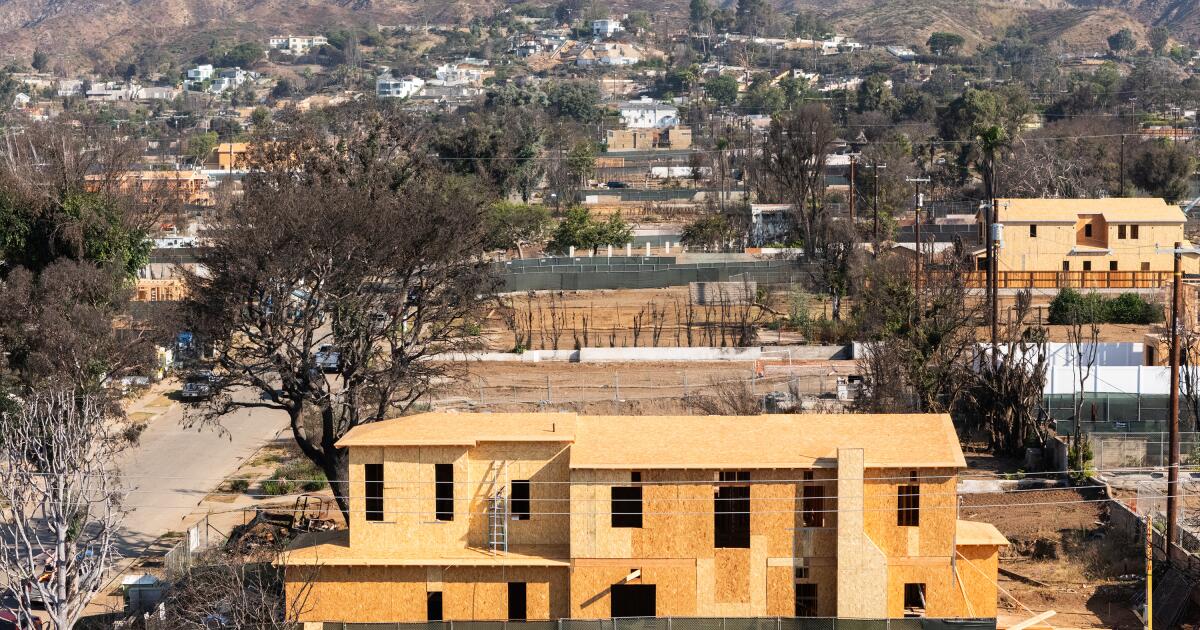
January 2025 wildfire victims seek tougher penalties against State Farm over claims handling
-
 Entertainment54 minutes ago
Review: ‘Sugar,’ with Colin Farrell as an alien private eye, gets a new and improved second season

