Idaho
Bill prohibiting mask mandates heads to Idaho Gov. Brad Little’s desk – East Idaho News


BOISE (Idaho Capital Sun) – Idaho Gov. Brad Little will soon have the final say over whether a bill prohibiting government and school mask mandates to fight the spread of infectious disease will become law.
On Friday, the Idaho Senate voted 27-6 to pass House Bill 32.
If it becomes law, House Bill 32 would prevent the state, cities, counties, school districts, public health districts and government officials in Idaho from mandating that an individual wear a mask or face covering to prevent or slow the spread of an infectious or contagious disease.
There are exceptions in the bill for health care facilities and hospitals, as well as an exception for face shields used to protect workers who are working around hazardous materials or who are welding.
Friday’s vote in the Idaho Senate was nearly along party lines. Only Sen. Jim Guthrie, R-McCammon, broke ranks with the Republican supermajority to vote against the bill. All Senate Democrats who were present Friday also voted against the bill.
Guthrie said he did not support COVID-19 safety restrictions, but he opposed the bill because it ties the hands of local governments and schools, which he said should be trusted to make decisions at the local level.
The Idaho House of Representatives already voted 52-16 to pass the mask bill on Jan. 29.
Once the bill reaches his desk – likely sometime next week – Little will have three options. He can sign it into law, he can allow it to become law without his signature or he can veto it. If Little vetoes the bill, the Idaho Legislature could override the veto with a two-thirds majority vote in both the Idaho Senate and Idaho House.
Under the Idaho Constitution, Little will have five days, Sundays excluded, to act after the signed bill is presented to him. If Little does not act within five days of receiving the bill, it will become law without his signature.
=htmlentities(get_the_title())?>%0D%0A%0D%0A=get_permalink()?>%0D%0A%0D%0A=htmlentities(‘For more stories like this one, be sure to visit https://www.eastidahonews.com/ for all of the latest news, community events and more.’)?>&subject=Check%20out%20this%20story%20from%20EastIdahoNews” class=”fa-stack jDialog”>



PAYETTE — A Payette mom’s bond was revoked Tuesday after she was charged with suffocating her twin children earlier this month and is believed to pose a danger to the life of her newborn child.
The case, which has drawn national headlines, concerns Andrea Renee Shaw, a 23-year-old Payette mother who in May 2025 said her 18-month-old fraternal twins died the same day, after receiving routine childhood vaccinations. In January, Shaw joined as a plaintiff in a federal lawsuit filed by Children’s Health Defense, an anti-vaccine organization founded by Robert F. Kennedy Jr., with several other plaintiffs claiming vaccine injury or death.
Kennedy, who now serves as secretary of Health and Human Services, is no longer part of the group after taking on the cabinet position, as was reported by the Associated Press.
In Idaho, the twins’ deaths prompted a 14-month investigation by the Payette County Sheriff’s Department. On June 29, the investigation yielded a grand jury indictment of Shaw on two counts of first-degree murder by suffocation. If convicted, Shaw can be punished by up to life in prison or the death penalty, and the court would have the ability to order the penalties be served consecutively, or back to back.
Tuesday’s arraignment at the Payette County Courthouse was primarily attended by Shaw’s relatives and members of the media. Payette County Judge Kiley Stuchlik, who serves Idaho’s Third Judicial District, presided.
A key consideration for Stuchlik on Tuesday was a request from Joseph Filicetti, the legal counsel for Shaw, to have her bond reduced from $2 million to $100,000. Filicetti said this would allow for Shaw to care for a newborn girl, who, according to court documents, was born by caesarean section on June 25, four days prior to Shaw’s grand jury indictment.
State prosecutors objected to the motion for bond reduction, noting at hand was a potential death penalty case and asserting, unlike her husband, Shaw’s story repeatedly changed during questioning. Prosecuting Attorney Mike Duke said releasing Shaw would ultimately put the newborn’s safety at risk.
“That child is the most at risk. We do not think she should be allowed to be anywhere near any children, let alone her own children,” Duke said.
Stuchlik decided to revoke bond entirely, stating Shaw posed a “risk of safety” to the newborn child that was not known to Stuchlik or prosecutors when the $2 million bond was initially set.
Also for consideration Tuesday was a request to have grand jury transcripts of witness testimony provided to prosecutors and defense counsel to prepare their respective cases.
Idaho
Idaho is home to the nation's first DarkSky Reserve. Now it's home to the nations first DarkSky Certified Resort


IDAHO FALLS, Idaho (KIFI) – A controversy is brewing as the City of Idaho Falls reviews its alcohol ordinance.
The goal is to consolidate four existing ordinances for beer, wine and liquor into a single law and ensure compliance with state code.
However, at its meeting last Thursday, the Idaho Falls City Council unanimously voted to remove the proposed ordinance from its agenda, in order to receive and consider additional public comment.
The proposed ordinance would:
1. Require commercial establishments selling, dispensing or permitting consumption of alcohol – including beer, wine or liquor – to have an alcohol license, alcohol catering permit or a charitable event permit.
2. Business events with 20 or less employees consuming alcohol at the business would be allowed.
3. Require alcohol servers to complete training every three years.
4. Individuals who violate the law could be charged with a misdemeanor.
Idaho Falls City Council President Jim Francis said the changes were the culmination of months of collaboration between law enforcement, business owners and city attorneys.
“We wanted to provide a safe environment – the primary point here – for public gatherings,” Francis said. “We recognize that certain antiquated elements of the current code are overly restrictive and needed to be addressed. We wanted to make the code more accessible to the public. We needed to address over-pouring issues. We wanted to reduce penalties where possible for violations, particularly the first offenses, and yet make the code clear enough to be enforceable consistently by law enforcement.”
But City Council Member John Radford said the changes represent an overreach by city government.
“I believe it’s a bad policy. What problem are we solving in the name of trying to solve a non-problem?” Radford said. “We’re becoming big brother around alcohol in your private property. I’m concerned that landlords will be at risk of being charged with a misdemeanor if they knowingly, which I made sure that was in there, because that is what we’ve been talking about, allowed people to drink in our business. We will be outside the norm of Idaho cities. This is a big step, and I don’t think the public has weighed in on this.”
At a City Council Work Session on June 1, Idaho Falls Chief of Police Bryce Johnson cited an increase in alcohol-related crime – particularly downtown – as a reason for the changes.
“DUI is there, but this would include sexual assaults, assaults, batteries, disturbances, urination, public vandalism, shooting – all sorts of crimes,” Johnson said.
But business owners are concerned about the potential impact on commercial enterprises.
“The ordinance doesn’t address the real problem – which is people drinking … at one event and then showing up in a bar or restaurant already hammered and causing problems anyway,” ” said Terri Ireland, representing the Idaho Falls Downtown Merchants Association. “The industry is really well-regulated by state and local laws already.”
The City of Idaho Falls began the process of updating its alcohol ordinance in January 2026, seeking input from community stakeholders.
Multiple community members spoke out about the ordinance.
For more in-depth information, you can read the full 39-page proposed alcohol ordinance here.
-
 Entertainment3 minutes ago
Review: Christopher Nolan’s ‘The Odyssey’ is a mighty Trojan horse of his thematic obsessions
-
 Lifestyle9 minutes ago
They just completed all of L.A. Times’ 101 Best California Experiences — and we’ve got questions!
-
 Politics15 minutes ago
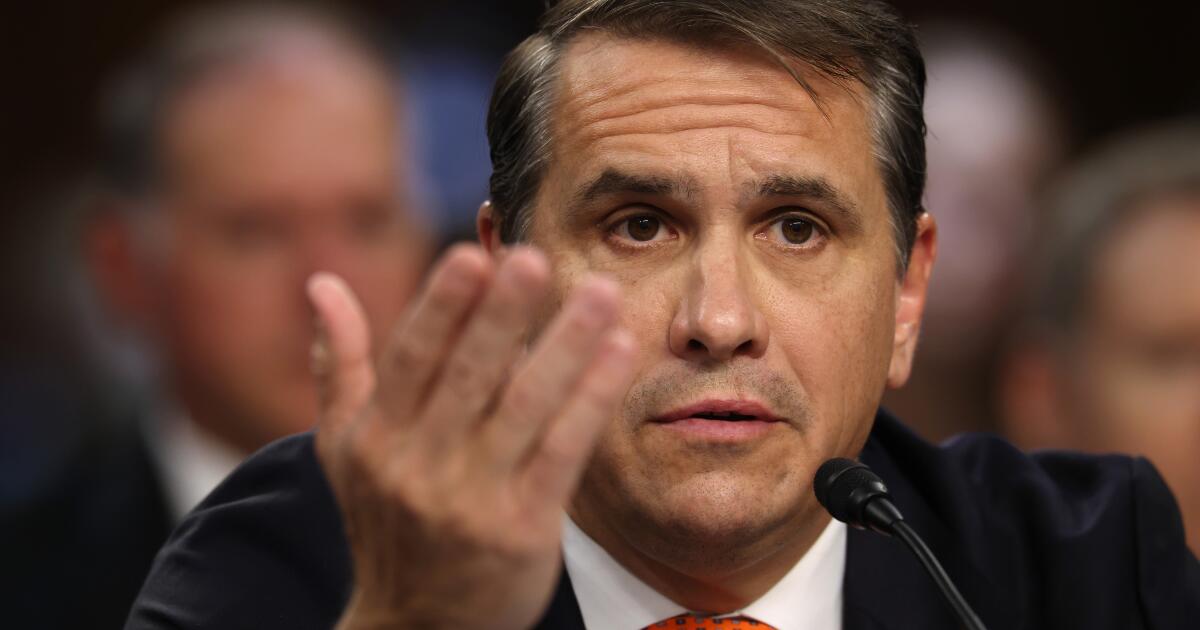
Blanche to face questions about his independence at attorney general confirmation hearing
-
 Sports27 minutes ago
How World Cup senior citizens like Lionel Messi have bio-hacked longer careers
-

 World39 minutes ago
Baltic presidents warn of Russian infrastructure attack plans
-
News1 hour ago
ICE should do traffic stops despite recent shootings, Trump says, seeming to oppose new suspension
-

 Los Angeles, Ca3 hours ago
Southern California hits hottest day of its extreme heat warning
-

 Detroit, MI3 hours ago
Steve Yzerman out as Detroit Red Wings GM, moves to senior advisor role

